

Finish Your Entryway Fast: 5 Anchor Formulas and a 10 Layer Checklist
The fastest way to style an entryway is to choose an anchor piece sized to your clearance, add a protective low-pile rug, pair a mirror or art at the correct scale, layer intentional lighting, then finish with concealed storage and a styled surface using the rule of threes. This weekend, measure your walkway and pick one anchor piece. Next, tackle lighting and one storage solution, like a Key Desktop Storage Decor tray, before adding decorative layers from Noble Abode.
TL;DR:
- Choosing an appropriately scaled anchor piece based on your entryway’s measurements prevents clutter and improves overall balance.
- Layering lighting with overhead fixtures and wall sconces creates a warm, welcoming atmosphere instead of a stark, utilitarian space.
- Natural materials like wood, wool rugs, and warm metal finishes age better and create a timeless, high-end look over trendy, glossy surfaces.
- Incorporating visible storage solutions like baskets, trays, and hooks makes clutter functional and stylish, especially when outlets are limited.
- A quick weekly reset, including decluttering and swapping accents, helps maintain a polished, inviting entryway without extensive renovations.
Table of Contents
- Which Anchor Piece Fits Your Entryway Layout?
- What Is the 10-Layer Checklist Pros Use?
- How Do You Hide Clutter Without Losing Style?
- How Should You Layer Entryway Lighting?
- How Do You Style the Console Surface Correctly?
- What Works Best in a Narrow or Small Entryway?
- What Materials and Colors Make an Entry Look Expensive?
- How Do You Refresh Your Entryway Fast?
- How Does Noble Abode Support Entryway Styling?
- Buy the Anchor Piece Right, Then Relax
- Product Spotlight: Key Desktop Storage Decor for Entry Storage
- Sources
- FAQ
Which Anchor Piece Fits Your Entryway Layout?
Entryway styling starts with one decision: what sits against that main wall. Designers consistently recommend choosing a single anchor piece first, whether that’s a console, bench, or cabinet, sized to the walkway rather than the wall. Get this wrong and everything you add afterward fights for attention. Get it right and the rest of the room organizes itself around it.
Your clearance dictates the formula, not your Pinterest board. Here’s how to match the piece to the space you actually have.
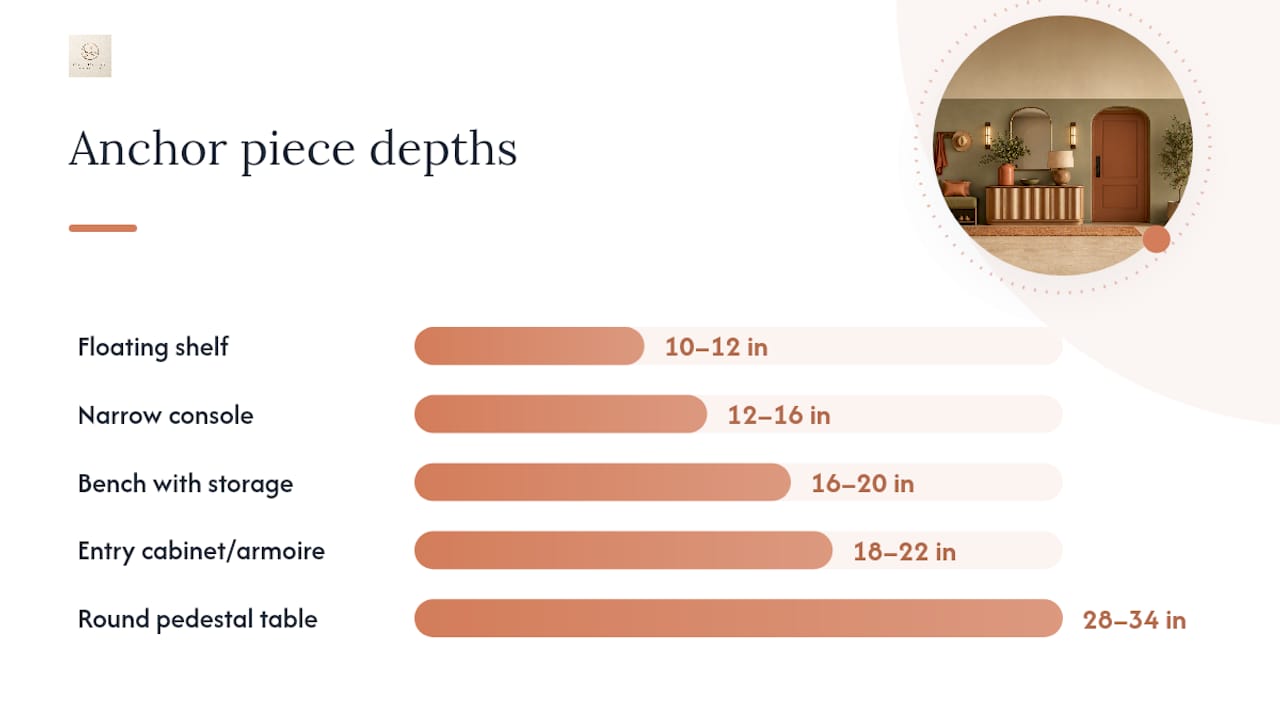
- Narrow console (12 to 16 inches deep): Best for hallways under 42 inches wide, where you need surface area for keys and mail but can’t sacrifice walking room. Keep at least 30 to 36 inches of clear walkway on the opposite side.
- Bench with storage (16 to 20 inches deep): Ideal when you want seating for removing shoes. Leave roughly 18 inches of clearance in front so someone can sit and lean forward without hitting a wall or door.
- Entry cabinet or armoire (18 to 22 inches deep): Works in wider foyers where closed storage matters more than open display. This formula suits households with coats, bags, and sports gear that need to disappear behind doors.
- Round pedestal table (28 to 34 inches diameter): A softer alternative to a rectangular console, good for square or octagonal entry spaces where sharp corners create bottlenecks.
- Floating shelf (10 to 12 inches deep): The only real option when floor space is nonexistent. It sacrifices storage for a styling surface, so pair it with wall hooks to compensate.
Measure your entry before you shop, not after. Stand at the front door and pace off the walkway width, then subtract your anchor piece’s depth from the total. If you land under 30 inches of clear passage, you’ve sized the piece wrong. That single measurement prevents more entryway regret than any color or finish decision you’ll make. A console meant for a grand foyer looks absurd, and functions worse, crammed into a garden apartment hallway.
Function should also drive the pick. If shoe storage is the daily pain point, the bench formula wins even if a console photographs better. If your household barely pauses at the door, a slim floating shelf with a mirror above does more for the space than a bulky cabinet nobody opens.
What Is the 10-Layer Checklist Pros Use?
Professional stylists build entryways in a specific order, and skipping steps is why so many entries feel half finished. Following the sequence below lets you complete the space in stages, spend money where it matters most, and avoid buying decor that has nowhere to go.
- Anchor piece. This is your foundation. Without it, nothing else has a home. Choose one of the five formulas above before buying anything.
- Rug or runner. A low-pile, durable rug protects flooring in a high-traffic zone and visually defines the space. Flatweave or washable materials hold up best against wet shoes and pet paws.
- Focal wall. A mirror or art piece above the anchor gives the eye somewhere to land. This is the single highest-impact, lowest-effort upgrade in the whole list.
- Storage. Baskets, trays, or a bench with cubbies keep daily clutter from colonizing your styled surface.
- Lighting. An overhead fixture plus one lamp or sconce turns a flat, functional hallway into a warm arrival point.
- A plant or greenery. Even a single faux olive branch in a substantial vase adds life without upkeep.
- Surface styling. Arrange your console top using varied heights so the vignette reads as intentional, not accidental.
- Texture. A woven basket, a ceramic vase, a brass tray. Mixing materials keeps the surface from looking flat under photos or daylight.
- Scent. A small reed diffuser or unlit candle subtly raises how welcoming the space feels, without overwhelming guests the moment they walk in.
- Seasonal swap. A rotating element, stems, a small wreath, a tray liner, keeps the entry from going stale for the other 51 weeks of the year.
Pro Tip: When in doubt, size up. Undersized decor is the most common entryway mistake stylists flag, and a mirror or vase that reads as too small will always look accidental rather than chosen. A slightly oversized piece almost always looks more expensive than a cautious, small one.
Notice that layers 1 through 5 are structural. They’re the ones that cost the most and matter most to daily function. Layers 6 through 10 are the fun part, the ones you can swap out for $20 at a time without touching the bones of the room. If your budget is tight, stop after layer 5 and live with it for a month before adding the rest. You’ll know exactly what the space still needs.
How Do You Hide Clutter Without Losing Style?
Storage only works as decor when it looks like furniture, not moving boxes. The best entryways treat storage as a visible design layer rather than something to apologize for or shove out of sight.
Closed cabinetry hides the most but costs the most and takes up floor space many entries don’t have. A bench with cubbies splits the difference: shoes disappear into fabric bins while the bench itself still functions as seating and an anchor piece. Open baskets are the budget option, and they work well for items you grab daily, like scarves or dog leashes, because you’re not opening a door every time.
Trays deserve their own mention. A single tray on the console catches keys, sunglasses, and mail before they scatter across the surface. It’s the cheapest clutter fix in this entire guide, and it doubles as a styling element when you choose one in brass, marble, or a textured ceramic.
Hooks solve the coat-and-bag problem better than almost anything else, but height matters more than most people realize. Mount adult hooks 60 to 66 inches from the floor, and if kids use the entry too, add a second row around 42 to 48 inches so they can hang their own backpacks without help.
- Closed cabinetry: best when you want zero visible clutter and have at least 18 inches of depth to spare.
- Bench with cubbies: best for households that remove shoes at the door daily.
- Open baskets: best for frequently grabbed items and tight budgets.
- Wall hooks at two heights: best for multi-person households juggling coats, bags, and backpacks.
Pro Tip: Run a 60 second weekly reset: clear the console, fluff the runner, restack the tray. Designers point to this simple habit as the difference between an entry that photographs well once and one that stays presentable year round.
If you’re renting or dealing with an entry too small for freestanding furniture, a fitted or built-in system from a provider like home organization specialists can maximize a narrow closet or awkward nook without eating into your walkway.
How Should You Layer Entryway Lighting?
A single overhead bulb makes any entry feel like a utility closet. Layered lighting, meaning ambient overhead light combined with a lamp or sconce at eye level, is what actually makes a space feel welcoming the second the door opens.
Start with the overhead fixture. A pendant should hang so its bottom sits 30 to 34 inches above the console or table beneath it, close enough to feel intentional without becoming a hazard for taller visitors. A semi-flush mount works better in entries with low ceilings or heavy foot traffic where a hanging pendant would get bumped.
No outlet near your console? Plug-in wall sconces solve that without an electrician. Many mount with adhesive strips and run their cord along the trim, which you can tuck behind a cord cover or paint to match the wall.
Bulb temperature matters as much as the fixture. Choose warm white bulbs in the 2700K to 3000K range. Anything higher reads clinical and cold, more waiting room than welcome home. If you can find bulbs with a CRI (Color Rendering Index) of 90 or above, skin tones and wood finishes will look noticeably richer under them.
- Pendant or chandelier: hang 30 to 34 inches above the console surface.
- Semi-flush mount: choose when ceiling height is under 8 feet or foot traffic is heavy.
- Plug-in sconce: use when there’s no hardwired option and you want wall-level light without an electrician.
- Table lamp: place on the console for a warm, secondary light source, and route the cord behind a leg or through a cord clip so it stays invisible.
A small lamp does double duty. It adds a warm glow at exactly the height where guests’ eyes land first, and it gives your surface styling a taller anchor point for the layout rules in the next section.
How Do You Style the Console Surface Correctly?
The console top is where entryway styling either reads as curated or collapses into random clutter. Get the mirror or art scale right first, because that’s the backdrop everything else on the surface will be judged against.
For art or a mirror hung above a console, leave 4 to 8 inches of space between the top of the furniture and the bottom of the frame. Most stylists warn against the opposite mistake far more often: going too small rather than too large. An oversized mirror or art piece consistently reads as more intentional and more expensive than a cautiously small one.
Once the wall is set, style the surface itself using a composition technique nearly every professional stylist relies on: one tall item, one mid-height item, one low item. A tall vase or lamp anchors one end, a mid-height stack of books or a small sculpture sits in the middle distance, and a low bowl or catchall tray finishes the grouping. This “rule of threes” creates a visual path for the eye instead of a flat, even row of objects that photographs as clutter no matter how nice each individual piece is.
Mixing finishes keeps the vignette from feeling too coordinated. Pair a matte ceramic vase with a brass tray and a woven basket, rather than three items in the same material and finish. A too-matched surface reads like a display at a furniture showroom instead of a home someone actually lives in.
- Leave 4 to 8 inches between console top and the bottom of hung art or a mirror.
- Size the mirror or art to cover 50 to 75% of the console’s width.
- Group items using one tall, one mid, one low, following the rule of threes composition.
- Mix at least two different materials or finishes in every surface vignette.
If you want a deeper breakdown of exact framing dimensions, Noble Abode’s guide to console table decor walks through eight specific pairings you can copy directly.
What Works Best in a Narrow or Small Entryway?
Small and narrow entries fail for one reason more than any other: furniture chosen for scale, not clearance. Every formula here assumes limited square footage, not a compromise on style.
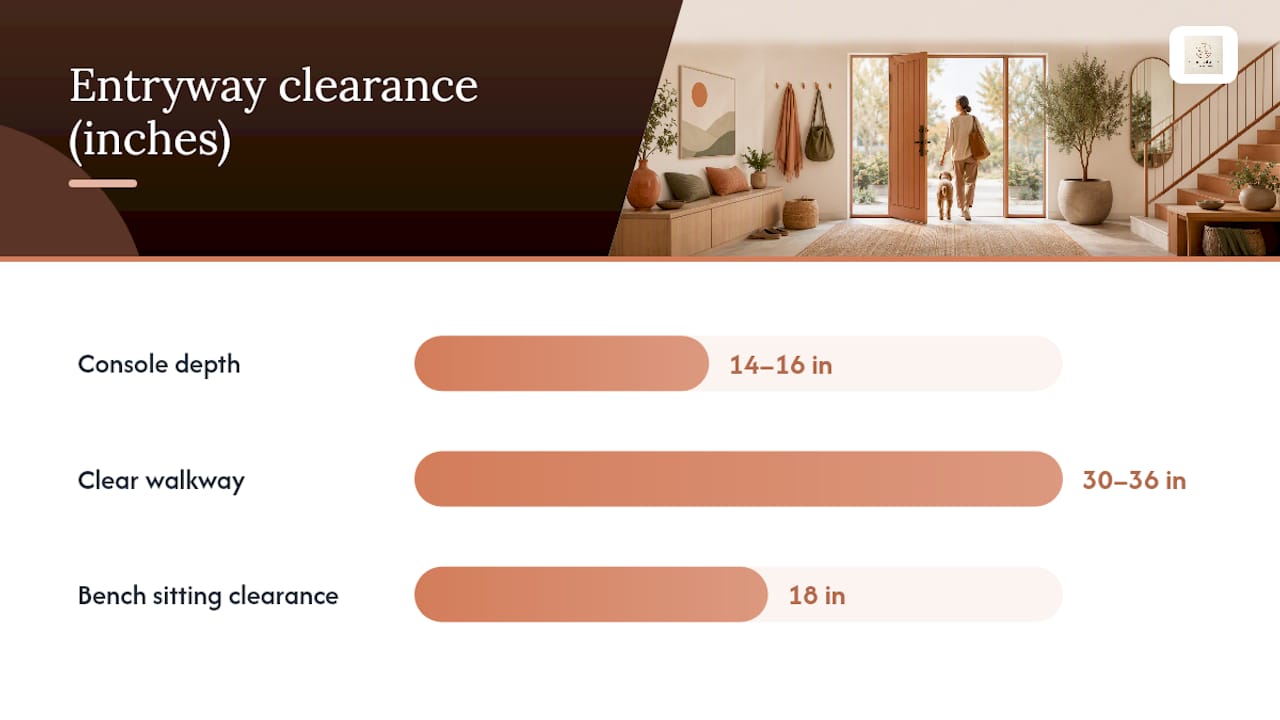
Depth is the number that matters most. Keep console or table depth between 14 and 16 inches to preserve a 30 to 36 inch clear walkway, which is the minimum most people need to pass comfortably without brushing against furniture. If a bench is non-negotiable for shoe removal, budget roughly 18 inches of sitting clearance in front of it, even if that means shrinking the bench itself.
Runners solve the styling problem in a hallway too tight for a full rug. Measure the hallway width and leave 4 to 6 inches of bare floor on each side, then anchor the runner with a rug pad or double-sided tape so it doesn’t slide on hardwood.
Mirrors do more heavy lifting in a small entry than almost any other single item. In narrow entries specifically, a mirror or other vertical element visually expands the space while letting the furniture underneath stay low-profile and out of the walking path.
- Cap console depth at 14 to 16 inches to keep a 30 to 36 inch walkway clear.
- Size a runner with 4 to 6 inches of bare floor showing on each side.
- Choose a tall, narrow mirror over a wide one to emphasize height, not footprint.
- Substitute a low-maintenance faux plant or dried branch arrangement where natural light won’t support live greenery.
If your entry doesn’t have room for a console at all, a wall-mounted floating shelf paired with hooks does the job of an anchor piece without touching the floor. Noble Abode’s guide to small space furniture covers slim-profile options built specifically for this kind of clearance math, and the narrow hallway art guide breaks down which frame proportions work in tight vertical spaces.
What Materials and Colors Make an Entry Look Expensive?
Expensive-looking entries almost never come from expensive individual items. They come from material and scale choices that avoid looking trendy in eighteen months.
Wood, natural fiber rugs, and warm metal finishes like brass or aged bronze form the backbone of a timeless entry. These materials age visibly better than glossy laminate or cool chrome, which can look dated the moment the next finish trend arrives. A jute or wool runner in a neutral tone will outlast three rounds of trendy patterned rugs, both stylistically and physically, since natural fibers tend to hide wear better than tightly printed synthetic ones.
Scale beats pattern almost every time. Oversized botanicals and large-format art consistently age better than small, busy prints, because a bold single gesture, one large mirror, one substantial vase, one dramatic branch arrangement, reads as a deliberate design choice rather than a collection of trend purchases.
- Choose warm wood tones (walnut, oak, or a warm-stained finish) over cool gray-washed woods for a timeless base.
- Pick brass, aged bronze, or matte black hardware over polished chrome for lasting appeal.
- Invest in one oversized piece (mirror, art, or a dramatic plant) rather than several small accents.
- Upgrade console hardware and drawer pulls; it’s a small cost with outsized visual impact.
- Choose a quality wool or jute rug over synthetic prints for a floor that reads high-end for years.
A few of these upgrades cost very little. Swapping dated cabinet knobs for brass pulls runs under $30 in most cases and changes how the whole piece reads. That’s a better first dollar than a decorative object that will get bored with in a year.
How Do You Refresh Your Entryway Fast?
A full entryway overhaul can wait. A weekend refresh cannot, and it takes less time than a grocery run.
- Declutter for 10 minutes. Clear the surface completely, sort what belongs in storage, and toss what doesn’t belong in the entry at all.
- Swap the runner or rug. A clean, unworn runner instantly resets how tired the space feels, especially after a muddy season.
- Refresh the greenery. Replace wilted stems or dusty faux branches with something seasonal, fresh eucalyptus in spring, dried pampas in fall.
- Rotate one small decor object. A new catchall bowl, a different vase color, or a seasonal candle keeps the vignette from going stale.
- Recheck your rule of threes. Confirm the surface still has a tall, mid, and low item after your swaps; it’s easy to accidentally flatten the arrangement.
Three easy seasonal swaps: a woven basket with a wool throw in winter, a lighter ceramic vase with branches in spring, and a simple change of candle scent for fall. Keep every swap small enough to store in a closet bin so next season’s refresh takes minutes, not a shopping trip. The anchor piece, rug, and lighting should never change with the seasons; only the accents do.
How Does Noble Abode Support Entryway Styling?
Various brands offer decorative vases, mirrors, trays, and small storage pieces built specifically for entries where both style and daily function matter. Many product lines lean on timeless materials and finishes rather than short-lived trend pieces, which lines up directly with the durability advice covered above.
Key Desktop Storage Decor fits directly into layer four of the checklist: storage. Placed on a console top, it corrals keys, sunglasses, and mail in one spot without looking like an office supply. Set beside a bench, it becomes a landing zone for a wallet or phone before shoes come off. Its compact footprint also makes it a strong fit for the narrow-entry formulas covered earlier, where every surface inch has to work double duty.
For deeper direction beyond this guide, Noble Abode’s blog covers entryway lighting choices in more depth, along with sizing rules for wall art proportions above a console or bench. Both build directly on the formulas laid out in this guide, without repeating them.
Buy the Anchor Piece Right, Then Relax
Entryway styling rewards patience with the big piece and playfulness with everything else. Buy the best anchor you can afford, since it’s the one item guests notice first and the one you’ll live with longest. A well-made console or bench outlasts three rounds of trend cycles if the bones are solid.
Small accents are a different game entirely. Borrow a vintage vase from a friend, hit a flea market for a tray, or wait for a seasonal sale before committing to art. Save the real spending for the anchor and the mirror; let the rest evolve as your taste does.
Start with one formula and one layer this week. The rest of the checklist will follow once the entry actually earns your attention every time you walk through the door.
— Stephane
Product Spotlight: Key Desktop Storage Decor for Entry Storage
Noble Abode built the Key Desktop Storage Decor for exactly the clutter problem this guide keeps circling back to: the pile of keys, mail, and small items that colonizes a console top within a week of styling it.
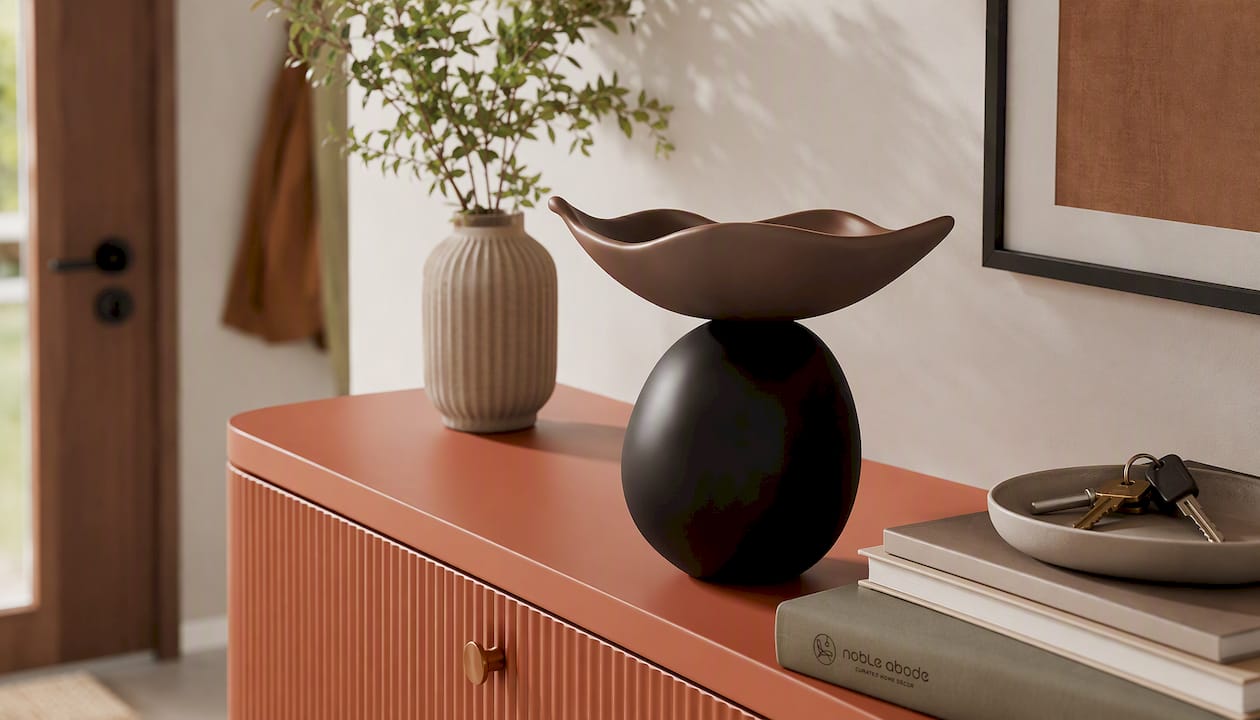
On a console, it works as a catchall tray that keeps the surface’s rule-of-threes composition intact instead of getting buried under loose items. Under a bench, it slides into a cubby or sits on a shelf as a compact organizer for smaller daily essentials that don’t need a full basket. Near a floating shelf in a narrow hallway, its small footprint means it adds storage without eating into the clearance you worked to protect.
Its finish pairs naturally with the warm metals and natural materials covered in the materials section above, so it slots into an existing vignette rather than fighting it. If your entry has the anchor and lighting sorted but still feels like it swallows your keys every evening, this is the layer worth adding next. Shop Key Desktop Storage Decor and see how it fits your console or bench setup.
Sources
- The Anatomy Of An Entryway: 5 Foolproof Formulas AND Our Favorite Shoppable Picks
- How to Style an Entryway: 10 Layers for a Welcoming Home
- How to create a timeless home entryway
- Foyer Decorating and Entryway Design Ideas
FAQ
What Are Good Entryway Decorating Ideas for 2026?
Oversized mirrors, warm-toned wood anchors, and layered lighting in the 2700K to 3000K range remain the strongest picks, alongside closed storage styled to look like furniture rather than utility bins.
What Entryway Decorating Mistakes Should You Avoid?
The most common mistake is undersizing decor, choosing a small mirror, vase, or console when a larger piece would look more intentional; a close second is skipping lighting layers and relying on a single overhead bulb.
How Do You Make Your Front Entrance Look Expensive?
Invest in one oversized statement piece (mirror, art, or a substantial vase), choose warm wood and brass finishes over cool synthetic ones, and swap console hardware for a quick, low-cost upgrade.
What Is the Most Welcoming Color for an Entryway?
Warm neutrals, soft terracotta, and deep warm greens tend to feel the most welcoming, especially when paired with lighting in the 2700K to 3000K range that keeps the whole palette feeling warm rather than cold.
How Do You Keep a Small Entryway Organized Long Term?
Run a 60 second weekly reset, clearing the console and restacking trays, and rely on a piece like Key Desktop Storage Decor to give loose items a fixed home instead of letting them spread across the surface.