

Small Space Furniture Ideas That Save Space and Look Stylish
The most effective approach for furnishing a small space combines three priorities: multi-functional furniture, perimeter placement, and vertical storage. Start there and the rest follows naturally.
Before buying anything, run through these first steps:
- Measure every wall, doorway, and ceiling height — including door swing clearance.
- Remove one large nonessential item already in the room (an oversized coffee table, a bulky armchair).
- Pick one convertible piece to anchor the layout: a storage ottoman, a sofa bed, or a drop-leaf table.
Pro Tip: Choose pieces with exposed legs or acrylic elements. Sightlines that pass under or through furniture keep a room feeling open, even when it is fully furnished.
Table of Contents
- What are the best furniture types for small spaces?
- Living room layout ideas that preserve floor space
- Dining and kitchen furniture solutions for compact homes
- Bedroom furniture ideas: Murphy beds, storage beds, and compact nightstands
- Entryway and bathroom touches that add disproportionate function
- Storage strategies that reclaim floor space
- How to choose furniture for small rooms: a step-by-step framework
- What do designers say about placement and visual tricks?
- Lighting-integrated furniture options for small spaces
- DIY and customization tips for unique room dimensions
- Key Takeaways
- The case for fewer, better pieces
- Noble Abode’s compact storage solution for desks and nightstands
- Useful sources and further reading
- FAQ
What are the best furniture types for small spaces?
Multi-functional furniture is the single category that delivers the most usable space per dollar in compact rooms. The key types, and when each earns its place:
Multi-function sofas and sofa beds work best in studio apartments where the living area doubles as a sleeping area. A convertible sofa bed handles both functions without requiring a separate bed frame.
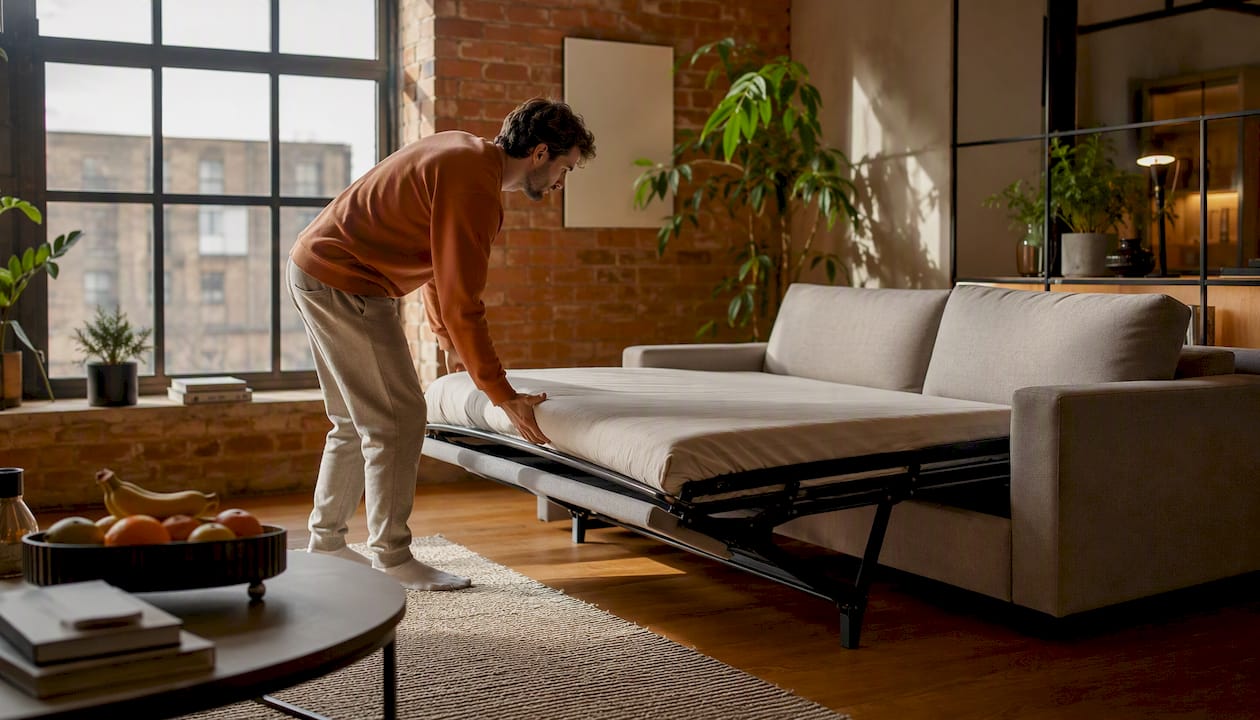
Murphy and transformable wall beds are ideal for spaces under roughly 400 square feet. Modern 3-in-1 systems reconfigure a room in seconds, integrating sofa, desk, and bed into a single wall unit, offering multifunctionality for limited spaces.
Storage beds and ottomans suit one-bedroom apartments where floor storage is the constraint. The bed frame or ottoman replaces a dresser or closet overflow.
Nesting and drop-leaf tables serve frequent entertainers. Tucked away, they free circulation space; extended, they seat four or more.
Wall-mounted desks and floating shelves are the right call for remote workers in studios. They preserve floor area entirely.
Slim-profile and acrylic/glass pieces reduce visual weight in any room type. Clear acrylic chairs or glass side tables take up physical space but register as near-invisible.
Pro Tip: Convertible pieces cost more upfront than single-function alternatives. That premium usually pays off: one quality sofa bed replaces both a sofa and a guest bed, cutting total furniture spend and floor footprint.
Living room layout ideas that preserve floor space
Place the largest seating piece, typically a sofa, along the longest wall and keep the center of the room clear. That open center path is what makes a small living room feel livable rather than cramped. For small living room ideas, the furniture choices that work consistently are:
- Slim-armed or low-profile sofas with exposed legs.
- A storage ottoman in place of a coffee table (adds seating, hides clutter).
- A narrow console table behind the sofa for lamps and small objects.
- Wall-mounted media units to eliminate the TV stand footprint entirely.
For social seating, two armless accent chairs placed at an angle take up less visual and physical space than a loveseat. If the room also serves as a TV viewing area, keep seating within 8–10 feet of the screen and avoid blocking the sightline with tall furniture.
Pro Tip: When choosing seating scale, pick the single largest piece the room genuinely needs — one well-proportioned sofa — rather than filling gaps with mismatched smaller chairs. Fewer, better-scaled pieces read as intentional.
Dining and kitchen furniture solutions for compact homes
A drop-leaf or extendable table is the most practical dining surface for a small apartment. Closed, it functions as a narrow console or work surface; open, it seats two to four. For kitchens with no dedicated dining zone, a counter-height ledge or peninsula with bar stools handles daily meals without requiring a separate table at all.

Banquette seating with under-seat drawers solves two problems at once: it provides fixed seating along a wall and adds storage that would otherwise require a separate cabinet. Folding bistro sets work well on small balconies or in eat-in kitchens where the table only comes out for meals.
Lighting matters here more than most people expect. A small pendant light centered over the dining surface defines the zone visually and keeps the ceiling from feeling low. Light-tone table surfaces, white or natural wood, reflect more light and make the area feel less enclosed.
Pro Tip: Keep extra dining chairs as stackables stored in a closet, or choose chairs that tuck fully under the table. Chairs left out in a small kitchen double the perceived clutter.
Bedroom furniture ideas: Murphy beds, storage beds, and compact nightstands
The right bed choice depends on ceiling height, daily routine, and privacy needs.
- Murphy or wall beds: best when the room must serve a second daytime function (home office, yoga space). Ceiling height of at least 8 feet is standard; always check the manufacturer’s clearance specs. Murphy beds remain among the most effective solutions for reclaiming living area in studio apartments.
- Storage beds: best when the room is a dedicated bedroom and under-bed drawers can replace a dresser. Integrated storage frames eliminate the need for a separate chest.
- Loft beds: suited to single rooms with ceilings above 9 feet, freeing the floor below for a desk or seating area.
- Daybeds: work for rooms that double as a guest space; styled with cushions, they read as a sofa during the day.
For nightstands, wall-mounted shelves or narrow vertical cabinets keep the floor clear and scale better than standard bedside tables in tight spaces. A floating shelf at mattress height holds a lamp, phone, and book without adding any footprint.
Pro Tip: Before ordering a Murphy bed, photograph the wall, measure door swings on all adjacent doors, and confirm the mattress thickness the system accepts. Most wall bed mechanisms specify a maximum mattress depth — exceeding it prevents the unit from closing.
Entryway and bathroom touches that add disproportionate function
Small entry zones and bathrooms respond well to vertical thinking. A narrow console table, a row of wall hooks, and one slim bench with shoe storage underneath handle coats, bags, and footwear without crowding a hallway. Floating shelves above the bench add a second storage tier while keeping the floor clear. For console table styling in tight entries, the principle is the same: go vertical, keep the surface edited.
In the bathroom, a wall-mounted vanity cabinet and a mirrored medicine cabinet do double duty: the mirror amplifies light and makes the room feel larger, while the cabinet behind it replaces a freestanding shelf. Recessed shelving in shower niches and vertical towel rails with shallow shelves keep floor space entirely open.
For small outdoor balconies adjacent to the apartment, foldable bistro sets and stackable chairs apply the same logic as indoor compact furniture: fold and stack when not in use.
Pro Tip: A narrow Lucite or glass console at the entry holds keys and mail without visually blocking the hallway. The transparency keeps the sightline to the back of the space intact.
Storage strategies that reclaim floor space
The most effective storage in small apartments moves up the walls and under the furniture. Practical tactics, ranked by impact:
- Full-height bookcases and closets: use every inch from floor to ceiling; the top shelves hold seasonal or rarely used items.
- Floating shelves: add storage without floor footprint; shallow profiles (6–8 inches deep) work for books, plants, and small objects.
- Under-bed storage: drawers built into the bed frame or low-profile rolling bins handle linens, off-season clothing, and shoes.
- Storage ottomans: replace coffee tables and add a hidden compartment for blankets, remotes, and chargers.
- Built-in bench seating: in dining nooks or entryways, a bench with drawers below replaces a separate cabinet.
Renters who cannot install built-ins should favor modular stackable units (freestanding bookcases, cube shelving) that move with them. Homeowners with more flexibility can invest in custom built-ins that use every awkward corner and alcove.
Open-sided shelving and light-colored materials reduce visual bulk while retaining full storage capacity. A white or natural-wood open bookcase reads as lighter than a closed cabinet of the same size.
Pro Tip: A standard reach-in closet can be converted into a compact home office or storage wall by adding a tailored shelving profile: one narrow desk surface, two vertical shelf columns, and a hanging rail. No floor space required.
How to choose furniture for small rooms: a step-by-step framework
Follow this sequence before purchasing any piece:
- Measure the room and all openings. Record wall lengths, ceiling height, and every door and window clearance. Note which walls have outlets or radiators.
- Map circulation paths. Mark the routes you walk daily (bed to bathroom, entry to kitchen). Keep those paths at least 30–36 inches wide.
- Decide function priorities. List what must happen in the room: sleep, work, entertain, store. Rank them. The top function drives the anchor piece.
- Pick scale and materials. Choose light tones, glass, acrylic, or open-frame pieces to reduce visual weight. Avoid dark, bulky finishes in rooms under 300 square feet.
- Set a budget and decide where to spend. Convertible pieces (wall beds, quality sofa beds) justify a higher spend because they replace multiple items. Accent pieces and storage bins can be budget-friendly.
When vetting transformable furniture, check the mechanism warranty, the mattress thickness limit (for wall beds), and the return policy. A mechanism that fails after 18 months in a studio apartment is a significant disruption. Designers and manufacturers consistently flag durable mechanisms and modular adaptability as the top purchase criteria for multi-function pieces.
For finishes, light surfaces reflect significantly more light than dark ones, which makes a measurable difference in how large a room feels. Glass and acrylic pieces, like a clear acrylic vase or transparent side table, add visual interest without adding visual weight.
Pro Tip: Photograph the room from its main entry angle, then print or digitally overlay scaled furniture cutouts before buying. This takes 20 minutes and prevents expensive mistakes.
What do designers say about placement and visual tricks?
The core placement rules from design practitioners are consistent: tuck furniture to the perimeter, keep the central floor area clear, and use wall-mounted pieces wherever possible. These rules hold across room sizes, but they matter most in apartments under 400 square feet.
Light surfaces reflect up to 70% of light, while dark surfaces may reflect only 10–15%, making light palettes a measurable visual expansion tactic. Mirrors amplify this effect by bouncing light across the room.
| Design tactic | Measurable effect | Source |
|---|---|---|
| Light palette surfaces | Reflect up to 70% of light vs. 10–15% for dark surfaces | Archiproducts |
| Perimeter furniture placement | Preserves open floor area in rooms as small as 323 sq ft | Better Homes & Gardens |
| Transformable/Murphy bed systems | Reconfigure a room in seconds; suited to spaces under ~400 sq ft | Target / Archiproducts |
Mirrors placed opposite windows double the perceived depth of a room. A single large mirror on a short wall reads as a window and adds no floor footprint.
Pro Tip: Designers who work in small homes consistently say the difference between tolerating a compact space and genuinely enjoying it comes down to one or two quality convertible pieces. The mechanism, the mattress, and the build quality matter more than the price tag alone.
Lighting-integrated furniture options for small spaces
Furniture with built-in lighting serves two functions simultaneously, reducing the need for separate floor or table lamps that consume floor space. Bed frames with integrated LED strips provide ambient light without a bedside lamp. Shelving units with built-in lighting highlight objects and illuminate work surfaces without adding a separate fixture.
For small home offices, a wall-mounted desk with an integrated task light keeps the surface clear and eliminates the cord management problem of a separate lamp. In living rooms, a media console with backlit shelving adds ambient warmth and defines the TV wall without requiring additional lighting fixtures.
Pendant lights hung low over dining surfaces or kitchen islands define zones in open-plan studios without using any floor or surface space. A single pendant at the right height does more for a small dining area than a floor lamp in the corner.
DIY and customization tips for unique room dimensions
Standard furniture rarely fits awkward alcoves, sloped ceilings, or narrow galley kitchens. Custom and DIY solutions close that gap without requiring a full renovation.
For alcoves and recesses, a simple built-in bookcase using stock lumber and adjustable shelf brackets costs a fraction of custom cabinetry and uses every inch of an otherwise wasted niche. Paint it the same color as the wall and it reads as architectural rather than added-on.
For small home office setups in tight corners, a floating desk cut to the exact wall width and mounted at the right height for the user eliminates the wasted space that a standard desk leaves on either side.
Modular cube shelving systems (available at most major home retailers) can be configured to fit under stairs, around doorframes, or along irregular walls. They disassemble and reassemble, which makes them practical for renters. For studio apartments specifically, decorating ideas for studio apartments often center on exactly this kind of adaptable, modular approach.
Key Takeaways
Multi-functional furniture, perimeter placement, and vertical storage are the three decisions that determine how well a small space actually works.
| Point | Details |
|---|---|
| Measure before buying | Record wall lengths, ceiling height, and door clearances before selecting any piece. |
| Anchor with one convertible piece | A quality sofa bed, storage bed, or Murphy bed replaces multiple single-function items. |
| Use vertical storage | Full-height shelving and wall-mounted units add capacity without consuming floor space. |
| Choose light materials | Light surfaces reflect up to 70% of light; dark surfaces reflect only 10–15%, making the room feel smaller. |
| Noble Abode for compact storage | The Light Luxury Multi-function Desktop Storage Box adds organized storage on desks, nightstands, and narrow consoles with a minimal footprint. |
The case for fewer, better pieces
Most people furnishing a small apartment make the same mistake: they try to fit everything in. A sofa, a coffee table, a TV stand, a bookcase, a desk, a dining table. The room ends up full but not functional.
The better approach is to decide what the space must do, then find the fewest pieces that cover all of those functions. A storage ottoman replaces a coffee table and a linen chest. A wall bed replaces a sofa and a bed. A drop-leaf table replaces a dining table and a console.
This is not about minimalism as an aesthetic. It is about making deliberate trade-offs. A well-chosen convertible piece costs more than its single-function equivalent, but it earns that premium every day. The rooms that feel genuinely comfortable at 350 square feet are almost always the ones where someone made two or three quality decisions rather than ten budget ones.
The other habit worth adopting: live with the room for a week before buying anything. Walk the circulation paths. Notice where things pile up. The clutter points tell you exactly where storage is missing, and that is where to spend first.
Noble Abode’s compact storage solution for desks and nightstands
Small spaces need storage that works at the surface level, not just in closets and under beds. The Light Luxury Multi-function Desktop Storage Box from Noble Abode addresses exactly that: multiple compartments in a compact footprint, with a refined aesthetic that suits a nightstand, home desk, or narrow entry console equally well.
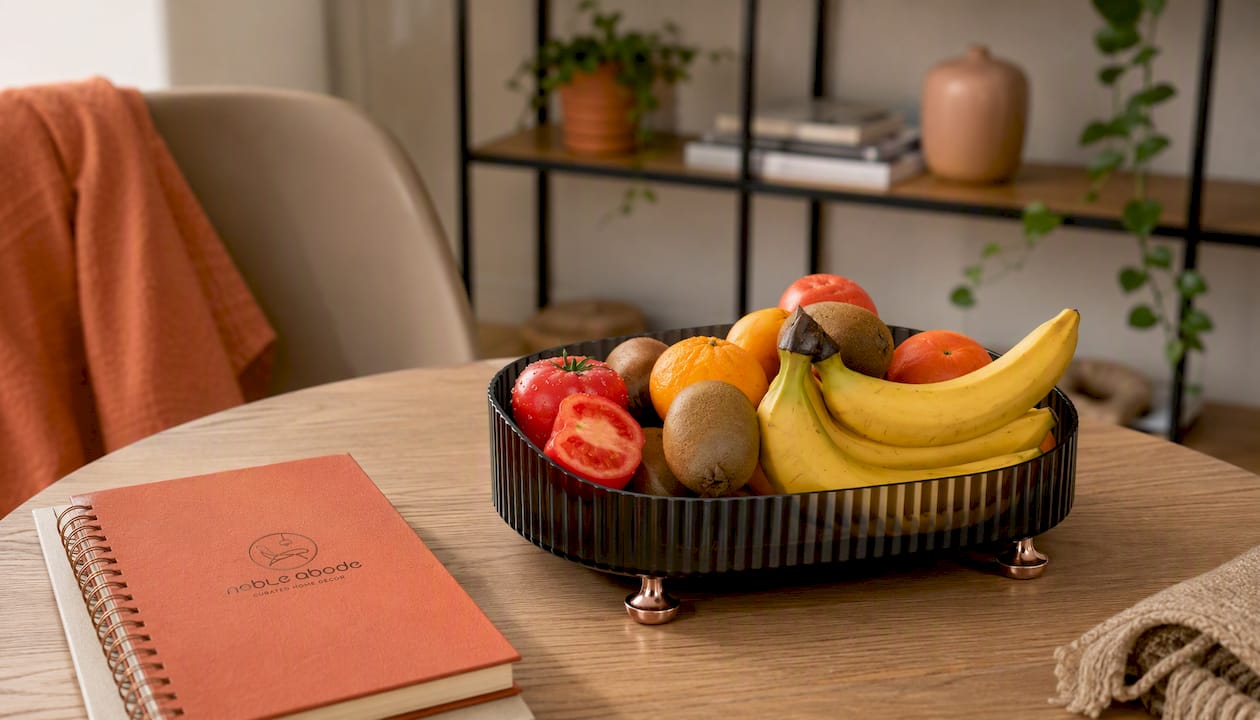
It holds frequently used items, chargers, stationery, and small accessories within reach without spreading across the surface. The design is clean enough to sit alongside other decor without looking like office supply overflow. For a studio apartment where the desk also serves as a dining surface or the nightstand doubles as a work area, that kind of contained, multi-compartment storage is genuinely useful.
Place it on a floating shelf above a narrow console, on a bedside surface, or at a home desk. Pair it with a small lamp and one or two curated objects and the surface reads as styled rather than cluttered. Browse the full Noble Abode collection at nobleabode.shop for additional compact decor and storage pieces suited to small-space living.
Pro Tip: Layer the storage box atop a narrow console or floating shelf to add discrete surface storage without widening the furniture footprint.
Useful sources and further reading
- Small-space furniture strategies — Better Homes & Gardens — best for perimeter placement rules and material guidance.
- How to furnish a 323 sq ft one-bedroom apartment — Archiproducts — detailed layout strategies and light-reflectance data for compact apartments.
- How Murphy beds maximize tiny spaces — Gridwise Living — practical guidance on Murphy bed selection, clearance, and installation.
- Small patio furniture ideas — Keter Australia — foldable and stackable furniture principles applicable to balconies and entryways.
- Small living room decorating ideas — Noble Abode — room-level styling examples and convertible furniture tips for apartments.
FAQ
What furniture works best in a studio apartment?
Multi-functional pieces work best: a sofa bed, a storage ottoman, a drop-leaf table, and wall-mounted shelving. These cover sleeping, seating, dining, and storage without requiring a separate piece for each function.
How do I make a small living room feel larger?
Place seating along the perimeter, keep the center floor clear, and choose furniture with exposed legs or glass/acrylic elements. Light-colored surfaces reflect significantly more light than dark ones, which measurably increases perceived space.
When does a Murphy bed make sense?
A Murphy bed makes sense when a room must serve a second daytime function, such as a home office or workout space. Ceiling height of at least 8 feet is standard, and the wall must accommodate the unit’s depth when closed.
What is the first step when furnishing a small space?
Measure the room before buying anything: wall lengths, ceiling height, door swings, and window clearances. Then map the circulation paths you use daily and keep those routes at least 30–36 inches wide.
What small storage piece works on a desk or nightstand?
A compact multi-compartment desktop storage box, such as Noble Abode’s Light Luxury Multi-function Desktop Storage Box, keeps frequently used items organized on a minimal footprint and suits desks, nightstands, and narrow consoles equally well.