

Small Living Room Decorating Ideas for Apartments
Effective small living room decorating for apartments is defined by three principles: appropriately scaled furniture, layered lighting, and intentional decorative accents. These are not style preferences. They are the functional standards that separate a cramped room from a composed one. Professional design guidelines require 30–36 inches of walkway clearance between furniture pieces. That single measurement determines whether your apartment living room feels open or suffocating. The ideas below apply that standard across furniture, lighting, color, and decor to give you a room that works as well as it looks.
1. Small living room decorating ideas for apartments: start with furniture scale
The most common mistake in compact living room decor is buying furniture sized for a house. Appropriately scaled furniture creates intentional, sophisticated rooms. It does not make a space feel cheap or cramped.
- Choose a sofa that is slightly narrower than standard (around 84 inches or less for most apartments).
- Select a low-profile sofa with exposed legs to let the eye travel under the frame and perceive more floor space.
- Avoid bulky sectionals unless the room is L-shaped and the sectional fits without blocking pathways.
- Use a loveseat plus one accent chair instead of a full three-seat sofa when square footage is tight.
- Opt for a round or oval coffee table to reduce sharp corners and improve traffic flow.
Pro Tip: Measure your walkway clearances before ordering any furniture. Tape the footprint on the floor with painter’s tape and walk through it for two days. If it feels tight on tape, it will feel worse with the actual piece.
2. Arrange furniture for flow, not just aesthetics
Furniture placement controls how a room feels to move through. Floating furniture away from walls softens the room, improves traffic patterns, and breaks the “furniture pushed against walls” look that makes small rooms feel institutional.
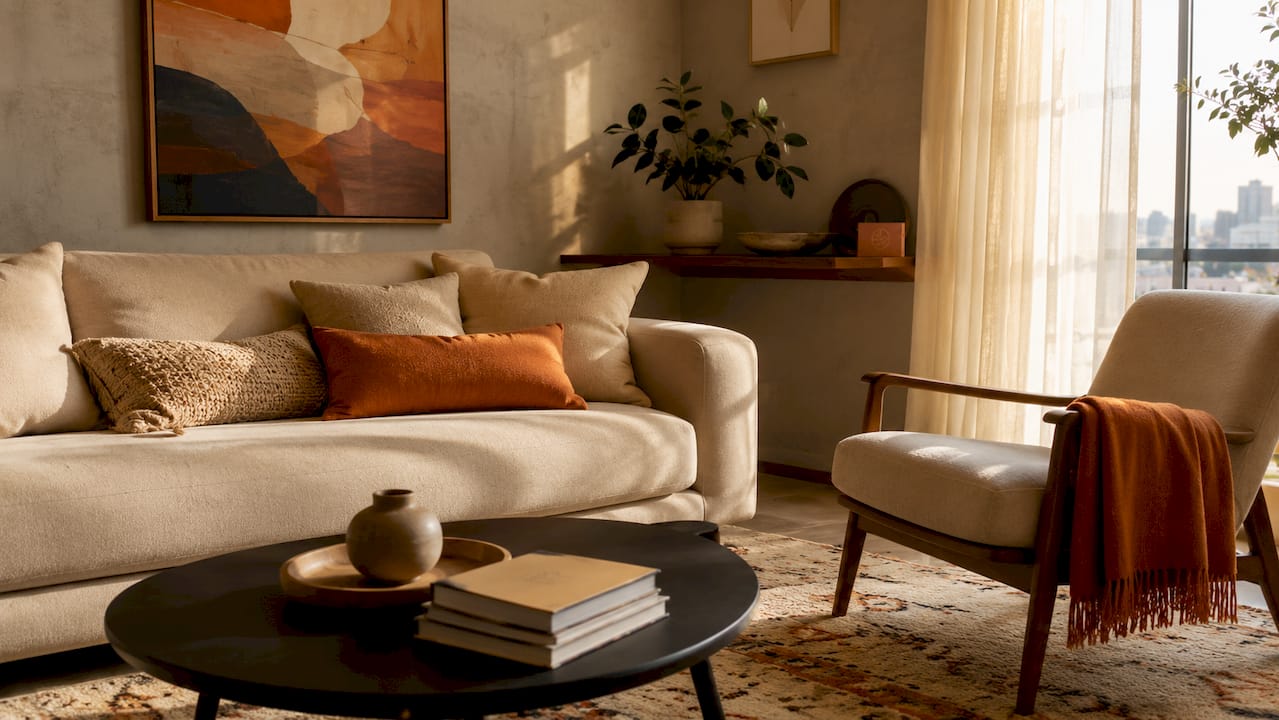
Pull your sofa 6–12 inches away from the wall behind it. Position seating to face a focal point, whether that is a window, a fireplace, or a wall-mounted TV. Keep the main pathway from the entry to the seating area clear at all times. Rounded furniture pieces, like a curved sofa or a drum-shaped side table, reduce visual sharpness and make narrow rooms feel less rigid.
The classic layout for a small apartment living room is one sofa facing a focal wall, with one or two accent chairs angled toward it. This arrangement seats three to four people comfortably and leaves the center of the room open.
3. Mount your TV and use floating shelves
Wall-mounted TVs with narrow floating shelves reclaim significant floor space compared to traditional media consoles. A console unit typically occupies 18–24 inches of depth. A wall-mounted setup with a slim floating shelf uses almost none.
Mount the TV at eye level when seated, not at standing height. Add two or three floating shelves beside or below it for storage and display. Keep shelves edited: three to five objects per shelf maximum. This approach frees up floor area for a rug, a plant, or simply breathing room.
Pro Tip: Run cables through the wall or use a slim cable channel painted to match the wall color. Visible cable bundles undercut the clean look that wall mounting is meant to create.
4. Layer your lighting for depth and warmth
Single overhead lighting is the fastest way to make a small room feel flat and uninviting. Layered lighting with warm-toned bulbs at 2700K–3000K creates depth and a cozy atmosphere that overhead fixtures alone cannot achieve.
- Add a floor lamp in a corner to create a warm pool of light at standing height.
- Place a table lamp on a side table or console to bring light down to seated eye level.
- Use plug-in wall sconces if your apartment does not allow hardwired fixtures.
- Add LED strip lighting behind the TV or under a floating shelf for low-level accent light.
Layered light sources are the single most effective tool for making a small apartment living room feel larger and more comfortable. The variety of heights and intensities creates visual depth that a single ceiling fixture cannot replicate.
Pro Tip: If your apartment has a harsh overhead light with no dimmer, buy a smart bulb with a warm-white setting and control it from your phone. It costs under $15 and changes the entire feel of the room.
5. Add texture and personality without clutter
Decorating small spaces well requires editing as much as adding. Too many small decorative items create visual clutter. Fewer, better choices improve both the aesthetic and the sense of space.
Use one or two patterned elements to add visual interest. A patterned rug or two contrasting throw pillows on a neutral sofa deliver pattern without overwhelming the room. For art, a curated gallery wall fills vertical space with personality. Stick to frames in one or two finishes for a cohesive look.
Incorporate plants at multiple heights. A tall fiddle-leaf fig in a corner, a trailing pothos on a shelf, and a small succulent on the coffee table create three distinct visual layers. Use natural materials throughout: wood, matte metal, and ceramic add warmth and cohesion without competing for attention.
Arrange decor objects in odd-numbered groupings of three or five, varying height and texture within each group. This is a standard visual merchandising technique that works equally well in residential spaces.
6. Choose the right rug size and placement
A rug that is too small is one of the most common errors in apartment living room design. The correct size for most small living rooms is an 8x10 rug. All front legs of seating furniture should rest on the rug to anchor the seating area and unify the furniture visually.
A rug that only sits under the coffee table floats in the center of the room and makes the space feel disconnected. If budget limits you to a smaller rug, place it fully under the coffee table and pull seating close enough to visually connect. For added depth, layer a smaller natural-fiber rug (jute or sisal) under a larger patterned one. This layering technique adds texture and dimension without requiring additional furniture.
Pro Tip: Coordinate your rug’s accent color with one other element in the room, such as a throw pillow or a vase. Two points of the same color create a cohesive look without requiring a full color scheme overhaul.
7. Use curtains to make walls look taller
Curtains hung close to the ceiling and extended well beyond the window frame make walls appear taller and rooms feel larger. This is one of the highest-impact, lowest-cost changes available in compact living room decor.
Mount the curtain rod 4–6 inches below the ceiling, not directly above the window. Extend the rod 8–12 inches past the window frame on each side. When the curtains are open, they frame the window without blocking light. When closed, they create the impression of a full-height, full-width wall feature.
Choose curtains in a color close to your wall color for a continuous, elongated look. Avoid heavy, dark drapes in small rooms. Linen, cotton, or sheer fabrics in warm whites, soft creams, or light grays keep the room feeling open.
8. Pick a color scheme that works with your space
Light, warm neutral wall colors reflect light and visually enlarge small rooms. Soft whites, warm greiges, and pale taupes are the most effective choices for apartment living room walls. These colors do not feel sterile when paired with warm-toned textiles and natural materials.
Avoid painting all four walls a dark color in a small room. If you want depth and drama, apply a darker shade to one accent wall only, typically the wall behind the sofa. This creates visual interest without closing the room in. Keep the remaining three walls light.
For color accents, choose two colors and repeat each one at least twice in the room. One accent color in the rug and a throw pillow, and a second in a vase and a piece of art, creates a coordinated look without requiring a designer.
9. Invest in one strong anchor piece
One high-quality anchor piece is more effective than many mismatched smaller items. In a living room, the anchor piece is almost always the sofa. Choose it carefully, in the right scale, the right fabric, and a color that works with your walls and rug.
Every other piece in the room should support the sofa, not compete with it. A well-chosen sofa in a small apartment living room does more design work than any other single decision. Budget accordingly: spend more on the sofa and less on accent pieces.
For decorative accents, a modern vase or a sculptural object on a shelf adds personality without demanding attention. These pieces support the anchor without fighting it.
10. Edit ruthlessly and map your daily use first
Functionality and daily space-use mapping must come before prioritizing trends in small apartment living rooms. Before buying or rearranging anything, spend one week noting how you actually use the room. Where do you sit? Where do you put things down? Where does clutter collect?
That data tells you what the room needs. If you always drop items on the coffee table, you need storage there. If you never use the accent chair, remove it and reclaim the floor space. Editing is not a failure of style. It is the discipline that makes small spaces work.
Remove anything that does not serve a clear function or bring genuine visual satisfaction. A room with ten well-chosen pieces looks more considered than one with thirty random items.
Key Takeaways
The most effective approach to small living room decorating for apartments combines proper furniture scale, layered lighting, and intentional editing of decor.
| Point | Details |
|---|---|
| Maintain walkway clearance | Keep 30–36 inches of clear pathway between all furniture pieces. |
| Choose scaled furniture | Select slightly narrower sofas and low-profile pieces with exposed legs to increase perceived space. |
| Layer your lighting | Use floor lamps, table lamps, and accent lights with 2700K–3000K bulbs for depth and warmth. |
| Size your rug correctly | Use an 8x10 rug with all front furniture legs resting on it to anchor the seating area. |
| Edit before you add | Map daily use first, then remove pieces that do not serve a clear function or visual purpose. |
What I have learned from decorating small apartment living rooms
The advice I give most often is the advice most people ignore: map how you use the space before you spend a dollar. Renters consistently buy furniture based on how a room looks in a photo, not how they actually live in it. The result is a sofa that blocks the natural path to the kitchen, or a coffee table so large that sitting down requires a sideways shuffle.
The second mistake I see constantly is ignoring lighting layers. People install one overhead fixture, find the room feels cold and flat, and then assume the problem is the furniture or the color. It is almost never the furniture. Swap in a floor lamp and a table lamp with warm bulbs, and the same room feels completely different within minutes.
My honest recommendation: spend your budget on three things in this order. First, the right sofa at the right scale. Second, two or three quality light sources. Third, one or two decorative pieces that genuinely mean something to you. Everything else is secondary. A well-curated small space built on those three priorities will outlast every trend cycle and feel better to live in every single day.
— Stephane
Noble Abode pieces worth adding to your apartment living room
Noble Abode carries a curated range of decorative accessories sized and styled for small apartment living rooms. Each piece is designed to add depth and personality without crowding a compact space.

The Key Desktop Storage Decor combines function and style in a single compact piece, ideal for a side table or floating shelf. For sculptural presence, the abstract art figurines and Nordic minimalist decor add visual weight without bulk. Noble Abode’s pieces are built to last and easy to maintain, making them a practical choice for renters who want impactful decor without permanent commitment.
FAQ
What is the best furniture layout for a small apartment living room?
The most effective layout places one sofa facing a focal wall with one or two accent chairs angled toward it, maintaining 30–36 inches of walkway clearance throughout. Float furniture slightly away from walls to improve flow and perceived space.
What size rug works best in a small living room?
An 8x10 rug fits most small apartment living rooms. All front legs of seating furniture should rest on the rug to anchor the area and unify the furniture grouping visually.
How do I make a small living room feel bigger without renovating?
Hang curtains close to the ceiling and extend them well past the window frame, use light neutral wall colors, choose low-profile furniture with exposed legs, and layer warm lighting from multiple sources at different heights.
How many decorative items should I put in a small living room?
Fewer is better. Prioritize one or two statement pieces, such as a large piece of art or a sculptural vase, over many small objects. Arrange accent items in odd-numbered groupings of three or five, varying height and texture within each group.
What lighting works best in a small apartment living room?
Layer three light sources: a floor lamp, a table lamp, and one accent light source such as LED strip lighting or a plug-in sconce. Use bulbs rated at 2700K–3000K for a warm, inviting atmosphere that adds depth to the room.