

Entryway Lighting Ideas That Actually Work for Every Home
Match your fixture to your ceiling height and entry size, then layer in warmth with a second and third light source. That’s the whole formula. Get the scale right using a simple length-plus-width calculation, keep the bottom of any hanging fixture at least 7 feet off the floor, and finish with warm light bulbs on a dimmer.
Three fastest wins if you’re starting today:
- Swap a dated ceiling fixture for a flush or semi-flush mount if your entry ceiling sits under 9 feet.
- Add a console lamp or a pair of sconces for a second layer of light and instant warmth.
- Put every bulb at 2700 to 3000K on a dimmer switch, or on a smart plug if you rent.
Renters can get the same effect without touching a single wire. Plug-in sconces, rechargeable table lamps, and smart bulbs on timers deliver the same layered look as hardwired fixtures. Style the console with a curated decor vignette from a source like Noble Abode and the whole entry reads finished, not half-decorated.
Key Takeaways
The most reliable entryway lighting combines a properly sized fixture, three layers of light, and warm light bulbs on a dimmer.
| Point | Details |
|---|---|
| Size by formula | Add length plus width in feet; that number in inches is your target fixture diameter. |
| Respect the 7 foot rule | Keep the bottom of any hanging fixture at least 84 inches above the floor. |
| Layer three light sources | Combine ambient overhead, task lighting at the console, and a low evening accent. |
| Go renter-friendly when needed | Plug-in sconces, rechargeable lamps, and smart plugs skip the wiring entirely. |
| Finish the vignette | Pieces like Noble Abode’s ceramic vases, key storage decor, and console cabinets complete the look under any fixture type. |
Table of Contents
- Fast Checklist: Pick a Fixture by Entry Size and Ceiling Height
- Layer Your Light: Ambient, Task, and Accent
- Fixture Types and When Each One Makes Sense
- Get the Sizing and Hanging Height Exactly Right
- No-Wiring Lighting Upgrades for Renters
- Match Fixture Finish and Shape to Your Home’s Style
- Bulb Color Temperature and Controls That Feel Welcoming
- Styling Tricks That Make the Light (and the Entry) Work Harder
- How Noble Abode’s Curated Pieces Finish an Entryway
- Why Most Entryway Advice Skips the Math
- Bring the Look Home With Noble Abode
- Sources
- FAQ
Fast Checklist: Pick a Fixture by Entry Size and Ceiling Height
Match the fixture to your footprint before you shop for style.
- Small or low entries (ceilings under 9 feet): go with a flush or semi-flush mount, a suitable size in diameter for a typical 5x7 foot entry.
- Standard entries (9 to 10 foot ceilings): a pendant or semi-flush works, with a console lamp and sconces added as supplemental layers.
- Tall or two-story foyers: a statement chandelier or cascade pendant earns its keep here, sized up beyond the basic formula for visual impact.
The sizing math itself is simple: add your entry’s length and width in feet, and that number in inches is your target fixture diameter, according to Glowryte’s lighting guide. A 6 by 8 foot entry lands you at a 14 inch fixture. Two-story foyers can be sized larger than that baseline for drama.
Layer Your Light: Ambient, Task, and Accent
A single overhead bulb never makes an entry feel welcoming. You need three layers doing three different jobs, a principle laid out clearly in this three-layer lighting guide.
- Ambient: the overhead fixture, whether pendant, flush mount, or chandelier, handles general illumination for the whole space.
- Task: a console lamp or a pair of sconces gives you light at the surface where you actually find your keys.
- Accent: a low, warm glow near the floor or on a side table adds mood once the sun goes down.
In a narrow hallway entry, task light might just be one wall sconce near the mirror. In a standard entry, pair a semi-flush overhead with a console lamp. In a tall foyer, a chandelier plus sconces flanking the door covers all three layers at once. Put the overhead on a dimmer, add a motion sensor near the door for hands-full moments, and use a smart plug for any accent lamp if you’re renting.
Pro Tip: Set your accent lamp on a smart schedule so it clicks on right before dusk. Walking into a warmly lit entry after dark feels intentional, not accidental.
Fixture Types and When Each One Makes Sense
Every entryway fixture solves a slightly different problem, and picking the wrong type is the most common styling mistake homeowners make.
- Pendants and chandeliers create a focal point and read as the room’s signature piece, but they need real head clearance. Design roundups consistently favor pendants for entries with 9 foot or taller ceilings.
- Flush and semi-flush mounts are the correct call for low ceilings or rental units, and modern versions have moved past purely utilitarian designs into genuine style statements.
- Wall sconces add warmth at eye level, typically mounted 60 to 66 inches from the floor. In a narrow hall, check the projection depth first. A sconce that sticks out more than 6 inches will catch a shoulder.
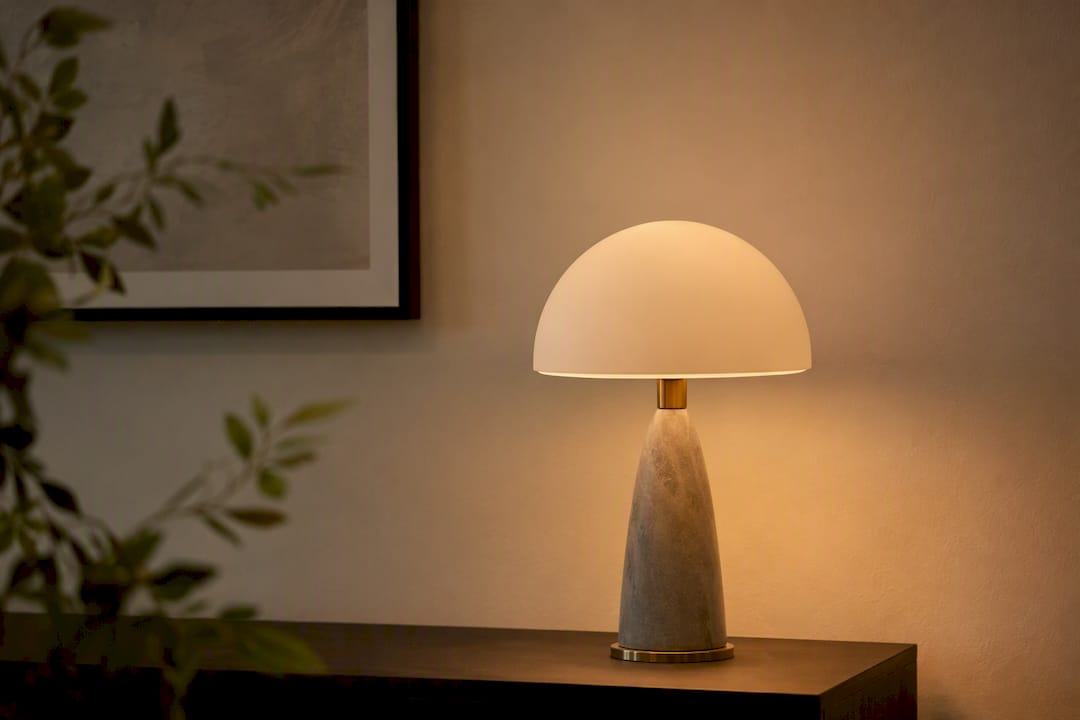
- Table and floor lamps double as task lighting and decor. A lamp on a console does more visual work than almost any other single object in the entry, since it anchors the vignette around it.
Get the Sizing and Hanging Height Exactly Right
The math here isn’t complicated, but skipping it is why so many entryway fixtures look either lost in the space or oversized for the room.
Add your entry’s length and width in feet, and that sum in inches becomes your target fixture diameter, per Glowryte’s sizing formula. For hanging fixtures, keep the bottom edge at least 7 feet (84 inches) above the floor so nobody clips it walking through.
| Entry Size (ft) | Sizing Formula Result | Target Fixture Diameter |
|---|---|---|
| 5 x 6 | 5 + 6 | 14 inches |
| 6 x 8 | 6 + 8 | 14 inches |
| 8 x 10 entrance (two-story) | 8 + 10, scaled up for visual impact | proportionally larger fixture |
For every foot your ceiling exceeds 8 feet, add roughly 3 inches of chain or rod length to the fixture drop. A 10 foot ceiling means about 6 extra inches of drop compared to a standard 8 foot ceiling, while still respecting the 7 foot clearance rule. The most common error is buying a fixture sized for a living room and hanging it in a 5 foot wide entry, where it overwhelms the walking path.
No-Wiring Lighting Upgrades for Renters
You don’t need an electrician to fix a dark entry.
- Plug-in wall sconces paired with adhesive cord covers look hardwired once they’re installed and routed cleanly along the trim.
- Rechargeable table lamps and rechargeable pendant fixtures now hold a charge for days, so cord placement stops being a constraint at all.
- Smart bulbs and smart plugs on timers create the same evening accent glow as a hardwired dimmer, without any wiring changes.
- If you’re set on a permanent statement chandelier or need a dedicated switch and dimmer, that’s the one case where a quick electrician visit pays off, especially for safety on anything hardwired near an entry door.
For more small-space specific ideas, this guide to lighting compact entries covers apartment-friendly setups in more depth.
Match Fixture Finish and Shape to Your Home’s Style
The fixture you pick should echo the metals and materials already in the room, not fight them.
- Warm metals like brass or gold suit traditional and transitional entries and tend to photograph as more inviting than cool tones.
- Matte black reads modern and pairs well with geometric or linear fixture shapes.
- Polished nickel or chrome fits contemporary spaces, especially alongside glass or crystal elements.
- Woven or rattan shades suit casual, coastal, or farmhouse entries, while crystal or glass drops signal a more formal foyer.
- Coordinate the fixture finish with your door hardware and mirror frame so the whole entry reads as one decision instead of three separate ones. If you’re also rethinking the door itself, this guide on choosing an interior door style is a useful companion piece.
Bulb Color Temperature and Controls That Feel Welcoming
The bulb you screw in matters as much as the fixture you buy it for.
- Choose 2700 to 3000K warm-white bulbs. Anything cooler reads clinical in a space meant to feel like a welcome, according to this foyer lighting guide.
- Look for a CRI (Color Rendering Index) of 90 or higher if you want skin tones and artwork colors to look accurate under the light.
- A dimmer is arguably the single highest-impact upgrade you can make to overhead lighting, since dimming a warm bulb makes it read even warmer, not just dimmer.
- Add a motion sensor for the moments you’re walking in with grocery bags in both hands, and set accent lighting on a smart schedule for evening ambiance.
Styling Tricks That Make the Light (and the Entry) Work Harder
A few placement decisions do more for a first impression than any single fixture.
- Hang a mirror across from or beside your light source. It bounces light back into the room and visibly widens narrow entries, especially when paired with sconces aligned to its edges.
- Build a console vignette: a lamp, a tray, and a small dish for keys turns a functional surface into a styled one.
- Leave clear headroom under any hanging fixture and keep the walking path unobstructed. Scale your decor to the entry’s actual footprint, not to what looked good in a photo of someone else’s foyer. For narrow hallway walls specifically, this guide on hallway art placement covers proportion rules in more detail.
How Noble Abode’s Curated Pieces Finish an Entryway
The fixture gets you light. The styling around it gets you a welcoming entry, and that’s where most guides stop short.
- Under a semi-flush mount or pendant, the Modern Luxury Wine Cabinet and Shoe Storage Decor gives you a console with real storage built in, ideal for entries doing double duty as a drop zone.
- Beside a console lamp, the Nordic Ceramic Vase or the Nordic Creative Ceramic Vase for Home Decoration fills that empty third of the tabletop that photos always seem to have solved and yours never does.
- A small Black Décor Statue sculptural piece sits well under warm sconce light, catching just enough shadow to look intentional rather than incidental.
- The Key Desktop Storage Decor solves the actual daily problem: where the keys go when you walk in, right at the base of your task light.
Pro Tip: Pair one taller piece (a vase or sculpture) with one flat piece (a tray or key dish) on the console. The height variation reads more styled than two objects at the same level.
Style the wall above with the 2pcs Floral Leaf Canvas Art Posters, or add a European Luxury Metal Decorative Piece for a more sculptural, formal finish. Browse the full console styling ideas for more combinations.
Why Most Entryway Advice Skips the Math
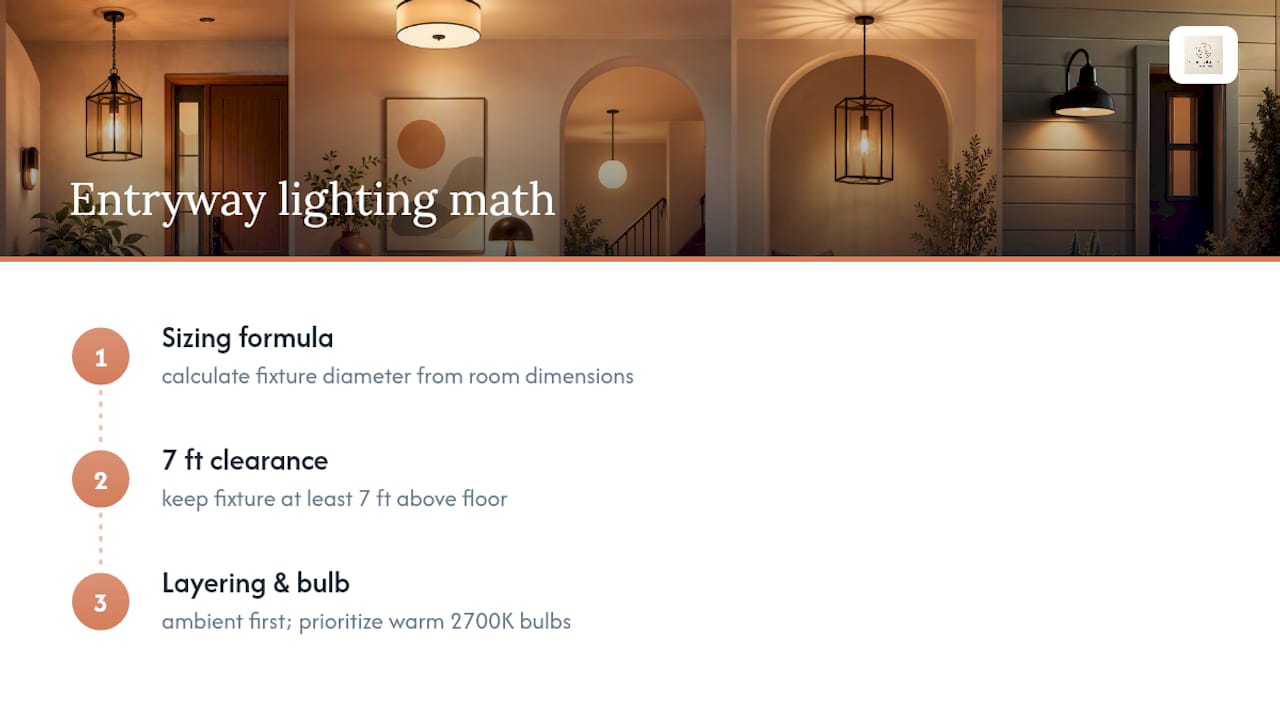
Most lighting content shows you a beautiful photo and calls it a day. What it skips is the part that actually prevents a costly mistake: the sizing formula and the 7 foot clearance rule. I’d argue those two numbers matter more than any style decision you’ll make, because a gorgeous chandelier hung too low or sized for a living room ruins an entry faster than a plain flush mount ever could.
The conventional wisdom oversells the single statement fixture and undersells layering. A stunning pendant with no task light at the console still leaves you fumbling for your keys in the dark. Get the ambient layer right first with correct sizing, then treat the task and accent layers as equally important, not as optional extras you’ll get to eventually.
If you’re renting, don’t wait for a “someday” hardwired fixture. Plug-in sconces and rechargeable lamps deliver the same layered warmth today, and they move with you. Prioritize the bulb color temperature over almost everything else on this list. A cheap fixture with a warm 2700K bulb outperforms an expensive one lit with the wrong light.
— Stephane
Bring the Look Home With Noble Abode
The fixture handles the light. Noble Abode handles everything the light falls on, and that’s usually the part that separates a finished entry from one that still feels unfinished no matter how good the pendant is. Where a lighting retailer stops at the bulb, Noble Abode gives you the curated console pieces, vases, and sculptural accents that turn that new fixture into an actual welcome home.

Start with the Nordic Modern Minimalist Luxury Living Room Décor piece for an entry that needs a quiet, elegant anchor, or pair the Key Desktop Storage Decor with a console lamp for a setup that’s both stylish and genuinely useful every single day. Browse the full Noble Abode collection and find the pieces that finish your entry the way the lighting alone never could.
Sources
- Entryway Lighting Ideas: Pendants, Flush Mounts & Sconces | Glowryte
- Entryway Lighting Ideas: A Three Layer Guide
- The Lighting Guide: How to Light Your Foyer for a Stunning First Impression - Wholesale Lighting Supplier from US Warehouse
- 21 Entryway Lighting Ideas That Shed Light on Your Home’s Style - HGTV
FAQ
What kind of light fixture works best for an entryway?
It depends on your ceiling height: flush or semi-flush mounts suit ceilings under 9 feet, while pendants or chandeliers suit taller entries and two-story foyers.
What entryway light fixtures are considered outdated?
Boob-light style flush mounts with plain frosted glass and oversized brass chandeliers with heavy ornamentation have both fallen out of favor, replaced by cleaner geometric or matte black designs.
What type of lighting works best placed in a foyer?
Layered lighting works best: an ambient overhead fixture sized to the room, paired with task lighting at a console and a low accent for evening warmth, as this three-layer approach explains.
What type of light bulb is best for an entryway?
Warm-white bulbs between 2700 and 3000K with a CRI of 90 or higher give the most flattering, welcoming glow, especially when paired with a dimmer switch.
Do I need an electrician to update entryway lighting?
Only for permanent hardwired fixtures or new switches and dimmers; plug-in sconces, rechargeable lamps, and smart bulbs need no wiring work at all.