

Three Item Formula for End Table Styling: One Anchor, Two Supports
Pick one anchor piece, add two supporting pieces, and arrange all three in an odd-numbered visual triangle with room to breathe. That’s the entire formula behind good end table styling. A lamp, a stack of books, or a vase can anchor the table; two smaller items support it. Clear the surface first, choose your anchor, then build outward using rule of three grouping.
TL;DR:
- Anchors should be chosen based on the table’s primary use and proportionally sized for visual balance, like a lamp for reading nooks or a vase for casual tables.
- Supporting accessories should form a visual triangle with varying heights, typically involving a tall, medium, and low item to create a dynamic vignette.
- On small or narrow tables, prioritize function and keep clutter minimal by limiting items to essential pieces like a small lamp, a few books, and a single plant.
- The bottom shelf should serve as quiet storage with muted, matte objects such as baskets or boxes, avoiding decorative clutter that competes with the tabletop.
- Cohesion between mismatched or matching tables can be achieved by repeating key traits like lamps, finishes, or accent colors, ensuring visual unity regardless of style choices.
Table of Contents
- Styling Formulas: The Anchor Method and the Visual Triangle
- Anchor Pieces and Supporting Accessories: Lamps, Books, Trays, and Plants
- How Do You Style a Small or Narrow End Table?
- What Should Go on the Bottom Shelf of an End Table?
- Making Matching or Mismatched End Tables Look Cohesive
- Seasonal Swaps and Low-Cost Refresh Ideas
- Why Curated, Durable Pieces Make End Table Styling Easier
- Shop Noble Abode: Curated Picks to Finish the Look
- Sources
- FAQ
Styling Formulas: The Anchor Method and the Visual Triangle
Every well-styled end table starts with one decision: what’s the anchor? The anchor is the tallest, most functional piece on the table, and it should match the table’s job. A reading nook needs a lamp. A table that mostly holds a coffee mug might do better with a vase or a short stack of books. Choose the anchor based on how you actually use the table, not on what looks good in a photo.
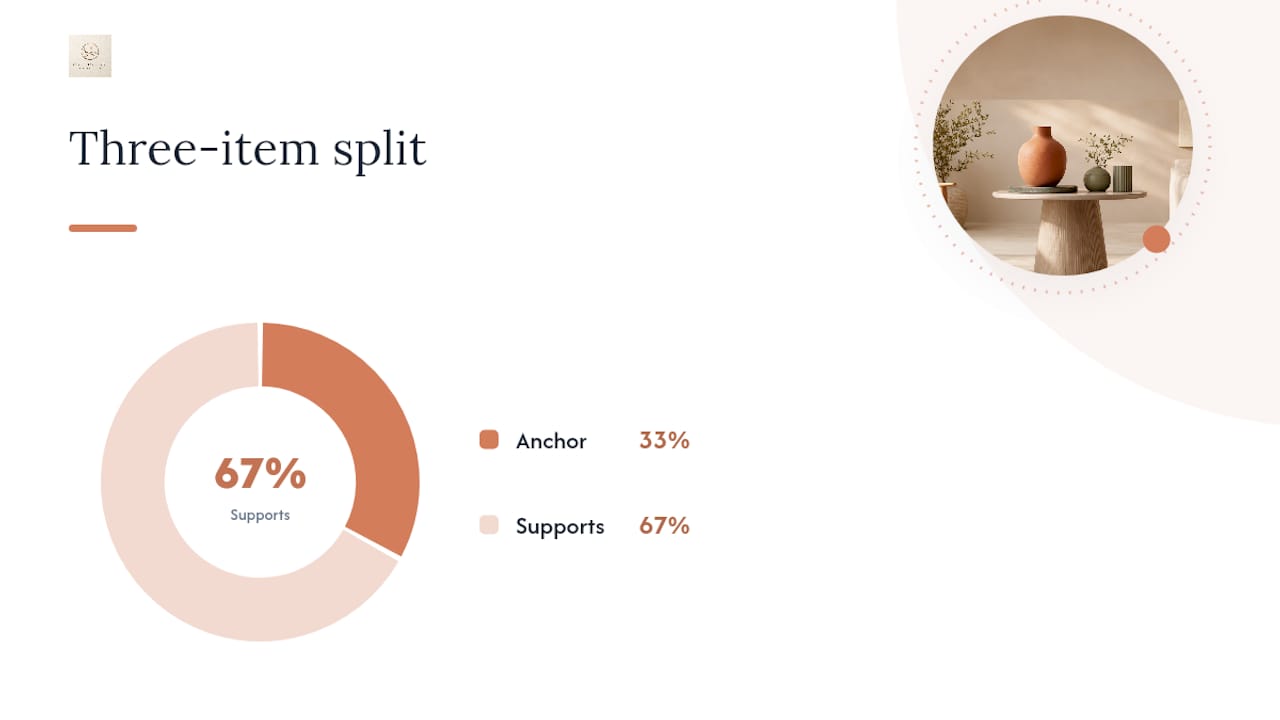
Once the anchor is set, add two supporting pieces. This gets you to three items total, which design writers consistently point to as the “magic number” for balanced groupings. Odd numbers read as intentional; even numbers tend to look like leftovers.
The visual triangle ties it together. Vary the heights so your eye moves naturally from tall to medium to low, which creates a dynamic, professional-looking vignette instead of a flat row of objects. Three combos that work almost anywhere:
- Lamp (tall) + small plant (medium) + tray with a coaster (low)
- Book stack (tall) + candle (medium) + small dish (low)
- Vase (tall) + small sculpture (medium) + coaster or tray (low)
Before you call it finished, run this editing checklist:
- Is there visible negative space, or does the table look packed?
- Remove one item. Does the table still look intentional? If yes, leave it off.
- Follow one-in, one-out: every new piece you add should replace something, not just pile on.
Pro Tip: Step back ten feet and squint. If nothing pulls your eye first, you’re missing an anchor. If everything competes for attention, you have too many pieces.
Anchor Pieces and Supporting Accessories: Lamps, Books, Trays, and Plants
The anchor and its supports do most of the visual work, so getting their proportions right matters more than any single decor choice. A few sizing rules keep the composition from feeling accidental.
- Lamp sizing. The bottom of the shade should sit around eye level when you’re seated on the sofa, and the lamp’s total height should feel proportional to the table, not the room. A lamp that’s too tall competes with wall art; one too short gets lost. Noble Abode’s table lamp sizing guide walks through matching lamp scale to table height if you want exact ratios.
- Book stacking. Stack largest at the bottom, smallest on top, and group by cover color rather than by subject. Books double as risers under a candle or small object, which is an easy way to build the height variation the visual triangle needs.
- Trays. A tray earns its spot by organizing small everyday items like coasters, remotes, and keys, while still leaving a visible border of open tabletop around it. Choose a tray material that contrasts with the table finish. Wood on wood disappears; wood on a marble tray pops.
- Plants and vases. Low-maintenance picks like pothos, snake plants, or a single stem in a bud vase add organic texture next to harder finishes like ceramic or metal. A vase with real presence can double as the anchor itself on tables that don’t need a lamp.
How Do You Style a Small or Narrow End Table?
Small tables fail for one reason more than any other: too much stuff. The same anchor-and-support formula scales down; it just needs tighter editing.
Start with function, not decor. Ask what actually needs to live within arm’s reach: a coaster, a phone charger, maybe a small dish for glasses. Everything else is optional.
- Swap a full-size table lamp for a slim task lamp, or skip the lamp entirely and use a tall, narrow plant for height instead.
- Stack no more than two or three books, and keep the stack short enough that it doesn’t dwarf the table.
- Use a tray sized to about half the tabletop, never edge to edge, so there’s still visible surface around it.
- Reliable two-item combo: a small lamp plus one plant. Reliable three-item combo: a short book stack, a candle, and a coaster.
Noble Abode’s small space furniture guide covers scale ratios for narrow tables if you’re furnishing an entire compact room around this same logic.
What Should Go on the Bottom Shelf of an End Table?
The bottom shelf isn’t a second display surface. It’s storage, and it should read quieter than the tabletop above it.
Pick one basket or box sized to fill most of the shelf without touching the edges. A woven basket or a matte fabric box hides clutter and adds texture without competing for attention with the vignette above.
- Use the shelf for things you want reachable but not visible: extra throw blankets, remotes, magazines, or charging cables.
- Keep tones muted and finishes matte. Save shine and color for the tabletop, since lower-shelf items should stay visually quiet compared to what’s on top.
- Leave a small margin of visible shelf around the basket rather than pushing it flush into a corner.
- One container is usually enough. Two competing baskets on a small shelf reads cluttered fast.
Making Matching or Mismatched End Tables Look Cohesive
Whether you match your end tables or mix them depends on the mood you want. Matching pairs read formal and calm, which works well flanking a sofa in a traditional living room. Mismatched tables feel collected and personal, better suited to eclectic or boho spaces.
Either way, unify them with one repeated trait:
- Repeat the same lamp on both tables, even if the tables themselves are different shapes.
- Match wood tone or metal finish across both tables even when the silhouettes differ.
- Carry one accent color (a candle, a small dish, a book cover) across both vignettes so your eye connects them.
- Match lamp height even if the bases look nothing alike; a shared eye line ties a room together more than matching furniture does.
A modern room might repeat black metal accents; a rustic room might repeat raw wood texture; a formal room might repeat a single brass finish across both tables.
Seasonal Swaps and Low-Cost Refresh Ideas
Refreshing an end table doesn’t require new furniture, just a rotation of small objects.
- Swap in seasonal palettes: soft pastels and fresh stems in spring, dried grasses or pinecones in fall, metallics and candles in winter.
- Follow a strict one-in, one-out rule when rotating seasonal objects so the table never accumulates clutter across the year.
- Store off-season pieces in a labeled bin so next year’s swap takes minutes, not an afternoon.
- Found objects like shells, smooth stones, or a single yard-cut branch work well as low, textural pieces, as long as they’re cleaned and dried before they land on furniture.
Why Curated, Durable Pieces Make End Table Styling Easier
Cheap decor forces you to buy more of it to fill a table, and it still looks thin. One well-made anchor piece does the opposite: it carries the whole vignette, so the supporting items can be simple and inexpensive. That’s the logic behind investing in a single durable statement piece rather than a pile of small, disposable ones.
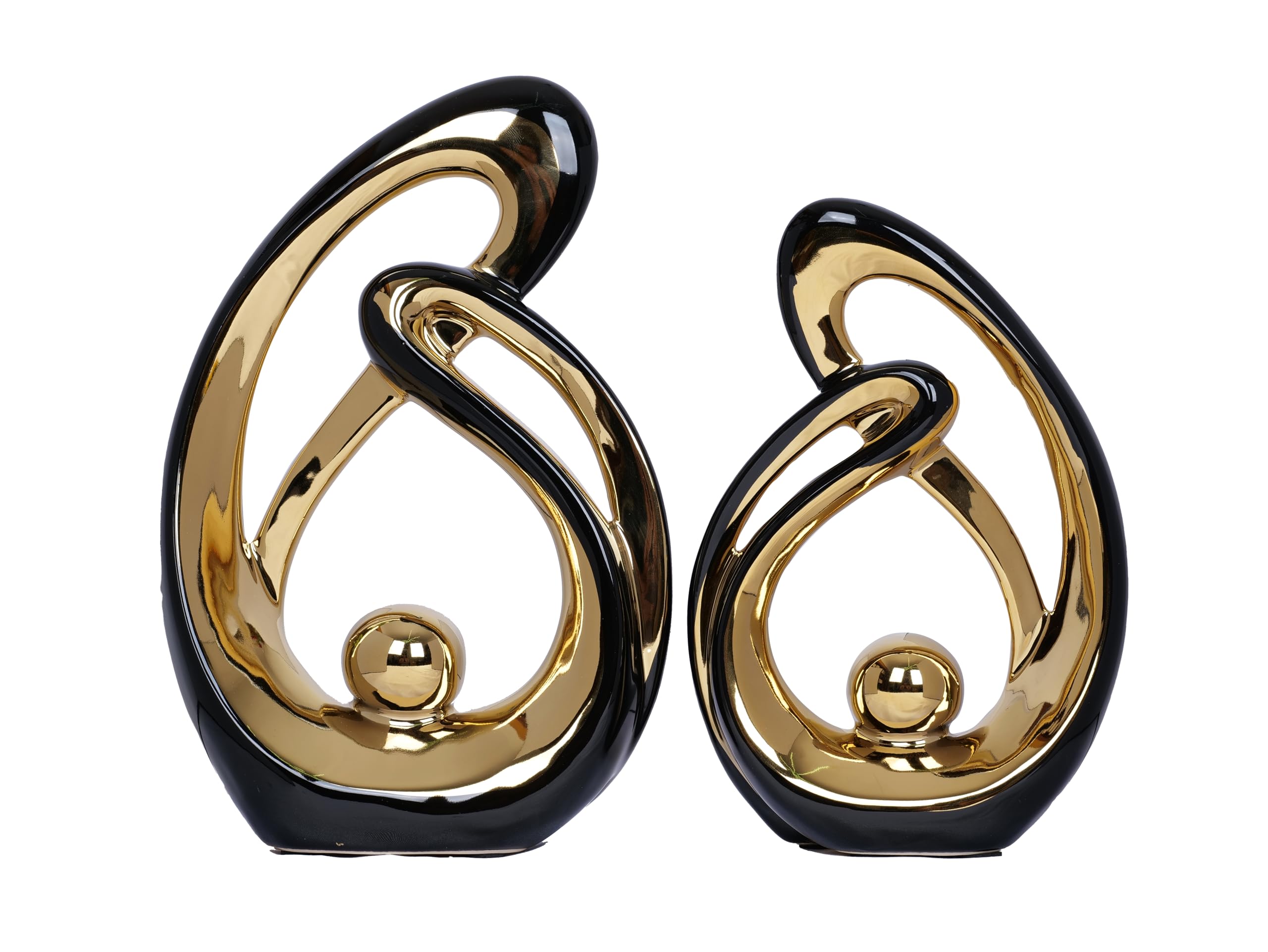
Noble Abode’s Key Desktop Storage Decor works as a functional anchor for an entryway or living room end table. The Modern Luxury Wine Cabinet and Shoe Storage Decor doubles as both storage and a display anchor for larger side tables. The 2 PCS Black & Gold Accent Ornament set fits the supporting-piece role in the visual triangle, adding contrast without overwhelming a small surface.
Keep the sofa-height rule in mind: lamp shades should sit near eye level when seated. Craftsmanship matters here more than trend chasing, since a well-built piece holds up under daily use.
— Stephane
Shop Noble Abode: Curated Picks to Finish the Look
This store offers a curated source for statement pieces built to last, not just to photograph well, avoiding the need to piece together decor from multiple retailers.
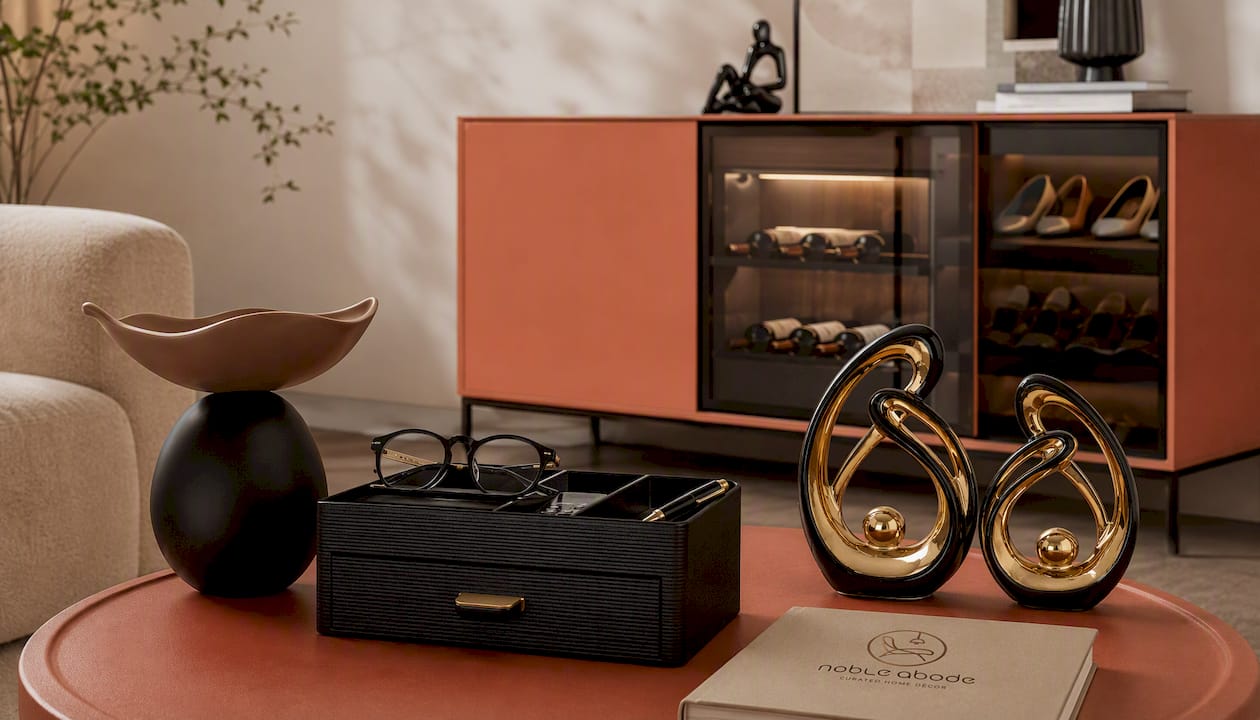
Browse Mood Lighting for anchor lamps sized correctly for end tables, or check Vases if your table needs a sculptural centerpiece instead of a light source. The Luxury Decor collection covers trays, small sculptures, and the supporting pieces that round out a visual triangle. One quality anchor piece changes the entire table, which is why it’s worth spending on the item that gets seen first, not the ones stacked around it. If you’re finishing the whole room rather than one table, the Throw Blankets & Soft Furnishings collection pairs well with a styled side table nearby. Start with the anchor piece and build the rest of your vignette around it today.
Sources
For deeper guidance beyond this article, see the rule-of-three grouping principles, small-table scale advice, and tray and surface organization tips. Noble Abode’s own console table styling guide and small living room decorating ideas expand on scale and composition for adjacent furniture. For general design trend context, One Day Doors & Closets covers cohesive room-level styling worth a look.
- Simplified Decorating: How to Style End Tables - Bless’er House
- What To Put On A Small End Table - StoneGable
- Creative End Table Decor Ideas - Homestyler
- How to Decorate a Side Table: End Table Styling Ideas for Any Room - The Spruce
FAQ
What can I put on end tables instead of lamps?
A tall plant, a stack of books topped with a small object, or a sculptural vase can all serve as an anchor in place of a lamp. Pick whichever matches the table’s function: plants and vases work well on tables that don’t need reading light.
What are the latest trends in accent and end table decor?
Mixed materials, like a wood table paired with a metal or glass tray, remain popular, along with organic textures such as woven baskets and unglazed ceramics. Black and gold accent pairings, seen in pieces like Noble Abode’s accent ornament sets, continue to trend for adding contrast to a neutral vignette.
What should go on the bottom of an end table?
The bottom shelf works best as storage: a basket or box sized to the shelf, holding items like throws, remotes, or magazines. Keep these pieces visually quieter than the tabletop items, since lower shelves read better muted rather than styled as a second display.
Do people still use end tables in the living room?
Yes. End tables remain standard in living room layouts because they hold functional items like drinks, remotes, and reading lamps within reach of the sofa. Styling them well, using an anchor piece and a couple of supporting accessories, keeps them useful without turning them into clutter magnets.