

Side Table Height Guide: How Tall Should Yours Be?
Pick a side table within 1 to 2 inches of your sofa’s armrest or seat height. Most fall between 18 and 28 inches, with 24 inches acting as the common baseline across the industry. That closeness in height keeps the surface within easy reach without looking mismatched next to your seating.
Before you shop, grab a tape measure and check two things:
- Measure floor to the top of the armrest (or seat cushion, if the sofa has no arms).
- Add 1 to 2 inches, and that’s your target table height.
Key Takeaways
The ideal side table height sits within 1 to 2 inches of your sofa’s armrest or seat cushion, with most tables landing near 24 inches.
| Point | Details |
|---|---|
| Follow the armrest rule | Keep the tabletop within 1 to 2 inches of your armrest or seat cushion height. |
| Know the standard range | Most side tables run 18 to 28 inches, with 24 inches as the common baseline. |
| Adjust for seating type | Low sofas need shorter tables; high-arm sofas and lamp tables can run taller. |
| Check width, depth, and lamp height | Confirm footprint, clearance, and combined lamp height before buying. |
| Shop proportionally at Noble Abode | Noble Abode’s small furniture and accent pieces are sized to standard armrest ranges for easy pairing. |
Table of Contents
- What Is the Standard Height Range for Side Tables?
- What Is the Armrest Rule, and How Do You Measure for It?
- What Width and Depth Should a Side Table Have?
- How Do Recliners, Low Sofas, and Nightstands Change the Rule?
- Should You Prioritize Function or Just Pick What Looks Good?
- How Should You Style and Pair Side Tables With Your Sofa?
- What’s a Quick Checklist Before You Buy?
- A Note From Noble Abode
- Find Side Tables and Accents Sized for Real Living Rooms
- Sources
- FAQ
What Is the Standard Height Range for Side Tables?
Side and end tables typically run from 18 inches at the low end to 28 inches at the high end, with some display-focused pieces stretching toward 30 inches. Within that spread, 24 inches shows up more often than any other single measurement, which is why it’s treated as the default when a shopper has no other reference point.
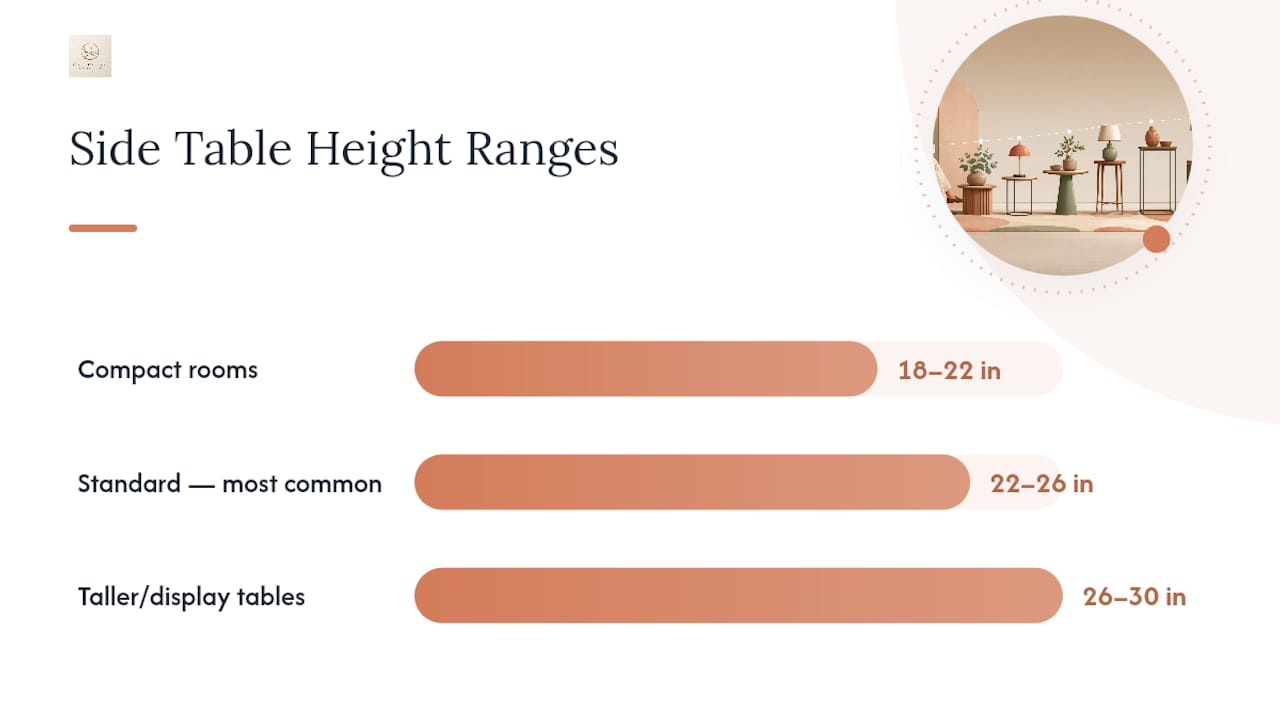
The most common side table height sold today sits at 24 inches — close enough to the average sofa armrest that it works in a majority of living rooms without adjustment.
That said, ranges shift depending on the source and the room:
- Compact or low-profile rooms: 18–22 inches
- Standard living room sofas: 22–26 inches
- Taller or high-arm seating, display tables: 26–30 inches
Treat these bands as starting points, not fixed rules. Your own sofa’s measurements should always override a generic average.
What Is the Armrest Rule, and How Do You Measure for It?
Use the armrest as your reference point whenever your sofa or chair has one. For armless pieces, measure the seat cushion instead. Designers consistently recommend keeping the tabletop within 1 to 2 inches of that measurement, a little higher or a little lower, so drinks, lamps, and remotes stay within a natural arm’s reach.
Here’s how to measure it properly:
- Sit in your normal spot on the sofa or chair, in the position you’d actually relax in.
- Measure from the floor straight up to the top of the armrest, or the seat cushion if there’s no arm.
- Press down slightly on the cushion first if it’s soft. Foam compresses under weight, and an uncompressed measurement can throw you off by an inch or more.
- Add 1 to 2 inches to that number for your ideal table height.
- Reach sideways as if grabbing a mug, and confirm the motion feels natural rather than a stretch or a downward reach.
This isn’t just about comfort. Ergonomic research on tabletop placement ties a height close to the armrest to less shoulder and trunk strain during everyday reaching, especially if the table gets used often.
Pro Tip: Stack a few books to your target height and set them beside your sofa for a day before buying. It’s a five-minute test that saves you a return shipping label.
What Width and Depth Should a Side Table Have?
Height only solves part of the equation. A table that’s the right height but too shallow or too wide can crowd a walkway or leave your arm hanging past the edge when you reach for it.
Most side tables run 16 to 24 inches wide and 16 to 22 inches deep, though narrower profiles (12 to 16 inches) work well for tight apartment layouts. As a placement rule, keep the table close enough that you can set down a cup without leaning, generally within 2 to 4 inches of the sofa arm, while still leaving 24 to 30 inches of walking clearance elsewhere in the room.
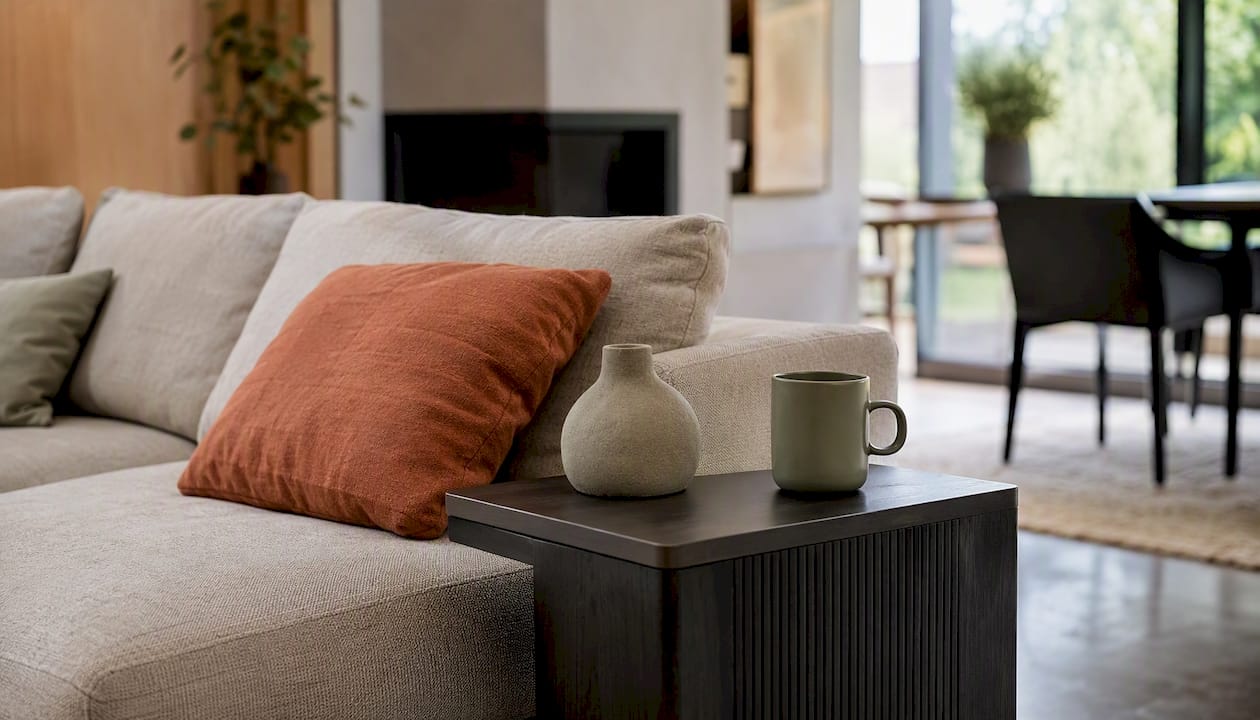
Don’t forget the lamp. A 24 inch table topped with a 28 inch lamp puts the shade well above seated eye level, which throws off both the lighting angle and the visual balance of the whole grouping. Check the combined table and lamp height before you commit to either piece separately.
How Do Recliners, Low Sofas, and Nightstands Change the Rule?
The armrest rule bends for a handful of common seating types, and knowing when to adjust saves you from buying a table that technically matches the “standard” but feels wrong in your actual room.
- Low-slung modern sofas: These often sit lower than traditional designs, so a table in the 18 to 22 inch range usually reads better than the standard 24 inch baseline. Lower lounge-style seating calls for a shorter table to keep the proportions honest.
- High-arm or traditional sofas: These push the ideal table height toward 26 to 28 inches to clear the taller arm.
- Recliners and sectionals: Measure the seat cushion rather than the arm, since recliner arms vary widely in height and often sit lower than the cushion itself.
- Nightstands: Align the tabletop with the top of your mattress, generally 24 to 28 inches, so you’re not reaching up or down for a phone or a glass of water in the dark.
- Lamp-focused tables: A table can run about 2 inches taller than the armrest when its main job is holding a light source, since that extra height improves the shade’s position relative to your eyes.
Should You Prioritize Function or Just Pick What Looks Good?
How you’ll actually use the table should drive the height decision more than any single rule. A table meant for drinks, a remote, or a phone charger needs to sit close to arm height, every time. A table meant mainly for a lamp gets a little more room to run taller. A purely decorative accent piece, one that never holds anything but a vase or a candle, has the most flexibility of all, since nobody’s reaching for it mid conversation.
- Drinks, remotes, everyday use: stick tight to the 1–2 inch armrest rule
- Lamp-primary tables: allow up to 2 inches above armrest height
- Decorative-only accents: prioritize visual scale over exact height
Pro Tip: Mix one functional table at proper armrest height with a shorter decorative table nearby. The height difference creates visual interest instead of a flat, matched-furniture look.
How Should You Style and Pair Side Tables With Your Sofa?
Height accuracy is only half the job. A table that matches your armrest measurement can still look undersized next to a chunky, upholstered sofa arm if its frame is too slender. Match visual weight, not just inches. A heavy, rolled-arm sofa pairs better with a substantial wood or stone-topped table, while a slim mid-century frame suits an equally lean metal or glass table.
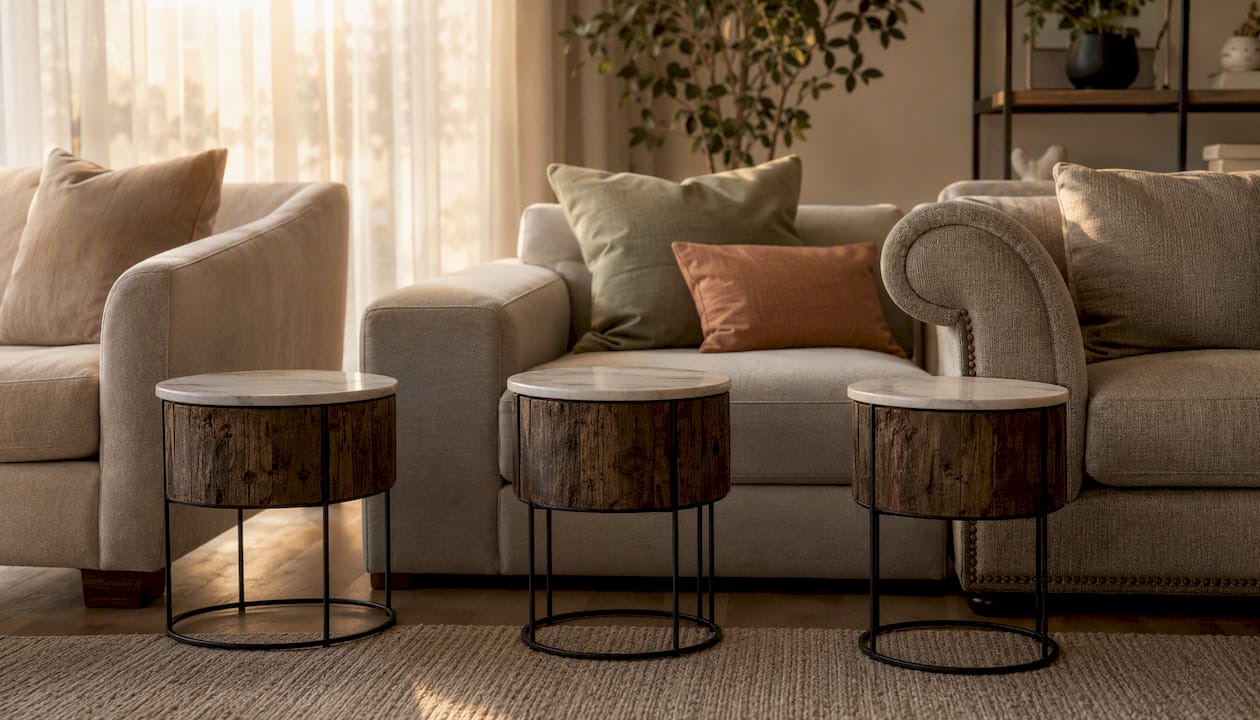
Layering different heights in one grouping adds depth that a single matched set never achieves. A nesting table set styled next to your main side table gives you a lower surface for books or a tray, and a taller one for a lamp, without breaking the overall armrest guideline for the piece doing the daily work.
A few pairing combinations that consistently work:
- Traditional living room: wood side table at 24–26 inches, brass-accented lamp, ceramic vase for scale
- Modern minimalist space: slim metal-frame table at 20–22 inches, single sculptural object, no clutter
- Small apartment layout: narrow 16-inch-deep table at 18–20 inches, paired with a compact accent lamp
Getting the proportion right between a sofa arm and its side table is less about hitting an exact number and more about making the whole grouping feel intentional. When the scale matches, nobody notices the furniture. When it doesn’t, it’s the first thing a guest’s eye catches.
What’s a Quick Checklist Before You Buy?
Run through these six steps before adding anything to your cart:
- Measure your armrest or seat cushion height, compressing cushions slightly as you go.
- Add 1 to 2 inches to get your target table height.
- Sit down and test the reach, adjusting your target if it feels off.
- If the table will hold a lamp, check the combined table and lamp height together.
- Confirm the width and depth fit your space, with enough clearance for walking.
- Match the table’s material and visual weight to your sofa’s frame and arm style.
A Note From Noble Abode
We build side tables and accent pieces around one idea: proportion first, then style. A table that sits at the right height but feels visually thin, or one that looks stunning but sits two inches too tall, both miss the mark. Noble Abode designs for both.
Find Side Tables and Accents Sized for Real Living Rooms
Once you know your target height, the next step is finding pieces that hit it without sacrificing style. Noble Abode’s curated small furniture and decor collection is built around that exact balance, tables sized to standard armrest ranges, paired with accent pieces that add scale and finish without crowding the surface.

For tabletop styling, look at pieces like the Reading Women Statue Thinker Sculpture for a decorative-only table, or a Luxury Gold Feather Table Tray to organize a functional one that holds drinks and remotes. Both add visual weight that matches a substantial sofa arm without overwhelming a smaller table. Browse the full Noble Abode shop to see which pieces fit your measured height and your room’s scale.
Sources
- End Table Height: How Tall Should Your Side Table Be? | Wayfair
- How tall should a side table next to a sofa be? | Ideal Home
- How tall side table perfect height | HouseDigest
- Sofa End Table Height: Ergonomic Guide | Eureka Ergonomic
FAQ
What is the standard height of a side table?
Most side tables measure between 18 and 28 inches tall, with 24 inches being the most common size sold across retailers.
What is the 1 to 2 inch rule for side tables?
Keep your table’s height within 1 to 2 inches of your sofa’s armrest or seat cushion. This range keeps drinks and everyday items within easy reach while looking proportional next to your seating.
Should a side table be higher than the bed?
A nightstand should align closely with the top of your mattress, generally 24 to 28 inches, rather than sitting noticeably higher or lower, so items stay within easy reach from a lying position.
Is 30 inches too tall for a side table?
30 inches sits at the upper edge of the range and works mainly for display-focused or decorative tables rather than everyday functional pieces next to standard-height seating.