

First 5 Minutes: Viscose Rug Care That Prevents Permanent Stains
Viscose rug care comes down to one rule: treat water like the enemy. Blot spills immediately, never rub, skip steam and hot water entirely, and call a specialist the moment a stain outlasts a damp cloth. Care guides and cleaning specialists who use dry compound methods both point to the same principle: less moisture, faster drying, longer-lasting rug.
TL;DR:
- Water and moisture are the main enemies of viscose rugs, requiring immediate blotting and avoidance of steam or hot water during cleaning.
- Routine maintenance involves suction-only vacuuming with the pile in the direction of fibers and minimal aggressive handling to prevent damage.
- Spot cleaning must be carefully tested first, with dry compounds preferred for light soiling and cool water plus neutral cleaners for stains, avoiding any scrubbing or alkaline solutions.
- Large stains, pet accidents, or musty smells indicate the need for professional cleaning, preferably with forced-air drying to prevent browning and fiber weakening.
- Visibly damaged or pulled fibers can often be minimally repaired with gentle guiding tools or professional reweaving, but larger tears are best left to specialists.
Table of Contents
- What Should You Do in the First 5 Minutes After a Spill?
- How Do You Maintain a Viscose Rug Between Cleanings?
- How Do You Spot-Clean a Viscose Rug Stain?
- When Should You Call a Professional Rug Cleaner?
- Where Should You Actually Put a Viscose Rug?
- How Should You Store a Viscose Rug When It’s Not in Use?
- What Common Mistakes Actually Damage Viscose Rugs?
- Can You Repair Minor Damage or Pulls in a Viscose Rug?
- Noble Abode Perspective on Practical Viscose Rug Care
- Easy-Care Rug Options From Noble Abode
- Sources
- FAQ
What Should You Do in the First 5 Minutes After a Spill?
Speed matters more than technique here, but technique still matters. Viscose is a regenerated cellulose fiber, essentially processed wood pulp, and it absorbs liquid fast while losing structural strength once wet. That combination is why a spill left for ten minutes can cause damage a spill blotted in ten seconds never will.
Here’s the sequence to follow, in order:
- Grab clean white cloths or plain paper towels. Colored or printed towels can transfer dye onto wet fibers.
- Press straight down and lift. Never rub, twist, or scrub. Rubbing drives liquid deeper into the pile and roughs up the fiber’s surface sheen.
- If the spill needs more than blotting, use a barely damp cloth with cool water only. Work in the direction of the pile, not against it.
- Slide dry towels underneath the rug to catch any liquid wicking through to the padding or floor.
- If you can lift a corner or the whole rug, do it. Point a fan at the damp area. Skip the hair dryer or space heater.
Stop and call a professional if you see yellowing starting, a dye bleeding into surrounding fibers, or a wet patch larger than a dinner plate. Those are signs that home treatment is more likely to spread damage than fix it.
Pro Tip: Keep a stack of plain white microfiber cloths near any room with a viscose rug. Reaching for a colored kitchen towel in a panic is how accidental dye transfer happens.
How Do You Maintain a Viscose Rug Between Cleanings?
Routine care prevents most of the damage that ends up needing professional viscose carpet cleaning later. The goal is simple: remove surface dust before it ground into the pile, without ever engaging the fibers aggressively.
- Vacuum on suction only. Turn off or remove the beater bar. That rotating brush is designed for durable wool or synthetic pile, and on viscose it causes permanent damage by fraying and crushing fibers.
- Vacuum in the direction of the pile, or use a carpet sweeper or handheld vacuum for lighter touch on smaller rugs.
- Vacuum once or twice a week in normal-traffic rooms, and rotate the rug every few months so wear and sun exposure distribute evenly.
- Groom occasionally with a soft-bristle brush or a wide-tooth comb to realign flattened pile and restore some of that signature sheen.
- Set the rug on a proper rug pad. A good rug pad reduces crushing, stops slipping, and adds a buffer against moisture from below.
- Move heavy furniture off the rug when possible, or use felt protectors under legs to spread the weight.
How Do You Spot-Clean a Viscose Rug Stain?
Before touching any stain, test in a hidden corner, like a spot under a couch or near a wall. Dab a small amount of your cleaning solution and wait several minutes. If color transfers to your cloth or the fiber changes texture, stop. That corner test is standard practice among specialists because viscose is sold under many names, including art silk and bamboo silk, and fiber behavior varies enough that assumptions are risky.
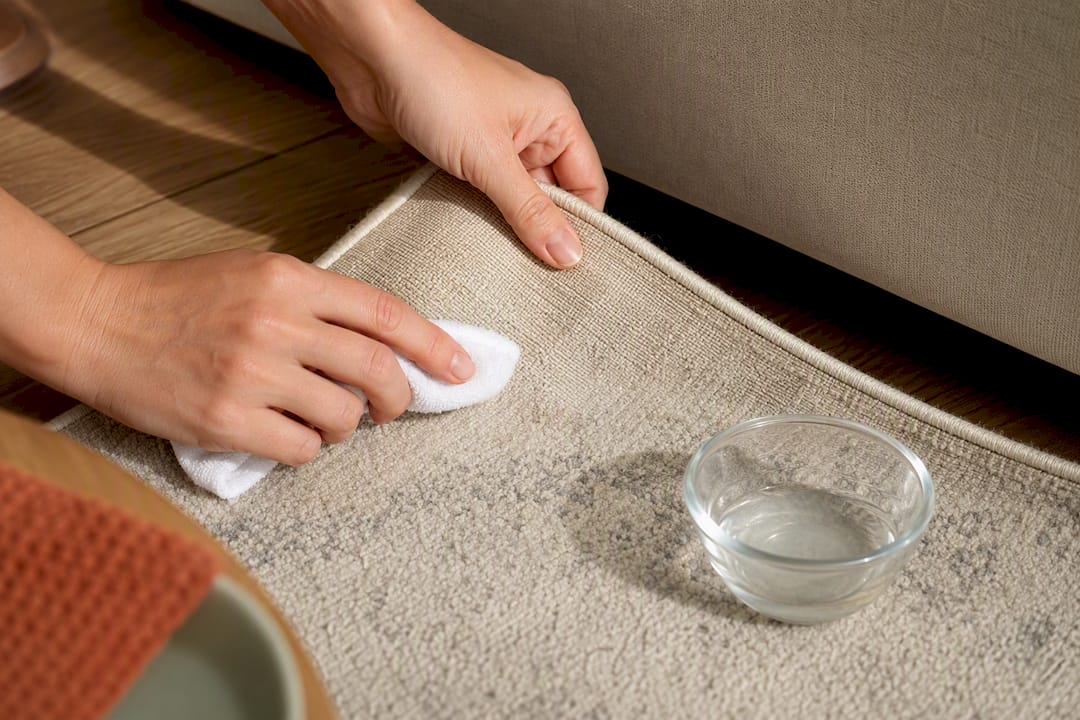
For light surface soiling, a dry-compound or encapsulation product is the safer route. These absorbent powders or crystals bind to soil particles with almost no free moisture involved, then get vacuumed away, which sidesteps the browning risk altogether.
For a heavier stain, follow this sequence:
- Use cool water only, never hot and never steam.
- Apply a mild, neutral to slightly acidic cleaner with a sponge, working in the pile direction.
- Extract the moisture immediately with a dry towel, pressing rather than rubbing.
- Finish with a light acid rinse to neutralize any alkaline residue left behind.
- Point fans directly at the spot and run a dehumidifier if you have one, until the area is fully dry.
Viscose fibers weaken and discolor from excess water more than almost any other rug material used in home decor, which is why specialists lean on acid rinses and forced-air drying rather than the wet extraction methods that work fine on wool or synthetic fibers. Avoid bicarbonate of soda applied dry, harsh alkaline carpet cleaners, and any amount of scrubbing. Each one increases the odds of a permanent watermark.
When Should You Call a Professional Rug Cleaner?
Large stains, pet accidents that have soaked through, or a rug that smells musty after getting wet are all cases where DIY effort tends to make things worse. Specialists trained in viscose carpet cleaning typically use one of two approaches: on-site dry-compound cleaning for moderate soiling, or off-site cleaning at a plant with humidity-controlled drying rooms for anything heavier. Both methods share the same logic as the acid-rinse and rapid-drying technique used for spot treatment, just scaled up with commercial equipment.
A good cleaner will walk you through a condition report before starting, note any existing wear or old stains, run a dye test, and set honest expectations. Some browning or texture change from a past incident may simply not reverse.
Questions worth asking before you hire anyone:
- What cleaning method do you use specifically for viscose or art-silk rugs?
- Do you use forced-air drying equipment, and how long does drying typically take?
- Can you provide references from other viscose rug jobs?
- Do you test and control pH during the cleaning process?
Treat a guarantee of “perfect, like-new restoration” as a red flag rather than reassurance. Honest cleaners disclose limits upfront.
Where Should You Actually Put a Viscose Rug?
Placement decisions prevent more damage than any cleaning technique ever will. Kitchens, entryways, bathrooms, and dining rooms combine two things viscose handles badly: constant moisture risk and heavy foot traffic. A viscose rug under a dining table is one spilled glass of wine away from a permanent mark.
Bedrooms, formal living rooms, and other low-traffic decorative spaces are where viscose earns its reputation for that silky, light-catching sheen without constant risk.
- Rotate the rug every few months to even out sun fading and wear patterns.
- Use a rug pad rated for hard floors or carpet, depending on where it sits.
- Keep it out of direct sunlight streaming through south-facing windows.
- Layer a smaller viscose accent rug over a larger, durable base rug rather than placing it alone in a busy walkway.
- For households with kids, pets, or genuinely high foot traffic, a durable, machine-washable rug material will simply hold up better than viscose ever will in that spot.
How Should You Store a Viscose Rug When It’s Not in Use?
Seasonal storage, a move, or simply swapping out a room’s look all call for the same careful approach. The two enemies during storage are moisture and pressure, and both cause damage that shows up only after you unroll the rug months later.
Clean the rug fully and let it dry completely before storing it. Any residual moisture trapped in rolled fibers becomes a breeding ground for mildew and sets up the exact browning reaction that ruins viscose during active use.
Roll the rug rather than folding it. Folding creates permanent creases in fibers that don’t bounce back the way wool does. Roll with the pile facing inward to protect the surface sheen, and use acid-free paper or a breathable cotton sheet as a wrap, never plastic. Plastic traps humidity against the fibers, and that trapped moisture is worse than storing it uncovered.
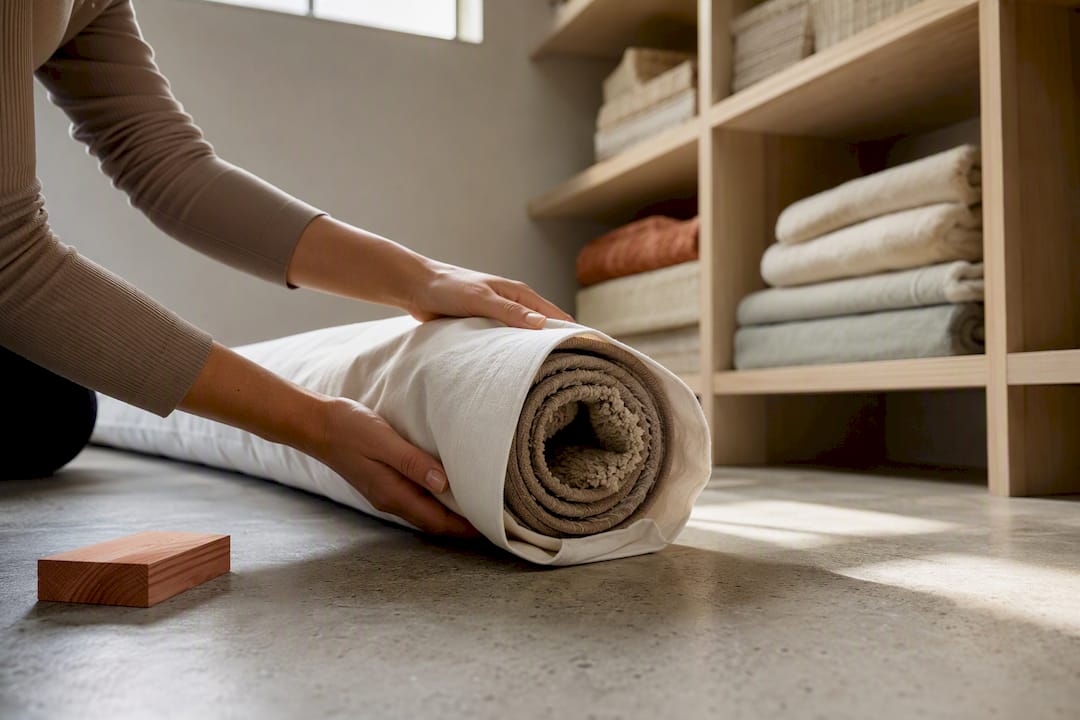
Store the rolled rug flat or standing upright in a cool, dry space with stable temperature. Attics and basements are usually poor choices because they swing between damp and dry, hot and cold, all of which stress cellulose fibers over time. Check on stored rugs every few months for any musty smell or dampness. Add cedar blocks or lavender sachets nearby to help deter moths without introducing chemical residue near the fibers.
What Common Mistakes Actually Damage Viscose Rugs?
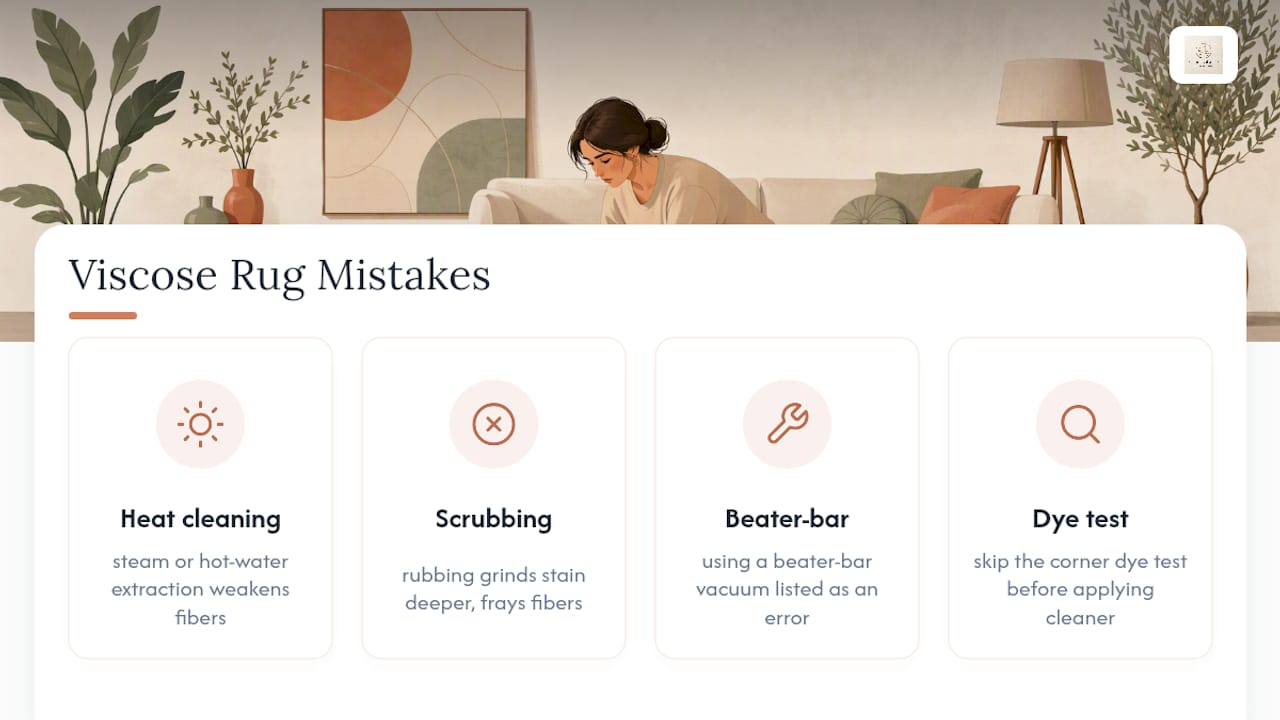
Most viscose rug damage traces back to a handful of repeated mistakes, not one dramatic accident. Steam cleaning tops the list. It looks thorough and satisfying, but the heat and moisture combination is close to the worst possible treatment for a fiber that already weakens when wet.
Hot water extraction, the kind of deep cleaning that works well on synthetic carpet, causes the same problem. Heat accelerates fiber breakdown and locks in browning faster than cool water ever would.
Rubbing or scrubbing a stain instead of blotting is the second most common error, and it’s almost instinctive. The natural reaction to a wine spill is to grab a cloth and rub hard. On viscose, that motion grinds the stain deeper into the pile and frays fibers at the surface, creating a rough patch that never quite lays flat again.
Using a beater-bar vacuum, letting furniture sit directly on the rug without protection, and skipping the corner dye test before applying any cleaner round out the list. Each mistake is avoidable, and each one is the kind of thing that seems harmless in the moment and shows up as a permanent flaw weeks later.
Can You Repair Minor Damage or Pulls in a Viscose Rug?
Small pulls and snags happen, usually from a shoe heel, a vacuum cleaner, or a pet’s claw catching a loop. For a minor pull, the fix is often simpler than owners expect: use a blunt needle or a crochet hook to gently guide the loose fiber back through to the backing, then trim any excess even with the surrounding pile height. Don’t yank the thread. Pulling on a snagged fiber can unravel adjacent stitches and turn a tiny snag into a visible bald spot.
For a small area of frayed or thinned pile, a rug repair specialist can sometimes reweave or patch the section using matching yarn, though color matching on viscose can be tricky given its light-reflective sheen. Larger tears, edge fraying, or fringe damage are best left to a professional restorer rather than a home fix, since amateur repairs on viscose tend to be more visible than the damage they’re covering.
For a rug you use daily, treating minor pulls as a five-minute maintenance task, rather than waiting until several accumulate, keeps small problems small.
Noble Abode Perspective on Practical Viscose Rug Care
Customer questions we hear most often are about spills and placement, not deep cleaning. That tracks with what specialists confirm: small mistakes cause outsized damage, and prevention beats repair. Noble Abode’s velvet care guide reflects the same philosophy across delicate textiles. When a household has kids, pets, or a busy entryway, we’ll often point customers toward durable, machine-washable materials instead, not because viscose isn’t beautiful, but because the right rug for the right room matters more than any cleaning trick.
— Stephane
Easy-Care Rug Options From Noble Abode
If the low-moisture rules above sound like more upkeep than your household wants, Noble Abode carries an alternative built for real life: the Ornate Room Rug, a soft floral luxury rug designed to be machine washable and non-slip, so spills and foot traffic don’t require the blot-and-pray routine viscose demands.

It works well in living rooms, dining areas, nurseries, and home offices, exactly the high-traffic spots where viscose struggles. Pair it with a rug pad for extra cushioning and grip, or browse the full Luxury Decor collection to build out the room around it. Not sure which material fits your space? Reach out to Support teams are available before you buy to answer questions about care requirements for rugs in the catalog.
Sources
- How to Clean a Viscose (Art-Silk) Rug Without Ruining It | The Carpet Guys Blog
- How to clean viscose & rayon - Actichem
- Viscose and Rayon Rug Cleaning Guide
FAQ
Is a Viscose Rug Hard to Clean?
Viscose is harder to clean than wool or synthetic rugs because it weakens and browns when overwet, so it demands blotting, low-moisture methods, and fast drying rather than standard wet cleaning. Routine dust removal with suction-only vacuuming is easy; stain removal is where the extra care comes in.
What Are the Pros and Cons of a Viscose Rug?
The upside is a silk-like sheen and softness that few other affordable fibers match, which is why it’s popular for decorative, low-traffic spaces. The downside is fragility: it’s prone to permanent browning and structural weakening from water, heat, and heavy foot traffic, and it doesn’t tolerate aggressive cleaning tools.
What Are Some Common Problems With Viscose Rugs?
The most reported problems are cellulosic browning after spills, flattened or crushed pile in high-traffic areas, and dye bleeding when cleaned with too much water. Sun fading and a rough texture from rubbing during stain removal are also common complaints.
What Are the Disadvantages of Viscose?
Viscose loses strength when wet, so a moderate spill or an aggressive cleaning attempt can cause damage that never fully reverses. It also crushes under heavy furniture or constant traffic and requires forced-air drying rather than the standard hot-water extraction used on most other rug fibers.