

Busy Homes: Durable Rug Materials That Last and Are Machine Washable
For busy homes, low-pile solution-dyed synthetics (polypropylene, nylon, or polyester) and low-pile wool are the most durable rug materials available. Choose synthetics if you want stain resistance and easy cleaning on a budget; choose wool if you want a natural fiber that hides soil and can last decades with proper care. Skip silk, viscose, jute, sisal, and high-pile shag in any room with heavy foot traffic, kids, or pets.
TL;DR:
- Solution-dyed polypropylene and low-pile wool are the most durable choices for busy households, resisting stains, wear, and hiding soil effectively.
- Flatweave construction and pile height below 0.3 inches make rugs easier to clean and less likely to trap dirt, hair, or moisture.
- Synthetic fibers like nylon and polyester outperform natural fibers in resilience, especially under high traffic, but nylon generally lasts longer and resists crushing better.
- Washable rugs, particularly those made from synthetic materials, can be cleaned regularly to maintain appearance and often outlast more expensive, non-washable options.
- Households with pets or children should prioritize solution-dyed fibers, flatweave designs, and pairing rugs with moisture-barrier pads to prevent damage and stains.
Table of Contents
- What Are the Most Durable Rug Materials?
- Does Pile Height Matter More Than Fiber Type?
- How Do You Clean and Maintain a Durable Rug?
- What Should You Look for With Pets or Kids at Home?
- Which Rug Materials Should You Avoid?
- How Do You Choose the Right Durable Rug?
- An Editor’s Take on Durable Rug Materials
- A Rug Built for Busy Rooms, Not Just Beautiful Ones
- Sources
- FAQ
What Are the Most Durable Rug Materials?
Fiber choice determines how a rug handles spills, foot traffic, and years of wear. Some materials shrug off red wine and muddy paws; others show every stain permanently. Here’s how the main contenders stack up.
Polypropylene is the workhorse of durable rug materials. It resists stains because the fiber itself doesn’t absorb liquid the way natural fibers do, and solution-dyed versions lock color into the yarn instead of a surface coating. That construction matters more than it sounds: solution-dyed fibers resist fading even after repeated exposure to enzymatic cleaners, which is exactly what you’ll be using on pet accidents. Polypropylene also shows up in indoor-outdoor rugs that can be hosed down outright.
- Pros: Affordable, stain-resistant, widely available in flatweave and low-pile styles.
- Cons: Lower-end versions can flatten under heavy furniture and don’t bounce back as well as nylon.
- Best for: Entryways, playrooms, and any room where budget replacement beats long-term investment.
Nylon is the most resilient synthetic fiber on the market. It resists abrasion better than polypropylene, which means less crushing under dining chairs or foot paths near a couch. Nylon fibers also hold their twist longer, so a nylon rug looks newer for more years under the same traffic load.
- Pros: Exceptional resilience, bounces back from crushing, holds up under rolling office chairs.
- Cons: Costs more than polypropylene and can stain if not treated or solution-dyed.
- Best for: Home offices, hallways, and stairs where fibers get crushed daily.
Polyester and triexta split the difference between softness and performance. Polyester holds color well and resists fading from sunlight, which makes it a common choice for rugs near windows. Triexta, a newer fiber, adds stain resistance built into the fiber structure rather than a topical treatment. Both fibers show up frequently in machine-washable rugs, since polyester and triexta flatweaves resist crushing and release pet hair easily during vacuuming.
- Pros: Soft underfoot, colorfast, common in washable designs.
- Cons: Can shed more than tightly woven nylon in cheaper constructions.
- Best for: Living rooms and bedrooms where comfort matters as much as durability.
Wool is the natural fiber that actually holds up. Its fibers have a natural crimp that resists crushing, and the surface hides dirt between vacuuming sessions better than any synthetic. The catch: wool absorbs liquid and typically needs professional cleaning after repeated accidents, so it rewards households that blot spills fast and punishes those that don’t.
- Pros: Naturally resilient, hides soil, ages well for decades with care.
- Cons: Higher upfront cost, slower to dry, needs prompt spill response.
- Best for: Living rooms and dining rooms with moderate traffic and attentive owners.
Cotton is comfortable and washable but not built for the long haul. It’s a reasonable choice for a casual accent rug or a kitchen runner you plan to replace every couple of years, not a decade-long investment piece. If you’re leaning toward a natural fiber with more staying power, our best wool rugs guide breaks down which wool constructions perform best under regular use.
Does Pile Height Matter More Than Fiber Type?
Fiber gets most of the attention, but pile height and weave structure often decide how a rug actually performs day to day. A great fiber in the wrong construction still mats, traps hair, and resists cleaning.
Flatweave and low-pile constructions win for one simple reason: less surface area for dirt, hair, and moisture to hide in. Low-pile flatweaves around 0.2 to 0.3 inches thick give you the fastest spill response window and the easiest vacuuming. Anything taller than that, and cleaning difficulty climbs fast rather than gradually.
Loop construction is the other variable worth understanding before you buy.
- Cut pile (fibers sheared at the top) feels softer but sheds more over time as fibers loosen.
- Loop pile (fibers left looped, like Berber styles) resists shedding but snags easily on pet claws and kids’ toys, which can unravel a whole row of loops.
- Flatweave (no pile at all, woven flat like a kilim) avoids both problems and is the most forgiving option for heavy households.
Construction quality beneath the surface matters just as much as pile height. Dense, tightly knotted rugs shed less and hold their shape longer than loosely tufted machine-made versions, even when both use the same fiber. A secure backing and finished edge also determine whether a rug frays after a few years or holds its shape for a decade. If you’re deciding between weaving methods, our hand-knotted vs. tufted rugs comparison walks through which construction actually lasts longer under daily use.
Pro Tip: If you have pets with claws, skip looped constructions entirely. A snagged loop can pull an entire thread and leave a visible run, the rug equivalent of a run in pantyhose.
How Do You Clean and Maintain a Durable Rug?
Maintenance is where perceived durability and actual durability split apart. Two rugs made from the same fiber can age completely differently depending on how fast spills get addressed and how the rug gets cleaned over its lifespan.
Spot cleaning is your first line of defense, and speed matters more than product choice:
- Blot the spill immediately with a clean cloth. Never rub, since rubbing pushes liquid deeper into the pile.
- Use a mild detergent diluted in water for synthetic fibers; use a wool-safe cleaner or plain water for wool.
- Test any cleaner on a hidden corner first to check colorfastness before treating a visible stain.
- Rinse and blot dry to avoid leaving a soapy residue that attracts more dirt.
Machine-washable rugs have changed the maintenance equation for busy households. Washable flatweaves made from performance synthetics can often be laundered cold and recover from accidents without ever needing a professional cleaner. Before you toss a rug in the wash, though, check three things: the backing material (some backings degrade in a washing machine), the recommended water temperature, and the drying method. Skipping the label instructions risks shrinkage or a warped backing that no longer lies flat.
Wool and larger area rugs still need professional attention. A rough guide: wool rugs in moderate-traffic living rooms benefit from professional cleaning every 12 to 18 months, while high-traffic entry rugs or homes with multiple pets may need it annually. Synthetic flatweaves in washable designs can often skip professional cleaning entirely if you stay on top of spot treatment.
Here’s the insight most buyers miss: washable rugs can end up functionally more durable in pet households than higher-quality non-washable rugs, simply because repeated machine washing removes accidents completely instead of masking them. A $150 washable rug that gets cleaned properly every month often outlasts a $600 rug that gets professionally cleaned once a year.
What Should You Look for With Pets or Kids at Home?
Households with pets or young children need rugs built around one assumption: accidents will happen, and the rug has to recover fast.
Solution-dyed fibers and flatweave construction should top your list. Because color lives inside the fiber rather than on the surface, solution-dyed polypropylene and nylon resist staining and hold color through repeated cleaning, which matters when you’re using enzymatic pet stain removers regularly. Pair that fiber choice with a flatweave or low-pile construction so hair and dirt don’t get trapped in the fibers between vacuuming sessions.
A rug pad is not optional in pet or kid households, it’s protective equipment. A moisture-barrier rug pad stops liquids from reaching the subfloor, which prevents warped hardwood or stained carpet underneath, a repair that costs far more than the rug itself. Non-slip backing also keeps the rug from sliding when kids run or dogs take off after a ball.
- Choose low-pile, patterned rugs, since patterns hide everyday wear better than solid colors.
- Avoid fringe entirely, since it tangles in paws, gets chewed, and frays fast.
- Skip looped edges and bindings that a dog can catch a claw on and pull loose.
- Pair every rug with a pad sized to match, not just placed underneath loosely.
Pro Tip: If you’re furnishing during a “puppy phase” or a toddler’s messiest years, buy a budget indoor-outdoor polypropylene rug you’re comfortable replacing in a year or two. Save the wool investment piece for when the household settles down. Our rug pad selection guide covers which pad type matches which flooring and traffic level.
Which Rug Materials Should You Avoid?
Some materials look beautiful in a showroom and fall apart within months in a real household. If your room sees regular foot traffic, kids, or pets, steer clear of the following:
- Silk: Stains permanently and can’t handle regular vacuuming, let alone spills.
- Viscose: Often marketed as “art silk,” but it stains just as easily and can disintegrate when wet.
- Jute and sisal: Natural plant fibers that absorb liquid, stain, and are nearly impossible to fully dry once soaked.
- High-pile shag: Traps hair, dirt, and moisture deep in the fibers where a vacuum can’t reach.
- Looped weaves in pet homes: Snag on claws and unravel with a single pulled thread.
Industry guidance consistently advises against viscose, silk, jute, and sisal in any room with meaningful foot traffic. That doesn’t mean these materials have no place in your home. A silk accent rug in a formal, rarely-used sitting room, or a jute runner in a mudroom you sweep daily, can work fine because the risk of standing liquid or heavy wear is low. The mistake is putting a delicate fiber somewhere it can’t survive.
How Do You Choose the Right Durable Rug?
Narrowing down durable rug materials gets easier once you run through a short checklist before you buy.
- Estimate your actual traffic level. An entryway or playroom needs a different rug than a formal dining room used twice a month.
- Pick your construction first, then your fiber. Low-pile or flatweave should be the default for any high-traffic space.
- Decide your cleanability standard. Do you want machine-washable, spot-cleanable, or are you willing to pay for professional cleaning?
- Confirm the backing and pad pairing. A moisture-barrier pad is worth the extra cost if you have pets, kids, or hardwood floors.
- Check the return policy and warranty. Rugs feel different in person than in photos, and a flexible return window protects you from a costly mismatch.
When you’re comparing listings or talking to a retailer, ask directly: Is this fiber solution-dyed? Is the rug machine-washable, and at what temperature? What’s the pile height in inches? These three questions eliminate most guesswork.
| Priority | Choose synthetic if… | Choose wool if… |
|---|---|---|
| Budget | You want a lower upfront cost | You’re investing in a decade-long piece |
| Cleaning | You want machine-washable or hose-off options | You can commit to prompt spill response |
| Household | You have pets, toddlers, or high accident risk | Traffic is moderate and consistent |
| Lifespan goal | You’re comfortable replacing every few years | You want a rug that ages for decades |
For a deeper look at how price connects to expected lifespan across fiber types, our rug pricing and annual cost breakdown is worth reading before you commit to a budget.
An Editor’s Take on Durable Rug Materials
Most rug advice treats fiber choice like the only decision that matters, and that’s backwards. Stephane, a product curator with experience in selecting rugs that need to look elegant and survive real households at the same time, has found the pattern is consistent: construction quality and washability predict long-term satisfaction better than the fiber label on the tag.
The overlooked truth is that a mediocre fiber in a smart construction usually outperforms a premium fiber in a poor one. A tightly woven, solution-dyed polypropylene flatweave will outlast a loosely tufted wool rug with a thin backing, even though wool carries the better reputation. Buyers get fixated on “is wool better than synthetic” when the real question is “was this rug built to be cleaned and to hold its shape.”
The other overlooked point: washability has quietly become the biggest durability upgrade in the rug industry over the past several years. A rug you can throw in a washing machine isn’t just convenient, it changes the entire math of how long a rug stays looking new. For deeper background on how weave choice affects longevity, our hand-knotted vs. tufted guide covers the construction side of this in more detail.
— Stephane
A Rug Built for Busy Rooms, Not Just Beautiful Ones
If you want the low-pile, easy-care profile this guide recommends without sacrificing style, the Ornate Room Rug delivers both. It’s a machine-washable, low-pile floral design built for exactly the rooms where durability matters most: living rooms, dining rooms, nurseries, and home offices.
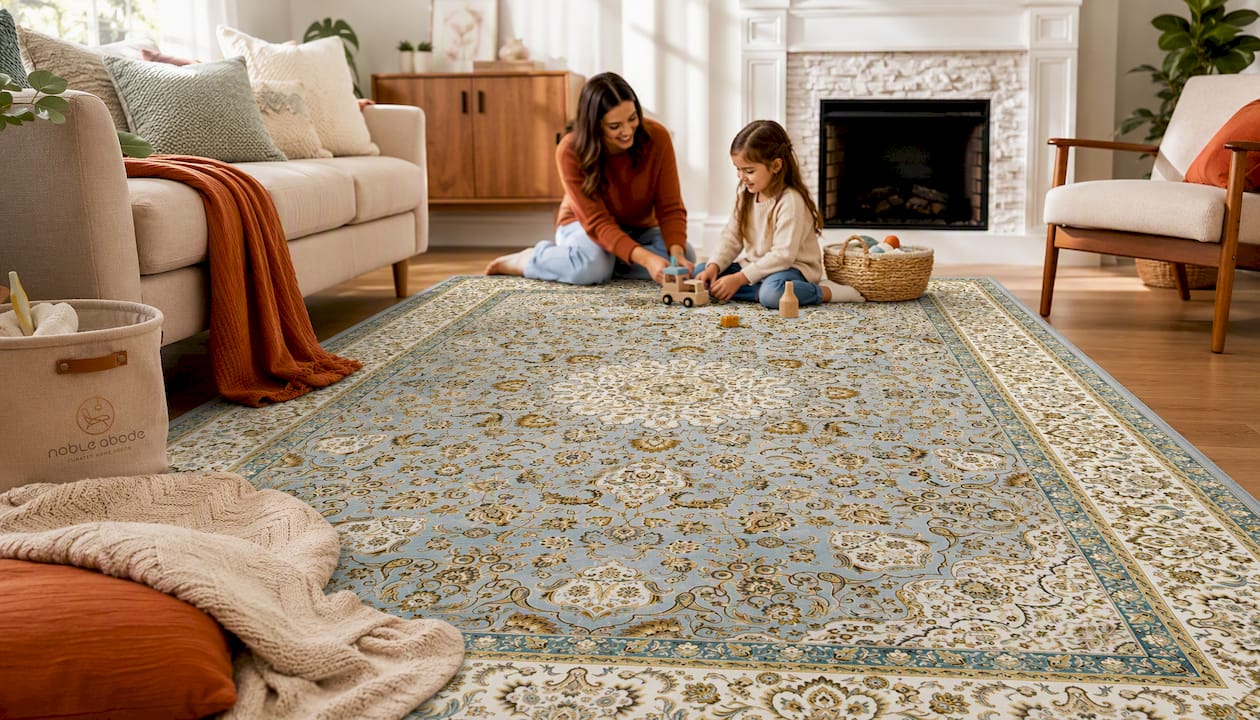
The rug’s soft floral pattern helps hide everyday wear and light soiling between cleanings, and its thin, low-pile construction avoids the matting and hair-trapping problems that come with plush or shag styles. It’s non-slip and sized for large rooms, including an 8x10 option that works well in open-concept living spaces. Because it’s machine-washable, it fits the maintenance profile this article recommends for busy households: spot-clean for small spills, wash for full recovery from bigger accidents.
Pair it with a moisture-barrier rug pad to protect your flooring underneath, especially if you have pets or young kids. Check the product page for exact sizing and care instructions before you order, and review Noble Abode’s return policy so you can size up or down if the fit isn’t right in your space.
Sources
- The Best Pet-Friendly Rugs: What Actually Holds Up to Paws, Claws, and Accidents – Nourison Home Inspiration
- What Is the Best Area Rug for Dogs and Pets? – Giant Floor
- Best Rugs for Homes With Pets – Pasha Rug
FAQ
What rug materials should I avoid for my living room?
Avoid silk, viscose, jute, sisal, and high-pile shag in any living room with regular foot traffic, since these materials stain easily and resist deep cleaning.
What is the most durable and non-shedding rug material?
Solution-dyed nylon in a low-pile or flatweave construction is among the most durable and lowest-shedding options, since the fiber resists abrasion and holds its twist far longer than looser weaves.
What type of rug holds up the best under heavy use?
Low-pile flatweave rugs made from solution-dyed polypropylene, nylon, or polyester hold up best under heavy foot traffic because they resist staining, don’t trap hair, and clean up quickly.
What is the most durable carpet material overall?
Nylon is generally considered the most durable carpet and rug fiber because of its resilience and resistance to crushing, though solution-dyed polypropylene is a close, more affordable alternative.
Are wool rugs a good choice for high-traffic rooms?
Low-pile wool rugs can work well in moderate-traffic rooms since wool naturally hides soil and resists crushing, but it needs prompt spill cleanup and occasional professional cleaning to stay durable.