

Best Living Room Rugs for Every Home: Expert Picks
For most households, the best living room rug is a low- to medium-pile, stain-resistant area rug sized to anchor the full seating group, with at least the front legs of every sofa and chair resting on the rug. Noble Abode’s Ornate Room Rug is the top pick for most buyers: machine-washable, non-slip backed, soft floral design, and available in a generous 8x10 size that works in most living rooms.
Quick picks by need:
- Best overall: Noble Abode Ornate Room Rug (washable, non-slip, floral design, 8x10)
- Best for pets and high traffic: Low-pile, machine-washable synthetic rug with stain-resistant construction
- Best for comfort: Plush wool-look or high-pile rug for low-traffic, no-shoes households
- Best washable option: Machine-washable flatweave or thin-pile rug with non-slip backing
- Best budget-friendly: Polypropylene flatweave, typically in the $50–$150 range for a 5x8
Pro Tip: When you’re unsure between two sizes, always go larger. A properly sized rug is often the single most impactful element in defining a living space — when in doubt, choose a slightly larger rug.
Table of Contents
- What should you consider when choosing a living room rug?
- How do you size and position a rug in a living room?
- Which rug material is right for your household?
- How do you clean and maintain a living room rug?
- Why does a rug pad matter, and how do you choose one?
- Noble Abode picks mapped to household needs
- How were these recommendations selected?
- Key Takeaways
- The case for getting the size right first
- Noble Abode rugs: curated picks for your living room
- Useful sources
- FAQ
What should you consider when choosing a living room rug?
Material, pile height, traffic level, and maintenance tolerance are the four decisions that determine whether a rug works long-term. Style and budget follow from those.
Core decision criteria:
- Material: Drives durability, feel, and cleaning method. Polypropylene handles heavy traffic; wool rewards low-traffic rooms with lasting softness.
- Pile height: Low-pile (under 0.5 inches) cleans easily and suits furniture-heavy rooms. High-pile feels plush but traps debris and resists vacuuming.
- Weave and construction: Hand-knotted wool holds up for decades; machine-tufted synthetics offer good value for 5–10 years of regular use.
- Maintenance: Machine-washable rugs suit busy households. Dry-clean-only rugs belong in formal, low-traffic spaces.
- Traffic level: Entryways and family rooms need durable, stain-resistant fibers. A reading nook can handle delicate materials.
- Pet and kid considerations: Low-pile, washable constructions with stain-masking patterns are the practical standard for homes with children or animals.
- Budget: Entry-level polypropylene rugs are typically budget-friendly and widely available in standard sizes. Mid-range wool blends are commonly offered at moderate price points suitable for many budgets. Premium hand-knotted wool starts around $500 and scales up significantly with size.
Trending styles for 2025–2026 favor modern neutrals, abstract designs, and vintage-inspired patterns, with growing demand for machine-washable, low-pile, and stain-resistant constructions. That shift reflects a practical reality: most buyers want a rug that looks good and survives daily life.
Pro Tip: When durability and plushness conflict, prioritize durability in any room where shoes are worn or pets roam freely. Reserve high-pile comfort rugs for bedrooms or dedicated no-shoes zones.
How do you size and position a rug in a living room?
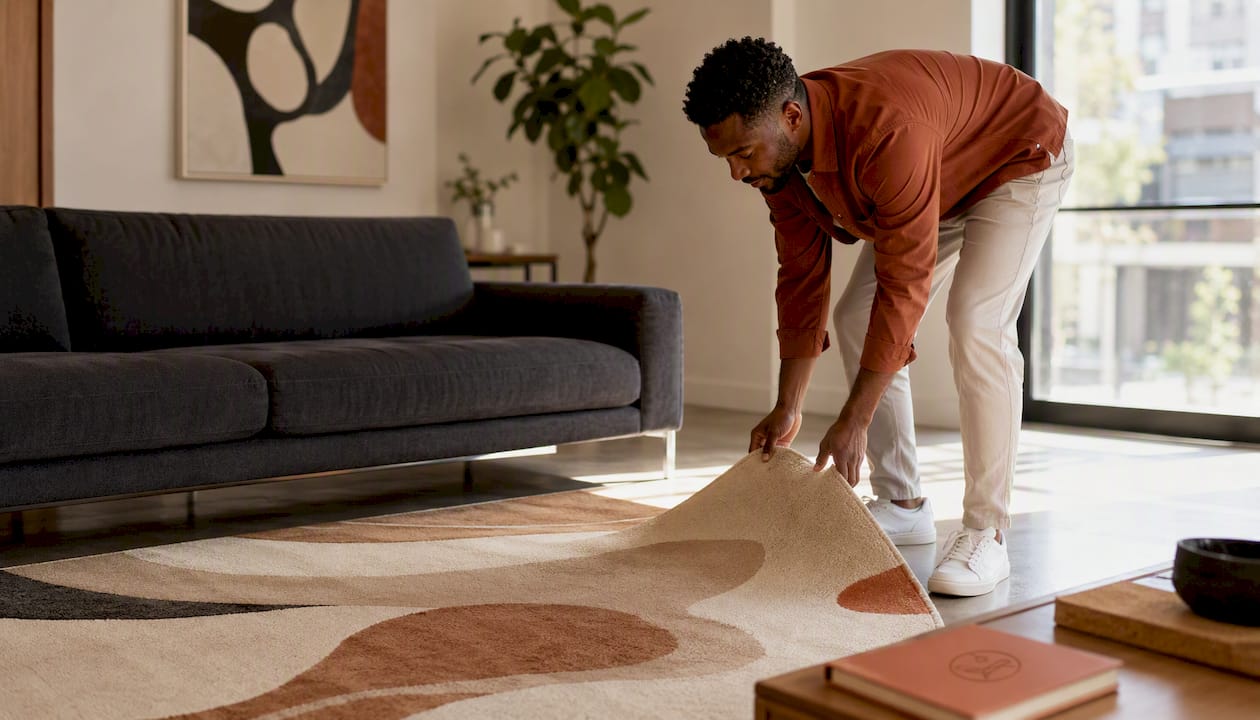
The general rule: all front legs of sofas and chairs should sit on the rug, creating a unified seating area. All four legs on the rug is ideal when the rug is large enough. All legs off the rug looks disconnected and makes the room feel smaller.
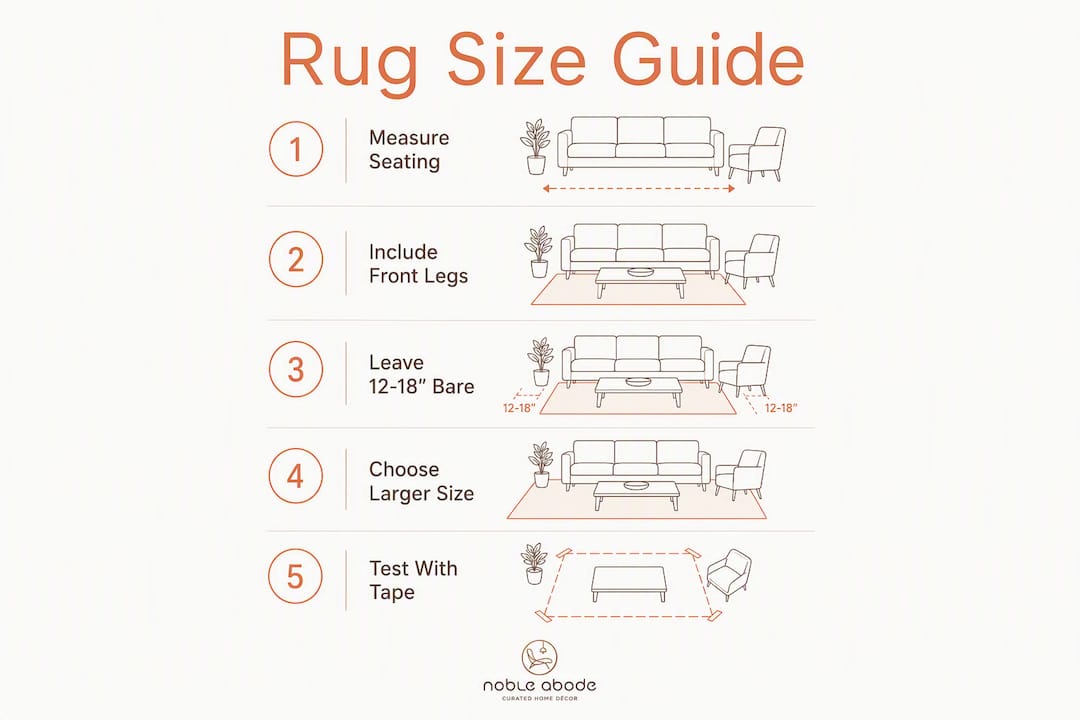
Aim to leave no more than 18 inches of bare floor between the rug edge and the walls. For small living rooms in apartments, a 5x8 or 6x9 rug often works. Larger open-concept spaces need a 9x12 or bigger to anchor the furniture group properly.
| Room Size | Recommended Rug Size | Furniture Clearance |
|---|---|---|
| Small (under 150 sq ft) | 5x8 or 6x9 | 6–12 inches from walls |
| Medium (around 150 sq ft) | 8x10 or 9x12 | 12–18 inches from walls |
| Large (around 250 sq ft) | 9x12 | 12–18 inches from walls |
| Open-concept (400 sq ft and up) | 10x14 or custom | Define zones; 18 inches max from walls |
Sizing guidance consistently shows that smaller rugs suit small rooms, medium rugs suit medium rooms, and larger rugs are recommended for bigger or open-concept living areas to anchor furniture properly.
Additional layout tips:
- For layered rugs, place a natural-fiber flatweave (jute or sisal) as the base and a smaller patterned rug on top.
- Floating furniture (all legs off the rug) works only in very large rooms where the rug itself defines a zone rather than anchoring a seating group.
- When combining a sectional with a coffee table, center the rug under the coffee table and let the sectional’s front legs rest on the rug edges.
Pro Tip: Before ordering, lay down painter’s tape or cut kraft paper to the exact rug dimensions. Walk around it for a day. Most people discover they need to go one size up.
Which rug material is right for your household?
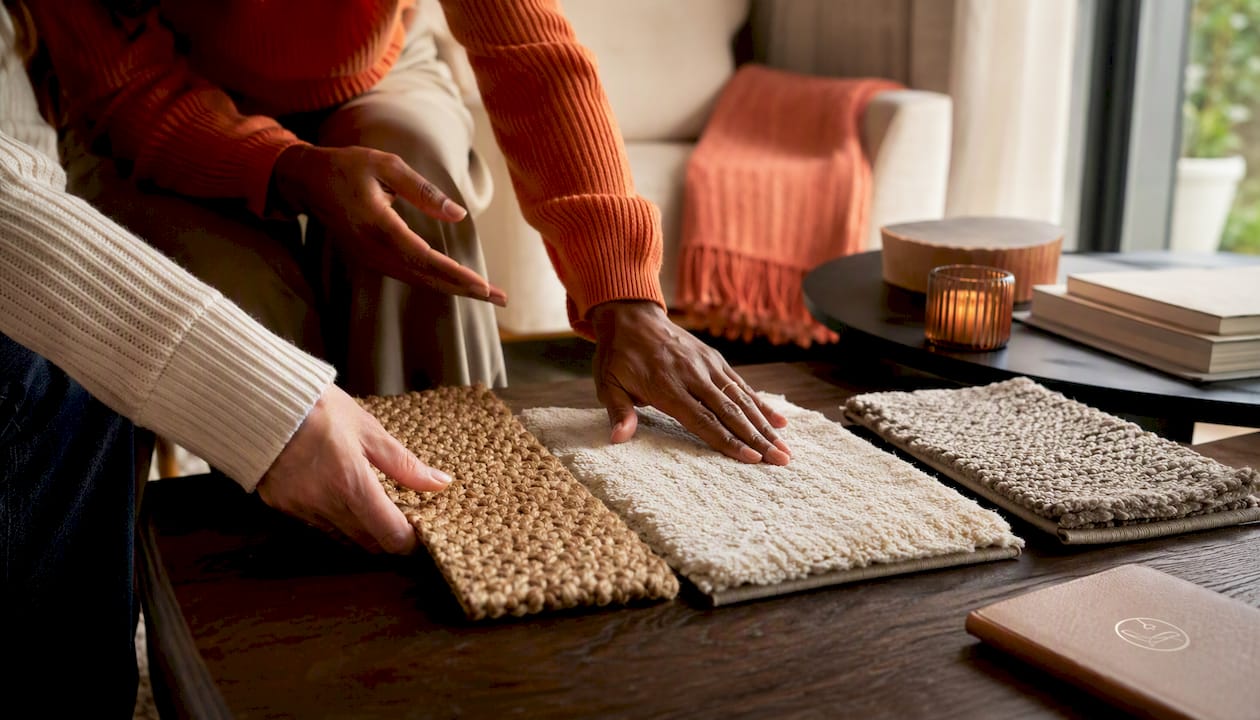
For high-traffic households, polypropylene is the most durable and easiest to clean; for households prioritizing comfort, wool remains the premier choice for natural resilience and softness. Every other material falls somewhere between those two poles.
| Material | Best For | Pile / Construction | Durability / Pet-Friendly | Maintenance | Price Band |
|---|---|---|---|---|---|
| Wool | Comfort, longevity, low-traffic | Medium to high pile, hand-knotted or tufted | High durability; not ideal for heavy pet traffic | Spot-clean; professional clean annually | Mid to premium (starting around $500) |
| Polypropylene | High traffic, pets, kids | Low to medium pile, machine-made | Very high; stain and moisture resistant | Easy; spot-clean or hose down | Entry to mid ($50–$150) |
| Polyester / microfiber | Softness on a budget | Medium to high pile, tufted | Moderate; flattens over time | Machine-washable options available | Entry ($50–$150) |
| Cotton / flatweave | Easy cleaning, casual spaces | Flatweave or low pile | Moderate; wears faster under heavy use | Machine-washable | Entry to mid ($50–$150) |
| Jute / seagrass | Natural look, dry spaces | Flatweave, woven | Moderate; not moisture-tolerant | Spot-clean only; avoid wet areas | Entry to mid ($50–$150) |
| Blended / washable | Busy households, style-comfort balance | Low to medium pile, tufted or woven | High when low-pile; varies | Machine-washable; easy care | Entry to mid ($50–$150) |
Pile height directly affects maintenance and comfort: high-pile and shag rugs feel cozy but trap debris and are harder to vacuum, while low-pile and flatweave rugs are easier to clean and better suited to heavy use and furniture movement. Design experts note that functional use should drive material choice: strict no-shoes households can opt for high-pile plush rugs, while homes with shoes, kids, or pets should prioritize low-pile or flatweave.
Pro Tip: Blended constructions (wool-polypropylene or cotton-polyester) give you the look of a natural fiber with the washability of a synthetic. They’re the practical middle ground for most households.
How do you clean and maintain a living room rug?
Pick material and pile height to match your cleaning tolerance and traffic level first. Then follow a consistent maintenance routine.
Routine maintenance steps:
- Vacuum weekly on a low-suction setting for high-pile rugs; use a standard setting for low-pile and flatweave.
- Rotate the rug every 6–12 months to distribute foot traffic and sun exposure evenly.
- Spot-clean immediately when spills happen: blot (never rub) with a clean cloth, apply a mild dish soap solution, rinse with cold water, and press dry with a towel. Allow to air-dry fully.
- Deep-clean annually for wool and natural-fiber rugs; machine-wash washable synthetics every 3–6 months depending on traffic.
- Call a professional cleaner for hand-knotted wool, silk, or antique rugs. Home cleaning risks shrinkage and color bleed.
Machine-washable rugs and low-pile, stain-resistant constructions are the standard recommendation for homes with pets and children because they combine ease of cleaning with modern aesthetics. Robot vacuums work well on low-pile and flatweave rugs but can tangle in high-pile fibers or flip lightweight rugs without a non-slip pad underneath.
Pro Tip: For pet owners, keep a washable cotton or synthetic runner over the highest-traffic section of the rug. Wash it weekly. The main rug stays cleaner longer, and replacement cost is minimal.
Why does a rug pad matter, and how do you choose one?
Always use a rug pad sized slightly smaller (about 1 inch on each side) than the rug itself. The benefits are concrete: anti-slip safety, added cushioning underfoot, protection for hardwood or tile floors, and extended rug life by reducing friction and backing wear.
Pad types by floor and rug:
- Non-slip latex pad: Best for hard floors (hardwood, tile, laminate) under any rug type. Keeps the rug from shifting without adding significant height.
- Felt plus rubber pad: Best for comfort-priority rooms. The felt layer cushions; the rubber layer grips. Works on hard floors and low-pile carpet.
- Thin non-slip mesh pad: Best under machine-washable rugs. Thin enough to wash with the rug; provides grip without bulk.
Rug backing quality interacts with pad selection: a pliable backing plus an appropriate felt-and-rubber pad reduces edge curling and keeps rugs in place, while thin PVC backings can stiffen corners and increase shifting on some floors.
Installation and maintenance:
- Cut the pad to fit if needed; most pads trim cleanly with scissors.
- Leave a 1-inch gap from all walls so the pad doesn’t bunch at baseboards.
- Lift and clean under large rugs every 6–12 months to prevent trapped moisture, which can damage hardwood floors.
Pro Tip: Check door clearance before choosing a thick felt pad. A pad that adds 0.25–0.5 inches of height can prevent a door from swinging freely. Measure the gap under your door first.
Noble Abode picks mapped to household needs
The Noble Abode Ornate Room Rug is the go-to choice for most buyers. It’s machine-washable, non-slip backed, soft underfoot, and carries a floral luxury design that works across farmhouse, modern, and transitional interiors. The 8x10 size fits most medium living rooms without custom ordering.
Picks by use case:
- Best overall: Ornate Room Rug. Machine-washable, non-slip, 8x10, soft floral design. Suits most living rooms, easy to maintain, and visually versatile.
- Best for pets and high traffic: A low-pile, washable polypropylene or blended construction from Noble Abode’s catalog. Stain-resistant, easy to spot-clean, and holds up under daily wear.
- Best for comfort: A plush wool-look or medium-pile option for low-traffic rooms or no-shoes households. Prioritize pile recovery and backing flexibility when selecting.
- Best budget-friendly: Entry-level polypropylene flatweave in the $50–$150 range. Durable, easy to clean, and available in neutral tones that pair with most interiors.
- Best for large or open-plan spaces: The 8x10 Ornate Room Rug or a larger custom size. Anchor the full seating group; leave 12–18 inches of floor visible at the walls.
For styling guidance that goes beyond the rug itself, Noble Abode’s home decor styles guide helps match rug patterns and colors to a room’s overall aesthetic.
Pro Tip: Pair any Noble Abode rug with a felt-and-rubber pad on hardwood floors. Add a modern sofa cushion in a complementary tone to complete the seating area.
How were these recommendations selected?
Picks were selected by matching use-case needs to material and construction, then validated through hands-on checks covering durability, feel, and care performance.
Selection methodology:
- Use-case mapping: Each pick was evaluated against a specific household profile (high traffic, pets, comfort priority, budget constraint, large space).
- Material testing: Shedding, pile recovery after compression, and fiber resilience under repeated foot traffic were assessed.
- Ease-of-cleaning trials: Spot-clean response, machine-wash durability, and drying time were checked for washable constructions.
- Size and visualization checks: Rug dimensions were verified against standard room footprints and furniture layouts.
- Product quality vetting: Backing flexibility, edge binding quality, and non-slip performance were reviewed for each recommended product.
“Authoritative testing outlets recommend including real-life tests such as pet and spill trials, pile recovery checks, and backing flexibility reviews as part of vetting a rug — this strengthens purchase confidence.” — Wirecutter
Noble Abode’s product pages and care instructions were used to confirm washability claims, construction details, and size availability. Interior design trends were cross-referenced to confirm that recommended styles align with current room design directions.
Key Takeaways
The right living room rug starts with size and material: choose a rug large enough to anchor your seating group, match the fiber to your traffic level, and use a pad on every hard floor.
| Point | Details |
|---|---|
| Size first | Aim for 8x10 or larger in most living rooms; all front sofa legs should rest on the rug. |
| Match material to traffic | Polypropylene for high-traffic and pets; wool or wool-look blends for comfort-priority rooms. |
| Low-to-medium pile for busy homes | Low-pile and flatweave rugs clean faster, work with robot vacuums, and handle furniture movement better. |
| Always use a rug pad | A felt-and-rubber pad prevents shifting, protects floors, and extends rug life on hard surfaces. |
| Noble Abode Ornate Room Rug | Machine-washable, non-slip, 8x10 floral design: the recommended pick for most living rooms. |
The case for getting the size right first
Most buyers spend too long on pattern and color and not enough time on dimensions. A rug that’s too small is the most common living-room mistake, and it’s one that no amount of good design can fix. The furniture floats, the room feels unanchored, and the rug looks like an afterthought.
The practical fix is straightforward: measure the seating group, not the room. The rug needs to hold the furniture together, not cover the floor wall to wall. Once the footprint is right, pattern and pile become secondary decisions that are much easier to get right.
There’s also a tendency to over-prioritize plushness. A high-pile rug feels luxurious in a showroom and becomes a maintenance burden at home. For most households, a low- to medium-pile construction in a stain-masking pattern does more work, lasts longer, and looks better after two years of real use than a shag rug that’s been vacuumed into submission.
Noble Abode rugs: curated picks for your living room
Noble Abode’s rug selection focuses on washable, design-forward options that work in real homes. The Ornate Room Rug is the anchor pick: machine-washable, non-slip backed, soft floral design, and sized at 8x10 for most living rooms.
Pair your rug with complementary pieces from Noble Abode’s curated catalog:
- Ornate Room Rug (8x10): Washable, non-slip, floral luxury design. Suits farmhouse, modern, and transitional interiors.
- Modern sofa cushions: Coordinate color and texture with the rug for a finished seating area.
- Table lamps for living rooms: Layer lighting with the rug to define the space after dark.
- Abstract art sculptures: Add a sculptural accent to shelves or side tables near the rug zone.
Browse Noble Abode’s full home decor selection at nobleabode.shop to find pieces that complete the room.
Useful sources
Key references used throughout this article:
- The 10 Best Area Rugs of 2026 — Wirecutter / The New York Times
- After Testing 100+ Area Rugs, These 12 Are the Best — The Spruce
- 13 Best Area Rugs for Stylish Living Rooms and Lofts (2026) — Architectural Digest
- Noble Abode — Ornate Room Rug product page
FAQ
What is the most durable living room rug?
Polypropylene (also called olefin) is the most durable fiber for living rooms with heavy foot traffic, pets, or children. It resists stains, moisture, and fading, and most polypropylene constructions are easy to spot-clean or hose down.
What living room rugs are in style right now?
Modern neutrals, abstract designs, and vintage-inspired faded patterns are the dominant trends for 2025–2026, with strong demand for machine-washable, low-pile, and stain-resistant constructions that combine current aesthetics with practical performance.
What size rug works best in a living room?
An 8x10 fits most medium living rooms and is the most commonly recommended size. The rule is to have at least the front legs of all seating on the rug, with no more than 18 inches of bare floor between the rug edge and the walls.
Do you really need a rug pad?
Yes. A rug pad prevents shifting, protects hardwood and tile floors from scratching, adds cushioning underfoot, and extends the rug’s life by reducing friction against the backing. Size it about 1 inch smaller than the rug on all sides.
Is the Noble Abode Ornate Room Rug machine-washable?
Yes. The Ornate Room Rug is machine-washable with a non-slip backing, making it a practical choice for living rooms where easy maintenance matters alongside design.