

Rug Pad Selection for Homeowners: What to Buy
For most homes, a 1/4-inch felt-and-natural-rubber hybrid pad is the right choice. It balances grip, cushion, and floor safety across sealed hardwood, tile, and stone surfaces, and consumer testing consistently names it the top all-around pick.
Three quick situational picks:
- Hardwood floors and most living rooms: 1/4-inch felt-and-natural-rubber hybrid. Prioritizes floor protection and cushion with reliable grip.
- Runners and entryways: Thin natural-rubber pad (1/8-inch). Prioritizes grip and density over loft; keeps the rug flat under foot traffic.
- Rugs over carpet: 1/8-inch waffle or needle-punched gripper pad. Prioritizes stability and prevents furniture wobble without adding excessive height.
Key Takeaways
The single most reliable choice for most homes is a 1/4-inch felt-and-natural-rubber hybrid pad, confirmed by independent testing and practitioner guidance across sealed hard floors.
| Point | Details |
|---|---|
| Best general-purpose pad | 1/4-inch felt-and-natural-rubber hybrid; safe for sealed hardwood, tile, stone, and laminate. |
| Sizing rule | Cut or buy the pad 1 inch smaller than the rug on each side to keep it hidden and hazard-free. |
| Oil-finish caution | Oil-finished hardwood can react with rubber; use adhesive-free felt-only pads on these floors. |
| Thickness for carpet | Keep pads at 1/8 inch maximum when layering a rug over wall-to-wall carpet to prevent instability. |
| Noble Abode rugs | Noble Abode’s washable area rugs pair well with a 1/4-inch felt-and-rubber hybrid for added cushion and floor protection. |
Table of Contents
- Why does a rug pad make a real difference?
- What are the main rug pad material types?
- How do you choose the right rug pad thickness?
- Which pad works on your specific floor type?
- How do you size, cut, and install a rug pad?
- What should you check before buying a rug pad?
- Why do experts consistently recommend felt-and-rubber hybrids?
- The case for getting the pad right before the rug goes down
- Noble Abode: rugs and decor worth pairing with the right pad
- Sources
- FAQ
Why does a rug pad make a real difference?
Skipping a pad is one of the most common and costly oversights in floor care. A rug pad reduces slip hazards, shields floor finishes from abrasion, and extends the life of the rug itself. Practitioners describe a quality felt-and-natural-rubber pad as the “cheapest insurance policy” for protecting both flooring and the rug.
The practical benefits, broken down:
- Safety: Unsecured rugs are a leading cause of household slips and falls, particularly on smooth hardwood and tile.
- Floor protection: Rug backing, especially jute and latex, can scratch and abrade finishes over time. A pad creates a buffer that absorbs that friction.
- Rug longevity: Padding absorbs foot-traffic impact, reducing fiber compression and backing stress. Rugs last measurably longer with consistent pad use.
- Comfort and noise: A pad adds underfoot cushion and dampens sound transmission, which matters in apartments and multi-story homes.
- Chemical risk prevention: Some rug backings contain compounds that can react with floor finishes when pressed directly against them for months or years.
The floor-protection argument is especially strong for hardwood. Bare rug backing acts like sandpaper on polyurethane and oil finishes with every step.
What are the main rug pad material types?
Felt-and-natural-rubber hybrids are the best general-purpose choice. For specialized situations, other materials have clear roles. Multiple consumer tests confirm that felt-only pads add cushion but lack grip, natural-rubber pads add grip but little cushion, and felt-and-rubber hybrids deliver the best combined performance.
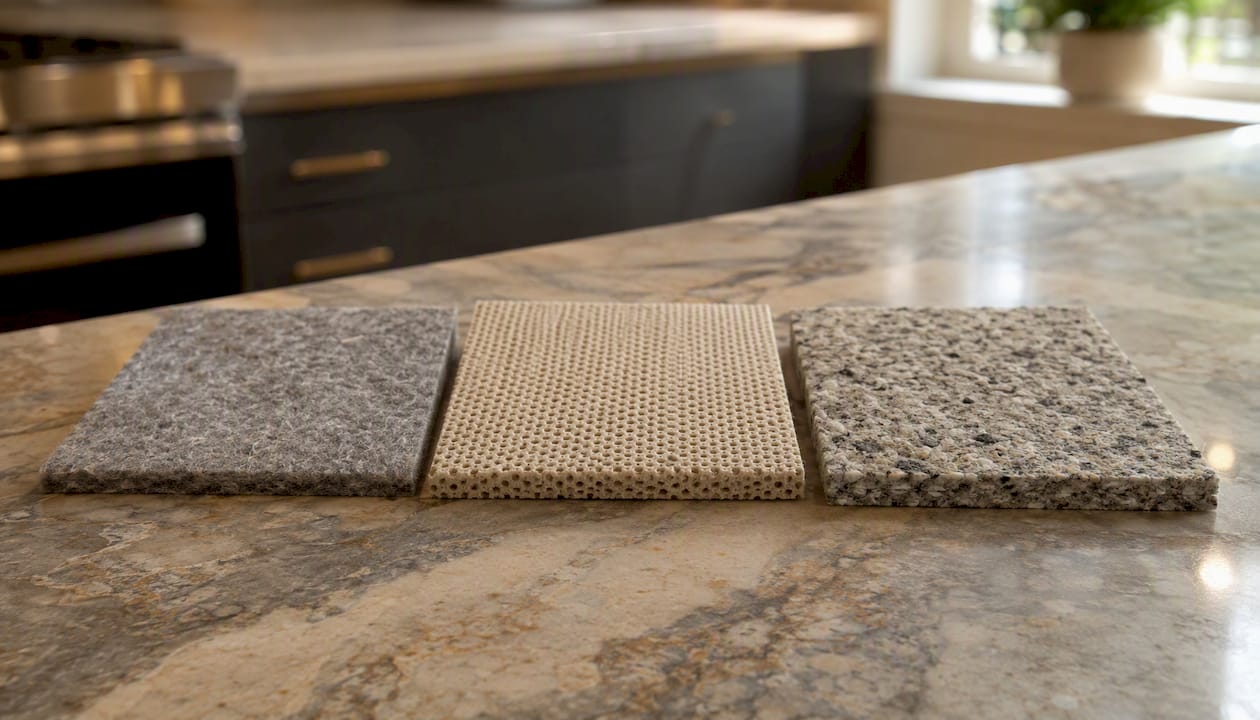
Felt
Dense, compressed wool or synthetic felt. Excellent cushion and noise reduction. No grip on its own, so it slides on smooth floors unless paired with rubber. Best for rugs under heavy furniture where movement is not a concern.
- Pros: Soft underfoot, quiet, safe for most floor finishes
- Cons: No grip; rug will shift on hard floors
Natural rubber
Solid or open-weave natural rubber. Strong grip on both the floor and the rug backing. Thin profiles work well for runners and entryways.
- Pros: Excellent traction, durable, breathable open-weave versions
- Cons: Little cushion; some rubber compounds can react with oil-finished wood
Felt-and-natural-rubber hybrid
Felt on top for cushion, natural rubber on the bottom for grip. The standard recommendation for living rooms, bedrooms, and dining rooms on hard floors.
- Pros: Grip, cushion, and floor safety in one pad; safe for most sealed finishes
- Cons: Thicker profile may affect door clearance; higher price point than basic pads
PVC and synthetic foam
Inexpensive and widely available. The main risk: PVC and synthetic foam pads can off-gas plasticizers that migrate and discolor hardwood and vinyl finishes over time. Avoid on finished hardwood and LVP unless the product is explicitly labeled non-staining and zero-VOC.
- Pros: Low cost, widely available
- Cons: Plasticizer migration, potential staining, shorter lifespan
Memory foam
Thick and very soft. Used primarily in bedrooms for maximum comfort. Not ideal for high-traffic areas because it compresses quickly under furniture legs.
- Pros: Maximum cushion
- Cons: Compresses under furniture; limited grip; not suited for hard-floor use without a rubber layer
Gripper dots and tape
Adhesive-backed dots or strips applied directly to the rug or floor. Useful for small rugs and mats where a full pad is impractical. Not a substitute for a full pad on large area rugs.
- Pros: Inexpensive, minimal profile
- Cons: Adhesive residue risk; no cushion or floor protection
How do you choose the right rug pad thickness?
1/4 inch is the go-to thickness for most homes. It provides enough cushion for comfort without creating a height difference that catches toes or blocks doors. The stepwise approach to thickness selection starts with floor type, then pile height, then room use, then door clearance.
Thickness options and their best uses:
- 1/8 inch: Runners, entryways, and rugs over carpet. Minimal height addition; prioritizes grip and flatness.
- 1/4 inch: Living rooms and bedrooms on hard floors. The standard for most household rugs. Balances cushion and stability.
- 3/8 inch: Low-traffic bedrooms and sitting rooms where extra softness is the priority. Check door clearance before buying.
- 1/2 inch: Maximum comfort, typically memory-foam construction. Best for bedroom-only use; rarely practical elsewhere due to height.
The practical rule: add the rug’s pile height to the pad thickness, then check that the combined height does not prevent doors from swinging freely. A flat-weave rug on a 1/2-inch pad can create a 3/4-inch rise at the threshold.
Pro Tip: Density matters more than thickness for grip. In high-traffic hallways and entryways, a dense 1/8-inch natural-rubber pad will hold a rug more firmly than a soft 3/8-inch foam pad. Choose density first, then thickness.
Which pad works on your specific floor type?
The short answer: felt-and-natural-rubber hybrids work on most sealed hard floors. The critical exception is oil-finished wood.
Oil-finished or chemically sensitive hardwoods can react with rubber compounds, and may require adhesive-free felt-only pads to avoid chemical interaction. If you are unsure of your finish, check the flooring manufacturer’s care guide or test a small area before committing to a rubber-backed pad.
Floor compatibility at a glance:
Before buying, run two checks. First, identify your floor finish from the original product documentation or manufacturer website. Second, confirm the pad is labeled non-staining and zero-VOC if you have hardwood or LVP. For rugs placed on carpet, keep the pad at 1/8 inch maximum to avoid excessive height and instability.
How do you size, cut, and install a rug pad?
Buy or cut the pad so it sits approximately 1 inch smaller than the rug on each side. This keeps the pad hidden under the rug’s edge and eliminates any raised lip that could catch a foot. A pad sized ~1 inch smaller per side remains hidden and does not create a tripping hazard.
Step-by-step installation:
- Measure the rug’s length and width. Subtract 2 inches from each dimension to get the target pad size.
- If the pad is pre-cut to a standard size, mark the trim line with a fabric marker or chalk.
- Use heavy-duty shears for felt pads. Use a utility knife with a metal straightedge for thick rubber-backed hybrids.
- Lay the pad flat on the clean floor, rubber side down.
- Center the rug over the pad. Adjust until the pad is evenly inset on all four sides.
- Walk the rug to confirm it does not shift. For runners, press the full length flat before placing furniture.
Maintenance and replacement:
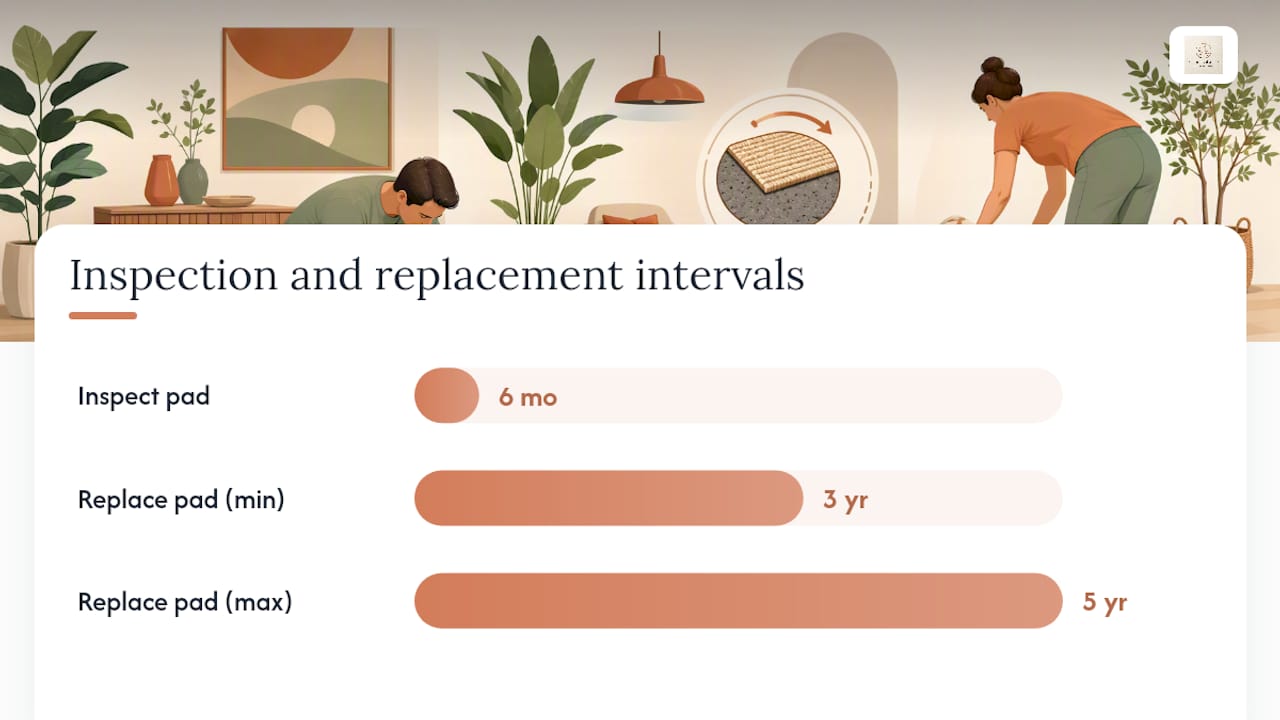
- Lift and inspect the pad every 6 months. Check for compression, discoloration, or any floor reaction (hazing, staining) beneath the pad.
- Clean felt pads by vacuuming or spot-cleaning with mild soap and water. Allow to dry fully before replacing.
- Clean rubber pads with a damp cloth. Avoid harsh solvents that degrade rubber.
- Replace felt and foam pads on a 3–5 year cadence under normal use, or sooner if the pad has compressed flat and no longer provides cushion.
- If you encounter an adhesive-backed pad, peel it slowly at a low angle. Use a plastic scraper and a small amount of rubbing alcohol to remove any residue without damaging the finish.
What should you check before buying a rug pad?
A short checklist covers the most common purchase mistakes.
Buy checklist:
- Floor finish confirmed (sealed, oil-finished, laminate, carpet)
- Pad labeled non-staining and zero-VOC for hard floors
- Thickness appropriate for door clearance and rug pile height
- Pad sized 1 inch smaller than the rug on each side
- Return policy confirmed before ordering online
- Material matches floor type per the compatibility table above
Red flags to avoid:
- PVC or PVC-mesh construction on finished hardwood or LVP
- Adhesive-backed pads when the floor finish is unknown
- Strong chemical or plastic smell out of the package (a sign of plasticizer off-gassing)
- Very low price with no material disclosure on the label
- Foam pads marketed as “universal” without a non-staining certification
Pro Tip: A higher price on a felt-and-natural-rubber hybrid is usually justified. The material cost is real, and a quality pad protects a floor finish that costs far more to refinish than the pad itself.
Price guidance: basic rubber gripper pads run $15–$40 for a standard 5x8 size. Quality felt-and-natural-rubber hybrids typically run $40–$100 for the same size. Memory-foam pads sit at the higher end. The cost difference is small relative to the floor protection benefit.
Why do experts consistently recommend felt-and-rubber hybrids?
The recommendation is consistent across independent tests and practitioner guidance. Felt-and-natural-rubber hybrids at approximately 1/4 inch deliver grip, cushion, and floor safety in a single product, which no single-material pad matches.
Test findings that support the pick:
- Grip: The rubber layer holds on both the floor and the rug backing, preventing creep even under heavy foot traffic.
- Cushion: The felt layer adds enough loft to reduce noise and improve underfoot comfort without creating instability.
- Floor safety: Natural rubber, when labeled non-staining, does not migrate plasticizers onto sealed finishes the way PVC does.
- Versatility: One pad type works across sealed hardwood, tile, stone, and laminate, simplifying the buying decision.
The one trade-off worth noting: a 1/4-inch hybrid is thicker than a basic rubber pad, so door clearance must be checked in advance. In rooms with tight door-to-floor gaps, a dense 1/8-inch natural-rubber pad is the practical alternative.
The case for getting the pad right before the rug goes down
Rug pad choice is a decision most buyers make last, often as an afterthought. That sequence is backwards. The pad determines how a rug performs, how long it lasts, and whether it damages the floor beneath it. Choosing the pad after the rug is already down means working around a decision already made.
The oil-finish caution is the most overlooked risk in this category. Many homeowners with antique or custom-finished hardwood floors assume any rubber pad is safe. It is not. Confirming the floor finish before buying takes five minutes and prevents a repair bill that can run into hundreds of dollars.
For renters specifically: photograph the floor condition before placing any rug or pad, and use only non-staining, adhesive-free pads. Document the floor state at move-in. A felt-only or felt-and-natural-rubber pad with a zero-VOC label is the safest choice for a rental, because it leaves no residue and poses no staining risk to a finish you do not own.
Noble Abode’s Ornate Room Rug is a practical example of how rug design and pad choice interact. A thin, flat-weave washable rug like this pairs well with a 1/4-inch felt-and-rubber hybrid, which adds the cushion the rug itself does not provide while keeping the total height manageable.
Noble Abode: rugs and decor worth pairing with the right pad
A well-chosen rug pad makes every rug perform better, and that matters most when the rug itself is worth protecting. Noble Abode offers a curated selection of area rugs, throw pillows, sculptures, and accent decor designed for modern living spaces. Each piece is chosen for timeless design and easy maintenance, so the investment holds up over time.

For readers coming from this guide: Noble Abode’s washable area rugs are a practical starting point. Thin-profile, machine-washable construction pairs directly with the 1/4-inch felt-and-rubber hybrid recommended throughout this guide. Browse the full collection at Noble Abode to find rugs, accent pieces, and living room decor that work together as a complete room setup.
Sources
FAQ
How do I choose the right rug pad?
Match the pad material to your floor finish first, then choose thickness based on rug pile height and door clearance. For most sealed hard floors, a 1/4-inch felt-and-natural-rubber hybrid is the standard recommendation.
What are the main types of rug pads?
The primary types are felt, natural rubber, felt-and-natural-rubber hybrid, PVC or synthetic foam, memory foam, and gripper dots. Felt-and-rubber hybrids are the most versatile for hard floors; thin waffle or needle-punched pads are best for rugs over carpet.
What thickness is best for a rug pad?
1/4 inch works for most living rooms and bedrooms on hard floors. Use 1/8 inch for runners, entryways, and rugs over carpet. Reserve 3/8 inch or thicker for low-traffic bedrooms where extra cushion is the priority and door clearance allows it.
Should I get a 1/4-inch or 3/8-inch rug pad?
Choose 1/4 inch for most rooms. It provides reliable cushion and grip without raising the rug enough to interfere with doors. Step up to 3/8 inch only in bedrooms with high door clearance and low foot traffic where softness is the main goal.