

Leave 12–20 Inches Visible When Layering Rugs
Yes, layering rugs is a practical, on-trend way to add texture, zone space, and make small or vintage rugs work in larger rooms. The three rules that matter most: use a large, low-profile base rug, choose a smaller top rug that leaves a visible border, and anchor both with the right pad. Get those right and the rest is styling.
TL;DR:
- Layering rugs allows you to add texture and define spaces without using large, expensive rugs, especially effective with a large flatweave base and a smaller top rug.
- Use a low-profile base made of jute, sisal, or synthetic material in high-traffic areas, and choose a wool, kilim, or plush top rug to add personality and softness.
- Keep top and base rugs properly sized with visible borders and furniture legs on the base to create a deliberate layered look and avoid a cluttered appearance.
- Secure layered rugs with appropriate pads, such as felt-rubber and gripper pads, to prevent slipping and curling, and avoid layering on stairs or narrow hallways due to tripping hazards.
- Regular maintenance, including rotation every six months and weekly vacuuming, is essential to prevent uneven wear and ensure the longevity of layered rug setups.
Table of Contents
- Why Layer Rugs in the First Place?
- Choosing Base and Top Rugs: Materials That Won’t Bunch
- What Size Rugs Should You Layer Together?
- How Do You Mix Patterns Without Clashing?
- How Do You Layer Rugs Without Slipping Hazards?
- Room-by-Room Layering Recipes
- Expert Maintenance: Rotation, Vacuuming, and When to Go Washable
- Budgeting and Cost Considerations for Layering Rugs
- Creative Styling Tips and Trends for Layering Rugs
- Common Mistakes and Troubleshooting Beyond Pattern and Color
- Real Examples: What Layering Looks Like in Practice
- Making Layering Part of a Flexible Styling Plan
- Where the Ornate Room Rug Fits a Layered Look
- Sources
- FAQ
Why Layer Rugs in the First Place?
Layering solves a problem flat, single-rug rooms can’t: texture without visual clutter. A jute or flatweave base underneath a plush or patterned top adds warmth underfoot and softens footsteps and echo in rooms with hard floors, according to Architectural Digest. It also solves a spatial problem: in open-plan living rooms, a base rug can define a seating zone while the top rug marks the exact conversation area, without buying one oversized rug that swallows your budget.
There’s a practical upside renters and thrift-shoppers appreciate. Layering lets that small vintage kilim you found at a flea market actually do something in a room too big for it on its own, according to Better Homes & Gardens.
- Adds texture, warmth, and sound dampening
- Defines zones in open-plan rooms
- Makes undersized or vintage rugs usable again
- Introduces pattern or color for less than a full room-sized rug would cost
Choosing Base and Top Rugs: Materials That Won’t Bunch
Your base rug does the structural work, so keep it low-profile. Jute, sisal, cotton flatweave, or a washable synthetic flatweave are the standard picks, especially in high-traffic rooms where spills and foot traffic are constant. Your top rug is where personality lives: wool, a vintage kilim, or a plush accent piece reads as intentional against a flatter, textured base.
One rule designers repeat often: never stack two high-pile rugs. Two plush layers create a spongy, unstable surface, and a chunky braided jute base is nearly as bad. It creates an uneven sub-surface that can make the top rug curl or wobble at the edges. Tight, flat weaves underneath solve this.
- Base: jute, sisal, cotton flatweave, washable synthetic
- Top: wool, vintage kilim, plush accent (avoid pairing two thick piles)
- Pets and kids: choose a washable top layer and a synthetic, moisture-resistant base
Pro Tip: If you have pets, skip natural jute as your base in dining or entry areas. It absorbs odors and stains faster than a washable synthetic flatweave, and cleanup is far less forgiving.
What Size Rugs Should You Layer Together?
Sizing is where most layered rug setups fail before they even start. Get this part right and everything else, pattern, color, styling, becomes much easier.
- Leave a visible border. Aim for the base rug to show a visible border around the top rug to create a clear and intentional layered look. This range comes from designers interviewed for the New York Times, and it’s the detail that separates an intentional layered look from two rugs that just happen to overlap.
- Use proven pairings as a starting point. A common sizing guideline is to choose a larger base rug with a smaller top rug to create a balanced border, such as a base significantly larger than the accent piece, without specifying exact dimensions.
- Keep furniture legs on the base rug. In living rooms, front sofa and chair legs should rest on the base layer for stability. At dining tables, make sure chairs stay on the rug even when pulled out. A chair leg catching bare floor is both a wobble risk and a sign your rug is undersized.
- Test before you commit. Mark both rug footprints on the floor with painter’s tape and live with it for a day. This single step catches the “floating rug” look, where the top rug seems randomly placed, before you’ve spent any money.
How Do You Mix Patterns Without Clashing?
The safest rule in rug layering: let one rug be the star. If your top rug has a bold pattern, whether it’s a Persian motif or a graphic geometric print, your base should stay subtle or neutral. Two loud patterns competing for attention is the fastest way to make a layered look feel chaotic instead of curated.
When you do want to mix two patterned pieces, bridge them with a shared color. A top rug with rust and cream tones pairs naturally with a base that repeats one of those shades, even in a completely different pattern. Contrasting scale also works. A tiny repeating print on top reads as calm against a base with a larger, looser pattern.
- Bold top rug + neutral or textured base (safest starting point)
- Two patterns bridged by one shared color
- Contrasting pattern scale (small print over large, or vice versa)
- Reliable pairings: jute base with a Persian-style kilim; neutral flatweave with a vintage runner
Rugs sized too close together, or patterns with no shared color to anchor them, are among the most common layering mistakes homeowners make, according to Bless’er House.
How Do You Layer Rugs Without Slipping Hazards?
Placement is simple once you know the order of operations, and skipping the padding step is how layered rugs earn a bad reputation for sliding.
- Lay the base rug first and secure it directly to the floor with a felt-and-rubber pad. This grips hardwood, tile, or laminate and stops the entire setup from creeping.
- Position the top rug, then add a thin webbed gripper pad between the two layers if the top rug shows any movement. This addresses the friction point between jute and the rug sitting on it, not just the floor underneath.
- Match your pad to your floor. Felt-rubber combination pads work best on hardwood and hard flooring, while a thinner grip pad is usually enough over wall-to-wall carpet. For heavy furniture legs, clear castor cups or rug tape at the corners add extra insurance.
Pro Tip: Never layer rugs on stairs or in narrow hallways. The extra height and the seam between two rugs both create real tripping hazards, and it’s the one place a slip pad won’t fully protect you. Also, keep dining chairs in mind: watch how much your chairs pull out over the rug edge before you finalize placement, not after the table’s set.
Room-by-Room Layering Recipes
A few configurations work reliably across most homes, and they’re a good starting point if you’re staring at an empty room unsure where to begin.
- Living room: a large natural flatweave base under the full seating area, topped with a 6x9 patterned rug centered under the coffee table.
- Bedroom: a runner or small accent rug at the foot of the bed, layered over a broader base that extends from beneath the bed frame outward.
- Entry: a washable, stain-resistant base with a smaller decorative top rug that can be swapped out easily.
- Dining area: prioritize washable materials on both layers since spills are inevitable.
- Covered porch or patio: use indoor/outdoor rated bases with weatherproof tops, since standard jute breaks down quickly outdoors, per Castlery.
Expert Maintenance: Rotation, Vacuuming, and When to Go Washable
Layered rugs need a slightly different maintenance rhythm than a single rug, and getting it wrong shows up fastest in uneven fading and matted pile.
- Rotate the entire layered setup every six months so foot traffic and sunlight wear evenly across both rugs.
- Vacuum the top rug weekly using a suction-only setting to avoid pulling at fringe or loose weave.
- Lift the top rug monthly and vacuum the base underneath. Debris and grit collect between layers faster than most people expect.
- Choose felt-rubber pads for stability, since they hold both layers in place during regular vacuuming.
- If you have pets, small kids, or a high-traffic dining setup, lean toward washable pieces for at least one layer. It saves you from replacing an entire rug over a single bad spill.
Budgeting and Cost Considerations for Layering Rugs
Layering costs more up front than buying one rug, but it doesn’t have to cost more than one oversized statement piece. A large jute or flatweave base typically runs less per square foot than a comparable wool rug, since the material itself is cheaper to produce, which means your budget can lean toward a higher-quality top rug where it actually shows.
Think of it as splitting your spend across two purposes instead of one. The base rug’s job is durability and floor protection, so it’s reasonable to buy it at a lower price point and expect it to last for years under moderate wear. The top rug is where quality matters more, since it’s what people see and feel first, so it’s worth allocating more of your budget there if you have to choose.
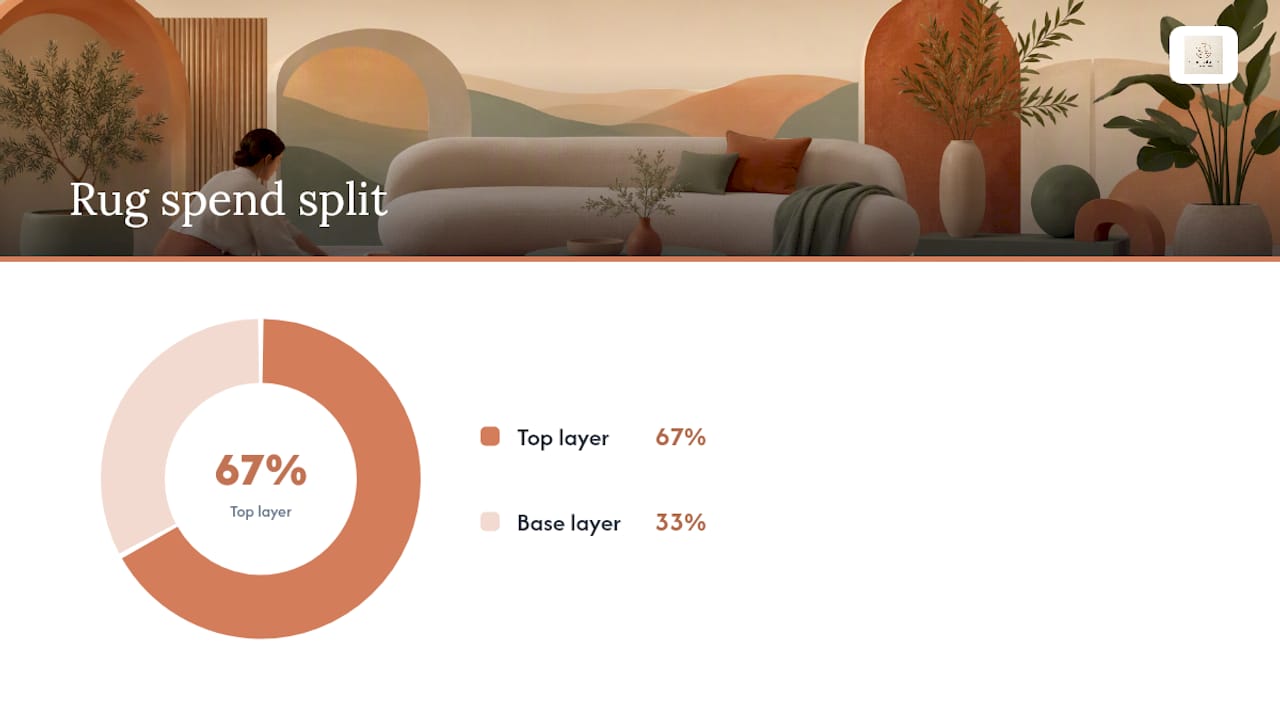
Total spend varies widely depending on room size and material choice, and rug prices themselves span a wide range depending on size, fiber, and construction, as detailed in Noble Abode’s breakdown of typical rug costs. A workable approach for most homeowners: budget two thirds of your total rug spend for the top layer and one third for the base, since the base rug’s simpler construction usually keeps its price lower per square foot.
If money is tight, start with just the base rug and add a top layer later once you find the right piece. Layering is one of the few design moves that lets you build a finished look in stages rather than all at once.
Creative Styling Tips and Trends for Layering Rugs
The layering trend has moved past the classic jute-and-kilim combination that dominated design blogs a few years ago. Homeowners are now mixing in unexpected textures, like a chunky wool top rug over a woven leather-look base, or pairing a solid-color top rug with a base that has subtle texture rather than pattern.
One trend worth trying: layering three pieces instead of two in larger rooms. A wide base rug, a mid-size patterned rug, and a small accent runner or hide can work together if each piece is a noticeably different size, keeping the visual hierarchy clear instead of muddy.
Seasonal swapping is picking up too. Treat your top rug the way you’d treat a throw blanket, swap a lighter, brighter top rug in for warmer months and a heavier, richer-toned piece for winter, while the base rug stays put year-round. This also extends the life of both pieces, since neither one takes the full brunt of a full year’s wear.
Another approach gaining traction: using a layered rug to soften a very modern or minimalist room. A stark, clean-lined living room with steel and glass furniture can feel considerably warmer with a textured jute base and a hand-knotted top rug in an earthy tone, without changing anything else in the space.
Runners are also showing up as top layers more often, laid diagonally or off-center across a square base rug rather than centered, which gives a room a slightly more relaxed, collected feel instead of a showroom-perfect one.
Common Mistakes and Troubleshooting Beyond Pattern and Color
Even once sizing and pattern rules click, a few smaller mistakes trip people up.
Skipping the pad entirely. This is the single most common issue, and it’s also the easiest to fix. A layered setup without a proper pad underneath will creep, bunch, and eventually curl at the edges within weeks, according to Bless’er House.
Centering everything by default. Not every top rug needs to sit dead center on the base. An off-center or angled placement, especially in bedrooms and entries, often looks more deliberate than a perfectly centered layout, which can read as accidental or unfinished if the sizes are close.
Choosing a top rug that’s too similar in size to the base. If there’s barely any base visible around the edges, the layering effect disappears entirely and it just looks like two rugs stacked by mistake.
Ignoring how the setup ages. A top rug that curls at the corners over time usually means the base underneath is too thick or uneven, not that the top rug is defective. Swap to a genuinely flat base before replacing the rug itself.
Overlooking door swing and traffic paths. A layered rug that’s too thick can catch on doors or create a noticeable step-up that’s easy to trip over, particularly where a room transitions from hardwood to a rug stack near a doorway.
Real Examples: What Layering Looks Like in Practice
Layering reads differently depending on the room, and seeing how it plays out helps more than any rule list on its own.
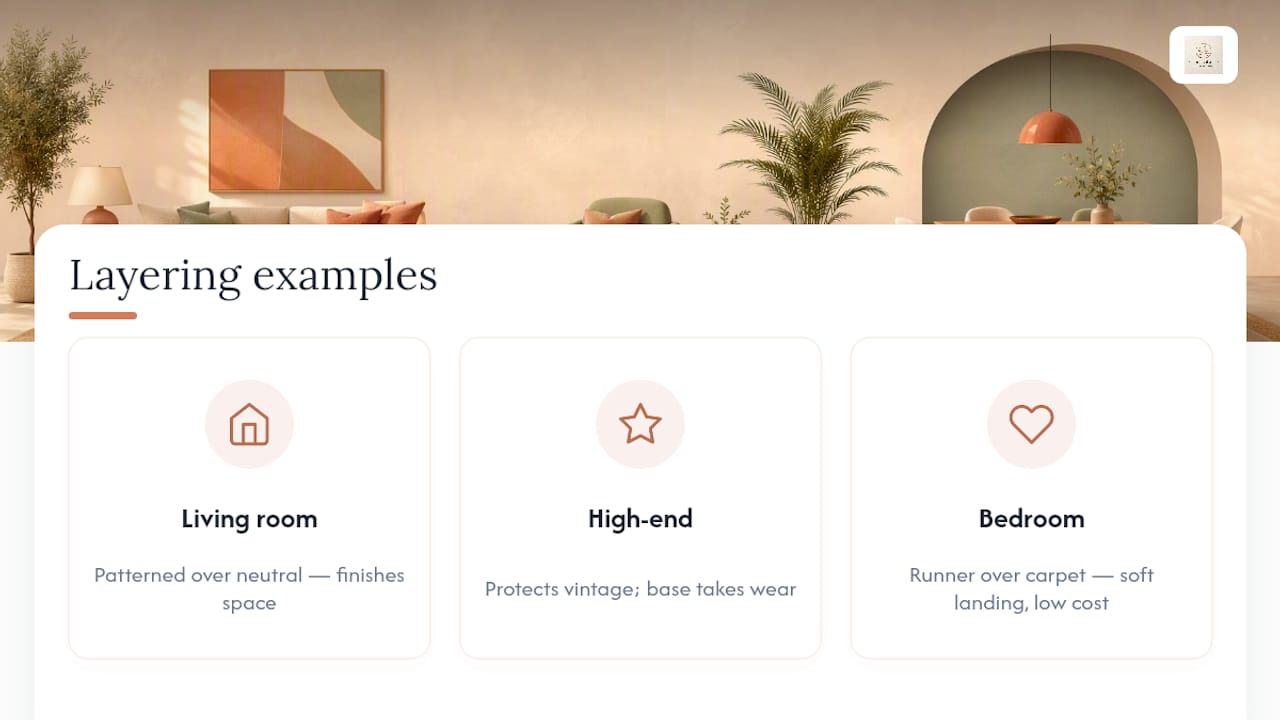
One widely cited example comes from a home renovation where a homeowner layered a smaller patterned rug over a large neutral base in her living room, and reported that it visually “finished” the space and noticeably cut down on noise, according to Apartment Therapy. The same account also flagged the slipping issue directly, reinforcing why a proper pad isn’t optional.
In more editorial, high-end interiors, designers often use layering to let a single vintage or antique rug act as the room’s focal point, resting it over a larger, plainer rug that anchors the furniture and absorbs sound, per Architectural Digest. This is the same logic behind protecting a delicate vintage piece: the base rug takes the wear, while the top piece gets displayed rather than trampled.
A simpler, everyday version shows up in bedrooms constantly: a narrow woven runner laid over the section of carpet or flatweave that extends past the bed frame, giving your feet something soft to land on first thing in the morning without needing a full room-sized rug underneath. It’s a small, low-cost layering move that solves a specific daily annoyance rather than a purely decorative one.
Making Layering Part of a Flexible Styling Plan
Treat your rugs like textiles you rotate seasonally, not permanent fixtures. A layered look lets you refresh a room by swapping just the top piece, no full furniture rearrangement required. That’s where a flea-market find or an inherited heirloom rug earns its keep, working as the top layer that gives a room actual personality. Pair that rotation with layered lighting and textiles, and the whole space starts to feel collected rather than purchased all at once. If you’re rethinking a room this way, it’s also worth considering how interior updates like new doors shift the whole feel of a space alongside your flooring choices.
— Stephane
Where the Ornate Room Rug Fits a Layered Look
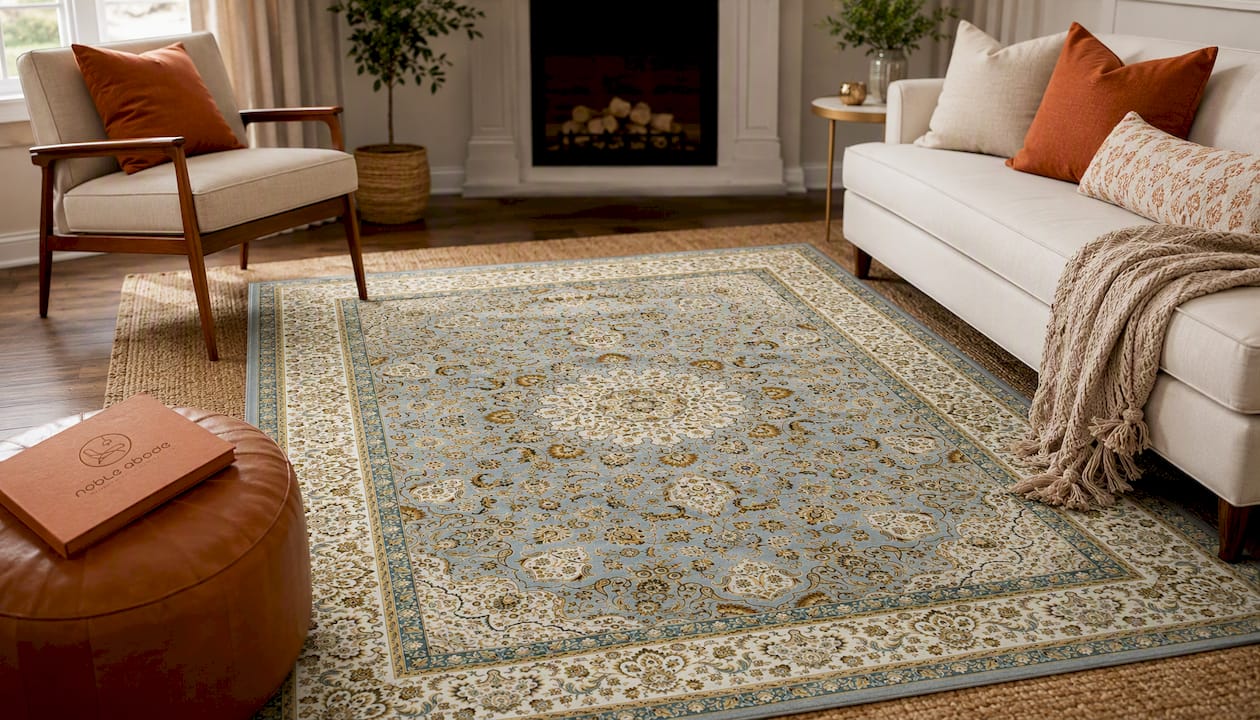
Noble Abode’s Ornate Room Rug is built specifically for the top-layer role this guide describes. A floral pattern and thin, low-profile construction help it sit flat over a base rug instead of adding height, and a machine-washable design solves common issues for pets, kids, and dining areas.
Pair it with a jute or neutral flatweave base to get the visible border this guide recommends, and let the floral pattern do the visual work while the base handles durability. Such a rug works well in a living room centered under a coffee table, or in a bedroom as a softer top layer over a broader base. If you’ve measured your space and you’re ready to try a layered setup, the Ornate Room Rug product page has the full size run and care details to help you order the right fit.
Sources
For deeper sizing and maintenance guidance, see Noble Abode’s guides on rug placement under sofas and rug pad selection.
- How to layer rugs | Better Homes & Gardens
- Mastering the art of layering rugs (NYT)
- How to Decorate with Layered Rugs and Carpets | Architectural Digest
- How Layering My Rugs Totally Transformed My Living Room | Apartment Therapy
FAQ
What is the rule for layering rugs?
Use a large, low-profile base rug and a smaller top rug that leaves about 12 to 20 inches of the base visible around its border, then secure both layers with proper rug pads.
Is layering rugs still in style in 2026?
Yes. The layered look has moved beyond the basic jute-and-kilim pairing into mixed textures, three-piece layers, and seasonal top-rug swaps, and it remains a common recommendation from interior designers.
What is the best rug for layering as the top piece?
A patterned, plush, or vintage-style rug with a low-profile, washable construction, like Noble Abode’s Ornate Room Rug, works best since it adds pattern without destabilizing the base underneath.
How do you stop a layered rug from shedding or slipping?
Vacuum the top rug weekly on a suction-only setting, lift and clean the base monthly, and use a felt-rubber pad under the base with a thin gripper pad between layers to stop movement.