

Stop Velvet Stains in 60 Seconds: Velvet Care and Design Moves to Cut Cleaning
Most velvet stains and everyday wear can be handled at home, but the correct method depends entirely on fiber type: check the care label first. If it reads “X” or “dry clean only,” or the item is silk or antique velvet, skip DIY and call a professional. For any spill, blot immediately with a dry cloth, never rub, and test any cleaner on a hidden spot before treating the visible stain. Routine care is simple: weekly vacuuming and occasional steaming, never ironing.
TL;DR:
- Water-based cleaning is safe only for velvet fibers labeled W or WS, while silk and viscose velvet require completely dry methods to avoid watermarks.
- Regular vacuuming and gentle brushing in the direction of the nap are crucial to prevent crushing and maintain velvet’s appearance over time.
- Only wash polyester and crushed velvet at home using gentle cycles and cool water, avoiding heat and drying methods that can damage the fabric.
- Immediate blotting and testing cleaners on hidden areas are essential for stain removal, with oil stains requiring solvent-based treatments and water risking spots on delicate velvet.
- Deep cleaning by professionals should be scheduled every 6 to 12 months, especially for antique or silk velvet, or when large stains or structural issues occur.
Table of Contents
- How to Identify Your Velvet Before You Clean It
- What’s the Best Routine for Maintaining Velvet?
- Can You Wash Velvet at Home, and How?
- How Do You Get Stains Out of Velvet?
- How Do You Fix Crushed Velvet or Pressure Marks?
- When Should You Call a Professional Velvet Cleaner?
- How Noble Abode Designs Velvet Pieces for Easier Care
- What Velvet Care Advice Gets Wrong
- Care-Friendly Velvet Alternatives Worth Considering
- Sources
- FAQ
How to Identify Your Velvet Before You Clean It
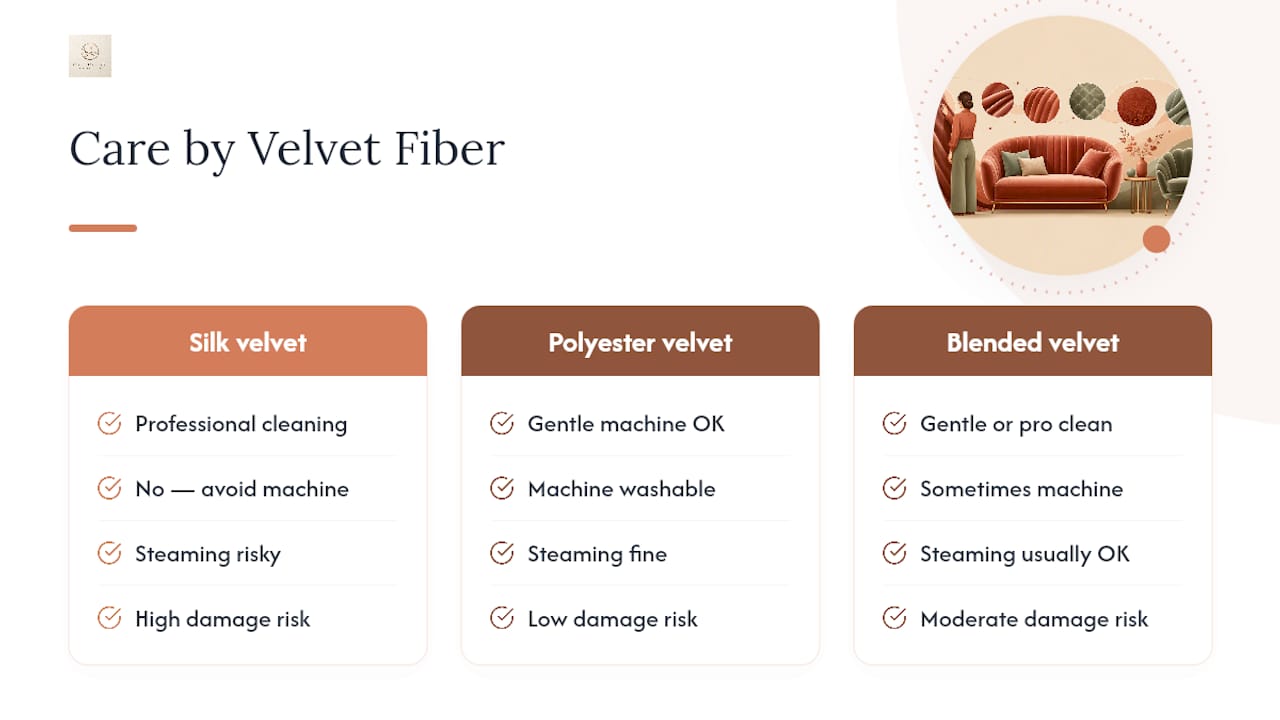
The single biggest mistake in home velvet care is treating every velvet the same. Silk and viscose velvet react badly to water, developing permanent spotting or “watermarking.” Cotton and wool velvet tolerate moisture better but still crush easily. Polyester and crushed velvet are the most forgiving fibers and often machine-washable under specific conditions.
Care labels use standardized codes that tell you exactly what’s safe:
- W means water-based cleaning is acceptable
- S means solvent-only, no water at all
- WS allows either method
- X means vacuum only, no liquid cleaning of any kind
On furniture, this tag is usually stitched under a cushion or along the frame’s underside. On garments, check the inside seam near the collar or waistband. Construction details matter too. Piped edges, tufted buttons, and glued backing can all limit how much moisture or agitation the piece can handle, regardless of what the fiber alone would suggest.
What’s the Best Routine for Maintaining Velvet?
Velvet punishes neglect faster than most fabrics because dust settles deep into the pile and flattens it under normal use. A weekly vacuum with a soft brush attachment, set to low suction, keeps grit from grinding into the fibers. Always move in the direction of the nap, never against it, or you’ll create uneven sheen patches that are hard to reverse.
Brushing matters just as much as vacuuming. A soft-bristled upholstery brush or even a dry, soft cloth run gently over the surface after vacuuming helps lift and realign crushed fibers before they set.
A few habits extend the life of any velvet piece considerably:
- Rotate cushions every couple of weeks to distribute wear evenly
- Keep velvet furniture out of direct sunlight, which fades dye unevenly
- Store off-season velvet items in breathable cotton covers, never plastic
- Increase vacuuming frequency in households with pets or young children
Pro Tip: Keep a lint roller near heavily used velvet seating. A 30-second pass after guests leave prevents the kind of buildup that eventually requires a full deep clean.
Can You Wash Velvet at Home, and How?
Whether you can launder velvet at all depends on the fiber, and getting this step wrong is how good pieces get ruined. Here’s the decision sequence to follow before you touch water or a washing machine:
- Check the label first. Anything marked dry-clean only, or made from silk, viscose, or antique velvet, stays out of water entirely.
- Confirm the fiber is washable. Polyester and crushed velvet often tolerate a gentle wash when the label allows it.
- Hand-wash when possible. Fill a basin with cool water and a small amount of delicate detergent, submerge the item, and gently agitate without wringing. Press water out between clean towels instead.
- Use the machine only as a fallback. Place the item in a mesh bag and run a delicate, cold cycle with a small detergent amount. Skip the spin cycle if your machine allows it.
- Dry flat or on a padded hanger. Never use direct heat. A brief no-heat “fluff” cycle can help loosen the pile afterward, but skip any dryer setting that generates warmth.
- Never iron. Heat and pressure flatten the pile permanently, and there’s no brushing that technique back to life.
Cool water and mild detergent are non-negotiable here. Hot water and standard detergent strip the finish that gives velvet its sheen in the first place.
How Do You Get Stains Out of Velvet?
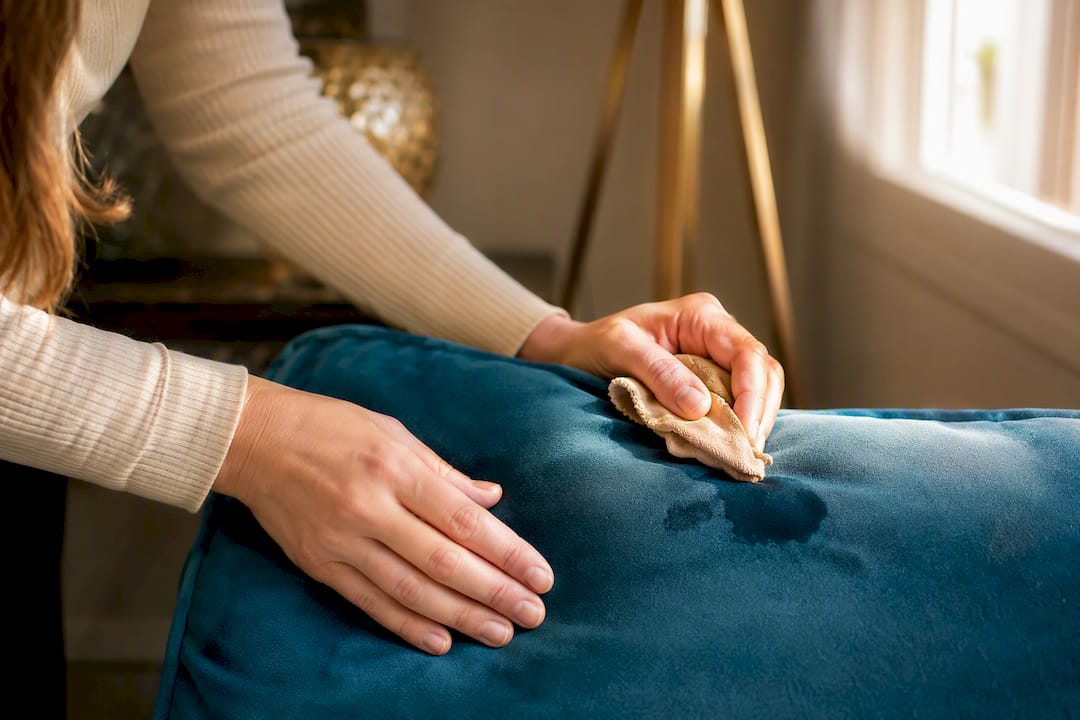
Speed matters more than product choice when a stain hits. Blot immediately with a dry, absorbent cloth, and lift off any solid residue before it works into the pile. Never rub, and never scrub in circles: experts warn that aggressive scrubbing permanently flattens or mats the fibers, and the correct motion is a gentle blot or a light massage with the nap, not against it.
Once the surface is dry, test your cleaner on a hidden patch, like the underside of a cushion, before treating the visible mark. Safe options include:
- A few drops of mild dish soap worked into a light suds, applied with a clean cloth
- A diluted upholstery cleaner formulated for delicate fabrics
- A home dry-clean solvent kit for wool or synthetic-blend velvets, following the product instructions exactly
Water can cause spotting or “ringing” on certain velvet types, so apply any liquid sparingly and blot rather than saturate. Rinse residue with a barely damp cloth, then blot dry immediately. Oil-based stains are the trickiest case: they spread if you introduce water too early, so lift what you can dry first, and lean toward a solvent-based approach.
Pro Tip: If you’re unsure whether a stain is oil or water-based, treat it as oil-based first. Water-based treatments make an oil stain worse, but the reverse mistake is rarely as damaging.
How Do You Fix Crushed Velvet or Pressure Marks?
Furniture dents, suitcase creases, and sofa-cushion flattening all respond to the same fix: steam, then brush. Hold a handheld steamer six to eight inches from the fabric and move in slow passes with the nap, letting the heat loosen the crushed fibers without direct contact.
- Once the area is warm and slightly damp, brush gently with a soft-bristled brush to lift and realign the pile
- For light marks, a brief no-heat dryer “fluff” cycle can loosen fibers without a steamer
- A careful vacuum pass afterward removes any loosened dust
- Never iron velvet directly. The flat heat crushes fibers permanently and leaves a shine that no brushing will undo
This combination, steam followed by brushing, is the standard method recommended by upholstery professionals for reviving pile without chemicals or specialty tools.
When Should You Call a Professional Velvet Cleaner?
Home care handles most day-to-day wear, but some situations call for expertise. Deep cleaning of velvet furniture typically happens every 6 to 12 months, more often in homes with pets or kids, since these households build up oils and dander faster than the fabric can shed them through vacuuming alone.
Professionals typically use low-moisture or solvent-based methods, since they avoid the over-wetting risk that causes rings and fiber damage. Before booking, confirm these details:
- What cleaning method they use on velvet specifically, not general upholstery
- Whether they’ll test a hidden spot before treating the whole piece
- Expected drying time and any ventilation needed
- Insurance coverage in case of fabric damage
Call in a pro immediately for antique or silk velvet, large or set-in stains, or any furniture with structural damage beneath the fabric.
How Noble Abode Designs Velvet Pieces for Easier Care
Some maintenance headaches disappear at the design stage. Noble Abode builds several upholstered pieces with that in mind, favoring finishes and covers that hold up to daily life without constant intervention.
- A reversible chenille sofa cover that’s cat-proof and flips for a style change, cutting down on how often the base upholstery needs deep cleaning
- Accent pieces like the rabbit fur checkerboard cushion, designed as a removable layer rather than a fixed surface
- Machine-washable throws and soft furnishings as a lower-maintenance alternative for households that want the velvet look without the upkeep
Pet owners juggling velvet furniture and shedding fur might also look at Noble Abode’s pet beds designed to match home decor, which keep pets off the good upholstery in the first place. Product-specific care instructions ship with each piece and cover exact cleaning codes.
What Velvet Care Advice Gets Wrong
Most velvet care advice treats every piece the same, and that’s the core problem. A blanket rule like “always steam, never wash” ignores that plenty of modern polyester velvet handles a gentle machine cycle fine, while treating silk velvet with the same casualness ruins it outright. The fiber decision has to come before the technique decision, every time.
The other place conventional advice falls short is urgency. Most guides bury the “blot immediately” instruction three paragraphs into a stain section, when it’s actually the single highest-leverage action a reader can take. Wine, oil, and pet stains all set faster into pile fabric than into flat weaves, so the first sixty seconds matter more than the cleaning product chosen an hour later.
If there’s one shift worth making, it’s this: treat velvet maintenance as prevention, not rescue. Weekly vacuuming and the occasional reversible cover do more to protect a piece long term than any stain remover ever will. Furniture built with easier care in mind, the kind with removable covers or pet-resistant finishes, removes half the guesswork before a spill even happens.
— Stephane
Care-Friendly Velvet Alternatives Worth Considering
If keeping velvet spotless feels like more upkeep than you want, Noble Abode’s lamp collection offers a way to bring warmth and texture into a room without adding another fabric surface to maintain.
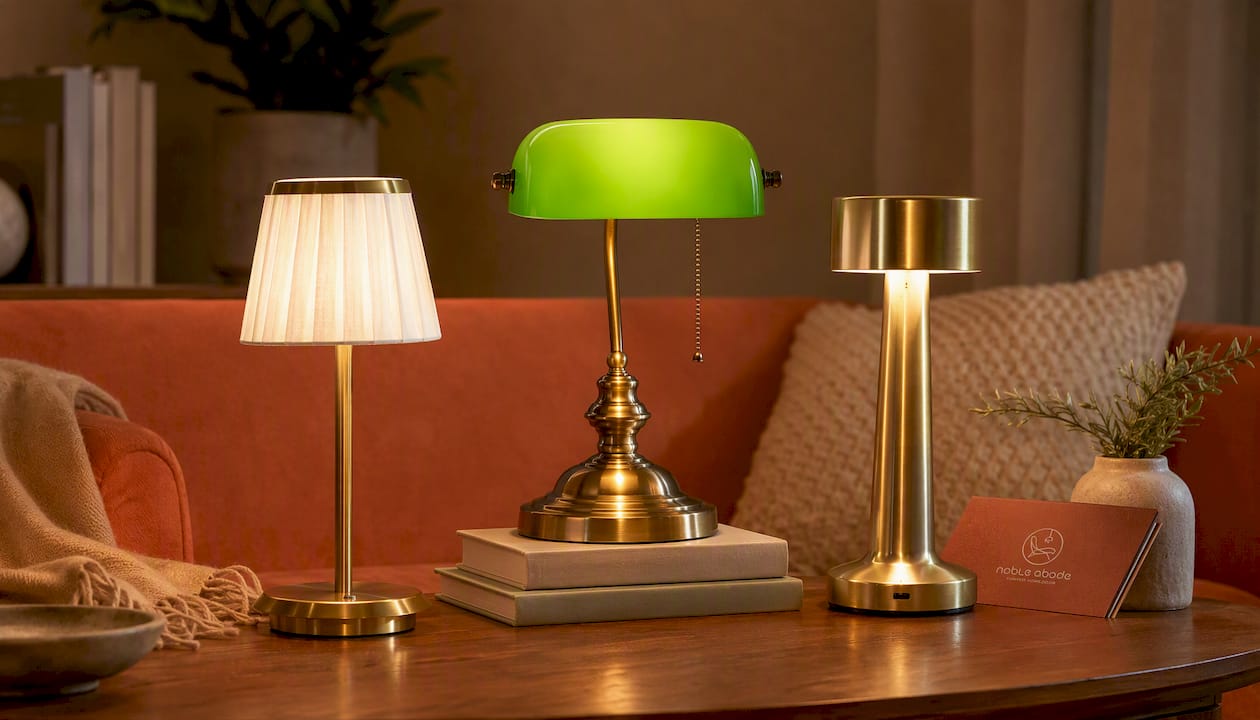
The Rechargeable Table Lamp Classic Style pairs well with velvet seating as a lighting accent that needs nothing more than an occasional wipe. For a room built around vintage textures, the Vintage Bank Table Lamp adds brass detailing that cleans up with a soft, dry cloth rather than a steamer or solvent kit. And for smaller spaces or bar setups, the Rechargeable LED Touch Table Lamp delivers ambient light with a one-touch control and zero fabric maintenance at all. Browse the full lamp collection to find a piece that complements your velvet furniture without adding to your cleaning list.
Sources
- How to Clean Velvet Furniture – Martha Stewart
- How to clean velvet furniture – Architectural Digest
- How to wash velvet in 6 steps – Whirlpool
- How to clean a velvet couch – Better Homes & Gardens
FAQ
Can You Use Dawn Dish Soap on Velvet?
A few drops of mild dish soap worked into light suds is one of the safer spot-cleaning options for water-tolerant velvet, but test it on a hidden area first and rinse with a barely damp cloth afterward.
How Do You Take Care of Velvet?
Vacuum weekly with a soft brush attachment moving with the nap, brush occasionally to lift the pile, keep it out of direct sunlight, and steam rather than iron to remove wrinkles or crush marks.
Does Velvet Get Ruined by Water?
Water can cause permanent spotting or “ringing” on silk and viscose velvet, so always test water-based cleaning on a hidden spot first, and lean toward solvent-based methods for delicate or antique pieces.
How Do You Bring Velvet Back to Life?
Steam the flattened area from a few inches away while moving with the nap, then brush gently with a soft-bristled brush to realign the fibers; repeat as needed for deep pressure marks.
How Often Should Velvet Furniture Be Deep Cleaned?
Most velvet furniture benefits from a professional deep clean every 6 to 12 months, with more frequent attention in households with pets or young children.