

Get a Photo-Ready Entryway Bench in Minutes With 3 Simple Pieces
The fastest fix for an entryway bench: add a low, sturdy rug that’s wider than the bench, one lumbar pillow, and a mirror hung 6 to 8 inches above. That trio alone reads balanced and welcoming within minutes. Everything past this point is about sizing it correctly, choosing durable materials, and layering just enough without tipping into clutter.
TL;DR:
- Using a mirror hung 6 to 8 inches above the bench, a lumbar pillow, and a low rug that extends beyond the bench creates a balanced and welcoming entryway within minutes.
- For durability, choose natural materials like woven rattan or sealed wood for their warmth and longevity, or performance fabric for upholstered options exposed to rain or snow.
- Limit layered decor to three purposeful objects, such as pillows, throws, and baskets, and measure carefully to avoid clutter or impractical proportions.
- A bench width of at least 36 inches is ideal for small foyers, with larger spaces accommodating up to 48 inches, ensuring proper fit and traffic flow.
- Focus on buying quality, wipeable, or sealed pieces for long-term wear, and start with one high-impact item like a mirror or rug rather than full overhauls.
Table of Contents
- Simple Entryway Bench Styling Formulas You Can Copy
- Which Bench Material Actually Fits Your Home?
- How Do You Layer Pillows, Rugs, and Mirrors Without Clutter?
- What Size Bench Fits Your Entryway?
- How Should You Style a Bench Based on Entryway Size?
- What Noble Abode Recommends for Long-Term Durability
- A Note on Getting Started Without Overhauling Everything
- Finishing Touches for Your Styled Entryway Bench
- Where This Guide’s Advice Comes From
- Sources
- FAQ
Simple Entryway Bench Styling Formulas You Can Copy
You don’t need five accessories and a trip to three stores. Most entryway bench styling problems come from too many small decisions instead of one clear formula. Pick the recipe that matches your household and stop there.
- Bench + basket + wall feature. One woven basket beside or under the bench for shoes, plus a single piece of art or a mirror above. Clean, low-maintenance, works in almost any hallway.
- Bench + rug + lumbar pillow. The minimalist route. A flat-weave rug grounds the bench, one lumbar pillow adds color without softness overload.
- Bench + layered pillows + draped throw. For entries that double as a mudroom or a first-impression space you want to feel warm. Two small squares plus a throw draped at one end.
- Storage bench + labeled baskets. Built for families. Baskets sorted by person or category keep gear from piling up on the seat itself.
- Seasonal swap recipe. Change one pillow cover and one accessory (a vase, a small tray) each season instead of redoing the whole vignette.
Each formula follows designer guidance on entryway bench decorating, which favors texture and restraint over piling on decor.
Which Bench Material Actually Fits Your Home?
Material decides both the mood of your entryway and how much upkeep you’re signing up for. Rattan and woven benches bring a relaxed, textured look and are a consistent favorite among designers because natural materials add warmth that plastic or laminate can’t fake. Solid wood benches lean more formal and hold up to decades of boots and backpacks, especially with a sealed finish. Slatted benches split the difference, letting light and air through while still feeling substantial. Upholstered benches feel the most inviting but need performance fabric if your entry sees rain boots or a dog that shakes off snow.
- Woven or rattan: casual, textured, needs occasional dusting and low humidity.
- Solid or slatted wood: durable, formal-leaning, wipes clean with a damp cloth.
- Upholstered: softest look, best with performance linen or a removable washable cover.
A backless bench keeps a narrow hallway feeling open, while a low-back version works better near a door that gets constant use. In a wide foyer, two small benches flanking a console can look more intentional than one long piece.
Pro Tip: If your entry gets direct sun, skip dark upholstery. It fades faster than wood or woven fibers and shows dust in a way lighter tones don’t.
How Do You Layer Pillows, Rugs, and Mirrors Without Clutter?
Layering is where most entryway bench decor either clicks into place or turns busy. The rule designers repeat most often: limit the vignette to three purposeful objects and pull one back if you’re unsure.
- Pillows: one lumbar pillow, or one to two small squares max. Firmer fills hold their shape under daily use, and washable covers save you from a full pillow swap every time shoes track in mud.
- Throws: drape one corner loosely for a lived-in feel, or fold it like a runner along the seat back for a tighter look. Swap wool for lighter cotton in warmer months.
- Baskets: measure the clearance under your bench and leave 1 to 2 inches of room so baskets slide freely without showing clutter at the front edge, a detail storage-focused entryway guides flag often.
- Rugs: extend a few inches beyond the bench on each side and choose low pile. It’s easier to vacuum and holds up better under foot traffic than a plush weave.
- Mirror or art: size it to roughly two-thirds the bench’s width and hang it 6 to 8 inches above the seat. That gap keeps the piece from feeling cramped against the bench line, according to entryway bench styling guidance. If your hallway runs narrow, art choices built for tight spaces can make the whole area feel wider.
What Size Bench Fits Your Entryway?
Get the size wrong and no amount of styling saves the vignette. A bench that’s too small looks lost against the wall. One that’s too large blocks the door swing or crowds foot traffic.
- Measure your available wall space and subtract at least 6 inches on each side for breathing room.
- Aim for a minimum width of 36 inches, and go 40 to 48 inches if you have a larger foyer to fill.
- Check depth. Anything under 12 inches feels flimsy to sit on, even for a quick shoe change.
- Compare the bench width to your door width. A bench roughly matching or slightly narrower than the door reads intentional; one that dwarfs it looks like an afterthought.
- Decide whether to float the bench a few inches from the wall (good for a floor vent or radiator) or push it flush for a tighter, cleaner line.
For exact measurements by room type, Noble Abode’s entryway bench dimension guide breaks down sizing by hallway width.
How Should You Style a Bench Based on Entryway Size?
Scale changes the whole approach. What works in a grand foyer will swallow a narrow hallway, and what looks perfectly proportioned in a small entry can feel sparse in a bigger one.
- Small entryway: a slim backless bench, one lumbar pillow, a small runner rug instead of a full rectangle, and either a round mirror or a slim leaning mirror that doesn’t demand wall-mounting hardware. Every inch works double duty here, which is where small-space furniture strategies genuinely help.
- Medium entryway: a storage bench or two cube ottomans, a rug that clears the bench edges by a few inches, and one plant or a tall vase for height. This is the size where the classic three-object rule shows up most often.
- Large foyer: a long bench or a pair of benches, two to three layered pillows, either an art cluster or one oversized mirror, and a rug that clearly defines the seating zone rather than floating in open floor.
Traffic matters as much as size. High-traffic entries do better with open storage (easy in, easy out) while lower-traffic formal entries can handle a closed storage bench without slowing anyone down.
What Noble Abode Recommends for Long-Term Durability
Stephane from the Noble Abode blog has spent years watching which entryway choices survive real life and which ones look great for a month and then fade. The pattern holds up: pieces with wipeable covers, sealed wood finishes, or performance fabric outlast trend-driven picks by years, not months.
Texture does more work than pattern in a small vignette. A woven basket next to a linen pillow next to a wool throw creates depth without a single busy print in the mix. That’s the difference between an entryway that looks curated and one that looks cluttered.
The takeaway for anyone furnishing an entry that gets used daily: buy for the material first, the look second. A bench with mismatched aesthetics but excellent durability will always outperform a gorgeous bench you’re afraid to actually use.
A Note on Getting Started Without Overhauling Everything
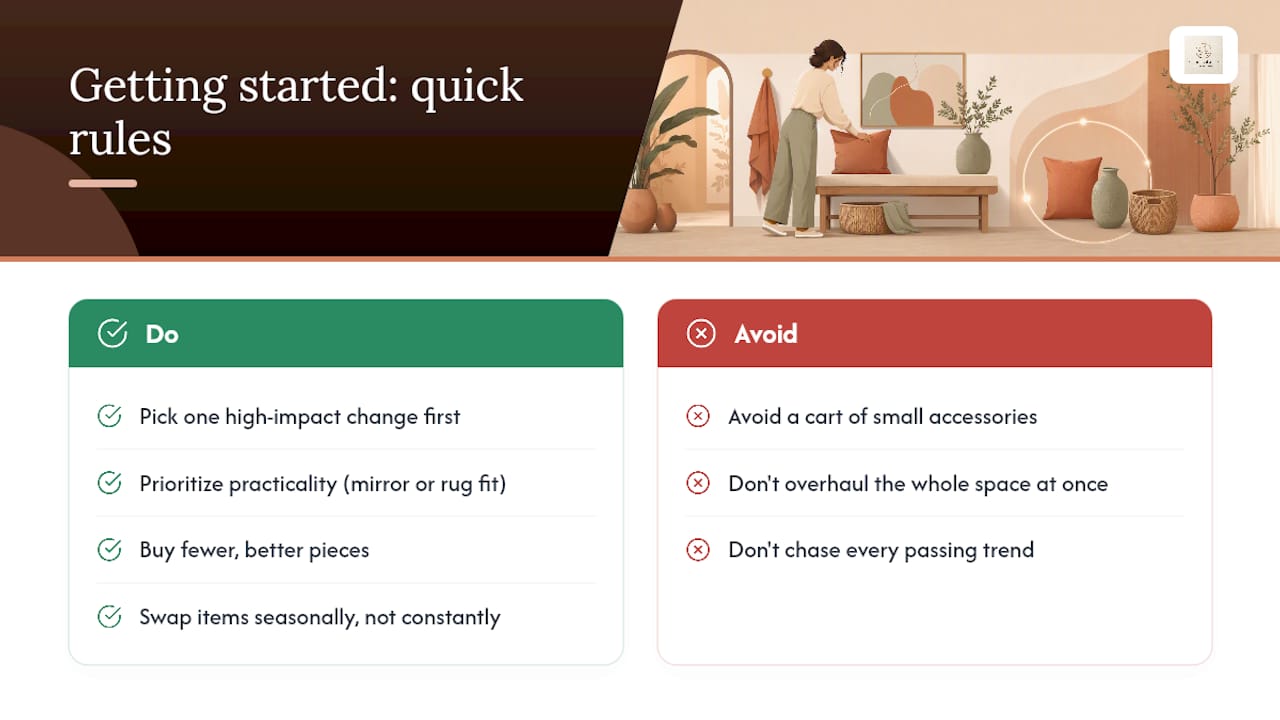
Pick one high-impact change first. A properly sized mirror or a rug that finally fits the bench does more than a cart full of small accessories ever will. Everyday practicality is the whole point of a bench, not the enemy of good design.
Buy fewer, better pieces and swap them seasonally instead of chasing every trend. Noble Abode’s broader styling principles follow the same logic, whether you’re working on a bench, a console table, or a whole room.
— Stephane
Finishing Touches for Your Styled Entryway Bench
Noble Abode is where a nearly finished vignette gets its last, tasteful layer, without turning into visual clutter. The Key Desktop Storage Decor works as a small decorative catch-all right on the bench or the surface beside it, holding keys and mail without adding bulk to the tabletop.
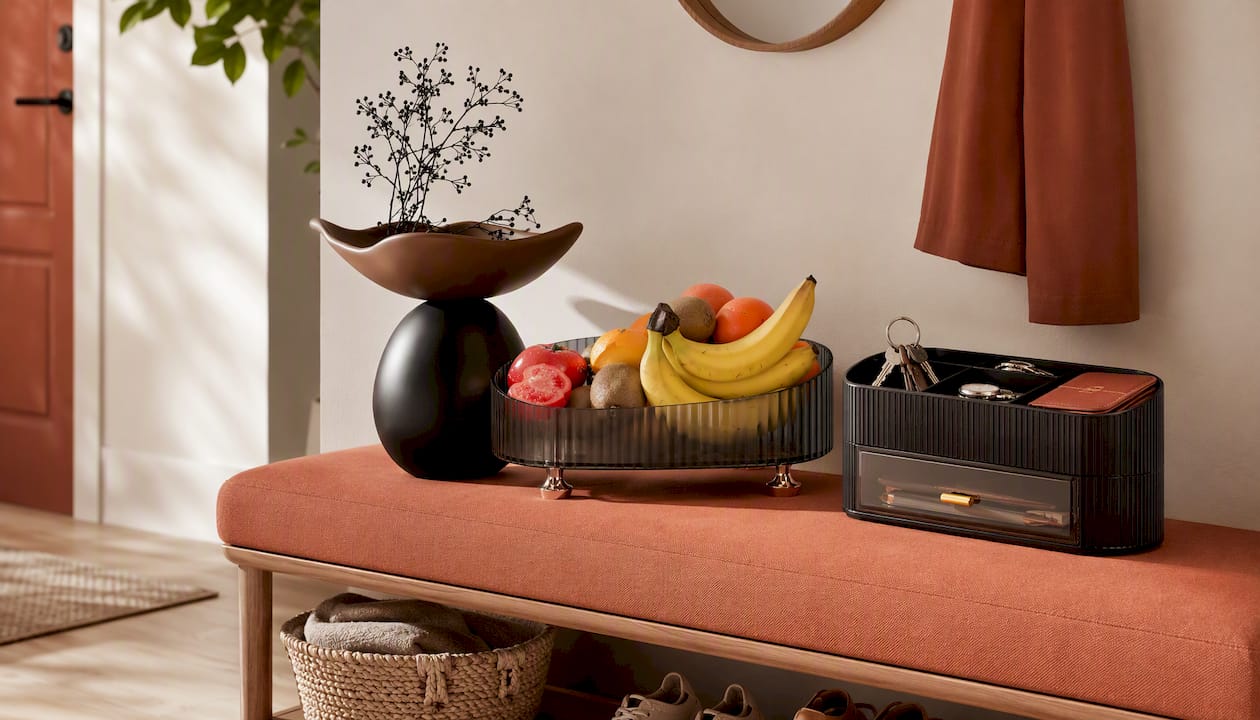 For a bit more capacity, the Light Luxury Multi-function Desktop Storage Box pairs naturally with the basket-and-bench combinations covered earlier. Set it beside a woven basket for smaller items you don’t want loose in a tray, gloves, sunglasses, a spare charger. Both pieces lean toward clean lines and neutral finishes, so they sit comfortably next to wood, rattan, or upholstered benches without fighting your existing color palette. If you’re finalizing a vignette this week, start with one piece rather than both. Browse the full storage decor collection and see which finish matches the materials already in your entry.
Where This Guide’s Advice Comes From
- Entryway bench ideas designers use for sizing and material guidance
- How to style an entryway bench for pillow and layering rules
- 28 inviting entryway bench ideas for mirror spacing and rug pairing
- Entryway mistakes to avoid for the three-object styling rule
- Interior doors as design focal points for proportion context
Sources
- Brilliant entryway shoe storage ideas
- How to style an entryway bench
- 28 Inviting entryway bench ideas to welcome guests
- Entryway bench ideas designers use
- Entryway mistakes to avoid
FAQ
How Do You Dress Up an Entryway Bench?
Add a rug that extends a few inches past the bench, one lumbar pillow, and a mirror hung 6 to 8 inches above the seat. Keep the total accessory count at three or fewer to avoid an over-decorated look.
What Are the Most Popular Entryway Bench Styles?
Woven or rattan benches, solid wood benches, and upholstered benches with performance fabric are the three styles designers return to most, each suited to a different maintenance level and mood.
How Can I Style a Console Table Near My Bench?
Treat the console the same way as the bench: pick one focal piece (a lamp or vase), add a tray for keys or mail, and skip more than two or three items total so the two pieces don’t compete visually.
What Trends Are Shaping Entryway Furniture Right Now?
Natural textures like rattan and water hyacinth, low-pile durable rugs, and multi-function storage pieces like the Light Luxury Multi-function Desktop Storage Box are showing up more often as households prioritize both looks and daily function.
Do I Need a Storage Bench or an Open Bench?
Open benches with a basket beside them tend to look more refined in formal foyers, while storage benches make more sense in mudrooms or high-traffic family entries where daily gear needs to disappear fast.