

Measure First: 18–24 Inches Is the Bedroom Rug Size to Aim For
A queen bed pairs best with an 8x10 rug, and a king bed pairs best with a 9x12. The designer rule of thumb is 18 to 24 inches of visible rug on the sides and foot of the bed. Smaller rooms can drop to a 6x9 or run two side rugs instead. Measurement and placement steps follow below.
TL;DR:
- A 9x12 rug is ideal for a king bed or a California king if the room has ample space, but runners can work if furniture limits full coverage.
- Measure the outer width of the bed frame, including footboards and upholstered edges, to ensure the rug size accommodates the proper 18 to 24 inch margin.
- Using painter’s tape to outline the intended rug footprint on the floor helps avoid sizing errors before purchase.
- In small bedrooms, two side runners or foot-only rugs are effective alternatives to large rugs, especially when space is limited.
- Rug pile height and material affect comfort, with wool offering durability and plushness, while synthetics provide easier maintenance and lower cost.
Table of Contents
- What Rug Size Fits Each Bed Size?
- How Do You Measure and Place a Bedroom Rug?
- What Works in Small Bedrooms?
- Which Material and Pile Height Should You Choose?
- How Noble Abode Applies These Rules
- The Case for Sizing Up, Not Down
- See the Ornate Room Rug in Your Bedroom
- Sources
- FAQ
What Rug Size Fits Each Bed Size?
Bed dimensions drive rug dimensions. Match the rug to the frame, not just the room’s square footage, and you avoid the two most common errors: a rug that floats too small under the bed, or one so oversized it crowds the dresser.
- Twin (38x75 inches): A 5x7 rug works under a single twin, but two runners along each side (roughly 2x6 feet each) often fit dorm rooms and kids’ bedrooms better, especially with bunk configurations.
- Full or double (54x75 inches): A 5x8 rug covers the essentials; a 6x9 gives more breathing room if nightstands flank the bed on both sides.
- Queen (60x80 inches): An 8x10 rug is the standard pick, leaving that 18 to 24 inch margin on three sides. Step up to 9x12 if the room comfortably fits a larger footprint or you want the rug to reach under a bench.
- King (76x80 inches) and California king (72x84 inches): A 9x12 rug is the common baseline; 10x14 suits primary bedrooms with generous floor space. Runners on each side remain an option if a wall-mounted headboard or built-in nightstands limit full coverage.
Before you settle on a size, measure the bed frame’s outer width, not just the mattress. Platform beds, upholstered frames, and footboards add inches on every side, and that difference can push you from a comfortable 8x10 fit into a cramped one.
How Do You Measure and Place a Bedroom Rug?
Getting the size right is mostly arithmetic. Getting the placement right takes a few minutes with a tape measure and some painter’s tape.
- Measure the frame, not the mattress. Note the outer width and length of the bed frame, then measure how far nightstands, benches, or dressers sit from the bed’s edge.
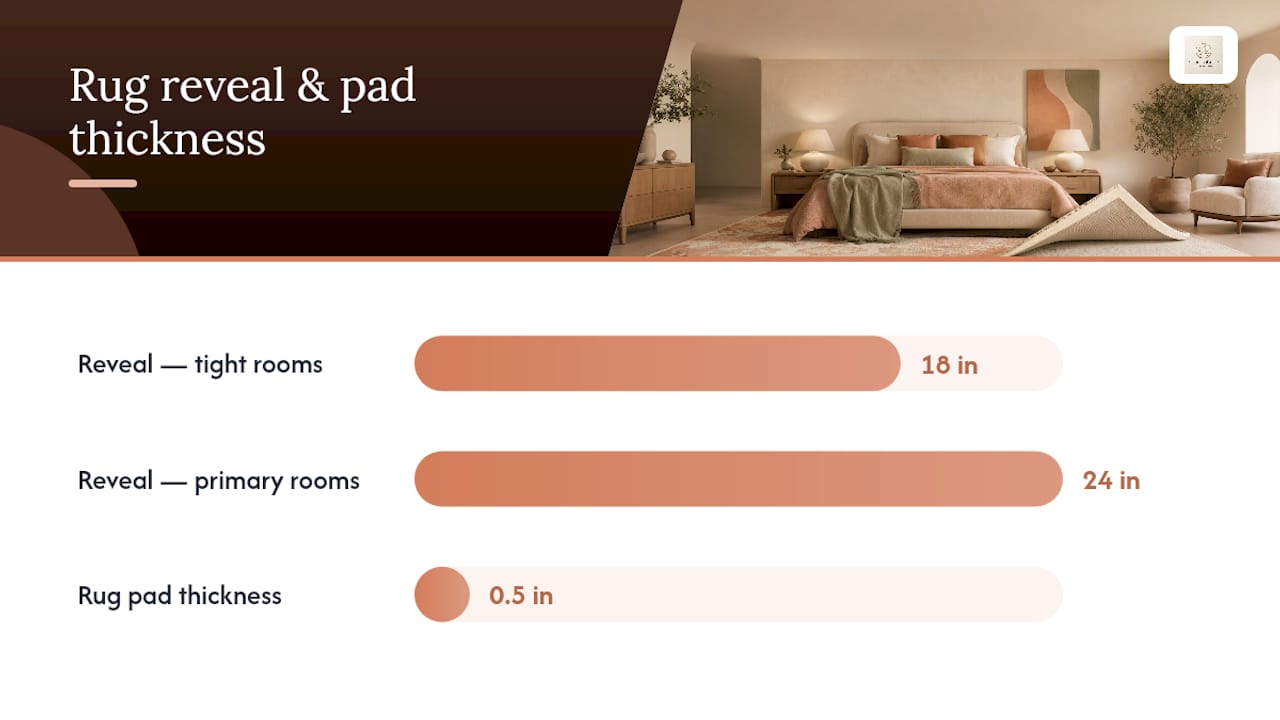
- Add 18 to 24 inches to each side and the foot. Use 24 inches in larger primary bedrooms where you want a generous, hotel-style reveal. Use 18 inches when floor space is tighter or the room has multiple furniture pieces competing for space.
- Tape out the footprint on the floor using painter’s tape before you order anything. This catches problems a tape measure alone misses, like a door that now swings into the rug edge or a dresser drawer that can’t fully open.
Three placement styles handle different budgets and room shapes. All legs on puts the entire bed, including nightstands, on the rug. It looks the most formal and works well in larger rooms. Front legs on only anchors the foot of the bed, which is the most forgiving option when a room’s proportions are awkward. The two-thirds method covers about two thirds of the bed’s length, a practical compromise when a full 9x12 doesn’t fit the budget or the floor plan.
Pro Tip: Check clearance with the rug pad already in place. A thick cushioned pad can add half an inch of height, which sometimes affects how a door swings or how a bench slides under the footboard.
What Works in Small Bedrooms?
A full-size rug isn’t always realistic in a smaller footprint, and forcing one in usually backfires. A handful of alternatives hold up visually without demanding square footage you don’t have.
- Two side runners (about 2.5 to 3 feet wide, 6 to 8 feet long) placed along each side of the bed keep bare feet off cold floors without needing a single large rug underneath the frame.
- Foot-only rugs (5x8 or 6x9) work when placed at the foot of the bed, but treat them as an accent piece rather than the room’s visual anchor, since they don’t touch the sides at all.
- Layering a smaller decorative rug over a neutral jute or sisal base is a smart fix in a room too tight for one large statement piece. It adds pattern and warmth while the base rug does the heavy lifting on coverage.
- Weight matters in apartments. A dense wool 9x12 can be difficult to roll, carry, or clean without help, while a lightweight synthetic runner is easy to shake out or machine wash.
Which Material and Pile Height Should You Choose?
Fiber choice affects comfort underfoot as much as it affects your cleaning routine. Wool holds up to years of daily foot traffic and resists crushing, which makes it a strong pick for a primary bedroom rug that won’t get replaced often. Low-pile synthetics and washable blends cost less and clean up faster, a real advantage in bedrooms shared with pets or young kids.
Pile height comes with trade-offs. A plush, high pile feels great on bare feet first thing in the morning, but it can catch on door bottoms and drawer fronts, and it holds more dust between vacuum sessions. A low pile clears furniture more reliably and wipes clean faster, though it won’t feel as soft.
- Rug pads change how the rug looks, not just how it feels. A thin non-slip pad keeps the rug from sliding without adding bulk, while a thicker cushioned pad boosts comfort but can shrink the visible margin around the rug’s edge.
- Designers generally suggest leaving roughly 12 to 24 inches of visible floor between the rug’s outer edge and the wall, with smaller rooms using the smaller end of that range.
- Wool rugs typically need professional cleaning every couple of years and cost more upfront; washable synthetic rugs can go through a home washing machine and cost less to replace if wear becomes an issue.
How Noble Abode Applies These Rules
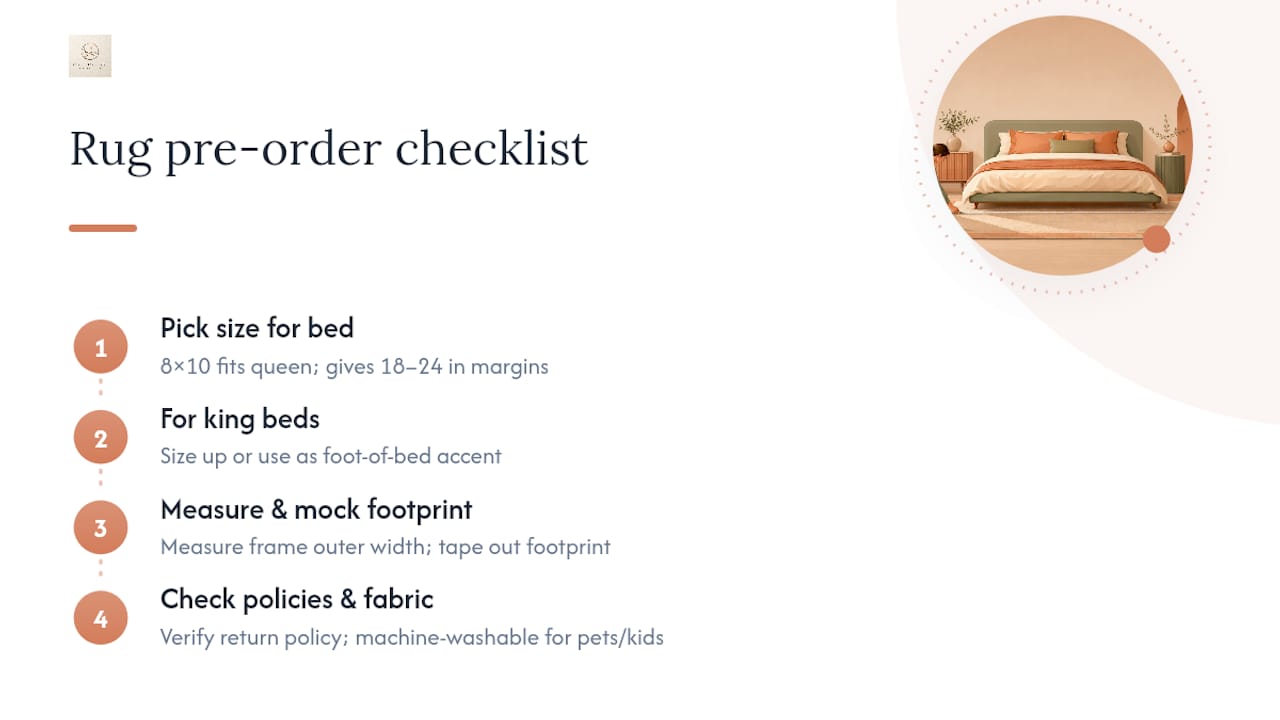
The Ornate Room Rug, a soft floral luxury rug from Noble Abode, is built at 8x10, which lines up directly with the queen bed sizing rule covered above. For a queen frame measuring 60x80 inches, that dimension delivers the 18 to 24 inch side and foot margin designers recommend, without any extra math. For a king bed, pair it with a matching layout strategy, sizing up to a larger footprint or using it as a foot-of-bed accent alongside side runners.
Before you order, run through a short checklist: measure the frame’s outer width, tape out the footprint on your bedroom floor, and check the return policy in case the scale reads differently once it’s actually on the floor. These rugs are machine washable, which is beneficial if the rug is placed in a bedroom shared with pets or kids.
The Case for Sizing Up, Not Down
Most rug-buying regret comes from thinking too small. Homeowners measure the bed, feel nervous about a big number, and round down to a size that leaves the rug looking like an afterthought rather than a foundation. The research on this is consistent: an oversized rug reads as intentional, while an undersized one fragments the room, no matter how nice the material is.
Where I think the conventional advice falls short is in treating the 18 to 24 inch rule as a fixed formula rather than a range with a decision behind it. Small rooms and tight budgets are real constraints, and a runner pair or a 6x9 accent rug is a legitimate answer, not a compromise to apologize for. What matters is that the choice is deliberate. Measure the frame first, not the mattress. Tape it out before you buy. And when you’re stuck between two sizes, go with the larger one. A rug that’s slightly too generous still looks finished; a rug that’s slightly too small never does.
— Stephane
See the Ornate Room Rug in Your Bedroom
The Ornate Room Rug has an 8x10 footprint that fits the typical sizing recommendations for a queen bed, providing the 18 to 24 inch margin designers suggest.
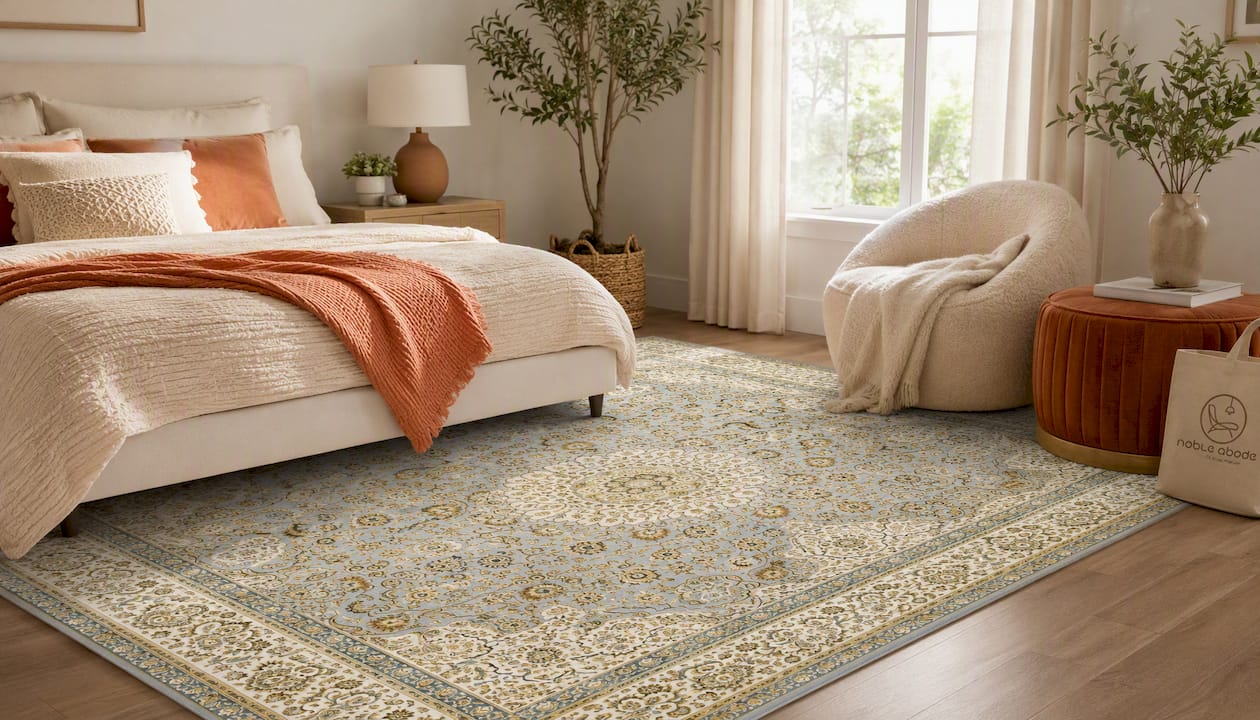
It’s a soft floral design built for daily bedroom use, and it’s machine washable, which matters if your household includes kids, pets, or just a lot of foot traffic. Measure your bed frame’s outer width before ordering, tape out the footprint on your floor, and check the product page for swatches and return details before you check out. If the 8x10 doesn’t match your room’s proportions, Noble Abode’s rug pad guidance can help you fine-tune fit and feel once the rug arrives.
Sources
- Choosing THE RIGHT Rug Size For Every Room (All Of Our Tips And Tricks) - Emily Henderson
- The ultimate rug size guide - The Spruce
- Area Rug Under a Queen Bed: Sizing and Placement Guide - DG Floors
FAQ
What size should a rug be for a bedroom?
For a queen bed, an 8x10 rug is the standard recommendation, leaving 18 to 24 inches of visible rug on the sides and foot. King beds generally call for a 9x12.
Is an 8x10 rug too big for a 10x12 room?
No. An 8x10 rug in a 10x12 room leaves about 12 inches of floor showing on each side, which fits designer guidance for a comfortable visible border in a smaller footprint.
Is a 5x7 rug too small for a bedroom?
For a queen or king bed, yes. A 5x7 rug typically only fits under a twin or full bed, or works as a foot-of-bed accent rather than a full anchor rug under a larger frame.
Is a 5x8 rug big enough for a living room?
It depends on the seating arrangement, but a 5x8 usually only fits a small living room with a loveseat rather than a full sofa and chairs. Most living rooms need at least the front legs of every seat resting on the rug, which typically calls for an 8x10 or larger.
How big should a rug be under a dining table?
Add about 24 inches beyond the table’s edge on every side so chairs stay on the rug even when pulled out, a rule detailed further in Noble Abode’s dining room rug sizing guide.