

Start With 18×18: Throw Pillow Sizes by Furniture Type for Decorators
Start with 18×18 and 20×20 as your default cover sizes, then size up to 22×22 or 24×24 for deep sofas and sectionals. Always order an insert 1 to 2 inches larger than the cover for a full, tailored look. Certain products are available that cover most of these size ranges.
TL;DR:
- Most standard throw pillows are 18×18, making them a versatile choice for sofas and beds, with 20×20 serving larger seating options.
- Corner and sectional pillows should be 20×20 or larger, with layering in smaller sizes like 16×16 or 18×18 to create a balanced visual.
- For loveseats and accent chairs, 16×16 or 18×18 pillows fit best, with larger sizes risking overcrowding on smaller seats.
- Pillow inserts should be 1 to 2 inches larger than the cover to ensure a full, plush appearance and long-lasting shape.
- Measure furniture seat depth and headboard height before buying to match pillow sizes accurately and avoid mismatched or awkward proportions.
Table of Contents
- What Are the Standard Throw Pillow Sizes?
- Which Pillow Sizes Work Best for a Sofa?
- What Size Pillows Fit a Loveseat or Accent Chair?
- How Do You Size Pillows for a Sectional?
- What Pillow Sizes Work for Beds?
- How Do You Measure a Pillow for the Right Insert?
- How Do You Mix and Layer Pillow Sizes?
- What Does Noble Abode Recommend Based on Real Product Fit?
- A Quick Sizing Checklist Worth Memorizing
- Ready to Match Pillows to Your Space?
- Where to Learn More About Pillow Sizing
- Sources
- FAQ
What Are the Standard Throw Pillow Sizes?
Square covers run from 12×12 up to 26×26, and knowing where each size lands helps you shop with confidence instead of guessing. The most common size sold across retailers is 18×18, which is why it works as a safe starting point for almost any sofa or bed. Rectangular lumbar shapes, typically 12×20 or 14×22, handle a different job: they slot in front of larger squares or anchor a headboard without hogging space.
Standard sizing conventions group into small, mid-range, and oversized categories, and each has a natural home in a room.
| Size | Shape | Best used for |
|---|---|---|
| 12×12 | Square | Accent chairs, kid’s rooms, tight corners |
| 14×14 | Square | Small seating, layering behind a lumbar |
| 16×16 | Square | Loveseats, dining nooks, single-chair accents |
| 18×18 | Square | Sofas, beds, the default “safe” choice |
| 20×20 | Square | Standard and deep sofas, front-row bed layering |
| 22×22 | Square | Deep sofas, sectionals, statement corners |
| 24×24 | Square | Oversized sectionals, large sofa beds |
| 26×26 | Square (Euro) | Bed backdrops, formal styling anchors |
| 12×20 | Lumbar | Front-row accents, headboard support |
| 14×22 | Lumbar | Wider beds, longer sofa backs |
Save this chart before you shop. Cover-only listings and insert-only listings often use these exact same numbers, so knowing the standard sizes prevents mismatched orders later.
Which Pillow Sizes Work Best for a Sofa?
Sofa depth and back height matter more than the sofa’s overall length. A shallow apartment-size sofa with a low back reads best with smaller pillows, while a deep-seat sofa needs larger covers so the pillows don’t sink into the cushions and disappear.
- Small or apartment sofas (under 72 inches): Use 16×16 or 18×18, two to three pillows total.
- Standard sofas (72 to 84 inches, average depth): Use 18×18 as your anchor size, with a 20×20 pair for symmetry.
- Deep sofas (seat depth over 24 inches): Move up to 20×20 or 22×22 so the pillows keep their shape against the deeper cushion instead of getting swallowed.
- Large or oversized sofas: Mix 22×22 corner anchors with an 18×18 or a lumbar in the middle for contrast.
A classic 3-seat sofa arrangement uses two matching squares as corner anchors, then a smaller lumbar or square centered in front. That’s three or five pillows total, following the odd-number rule that designers rely on because odd counts read as intentional, not accidental. If you’re deciding between 18×18, 20×20, and 22×22 on the same sofa, let the back cushion height be the tiebreaker: taller backs can carry the larger size without looking top-heavy.
What Size Pillows Fit a Loveseat or Accent Chair?
Smaller seating punishes oversized pillows fast. A 22×22 square on a loveseat eats half the available seat space, so scale down and let the chair’s proportions lead.
- Loveseats: Stick to 16×16 or 18×18, one pair or a pair plus a small lumbar.
- Armchairs: A single 18×18 or one lumbar pillow is usually enough; two full squares can crowd the seat.
- Accent and slipper chairs: One 16×16 in the back corner keeps the chair’s silhouette visible.
- Wingback chairs: A lumbar pillow along the lower back works better than a square, since it won’t compete with the chair’s tall frame.
For more shape options in this category, a lumbar pillow guide is worth a look before you commit to squares everywhere.
How Do You Size Pillows for a Sectional?
Sectionals succeed or fail on grouping. Treat each corner and each long run as its own mini-arrangement instead of scattering pillows evenly across the whole piece.
- Anchor every outside corner with a 20×20 or 24×24 pillow to give the sectional visual weight where it turns.
- Layer an 18×18 or 16×16 in front of each corner anchor for depth.
- Cluster three pillows per corner section and two to three along straight runs.
- Aim for a total count of five to nine pillows across the full sectional, scaling up with the piece’s size.
This clustering approach keeps a large sectional from reading like a showroom display, since uneven groupings mimic how pillows actually get used and rearranged in a lived-in home.
What Pillow Sizes Work for Beds?
Bed layering depends on width more than anything else. A queen bed can carry more pillows than a twin without feeling stuffed, and Euro shams do a job that standard throws can’t.
- Twin or twin XL: One or two 18×18 pillows in front of the sleeping pillows is plenty.
- Full or double: Two 18×18 or 20×20 pillows, centered.
- Queen: Two 20×20 pillows plus one 26×26 Euro sham behind them for height.
- King or California king: Two 26×26 Euro shams as the back row, then two 20×20 or 22×22 pillows layered in front.
Euro shams work as a height anchor behind the decorative layer, giving the bed a finished, hotel-style look without adding clutter. Skip them on a twin bed. There simply isn’t enough width to justify the extra bulk.
How Do You Measure a Pillow for the Right Insert?
Getting the fit right comes down to two things: measuring correctly and sizing the insert slightly larger than the cover.
- Lay the pillow or cover flat and measure straight across one edge, corner to corner along the seam, not diagonally.
- Repeat on the adjacent side to confirm the cover is truly square (or rectangular, for lumbar shapes).
- Round your measurement to the nearest half inch when ordering a cover or insert.
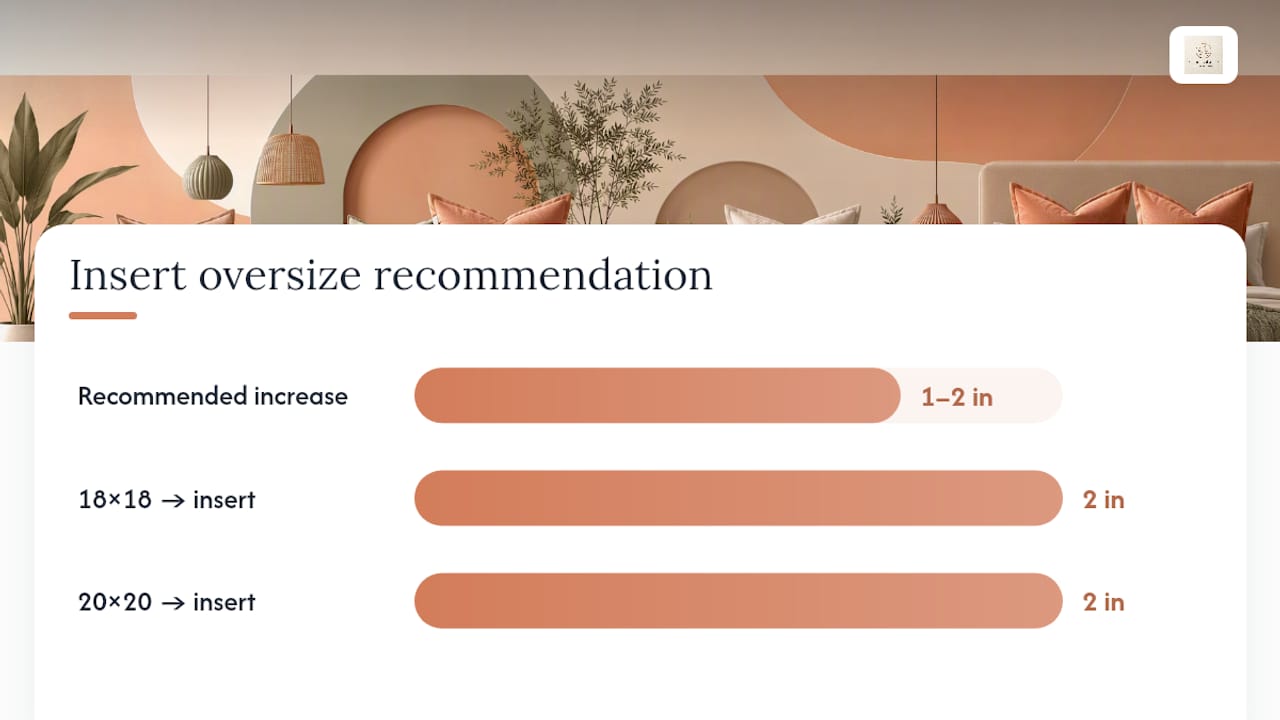
- Choose an insert 1 to 2 inches larger than the cover size. An 18×18 cover pairs well with a 20×20 insert, and a 20×20 cover pairs with a 22×22 insert.
That extra inch or two is what keeps a pillow looking plump instead of flat and deflated after a few weeks of use. Fill type changes the effect too: down inserts compress and mold to the seat, down-alternative holds its shape longer with an allergy-friendly fill, and poly fiberfill is the firmest and most budget-friendly option. Check the insert sizing guide before ordering if the cover and insert are sold separately, since sizing mismatches are one of the most common return reasons in this category.
Pro Tip: Keep a tape measure and a photo with a ruler in frame handy when shopping online. It’s the fastest way to judge real-world scale before a pillow shows up smaller than you expected.
How Do You Mix and Layer Pillow Sizes?
Layer largest to smallest, moving from the back of the seat toward the front, stepping down roughly two inches at each layer. That’s the single habit that separates a styled arrangement from a pile of mismatched cushions.
- Mix shapes: pair squares with at least one lumbar per grouping.
- Avoid buying four identical pillows. Uniform sets read as generic rather than curated.
- Vary texture: velvet, boucle, linen, and knit all sit differently even at the same size.
- Match pattern to scale. Large prints need a bigger canvas, so save bold florals or geometrics for 20×20 or 22×22 covers, and keep small prints on 16×16 to 18×18.
Three arrangements cover most furniture: a 3-seat sofa with two 20×20 corners and one 18×18 lumbar centered; a sectional corner with a 24×24 anchor, an 18×18 layer, and a small lumbar tucked in; and a queen bed with two 26×26 Euro shams behind two 20×20 pillows. Retailers commonly recommend three to five pillows for a standard sofa and five to nine for a sectional, which keeps the count generous without tipping into clutter. For more full-room proportion cues, a rug placement guide covers how pillow scale should relate to the rug and sofa footprint beneath it.
What Does Noble Abode Recommend Based on Real Product Fit?
Stephane, who writes on sizing and styling for Noble Abode, points to product fit as the fastest way to shortcut all this math. The Retro Luxury Sofa Bed with Pillows ships with pillows already scaled to its own proportions, which removes the guessing entirely for anyone furnishing a larger sofa-bed setup. The Light Luxury Retro Style Pillow for Sofa & Bedside sits in the 18×18 to 20×20 range that works across most standard sofas and beds alike.
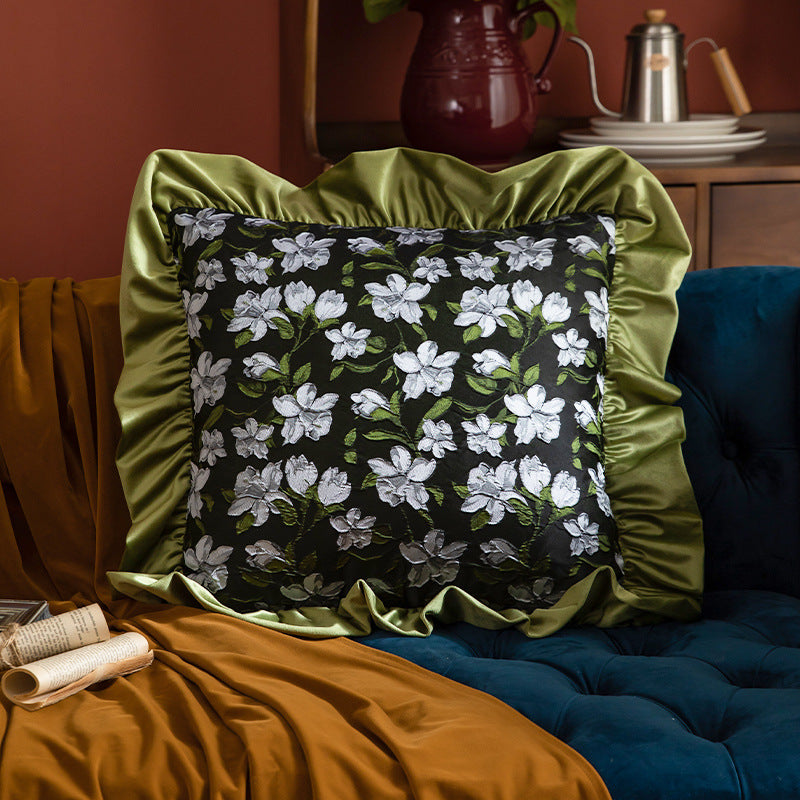
For oversized or Euro-style styling, the YCOLL Dark Grey Pillow Covers come in the 26×26 range covered above. Velvet-striped covers in that size hide insert seams well and hold their shape through regular use. Pair any of these with a durable, easy-care cover if the pillows sit in a high-traffic room.
A Quick Sizing Checklist Worth Memorizing
Three rules cut most sizing decisions down to seconds. First, match cover size to seat depth, not sofa length: deeper seats need bigger pillows. Second, size the insert 1 to 2 inches larger than the cover every single time. Third, layer largest to smallest and mix at least one lumbar into any grouping of three or more.
Measure the furniture before you order anything. A pillow that looks right in a product photo can look completely wrong against your actual seat depth or headboard height.
— Stephane
Ready to Match Pillows to Your Space?
Guesswork over pillow sizing usually ends the same way: pillows that look shrunken on a deep sofa or oversized on a loveseat. The catalog is built around the size brackets covered above, offering pieces scaled to common furniture types.
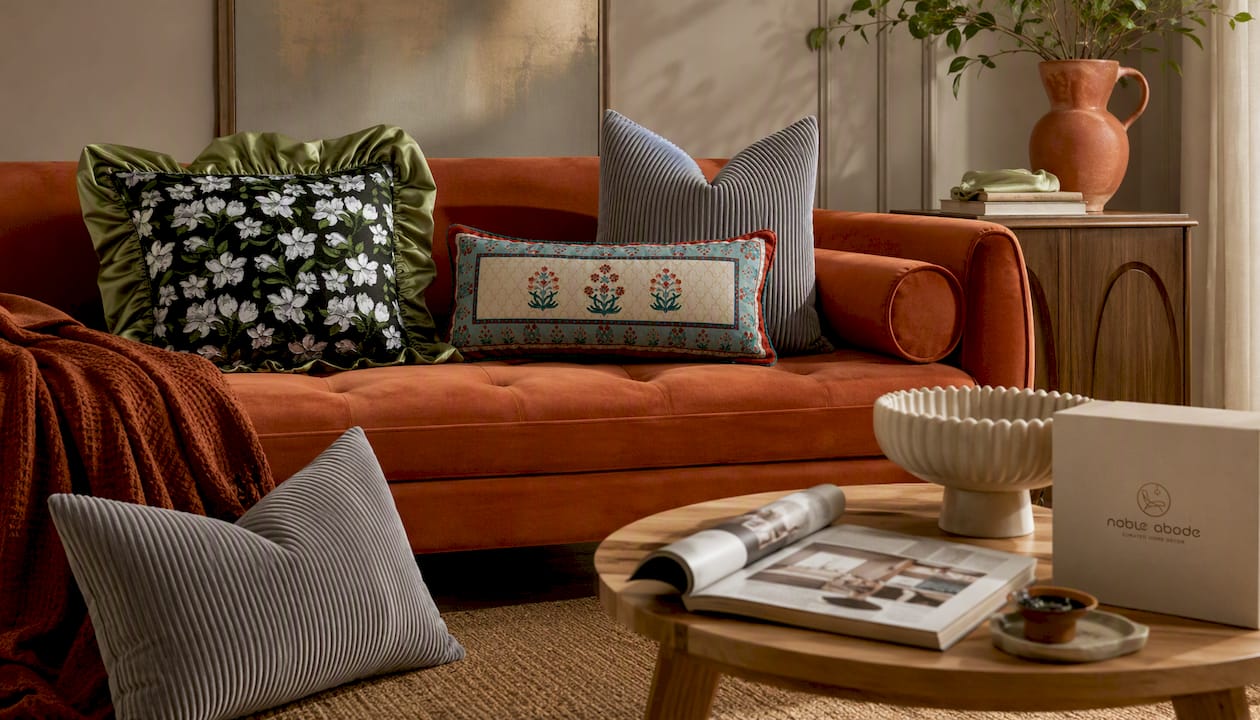
For larger sofas and sofa-bed setups, the Retro Luxury Sofa Bed with Pillows comes with pillows proportioned to the piece, so there’s no separate insert math to do. For standard sofas and bedside styling, the Light Luxury Retro Style Pillow for Sofa & Bedside sits right in the 18×18 to 20×20 range most rooms call for. If you want the Euro-anchor look on a bed or an oversized statement on a sectional corner, the YCOLL Dark Grey Pillow Covers come in a 26×26 set of two with a velvet-striped finish that pairs well with the insert sizing rule covered earlier. Browse the current sizes and covers, and order the insert one size up from whichever cover fits your space.
Where to Learn More About Pillow Sizing
- Standard pillow dimensions and lumbar sizes, Designing Idea
- Measuring technique for covers and inserts, Cushion Source
- Euro sham and sectional sizing, Wayfair
- Insert sizing basics for covers bought separately, Afrokoptiki
Sources
- Throw Pillow Sizes (Standard & Common Dimensions) | Designing Idea
- How to measure a throw pillow | Cushion Source
- Your guide to pillow sizes for every space | Wayfair
- Throw Pillow Size Guide: Complete Dimensions & Styling Guide (2026) | Tropical Pillow
FAQ
What Is the Standard Size of a Throw Pillow?
18×18 is the most commonly sold size and works as a flexible default for most sofas and beds, with 20×20 as the next most popular option for larger seating.
Can a 20×20 Pillow Fit in an 18×18 Case?
No. A 20×20 insert is too large for an 18×18 cover and will strain the seams; match insert size to the cover’s listed dimensions, sizing up only 1 to 2 inches for fullness.
Is 18×18 a Standard Throw Pillow Size?
Yes, 18×18 is one of the most widely stocked standard sizes across retailers and a safe starting point when you’re unsure what size to buy.
What Is the Difference Between a 16×16 and an 18×18 Throw Pillow?
A 16×16 suits smaller seating like loveseats and accent chairs, while an 18×18 has more presence and works better on full-size sofas and beds.