

What Size Pillow Insert Do You Need for Your Cover?
For most decorative pillow covers, buy an insert 1 to 2 inches larger than the cover size. A 20-inch cover generally gets an insert slightly larger to ensure a full, plump look that doesn’t sag at the corners. Measure the actual cover before you order anything, because labeled sizes vary by brand.
Here’s how to pick the right oversize:
- +1 inch: soft, relaxed look, or covers made from delicate or vintage fabric.
- +2 inches: the standard choice, plump and photo-ready, works with most polyester or cotton covers.
- +3 to 4 inches: dramatic, firm “karate-chop” styling, best reserved for high-loft fabrics like faux fur.
Standard cover sizes cover a range typically used in home decor, and getting the insert size wrong can noticeably affect how the pillow sits on a sofa. Stephane, who curates the decor line at Noble Abode, sizes every insert recommendation against the actual cover dimensions rather than a generic label.
Key Takeaways
The right pillow insert size runs 1 to 2 inches larger than the cover, with the exact oversize depending on fill type, fabric, and the fullness you want.
| Point | Details |
|---|---|
| Default sizing rule | Buy an insert 1 to 2 inches larger than the cover; +2" is standard for a plump look. |
| Measure before buying | Lay the cover flat and measure seam to seam, since labeled sizes vary by brand. |
| Match fill to fabric | Down and faux-down hold +2" well; polyfill often needs only +1". |
| Protect delicate covers | Vintage or embroidered covers do better at same size or +1" to spare the seams. |
| Shop with confidence | Noble Abode’s decor collection pairs well with correctly sized pillows once you’ve measured your cover. |
Table of Contents
- Pillow Insert Size Chart for Common Cover Sizes
- How Do You Measure a Pillow Cover Before Buying an Insert?
- Do Different Fill Materials Change the Insert Size You Need?
- When Should You Break the Standard Sizing Rule?
- Sources
- FAQ
Pillow Insert Size Chart for Common Cover Sizes
Once you know your cover’s measurement, the math is simple. The insert is generally chosen to be modestly bigger than the cover, often about two inches larger for square covers based on common home-decor sizing conventions, based on the sizing conventions used across pillow insert size charts.
| Cover Size | Recommended Insert | Look |
|---|---|---|
| Cover Size | Recommended Insert | Look |
| — | — | — |
| Smaller square sizes | Slightly larger inserts typical for fullness | |
| Mid-range square sizes | Moderately larger inserts typical for fullness | |
| Larger covers | Larger inserts commonly used for fullness |
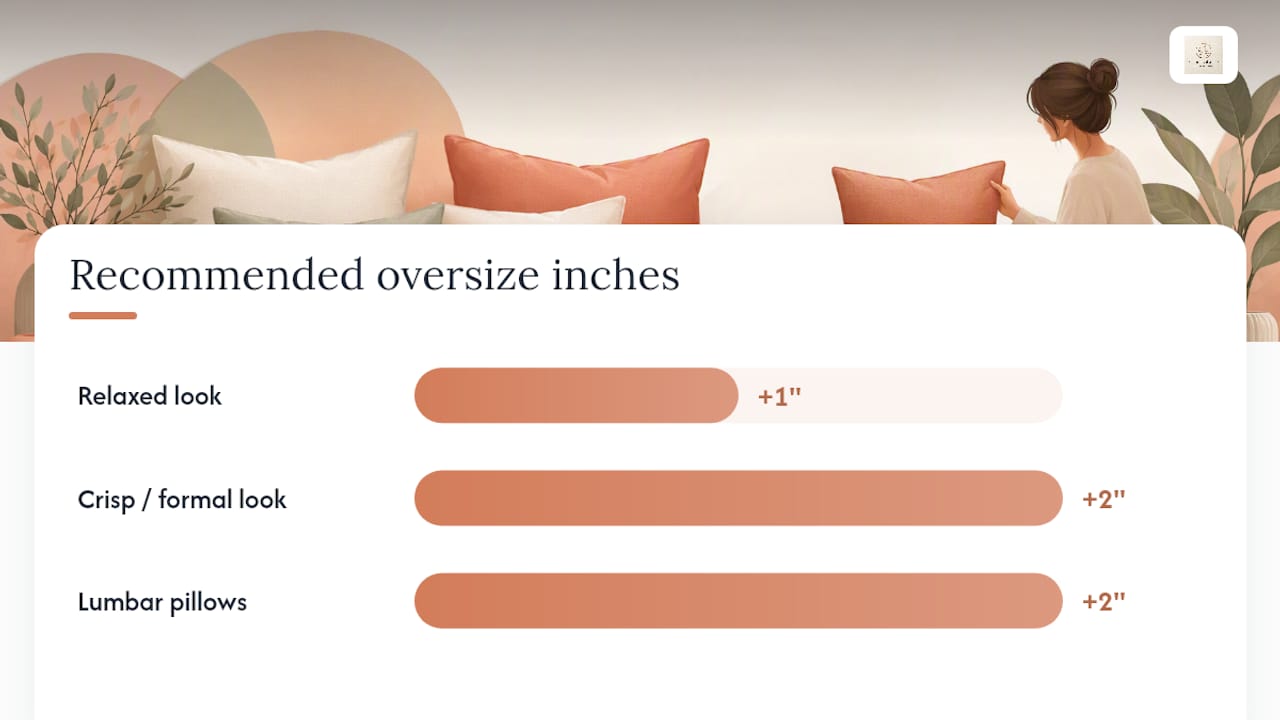
Lumbar covers typically follow a sizing pattern with inserts sized moderately larger than the cover, such as a slight oversize on each dimension, following the same +2" logic on each side. If you’re shopping for a sofa or bed, the best lumbar pillows for sofas and beds covers common shapes and how they stack against square pillows.
Most decor guides recommend avoiding overly large oversize beyond a few inches for typical woven covers to prevent strain on seams. Push past that and the seams start to strain, especially on covers with piping or a hidden zipper.
Choosing among various oversize increments depends on factors like desired look and insert fill, the look you want and the fill inside the insert. A relaxed, lived-in throw pillow does fine at +1". A crisp accent piece on a formal sofa usually wants the full +2". Anything beyond that is a styling choice for high-loft or plush fabrics, not a default.
How Do You Measure a Pillow Cover Before Buying an Insert?
Getting this step right prevents almost every fit problem people run into later. Follow these steps:
- Lay the cover flat on a table or floor, smoothing out wrinkles, and measure seam to seam across the width and then the height.
- Round the measurement logically. A cover that measures 19.5 inches is functionally a 20-inch cover, round up if you want fullness, or keep it flush if the cover fabric is stretchy.
- Match the number to the chart, then adjust up or down based on how firm you want the finished pillow to look. Check the seller’s listing for interior seam allowance, since some inserts run slightly under their labeled size.
Pro Tip: If a cover has thick piping, ruffled trim, or an internal lining, measure the usable interior space rather than the outer seam. Bulky trim can eat up an inch of interior room, and sizing off the outer edge leaves the insert loose inside the cover.
Sizing advice only works if it’s measured against the actual product in your hands. Labeled sizes vary enough between brands that skipping this step is the most common reason a “20-inch” cover ends up looking underfilled.
Do Different Fill Materials Change the Insert Size You Need?
Yes, and this is where a lot of shoppers get tripped up. The fill inside an insert affects how much oversize you actually need, not just the outer dimension.
- Down inserts hold their shape best and support the full +2" rule without sagging, which is why designers default to down for structured looks, a pattern confirmed by PillowDecor’s insert guidance.
- Faux-down inserts mimic that same loft and shape retention, a solid choice if allergies rule out real down.
- Polyfill inserts compress more over time and read softer, so +1" is often enough to get a full look without over-stuffing the cover.
Fabric matters just as much as fill. Thick knits, velvet, faux fur, and heavy embroidery all add bulk that eats into the cover’s usable interior space, so these covers often need a larger insert, or a higher-loft fill, to avoid looking flat or sagging in the middle within a few weeks.
One more practical note: washable inserts make sense for everyday pillows that see pet hair or spills, while non-washable down inserts are better suited to formal, low-traffic pieces. Factor that into which fill you buy, not just the size.
When Should You Break the Standard Sizing Rule?
Some covers call for a different approach entirely.
- Vintage or delicate covers: stick to the same size as the cover, or +1" at most, to avoid straining old seams.
- High-loft or faux-fur covers: +3 to 4" can look great, but inspect the seams first since these fabrics have less give than standard cotton.
- Karate-chop firm styling: pair +3 to 4" oversize with a firm down or high-loft insert. For a softer, more relaxed pile, go with +1" and a lighter fill instead.
- Sofa scaling: deeper sofas typically call for 22 to 24-inch pillows, while loveseats and shallower seating look better with 18 to 20-inch pillows, a scale relationship laid out in Puffy’s sofa pillow sizing guide.
Designers who repeat the +1" rule for antique linens do it for a reason: older fabric and hand-stitched seams don’t tolerate the same stretch a modern polyester cover shrugs off.
Why Getting the Fit Right Changes How a Room Feels
I’ve watched the same sofa look completely different depending on whether the pillows inside the covers were sized right. An underfilled insert makes an expensive cover look cheap, while an oversized one on a delicate fabric can blow out a seam within months. Noble Abode builds its styling guidance around the actual cover measurement, not the label on the package, because that’s the detail that determines whether a room looks curated or just decorated.

Shop Coordinating Covers and Decor After You’ve Measured
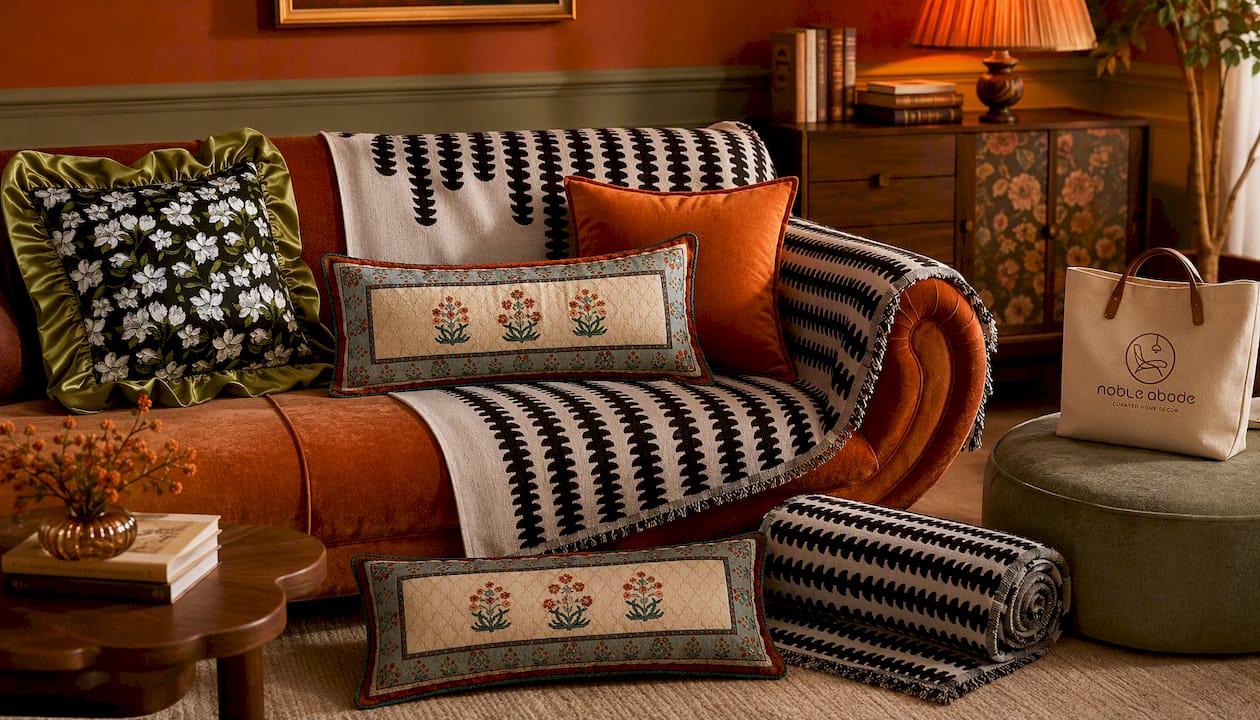
Once you know your insert size, matching decor is the fast part. Noble Abode’s Luxury Decor collection carries pieces built around the same idea as a well-fitted pillow: proportion done right, without guesswork. Measure your cover first, then browse pieces that scale with it.
A few places to start:
- The best pillow covers for 2026 guide if you’re still choosing a cover before sizing the insert.
- The Nordic Modern Minimalist Living Room Décor piece for pairing with textured throw pillows.
- The European Luxury Metal Decorative Piece for a shelf or console next to a styled sofa.
Measure the cover, pick the insert from the chart above, then browse the collection for pieces that complete the look.
Sources
FAQ
What size should a pillow insert be?
An insert should measure 1 to 2 inches larger than the cover on each side, so a 20-inch cover typically takes a 22-inch insert for a full look.
Do pillow inserts need to be bigger than the cover?
Yes, in almost every case. A same-size insert tends to look flat and underfilled once it’s stuffed into a cover, which is why the +1" to +2" rule is standard practice.
What size insert should I get for a 20x20 pillow cover?
A 20x20 cover pairs best with a 22x22 insert for standard fullness, or a 21x21 insert for a softer, relaxed look.
What size insert should I get for a 24x24 pillow cover?
A 24x24 cover pairs with a 26x26 insert for the plump, polished look most decor guides recommend, though delicate fabrics do better with only about +1 inch oversize.