

How to Create Personalized Spaces That Reflect You
Your home should work for you, look like you, and feel like you. Personalized spaces are living environments shaped by your identity, lifestyle, and values, not by a showroom floor or a trending Pinterest board. The core components of a well-personalized space include:
- Style identity: A consistent aesthetic that reflects your preferences, whether minimal, eclectic, or traditional
- Functional layout: Furniture placement and storage that supports how you actually live
- Meaningful decor: Objects with personal history, cultural significance, or emotional weight
- Sensory comfort: Textures, lighting, and color that affect how a room feels, not just how it looks
- Cohesion: A visual thread connecting every element so the space reads as intentional
Getting all five right is what separates a room that looks designed from one that genuinely feels like home.
Table of Contents
- Why personalized spaces improve well-being and satisfaction
- How to discover your personal style before you decorate
- Practical ideas and tips to personalize your living space
- How your decor tells a story and connects you emotionally
- Design rules that keep personalization balanced and intentional
- What research says about the effectiveness of personalized design
- Final thoughts on personalizing your living environment with confidence
- Sustainable and eco-friendly personalization options
- Tools and resources for DIY personalization projects
- Bring your space to life with Noble Abode
- Key Takeaways
Why personalized spaces improve well-being and satisfaction
The connection between personalization and psychological health is well documented. People who personalize their surroundings report higher life satisfaction, reduced stress, and better performance, as supported by recent research. That finding holds across home offices, living rooms, and shared workspaces.
Research published in Virtual Reality by Springer Nature found that design personalization enhanced participants’ psychological well-being, workspace satisfaction, and work performance. The same study confirmed that autonomy over spatial decisions shapes both functional ability and emotional experience. When you control how a space looks and functions, you feel more competent and engaged.
Stat to know: A study with 18 VR users found a 63% improvement in presence when environments were spatially grounded in users’ personal physical rooms, compared to standard passthrough solutions.
Personalization also reduces emotional exhaustion. Decorating a space to reflect familiar or preferred environments gives you a sense of psychological stability, particularly in open-plan or multi-use settings where privacy is limited.
How to discover your personal style before you decorate
Style discovery is a practical process, not a creative gift. Start with observation before you buy anything.
- Audit what you already own. The objects you have kept for years, regardless of trend, reveal your actual preferences.
- Build a mood board. Collect images from shelter magazines, Instagram saves, or tools like Roomstyler to identify recurring colors, textures, and shapes.
- Take a style quiz. Many free quizzes ask about lifestyle habits, color comfort, and furniture silhouettes to surface a style category.
- Ask three questions: What feeling do I want when I walk in? What do I want to do in this room? What do I never want to see in here?
- Identify your design DNA. This is your set of enduring preferences, the things that show up consistently across every room you have ever loved. Knowing it reduces decision fatigue on every future project.
For a deeper look at home decor styles and how to match them to your personality, Noble Abode’s style guide covers the major categories with practical examples.
Pro Tip: Save a folder of rooms you dislike as much as rooms you love. Knowing what you want to avoid is just as useful as knowing what you want.
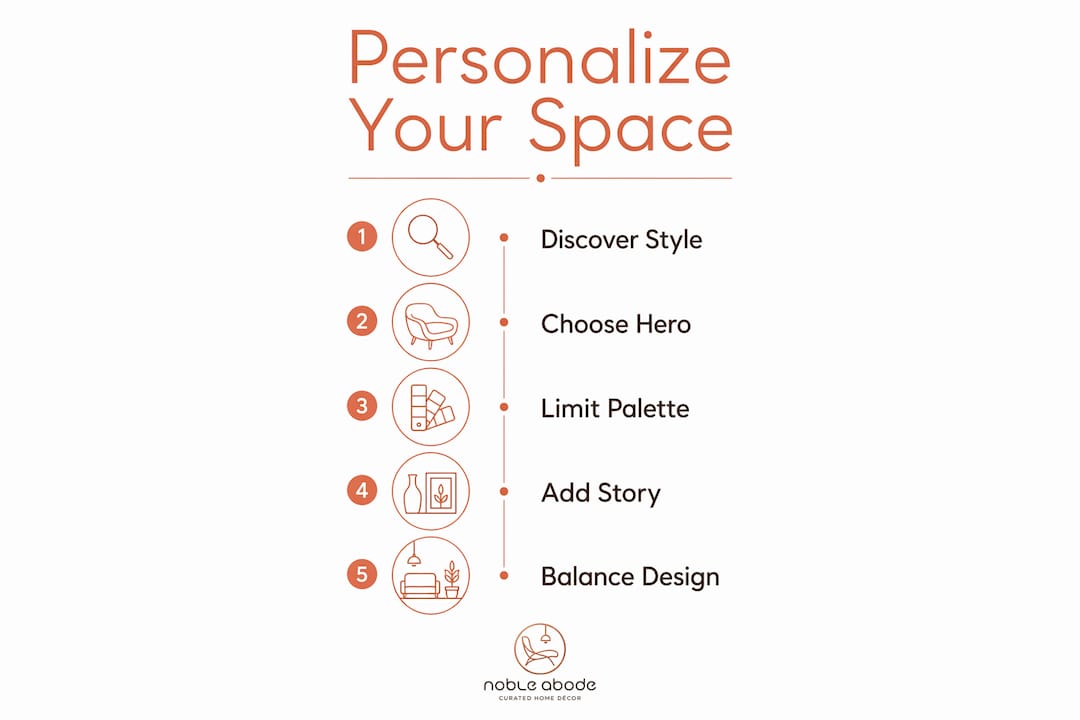
Practical ideas and tips to personalize your living space
Personalization does not require a full renovation. The most impactful changes are often targeted and affordable.
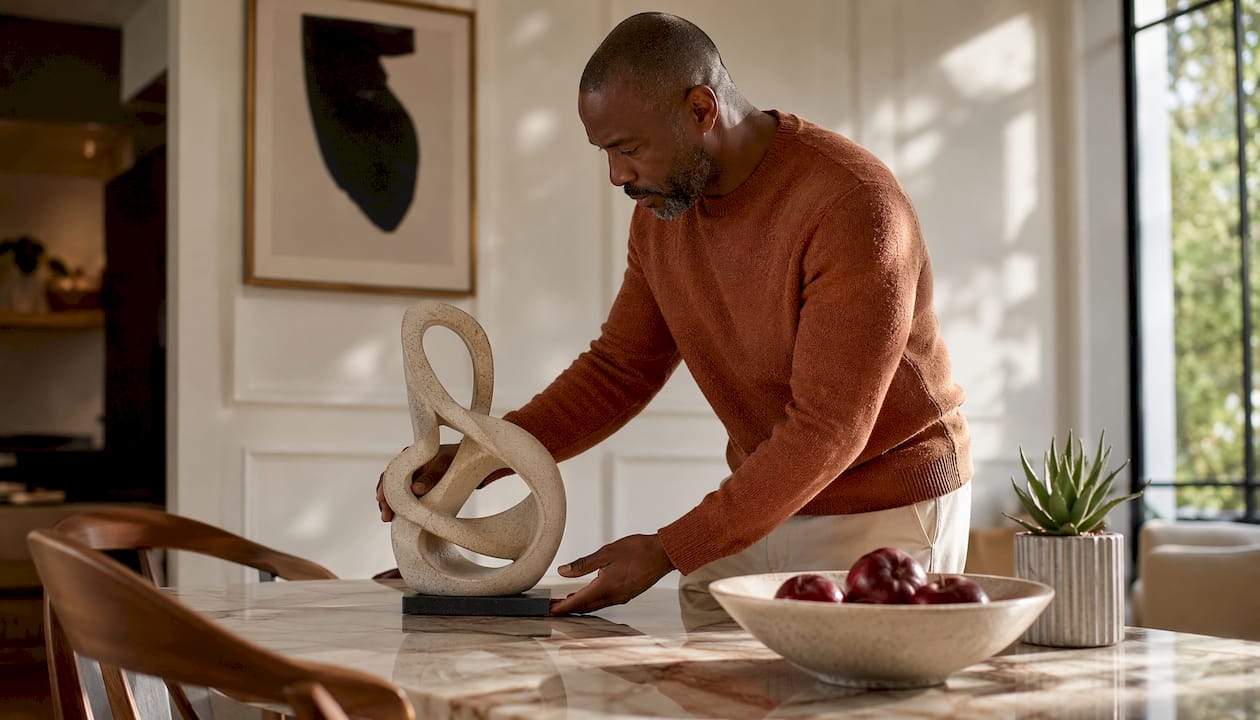
Start with a hero piece. Choose one item, a rug, a sculpture, a piece of art, that anchors the room’s color palette and mood. Every other accessory decision flows from it. This single move prevents the scattered, unfinished look that comes from buying pieces without a reference point.
Use vignette styling on flat surfaces. A shelf, console, or side table styled with three to five objects of varying height, texture, and meaning creates an instant focal point. Combine something tall (a lamp or vase), something with texture (a woven object or ceramic), and something personal (a framed photo or travel find). The result reads as curated rather than cluttered.
Additional ideas worth applying:
- Swap generic hardware on cabinets and doors for pieces in a finish that matches your style
- Layer rugs to add depth and define zones in open-plan rooms
- Use statement furniture as a personality anchor in smaller rooms where wall space is limited
- Hang art at eye level rather than pushed to the ceiling
- Add a single bold color through throw pillows, a lamp shade, or a decorative object to test a palette before committing to paint
Pro Tip: Limit your active color palette to three tones per room: one dominant, one secondary, one accent. This prevents visual noise without making the space feel sterile.
How your decor tells a story and connects you emotionally
Rooms communicate. Every object you place signals something about who you are and what you value. The most memorable spaces are not the most expensive ones. They are the ones where the objects clearly belong to the person who lives there.
Meaningful personalization works through specificity:
- Travel objects: A ceramic from a market in Oaxaca or a textile from a trip to Japan carries more visual interest than a mass-produced equivalent.
- Family pieces: A grandmother’s clock or a father’s bookshelf, repainted or refinished, grounds a room in personal history.
- Commissioned or local art: A piece from a local artist connects the room to a community and a moment in time.
- Books as decor: Arranged by color or subject, a personal library reveals taste and invites conversation.
Balancing personalization in shared spaces requires negotiation, not compromise. Assign each person a zone or surface where their preferences dominate. In shared areas, look for objects that both people find meaningful or neutral, then let individual expression live in bedrooms, home offices, or dedicated shelves.
For customizable office environments, Noble Abode’s guide on personalizing office space covers how to balance identity and productivity in the same room.
Design rules that keep personalization balanced and intentional
Expert design principles exist to prevent personalization from tipping into visual chaos. Two of the most practical are the 60/40 rule and the 3-5-7 rule.
The 60/40 rule divides a room’s visual weight: 60% goes to a dominant style, material, or color family, and 40% introduces contrast or personality. A room that is 100% one aesthetic reads as a showroom. The 40% is where your individuality lives.
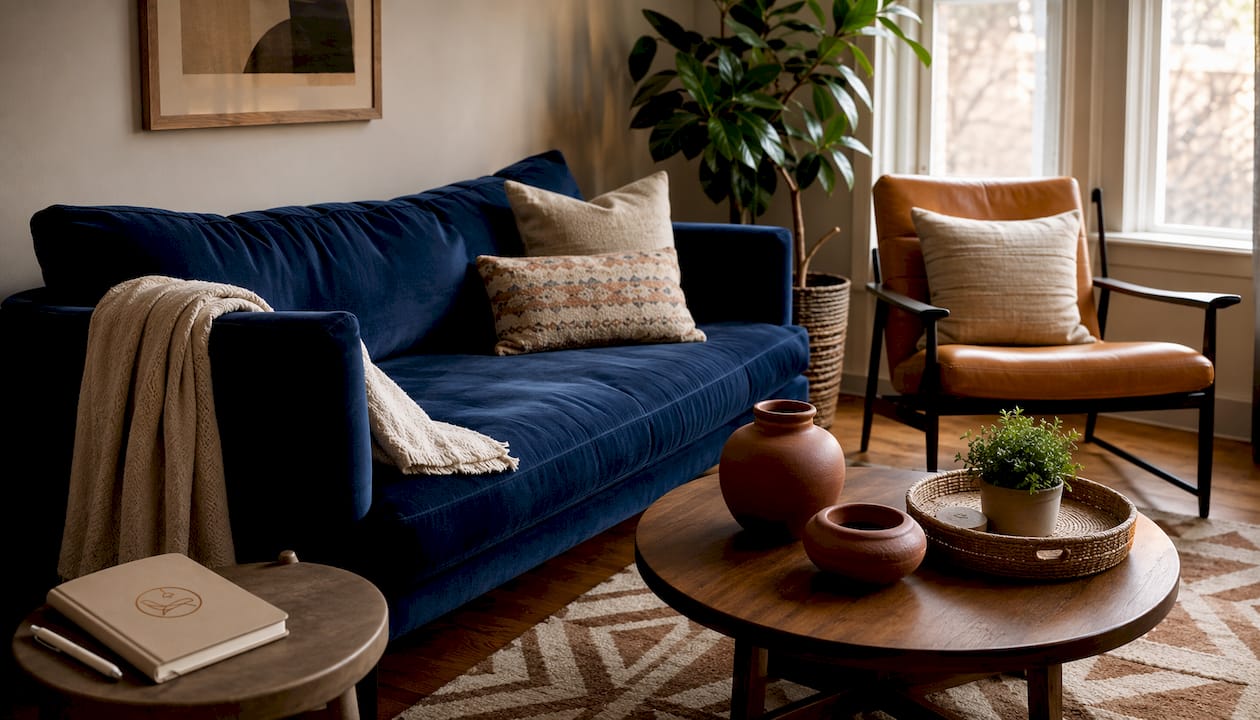
The 3-5-7 rule applies to groupings of decorative objects. Odd numbers create visual tension and interest. Group items in threes, fives, or sevens rather than pairs or even rows. Vary the height within each group so the eye moves rather than stops.
Additional guidelines for balanced personalization:
- Respect room dimensions and structural limits before choosing furniture. Poor furniture flow is visible regardless of how stylish the individual pieces are.
- Keep negative space. A wall or surface left empty gives the eye a place to rest and makes the objects nearby more impactful.
- Match the scale of decor to the scale of the room. A small sculpture on a large console disappears. A large vase in a tight corner overwhelms.
- Repeat a material or color at least three times across a room to create cohesion without monotony.
What research says about the effectiveness of personalized design
The Springer Nature study on virtual reality workspaces found that personalization enhanced affective attachment and intrinsic motivation, which indirectly improved work performance. The mechanism is straightforward: when a space reflects your identity, you feel more ownership over it, and that ownership translates to engagement.
Research finding: The same study confirmed that excessive or overly complex personalization options can increase cognitive load, negatively affecting concentration. Optimal balance between detail and simplicity is the goal.
Understanding your design DNA, the consistent preferences that appear across every space you have loved, reduces future decision fatigue. Tools that remember your preferences across projects make each subsequent redesign faster and more coherent. Tuis, an AI interior design tool, is built specifically around this principle: it learns your taste over time and tracks decisions so your third renovation is easier than your first.
Pro Tip: Keep a running note or folder of every decor decision you make, what you bought, what you rejected, and why. Over two or three projects, patterns emerge that define your design DNA clearly.
Final thoughts on personalizing your living environment with confidence
Personalization is not a one-time project. It is an ongoing process of editing, adding, and refining as your life changes. The most important step is starting with intention rather than impulse.
Key reminders before you begin:
- Define your style identity before you shop, not during
- Choose a hero piece first and build around it
- Apply the 60/40 and 3-5-7 rules to maintain visual balance
- Respect the room’s spatial structure; good flow matters as much as good taste
- Let meaningful objects do the work that generic decor cannot
Personalization backed by design principles produces spaces that are both beautiful and functional. The goal is a room that feels like yours the moment you walk in.
Sustainable and eco-friendly personalization options
Personalizing your space does not require buying new. Sustainable personalization prioritizes quality, longevity, and intentional sourcing.
Secondhand and vintage pieces carry history and character that new production items rarely match. Thrift stores, estate sales, and online resale platforms offer furniture and decor at a fraction of retail cost, with a lower environmental footprint.
Natural materials age well and add warmth without synthetic off-gassing. Linen, wool, rattan, solid wood, and stone are durable choices that improve with use rather than degrading quickly.
Multifunctional furniture reduces the total number of pieces a room needs. A storage ottoman, a bench with drawers, or a multifunctional furniture piece designed for small spaces serves two purposes without doubling the material cost or visual clutter.
Repainting, reupholstering, or refinishing existing pieces is often more sustainable and more personal than replacing them. A chair recovered in a fabric you chose yourself carries more identity than one bought off a shelf.
Tools and resources for DIY personalization projects
The right tools make personalization projects faster and more accurate.
Planning and visualization tools:
- Roomstyler: A free browser-based room planner that lets you lay out furniture to scale before moving anything physically
- Tuis: An AI design companion that learns your preferences across projects and reduces decision fatigue
- Habitas: Upload a room photo and receive three photorealistic redesign variants in under 60 seconds, each with a categorized execution plan you can hand to a contractor
- Cova: Generates a photorealistic AI render of your room in your chosen aesthetic, with every item in the render shoppable from major retailers
Physical DIY resources:
- The National Kitchen and Bath Association (NKBA) publishes planning guidelines for room dimensions, clearances, and layout standards
- Hardware stores like Home Depot and Lowe’s offer free design consultation services for paint, tile, and flooring projects
- YouTube channels from professional interior designers cover techniques like vignette styling, gallery wall layouts, and furniture arrangement in real time
For ready-to-place decor that adds immediate personality, Noble Abode’s home decor ideas guide covers statement pieces that work across a range of styles and room sizes.
Bring your space to life with Noble Abode
Noble Abode curates statement decor pieces built for lasting impact. From abstract sculptures to decorative desk accents, every item is selected for timeless design and premium craftsmanship. Start with a Key Desktop Storage Decor piece to anchor your workspace, or explore the full collection at Noble Abode to find the hero piece your room is missing.
Key Takeaways
Personalized spaces improve well-being, reduce stress, and increase satisfaction when built around a clear style identity, intentional design rules, and meaningful objects.
| Point | Details |
|---|---|
| Start with style discovery | Audit existing objects, build a mood board, and define your design DNA before buying anything new. |
| Use a hero piece as anchor | One focal item guides every color, texture, and accessory decision that follows. |
| Apply the 60/40 and 3-5-7 rules | Sixty percent dominant style, forty percent contrast; group objects in odd numbers for visual interest. |
| Respect spatial structure | Room dimensions and furniture flow determine whether personalization reads as intentional or chaotic. |
| Personalization supports well-being | Research confirms that autonomy over spatial decisions improves psychological stability, satisfaction, and engagement. |