

How to Personalize Office Space for Productivity in 2026
Personalizing your office space is the process of customizing your work environment to reflect your individual style while actively supporting your work habits and comfort. The industry term for this practice is workspace personalization, and it covers everything from ergonomic desk setup to decor selection and storage systems. Personalization creates a functional ecosystem that supports both workflow and professional identity, not just aesthetics. 66% of companies using flexible workspaces rely on office personalization to establish brand presence. That figure shows personalization is a professional standard, not a personal indulgence.
How to personalize your office space: layout and ergonomics first
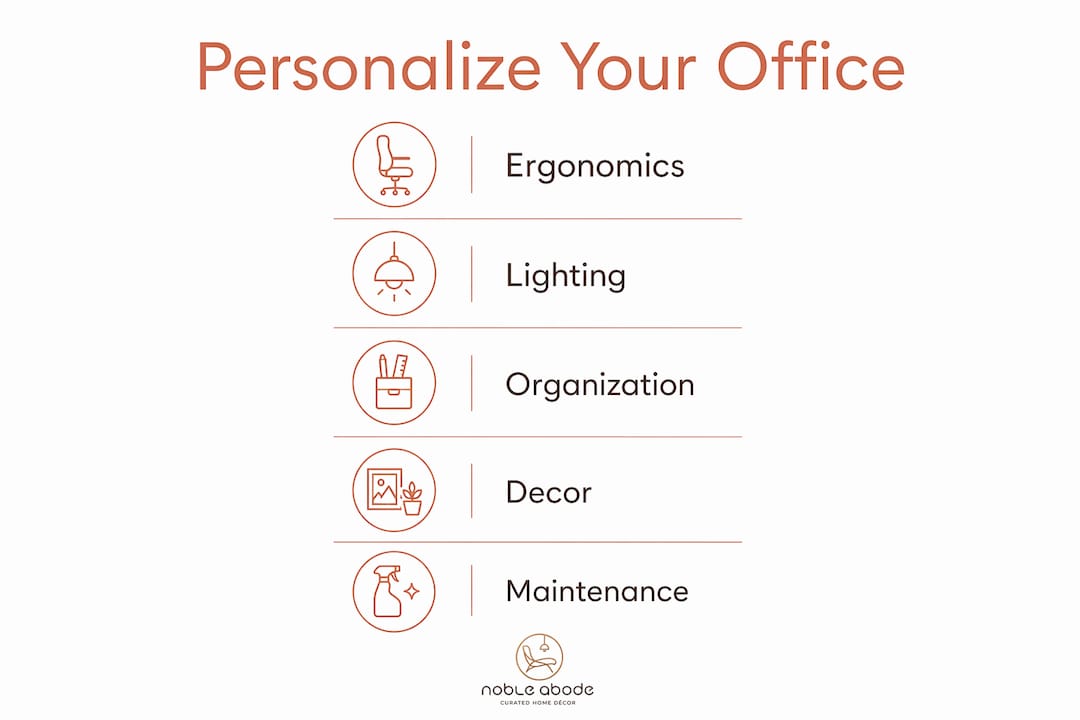
Ergonomics and lighting come before any decorative choice. A workspace that causes physical discomfort will undermine every decor upgrade you make. Getting the physical setup right is the foundation of any successful workspace personalization effort.
Desk and chair positioning
- Set desk height so your elbows rest at a 90-degree angle when typing. This reduces shoulder and wrist strain during long work sessions.
- Position your monitor so the top edge aligns with eye level. Looking down or up at a screen causes neck strain within hours.
- Place your desk near a window for natural light, but position the screen perpendicular to the window to avoid glare directly on the display.
- Use a chair with lumbar support and adjust the seat height so your feet rest flat on the floor.
Cable and surface management
Cable management with trays, Velcro ties, and wireless charging pads hides 2–4 cords and dramatically reduces visual clutter. A clean surface makes your decorative items stand out instead of competing with tangled wires. Wireless charging pads also free up outlet space and reduce the number of cables crossing your desk.
Pro Tip: An L-shaped desk gives you two distinct work zones: one for your primary screen and keyboard, and one for reference materials or a second monitor. This layout suits professionals who switch between focused writing and active research throughout the day.
Workflow analysis before arranging furniture helps you place the tools you use most within arm’s reach. Put your printer, notebooks, and reference books where you naturally reach, not where they look good.
What lighting setup works best for a personalized workspace?
Lighting is the single most overlooked factor in office design. Most professionals rely on one overhead light source, which creates harsh shadows and eye strain by midday.

The three-layer lighting system
Effective office lighting uses three distinct layers working together:
- Natural light: Position your desk to receive indirect daylight. Direct sunlight causes screen glare and temperature discomfort.
- Task lighting: An adjustable desk lamp with directional control lets you focus light exactly where you need it. Choose a lamp with adjustable color temperature so you can shift from warm tones (2,700K) for reading to cool tones (5,000K) for detail work.
- Ambient overhead lighting: Overhead fill lighting softens the contrast between your bright screen and a dark room, reducing eye fatigue over long sessions.
Avoiding harsh overhead-only lighting is the single change that most reduces eye strain in home offices. The combination of all three layers creates a balanced, comfortable environment that supports focus.
Pro Tip: Position your desk lamp to the side opposite your dominant hand. A right-handed worker benefits from a lamp on the left side, which prevents the hand from casting a shadow across the work surface.
Adjustable brightness matters as much as color temperature. Dimmer controls on overhead lights let you match ambient brightness to the time of day, which reduces the visual fatigue that builds up during afternoon work sessions.
How do you add decor without cluttering your office?
Decor selection is where most professionals make their biggest mistakes. The goal is to create personal work area that feels intentional, not accumulated.
The 80/20 rule for desk decoration keeps 80% of the desk surface functional and reserves 20% for accents. This prevents visual fatigue and keeps focus on work rather than objects. A single well-chosen piece carries more visual weight than five random items grouped together.
Decor categories that work in professional offices
- Wall art: Hang artwork so the center aligns at eye level, filling about two-thirds of the wall space above your desk. Oversized art on a small wall, or tiny frames on a large wall, both undermine the professional appearance of the space.
- Plants: A small potted plant or succulent adds organic texture without requiring significant desk space. Low-maintenance varieties like pothos or snake plants suit busy professionals.
- Professional achievements: Framed certifications, awards, or a modern luxury globe decor piece add personality while reinforcing your professional identity.
- Functional decor: A decorative desk clock serves a practical purpose while contributing to the visual style of the desk. Choosing items that do two jobs reduces clutter automatically.
2026 design trends for office personalization
Clutter-free environments with unified color palettes sustain productivity better than saturated or overly varied decor. The dominant trends for 2026 are “textured tranquility” and “minimal luxe,” both of which favor neutral palettes, natural materials, and one or two statement pieces over collections of small objects. These trends align with what research shows about focus: calm visual environments reduce cognitive load.
Scale and proportion matter more than most professionals realize. Poorly matched decor items, regardless of their individual quality, create visual imbalance that reads as unprofessional. Match the size of your accessories to the size of your desk and wall surfaces.
What storage systems keep a personalized office organized?
Organization is not separate from personalization. The storage solutions you choose are visible parts of your office design. Selecting storage that complements your decor style makes the entire space feel intentional.
Storage options by surface
- Wall shelves: Floating shelves above the desk keep frequently used items accessible without occupying desk space. Choose shelf materials that match your desk finish.
- Desk organizers: A desktop storage box that fits your color palette keeps pens, cables, and small tools sorted while adding to the visual style of the desk.
- Cable trays: Under-desk cable trays remove power strips and cord bundles from sight entirely.
- Drawer inserts: Dividers inside desk drawers prevent the drawer from becoming a catch-all and make retrieval faster.
Daily maintenance habits preserve the personalization you invest in. A five-minute end-of-day tidy routine, returning items to their designated spots, prevents the gradual accumulation of clutter that erodes the look of even well-designed offices. Consistent daily organization routines prevent clutter from undermining the benefits of personalization over time.
Pro Tip: Choose multi-functional accessories wherever possible. A decorative box that stores cables, a lamp that includes a USB charging port, and a clock with a built-in pen holder each reduce the total number of objects on your desk.
How do you reflect your professional brand in your office design?
Workspace personalization extends beyond personal taste. For professionals who work on video calls, the space behind you is part of your professional presentation. For business owners, the office communicates brand values to visiting clients.
Personalizing your home base in flexible or coworking office models anchors your professional identity while enabling mobility. Even a small designated area with your chosen accessories and brand colors signals ownership and consistency.
Practical ways to integrate professional brand into office decor
- Use your brand’s primary color as an accent in one or two items: a desk pad, a pen holder, or a framed print. Avoid covering every surface in brand colors, which reads as promotional rather than professional.
- Display certifications, licenses, or awards in matching frames at consistent heights. Mismatched frames undermine the credibility of the achievements they display.
- For shared or team spaces, agree on a neutral base palette and allow individual desks to carry personal accents. This balances team cohesion with individual expression.
- In coworking environments, portable decor items such as a small framed photo, a compact plant, or a decorative art figure let you personalize any desk quickly without permanent installation.
Reviewing your 2026 decor style options before purchasing helps you build a coherent look rather than accumulating items that clash over time. Cohesion is what separates a personalized office from a cluttered one.
Key Takeaways
A personalized office space works best when ergonomics, lighting, and organization are established before any decorative choices are made.
| Point | Details |
|---|---|
| Ergonomics before decor | Set desk height, monitor position, and chair support before adding any decorative items. |
| Three-layer lighting | Combine natural light, a task lamp, and overhead fill lighting to reduce eye strain. |
| The 80/20 desk rule | Keep 80% of desk space functional and limit decorative accents to 20% of the surface. |
| Scale-matched decor | Match the size of art and accessories to your desk and wall dimensions for a professional result. |
| Daily maintenance | A five-minute end-of-day tidy routine preserves the look and function of your personalized setup. |
Why I always tell people to fix the chair before buying the art
Most professionals approach office personalization in the wrong order. They buy a piece of art, a new lamp, or a set of desk accessories, then wonder why the space still feels uncomfortable or distracting. The reason is almost always physical: the chair is wrong, the monitor is too low, or the lighting creates glare by 2:00 PM.
My consistent experience is that the single upgrade with the highest return is monitor height. Raising a screen to true eye level, using a monitor arm or a simple riser, removes the low-grade neck tension that accumulates over a full workday. Once that tension is gone, concentration improves noticeably. No decor purchase produces that result.
The second thing I’ve learned is that minimalism within personalization is not a design preference. It’s a productivity strategy. A desk with three well-chosen objects is easier to work at than a desk with fifteen. The 80/20 rule is not arbitrary. It reflects how visual clutter competes with cognitive focus.
The third insight that took me time to accept: your office reflects your work journey, not your aspirations. Display what you have actually achieved, not what you plan to achieve. A framed certification you earned, a project you completed, or a piece of art you chose deliberately all carry more meaning than generic motivational prints. That specificity is what makes a workspace feel genuinely personal rather than staged.
— Stephane
Noble Abode office decor: curated pieces for your workspace
Noble Abode offers a curated selection of decor designed for professionals who want their workspace to look considered, not assembled at random.
The Modern Luxury Globe Decor adds a sophisticated focal point to any desk or shelf without occupying significant space. The Decorative Small Desk Clock combines function with style, keeping time visible without adding visual noise. Both pieces fit the 2026 minimal luxe trend and work across home offices, corporate desks, and coworking setups. Noble Abode products are built to last and easy to maintain, making them practical choices for professionals who want quality without constant upkeep.
FAQ
What does it mean to personalize your office space?
Personalizing your office space means customizing your work environment to reflect your individual style and support your specific work habits. It covers ergonomic setup, lighting, decor selection, and storage organization.
How much of my desk should I use for decoration?
The 80/20 rule applies: keep 80% of your desk surface functional and use 20% for decorative accents. This balance prevents visual fatigue and keeps focus on work.
What is the best lighting setup for a home office?
A three-layer system works best: natural light from a nearby window, an adjustable task lamp for direct work light, and overhead ambient lighting to reduce screen-to-room contrast.
How do I personalize a shared or coworking office space?
Use portable items such as a compact plant, a small framed photo, or a decorative accent piece that you can set up and pack away easily. Stick to your brand’s accent color in one or two items to maintain a consistent professional identity.
Does office personalization actually improve productivity?
Personalized offices that incorporate workflow analysis and ergonomic layouts consistently support better productivity. Clutter-free environments with unified color palettes sustain focus more effectively than heavily decorated or visually busy spaces.