

Museum Quality Lighting for Artwork in Homes: 30° Aim and CRI 90+
For most home collections, high-CRI LED accent lighting aimed at roughly 30° off vertical, dimmed to match the room, gives the best combination of color accuracy, contrast, and long-term safety. Start with a picture light for a single framed piece or a track/spot fixture for a flexible gallery wall. Keep artwork out of direct sunlight and stick with LEDs over halogen or incandescent bulbs whenever possible, especially when displaying specialty UV-reactive pieces like UV Glow Art that require blacklight for full effect.
TL;DR:
- Aim fixtures at about 30° from vertical to avoid glare and enhance texture while ensuring even coverage for medium-sized artworks.
- Use warm 2700K to 3000K color temperature LEDs with a CRI of 90 or higher to preserve accurate colors and overall visual appeal.
- Place picture lights two-thirds the width of the artwork and mount high enough to eliminate reflections in glazed frames.
- Keep works on paper and textiles below 50 lux, and avoid direct sunlight, to prevent irreversible light damage over time.
- Layer lighting with picture lights, track or wall-wash systems, and supportive ambient lamps to create a balanced, professional-looking display.
Table of Contents
- Which Fixture Types Work Best for Lighting Artwork?
- What Are the Right Angle, Distance, and Color Settings?
- How Do You Install Art Lighting Without Glare or Gaps?
- How Do You Protect Artwork From Light Damage Over Time?
- Which LED Bulbs and Controls Actually Preserve Color?
- Styling Art Lighting Like a Design Professional
- Do You Need Filters or Diffusers for Artwork Lighting?
- Museum Rules, Home Reality: What Actually Matters
- How Noble Abode Completes a Well-Lit Art Display
- Sources
- FAQ
Which Fixture Types Work Best for Lighting Artwork?
The fixture you pick depends less on your budget and more on what you’re actually hanging. A single oil painting behaves nothing like a rotating gallery wall or a bronze sculpture on a console, and using the wrong fixture family means either flat, shadowless light or hot spots that fight the frame.
- Picture lights. Mounted directly above (occasionally below) a frame, these throw a narrow, even wash down the surface. They’re the classic choice for a single statement piece, and battery-powered or plug-in versions exist specifically for renters who can’t run new wiring.
- Track and spotlights. A run of track with adjustable heads lets you re-aim light whenever art moves, which matters if your collection changes seasonally or you buy new pieces often. Wall-wash and track systems are the go-to for flexible home galleries because you’re not rewiring every time you rehang.
- Wall washers. Instead of spotlighting each frame, wall washers illuminate the entire vertical surface evenly. This works well for gallery walls with mismatched frame sizes, since the wall becomes the lit element rather than each individual piece.
- Recessed downlights. Angled ceiling fixtures set back from the wall can double as art lighting if aimed correctly, though they’re less precise than dedicated picture lights or track heads. They suit large murals or oversized canvases where a single beam won’t cover the surface.
- Table and floor lamps. For sculptures, ceramics, or textiles displayed on furniture rather than hung, a well-placed accent lamp does more work than overhead lighting ever could, especially for three-dimensional pieces that need light from the side to reveal texture.
Match the fixture to the scenario: a small watercolor in a hallway rarely needs more than a compact picture light, while a large mural over a staircase almost always calls for track lighting or multiple wall washers spaced for even coverage. Sculptures benefit from angled table or floor lamps that create shadow and depth rather than flat overhead glare.
If you’re renting or don’t want to drill into plaster, battery-operated picture lights and plug-in track heads solve most problems without an electrician. Hardwiring makes sense once you’re committing to a permanent gallery wall or a large-format piece that will hang in the same spot for years.
What Are the Right Angle, Distance, and Color Settings?
Getting the numbers right matters more than the fixture brand. Museums and lighting designers rely on a handful of consistent figures, and they translate directly to a living room or hallway.
- Aim at 30° from vertical. This is the industry standard aiming angle for avoiding glare while still producing enough shadow to reveal texture and brushwork. Adjust within a 25° to 35° range depending on the piece.
- Tighten the angle for texture, widen it for glass. A painting with heavy impasto reads better closer to 25°, since the steeper angle exaggerates the raised paint. A flat piece behind glass or acrylic glazing does better closer to 35°, which reduces the glare and reflections glazed frames tend to throw back.
- Scale fixture distance to ceiling height. On a standard 8-foot ceiling, positioning the fixture 2 to 3 feet out from the wall combined with the 30° aim gives even coverage on a medium-size piece. On a 10-foot ceiling, push that offset out to roughly 3 to 4 feet to maintain the same angle and spread.
- Choose 2700K to 3000K color temperature. This warmer range flatters most oil paintings, wood frames, and traditional interiors. Cooler temperatures (3500K and above) can work for stark, modern, or black-and-white pieces, but they tend to wash out warm undertones in classic paintings.
- Demand a CRI of 90 or higher. Christie’s lighting guidance recommends 95+ specifically for saturated colors, since anything lower flattens reds and greens in ways that are obvious once you compare side by side.
Lux targets by medium: conservation guidelines from NEDCC put works on paper at or below about 50 lux, while more resilient media like oil paintings and sculpture can tolerate 50 to 200 lux depending on how sensitive the pigments and materials are. A basic lux meter app or a $20 handheld meter is enough to check your setup.
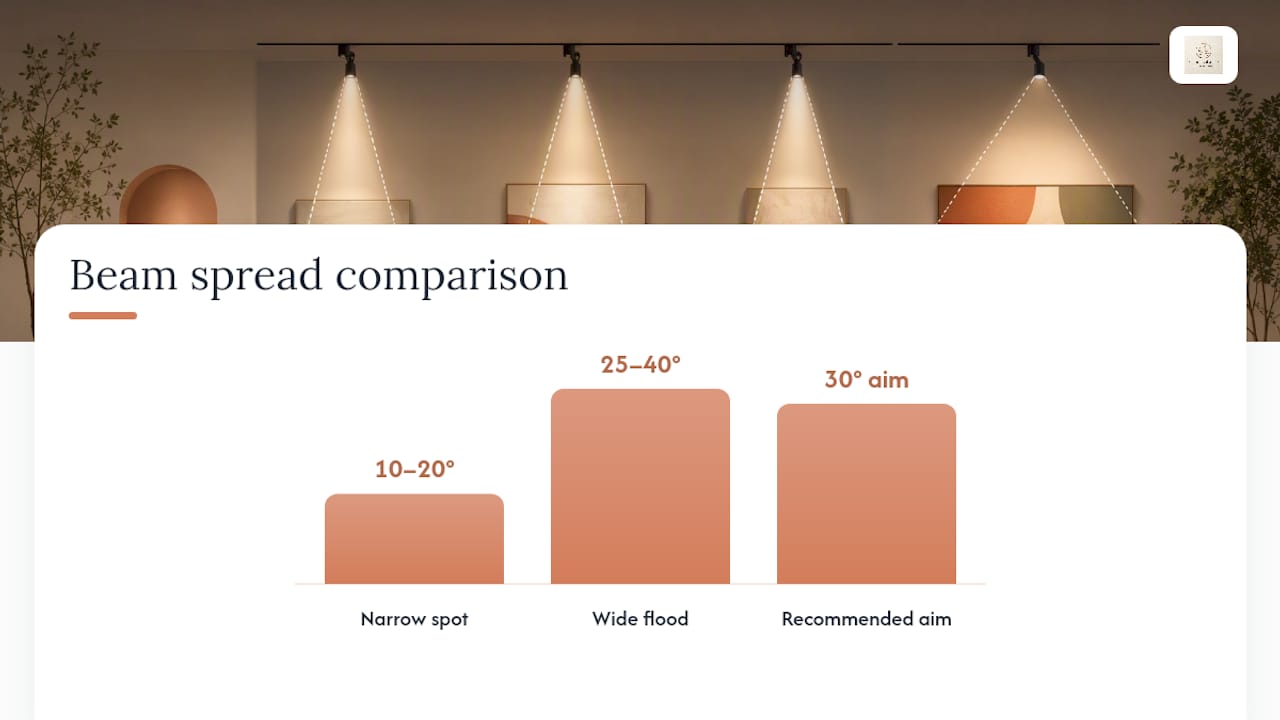
Beam spread matters too. A narrow spot (10° to 20°) concentrates light on a small area, useful for compact pieces or accenting a sculpture’s highlights. A wider flood (25° to 40°) suits larger canvases or wall-washing an entire gallery run without visible hot spots between fixtures.
How Do You Install Art Lighting Without Glare or Gaps?
Getting the hardware right is only half the job. Installation details, how high you mount, how far you space fixtures, and how you test afterward, determine whether the lighting actually looks intentional or just looks like a bare bulb pointed at a wall.
- Size the picture light to the frame. A general rule is choosing a fixture roughly two-thirds the width of the artwork; too narrow and you get hot spots in the center with dark edges, too wide and light spills onto the wall beyond the frame.
- Check frame strength before mounting. Heavier picture lights need a bracket anchored into the wall, not just the frame, especially on lightweight gallery frames that weren’t built to carry fixture weight.
- Mount high enough to clear reflections. If you can see the fixture reflected in glazing or varnish from normal viewing height, drop the mounting point or adjust the aim until the reflection disappears.
- Space wall washers evenly. For continuous coverage across a gallery wall, fixture spacing typically matches the fixture’s beam spread so adjacent pools of light slightly overlap rather than leaving dark gaps between frames.
- Pick power based on permanence. Battery units suit temporary or renter setups, plug-in fixtures work where an outlet is nearby, and hardwired installations make sense for a gallery wall you don’t plan to rearrange.
After installation, run a quick three-part test: stand where guests actually view the piece and check for glare, walk the length of a gallery wall to confirm even brightness with no visible dark patches, and dim the lights fully to confirm there’s no flicker or color shift at low output.
Pro Tip: If you see a bright reflection of the fixture itself in a glazed frame, don’t just re-aim the light. Lower the mounting height slightly first. It usually fixes the reflection without changing your 30° angle.
How Do You Protect Artwork From Light Damage Over Time?
Light damage is cumulative and irreversible. A watercolor exposed to bright afternoon sun for a few summers will fade in ways no restoration can fully undo, and the most vulnerable media, works on paper, textiles, and photographs, show damage faster than oil paintings or sculpture.
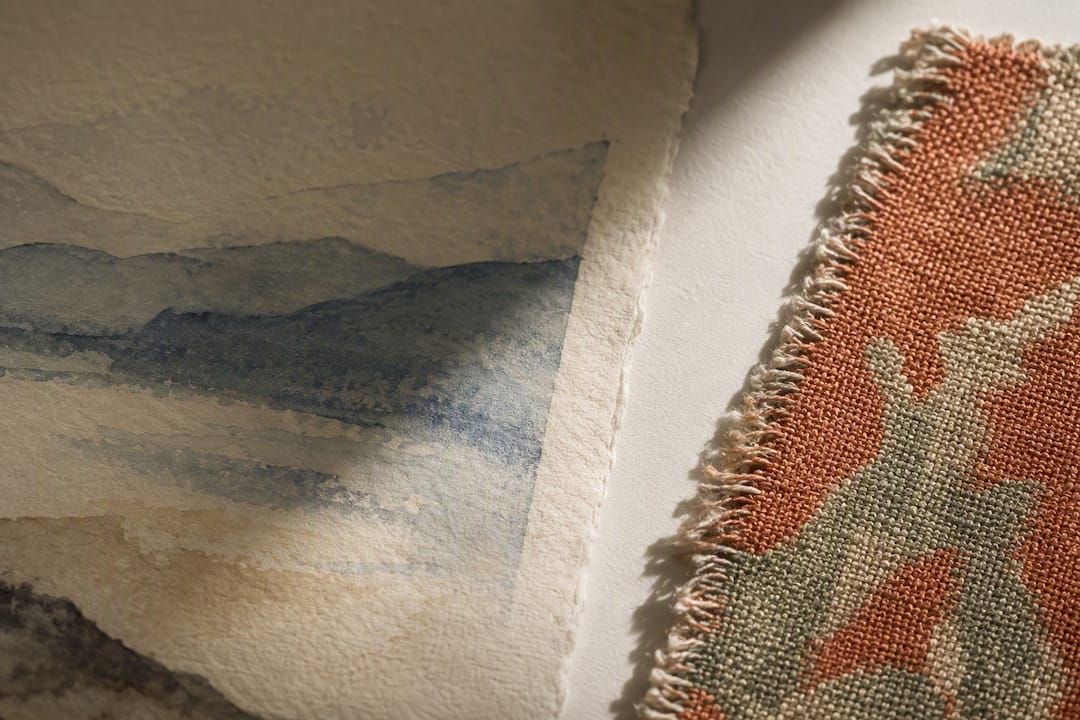
The 50 lux threshold for paper-based work exists because paper and textile fibers break down under both visible light and UV radiation, even when the light doesn’t feel bright to the eye. More durable media like oils and acrylics tolerate the higher 50 to 200 lux range, but “durable” doesn’t mean immune. Direct sunlight is the real threat across every medium, since UV and heat combine to accelerate fading regardless of what’s on the surface.
Practical steps that make a real difference:
- Keep any artwork out of direct sun exposure, even for a few hours a day near a window.
- Use LED bulbs, which emit little to no UV or infrared radiation compared to halogen or incandescent sources.
- Put display lighting on a timer so pieces aren’t lit around the clock.
- Rotate especially sensitive works (works on paper, textiles) out of display periodically to reduce cumulative exposure.
- Add UV-filtering glazing on framed paper or photographic pieces.
If a piece is valuable, fragile, or historically significant, a professional conservator can assess condition and recommend display limits specific to that object. That’s a different conversation than everyday home lighting, but worth having before you hang a family heirloom over a sunny bay window.
Which LED Bulbs and Controls Actually Preserve Color?
Not all LEDs are equal, and the gap between a cheap bulb and a well-specified one shows up immediately on saturated color. Integrated LED fixtures build the light source into the housing, while replaceable LED lamps let you swap bulbs as needed. Both work, but check the fixture’s own spec sheet, since a great bulb in a poorly designed housing still throws uneven light.
Read the box or listing for two numbers: CRI and CCT. A CRI below 90 will flatten color even if the light looks fine at a glance, and low-quality LEDs are notorious for this exact problem. Test it yourself by comparing how red and green tones look under the new bulb versus daylight.
- Choose dimmable LED drivers rated for smooth, flicker-free dimming, cheap drivers often stutter or buzz at low output.
- If you’re using smart lighting, confirm the system maintains consistent CCT across brightness levels rather than shifting color as you dim.
- Favor reputable manufacturers with published CRI and CCT specs over unlabeled budget bulbs.
LEDs also run cooler and use less energy than halogen or incandescent alternatives, which matters both for your utility bill and for keeping heat away from sensitive surfaces.
Styling Art Lighting Like a Design Professional
Layered lighting is what separates a lit painting from a lit room. Christie’s lighting guidance describes combining ceiling-level accent light to define the space, picture or wall lighting to highlight the art itself, and ambient table lighting for balance. That third layer is where Noble Abode pieces earn their place: a glass table lamp beside a framed piece, or a sculptural accent on a console beneath it, extends the light story instead of competing with it.
Match scale and finish. A large canvas wants a substantial vignette below it, not a tiny trinket lost in shadow. Keep supporting pieces in neutral, matte, or metallic finishes so they read as part of the composition rather than distractions. For deeper styling logic, see our guides on layered lighting and ambient versus task lighting.
Do You Need Filters or Diffusers for Artwork Lighting?
UV filters and diffusers solve two different problems, and confusing them leads to either wasted money or under-protected artwork. A UV filter, whether built into LED glazing, a filter sleeve on a fixture, or a laminate applied to glass, blocks the ultraviolet wavelengths that cause fading without meaningfully changing how bright or how warm the light looks. This matters most for works on paper, textiles, and anything displayed near a window that gets indirect daylight.
Diffusers, on the other hand, are about distribution, not protection. A diffuser panel or frosted lens spreads a narrow LED source into a broader, softer pool of light, useful when a single spotlight is creating a harsh hot spot in the center of a large canvas instead of even coverage. Track heads and wall washers often include diffusion options for exactly this reason.
For glazed frames specifically, UV-filtering acrylic or glass does double duty: it protects the piece from ambient UV exposure from windows and interior lighting alike, and it reduces the risk of the glazing itself amplifying glare when your accent light hits it. If you’re framing anything with archival or sentimental value, that filtering layer is one of the cheapest insurance policies available, usually adding a modest amount to framing costs versus standard glass.
Museum Rules, Home Reality: What Actually Matters
The conventional advice on art lighting treats every recommendation as equally strict, and that’s where most homeowners get discouraged before they even start. Museums hold works on paper to 50 lux because they’re managing century-long preservation timelines. Your framed poster from a decade-old trip doesn’t carry the same stakes, and treating it with archival-grade caution is often wasted effort.
What actually deserves priority: get the 30° angle and CRI 90+ right first, because those two numbers determine whether your art looks good every single day. Conservation limits matter most for genuinely valuable, fragile, or irreplaceable pieces, not for the print you bought at a gallery gift shop. Spend your effort on angle, color accuracy, and keeping things out of direct sun. Save the UV glazing and lux meters for the pieces that would actually hurt to lose.
Where homeowners consistently underinvest is the third lighting layer, the ambient and accent pieces around the art itself. A well-aimed picture light on a painting above a bare console still looks unfinished. Add a lamp with a warm CCT and a sculptural piece with a compatible finish, and the whole wall reads as designed rather than lit.
— Stephane
How Noble Abode Completes a Well-Lit Art Display
Good art lighting sets the stage, but the pieces around it finish the composition. Noble Abode’s curated decor is built for exactly this kind of layering: neutral palettes, premium finishes, and scale that supports a focal wall instead of competing with it.

For a small entry vignette beneath a framed piece, the Key Desktop Storage Decor adds function without visual noise. On a console or sideboard, the Black Décor Statue abstract resin sculpture catches a side-angled table lamp beautifully, its matte finish reflects light softly rather than throwing glare back at viewers. For a modern minimalist gallery wall, the Nordic Modern Minimalist Luxury Living Room Décor collection keeps supporting surfaces clean so the art stays the focal point.
If your wall lighting runs warm at 2700K, pair it with the Luxury Ruffled Electroplated Ceramic Vase or the European Luxury Metal Decorative Piece for a finish that catches that warmth rather than fighting it. Browse the full collection at Noble Abode to find pieces that scale correctly for your specific wall and light setup.
Sources
For deeper technical grounding, Lutron’s aiming and angle guidance and Christie’s expert lighting guide cover installation and color science in more depth. For conservation limits, NEDCC’s light damage leaflet is the standard reference, and Energy.gov explains the efficiency case for LEDs.
- How to light artwork — Lutron
- Protection from Light Damage — NEDCC
- An expert guide to lighting your artworks — Christie’s
- How to light art — Austin Gallery (lighting guide)
FAQ
What kind of lighting is best for displaying artwork?
High-CRI (90 or above) LED fixtures aimed at about 30° from vertical, in a warm 2700K to 3000K color temperature, are the best all-around choice for most home-displayed paintings and prints.
What are the best ways to illuminate artwork?
Picture lights work well for single framed pieces, while track lighting or wall washers suit gallery walls and larger collections that change over time; layering in ambient table or floor lamps completes the effect.
What is the best type of light for painting art?
LED is the preferred light source for paintings because it emits minimal UV and infrared radiation and produces far less heat than halogen or incandescent bulbs, reducing fading risk over time.
What are the five types of light used in art?
Definitions vary by source, but common categories referenced in lighting and display guidance include picture lights, track and spotlights, wall washers, recessed downlights, and ambient table or floor lamps.