

Ambient vs Task Lighting: How to Light Your Home
Ambient lighting fills a room with general, even illumination; task lighting focuses brighter light on a specific activity, like reading or chopping vegetables. Use ambient light for overall comfort and safety in a space, and add task light anywhere your eyes need to work harder.
Typical ambient fixtures: ceiling fixtures, recessed lights, floor lamps Typical task fixtures: desk lamps, under-cabinet lights, adjustable table lamps
The verdict: install ambient lighting as your base layer first, then add task lighting wherever precision matters. Skipping straight to one bright overhead fixture is the most common lighting mistake homeowners make.
Key Takeaways
Ambient lighting fills a room evenly while task lighting concentrates 3 to 5 times more brightness on a specific work zone, and layering both prevents the glare and shadows a single fixture can’t avoid.
| Point | Details |
|---|---|
| Layer in order | Install ambient lighting first, then add task lighting to specific work zones, then accent for depth. |
| Match brightness to the job | Task lighting should run roughly 3 to 5 times brighter than the surrounding ambient level. |
| Choose the right color temperature | Use warm 2700 to 3000 K for ambient rooms and cooler 3500 to 4500 K with CRI 90+ for task zones. |
| Avoid the single-fixture trap | One overhead light for everything causes glare, shadows, and eye strain during close work. |
| Pick fixtures that do both | Lamps like Noble Abode’s Vintage Bank Table Lamp, Glow Table Lamp, and Rechargeable Table Lamp Classic Style combine task brightness with ambient styling. |
Table of Contents
- What Is the Difference Between Ambient, Task, and Accent Lighting?
- Ambient vs Task vs Accent at a Glance
- Where Should You Use Ambient Lighting vs Task Lighting?
- How Do You Layer Ambient, Task, and Accent Lighting?
- What Bulb and Fixture Specs Should You Look For?
- What Mistakes Should You Avoid When Mixing Ambient and Task Lighting?
- How Bright Should Task Lighting Actually Be?
- Sources
- FAQ
What Is the Difference Between Ambient, Task, and Accent Lighting?
Ambient lighting is the general light that fills a room so you can move around safely and see the space as a whole. It usually comes from ceiling fixtures, recessed cans, wall sconces, or floor lamps set to bounce light broadly. Its functional goal is even coverage. If a fixture lights the whole room rather than one spot, it is ambient.
Task lighting is the functional layer that delivers concentrated, higher-intensity illumination to a specific zone like a desk, stove, or reading chair. Desk lamps, under-cabinet strips, and vanity lights are classic examples, and good task fixtures are directional and glare-controlled, sending light exactly where you need it rather than scattering it everywhere. Task lighting’s functional goal is visibility for a specific action, and it should be noticeably brighter than the ambient light around it.
Accent lighting plays a different role entirely. It highlights a feature, artwork, or architectural detail rather than lighting a room or a task. Picture lights and adjustable spotlights fall into this category, and accent fixtures typically shine brighter than the ambient field around the object they’re highlighting to create a genuine focal point.
- Ambient: fills the room, functional goal is coverage
- Task: focuses on one zone, functional goal is visibility for an activity
- Accent: highlights a feature, functional goal is drama and focus
Ambient vs Task vs Accent at a Glance
Task lighting isn’t just “brighter.” Design guidance built around these three layers suggests task light should run roughly 3 to 5 times brighter than the surrounding ambient level to actually reduce eye strain, not just add glare. Accent lighting follows a similar logic on a smaller scale, often landing around 3 times the ambient brightness on the object it’s highlighting.
| Purpose | Coverage | Typical brightness | Color temp / CRI | Common fixtures | Placement |
|---|---|---|---|---|---|
| Ambient: general room fill | Wide, often bounced off walls/ceiling | Moderate baseline | Warm 2700 to 3000 K; CRI matters less | Ceiling fixtures, recessed cans, floor lamps | Overhead or perimeter, indirect angles work well |
| Task: activity-specific visibility | Narrow, directed at one surface | 3 to 5x local ambient | 3500 to 4500 K; CRI 90+ recommended | Desk lamps, under-cabinet lights, vanity lights | Close to the work surface, angled to cut glare |
| Accent: highlight a feature | Narrow beam on one object | Around 3x ambient on subject | Depends on the feature; CRI matters for art/color | Adjustable spotlights, picture lights | Mounted or aimed at an angle from the object |
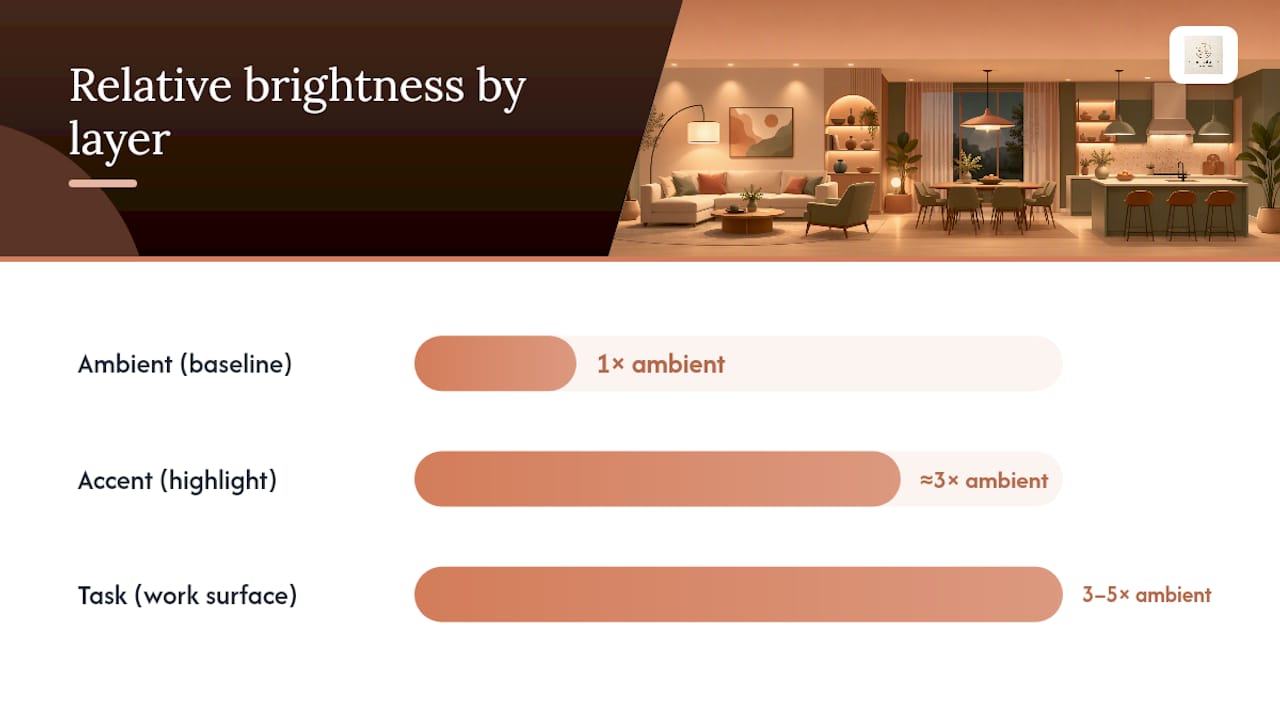
Mounting height and beam angle do most of the heavy lifting here. A pendant hung too high loses its ambient softness; a desk lamp angled wrong throws glare straight into your eyes instead of onto the page.
Where Should You Use Ambient Lighting vs Task Lighting?
Kitchen. Ambient light keeps the whole space navigable, but under-cabinet strips or pendants over an island handle the countertop and stovetop work where knives and heat make good visibility non-negotiable.
Home office. General ambient light keeps eye fatigue down over a full workday, while a desk lamp aimed at your keyboard or documents does the close work. Position task lamps to the side of your monitor, not behind it, so you avoid glare on the screen during video calls.
Living room and bedroom. Ambient sets the mood; a reading lamp beside the chair or bed adds the task layer exactly where you need it. This is also where accent lighting earns its keep, washing a bookshelf or piece of art with extra depth.
Bathroom. Vanity lighting flanking the mirror at face height reduces the shadows that overhead-only lighting throws across your face, while a ceiling fixture covers general safety and visibility for the rest of the room.
- Kitchen: pendant or under-cabinet task light over prep areas
- Home office: side-mounted desk lamp to avoid screen glare
- Living room/bedroom: a dedicated reading lamp near seating
- Bathroom: vertical vanity lights at face height, not just overhead
Natural daylight can cover much of the ambient job during the day, but plan artificial ambient light for evenings and darker rooms regardless.
How Do You Layer Ambient, Task, and Accent Lighting?
- Start with ambient. Map how you actually move through and use the room, then choose ceiling or wall fixtures that give even, dimmable coverage for the whole space.
- Add task lighting next. Identify every activity zone, desk, stove, vanity, reading chair, and choose directional fixtures sized to that specific job, with a beam angle narrow enough to concentrate light without spilling into the rest of the room.
- Finish with accent lighting. Once the functional layers are in place, add spotlights or picture lights to create depth and draw the eye to features worth showing off.
Pro Tip: Don’t try to make one bright overhead fixture handle both ambient and task duty. A single high-output source used for everything is the fastest route to glare and harsh shadows exactly where you’re trying to work.
What Bulb and Fixture Specs Should You Look For?
Judge brightness by lumens, not watts. Watts measure energy use; lumens measure actual light output, and that’s the number that tells you whether a fixture will do its job. Ambient fixtures generally need less concentrated output than task fixtures serving the same square footage, since task light has to overcome a smaller, more demanding zone.
Color temperature changes how a space feels and functions. Warm white in the 2700 to 3000 K range suits ambient lighting in living rooms and bedrooms, while task areas like a home office desk or kitchen counter often perform better in the cooler 3500 to 4500 K range, which sharpens contrast and supports focus. CRI, the Color Rendering Index, matters most for task zones: a bulb rated 90 or higher renders colors accurately, which is the difference between cooking by a light that shows you what’s actually done and one that hides it.
Beam angle and fixture type round out the picture. Wide-beam fixtures like flush mounts and floor lamps suit ambient roles, while narrow-beam desk lamps, under-cabinet strips, and adjustable pendants handle task work.
- Lumens: check output, not wattage
- Kelvin: warm (2700 to 3000 K) for ambient, cooler (3500 to 4500 K) for task
- CRI: 90+ for any task involving color judgment
- Dimmable and fixture-compatible: confirm before buying
What Mistakes Should You Avoid When Mixing Ambient and Task Lighting?
Relying on one overhead fixture for the entire room is the single most common error, and it produces glare, uneven shadows, and eye strain during close work. The fix: add a dedicated task fixture wherever you read, cook, or work.
Choosing the wrong color temperature or a low CRI bulb for tasks like cooking or applying makeup leads to poor color judgment; swap in a cooler, higher-CRI bulb for those zones. Ignoring beam angle and placement creates dark patches even when total room brightness seems fine; a task lamp aimed too high or too far from the surface won’t concentrate light where it’s needed.
Watch for this: effective task lighting runs roughly 3 to 5 times brighter than the ambient light around it. A desk lamp barely brighter than the room’s overall light isn’t doing its job.
How Bright Should Task Lighting Actually Be?
The rule of thumb holds up under real use: task lighting should run about 3 to 5 times brighter than the surrounding ambient level to meaningfully reduce eye strain.
Here’s a test you can run without any equipment. Set your task lamp where you’ll actually use it, then read a book or inspect a countertop. If the text is comfortable to read without squinting and you don’t see harsh shadows from your own hand or head blocking the light, it’s doing its job. If you’re leaning in or angling the page to catch the light, move the lamp closer or add wattage before you assume the room itself is too dark.
Style and function don’t have to compete
Function comes first in task zones. Once that’s solved, style closes the gap. Noble Abode’s table lamps are built around exactly that order, useful task light wrapped in a piece that also earns its place on the table when the lamp is off.
Table lamps that pull double duty
Not every fixture has to pick a single lane. Several pieces in the Noble Abode collection work as task and ambient lighting depending on how you use them.
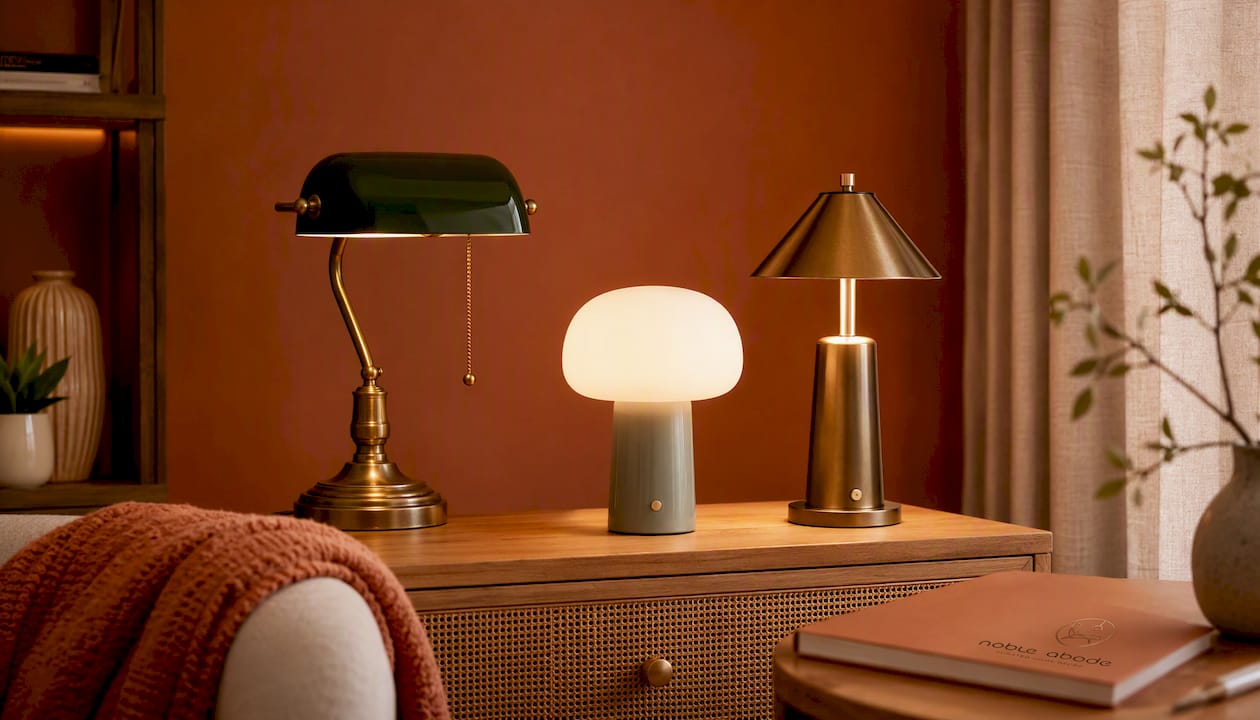
The Vintage Bank Table Lamp has the adjustable, focused character of a classic desk light, making it a solid pick for a home office or reading chair where you need direct visibility. The Glow Table Lamp dims low enough for bedside mood lighting, then brightens for late-night reading without swapping fixtures. The Rechargeable Table Lamp Classic Style skips the cord entirely, so it moves from a kitchen counter to a reading nook to a patio table as your task needs shift through the day.
Browse the full table lamp collection to find a fixture that matches your room’s style while covering the task lighting your space actually needs.
Sources
- Task lighting — Wikipedia
- Light fixture guide — Family Handyman
- AEX-790-17 Lighting — Ohio State University Extension
- What Is the Difference Between Accent, Task, and Ambient Lighting? — GE Lighting
- Ambient, task and accent lighting 101 — Vibia
FAQ
What are the downsides of using ambient lighting?
Ambient lighting alone often leaves work surfaces under-lit for close tasks, since its job is even coverage, not concentrated brightness; without added task light, reading or cooking areas can leave you squinting or working in your own shadow.
What is considered task lighting?
Task lighting is any fixture that delivers focused, higher-intensity light to a specific activity zone, generally running 3 to 5 times brighter than the surrounding ambient light in that spot.
What are examples of task lighting?
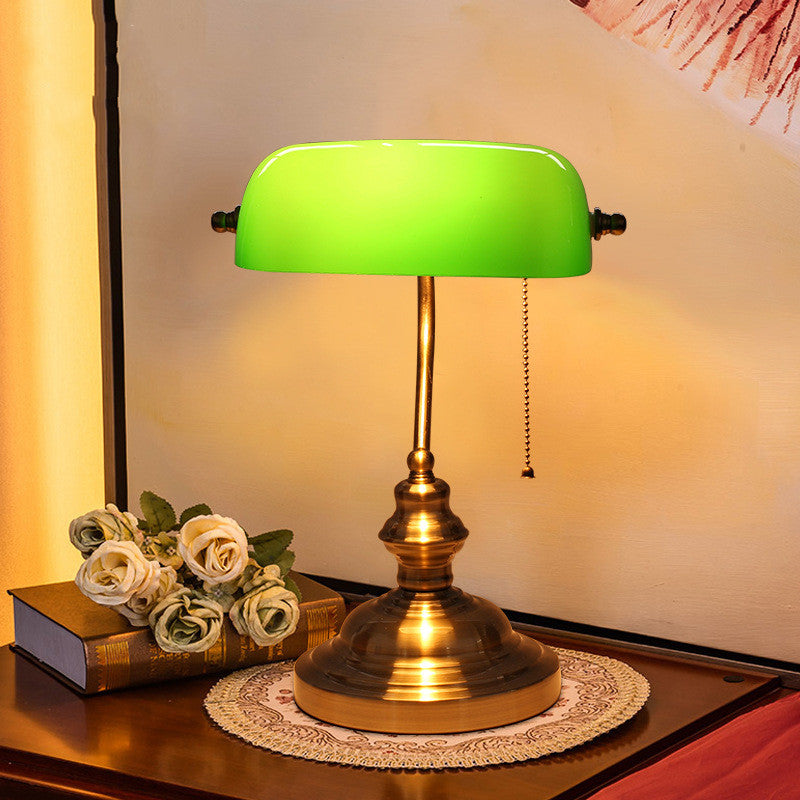
Desk lamps, under-cabinet kitchen lights, vanity lights, and adjustable table lamps like Noble Abode’s Vintage Bank Table Lamp all function as task lighting.
What are the four types of lighting?
The three functional layers covered here are ambient, task, and accent lighting; some guides add decorative lighting as a fourth category for fixtures chosen purely for visual style rather than any of the three functional roles.