

Luxury Contemporary Interior Design: Elevate Your Home
A luxury contemporary interior succeeds when high-quality, tactile materials and a few well-edited statement pieces share space with deliberate negative space and layered lighting. Get these five elements right and the room does the rest.
Quick-start checklist:
- Statement lighting: one sculptural pendant or designer table lamp per zone
- Sculptural art or decorative accent: one to two pieces maximum per room
- Fine textiles: velvet cushions, wool throws, or silk accents on seating
- Hidden storage: integrated cabinetry or multiuse furniture to clear surfaces
- Neutral layered palette: warm whites, greiges, and one deep accent tone
Spend first on lighting and an anchor furniture piece. These two categories shape how every other element reads. Textiles and art come next. Secondary decor fills last.
Table of Contents
- What does luxury contemporary interior design actually mean?
- Which physical components create the look?
- How do layout and storage preserve the luxury effect?
- Where should you spend and where can you save?
- How do you keep luxury materials looking their best?
- Five steps to execute a room transformation
- Noble Abode pieces that complete the look
- Key Takeaways
- Designing for feeling, not for trend
- Useful sources for further research
What does luxury contemporary interior design actually mean?
Contemporary design is adaptive. Unlike “modern” design, which refers to a fixed mid-century aesthetic with strict rules, contemporary design evolves with each decade and responds directly to how you live. That distinction matters when you are making purchases: a modern interior follows a historical template, while a contemporary one is shaped by your site, your lifestyle, and current material culture.
Luxury contemporary, specifically, layers that adaptability with premium craftsmanship and a lifestyle-first approach. The goal is not a showroom. Quiet luxury favors understated, tactile materials and craftsmanship over logos and trends, with neutral layered palettes and materials that age gracefully.
Core principles:
- Quality over quantity: fewer pieces, higher specification
- Functionality: every element earns its place by performing daily
- Negative space: editing out half your decorative items often raises perceived quality more than buying new ones
- Restraint: a cohesive material palette of three to four finishes maximum
- Sensorial warmth: mix fabrics and finishes to prevent the space from reading cold
Pro Tip: Edit before you shop. Remove half the decorative items currently on display, live with the result for a week, then decide what to reintroduce. Most rooms need less, not more.
Which physical components create the look?
Designers consistently point to five categories: materials, anchor furniture, lighting, art and sculpture, and textiles. Nail these and secondary purchases fall into place naturally.
Materials to prioritize
Natural stone or marble, solid or veneered hardwood, leather, velvet, fine wool, and brass or aged metal. Used sparingly as focal materials, these create lasting value and a timeless look. Pair warm-toned wood with cool stone for contrast; avoid mixing more than two metal finishes in one room.
For flooring, consider millwork and hardwood options that complement a neutral stone palette without competing with it.
Anchor furniture
Invest in one anchor sofa or dining table rather than spreading budget across many smaller pieces. A well-proportioned sofa in a performance velvet or textured linen reads as luxury immediately. Everything else can be more restrained.
Lighting
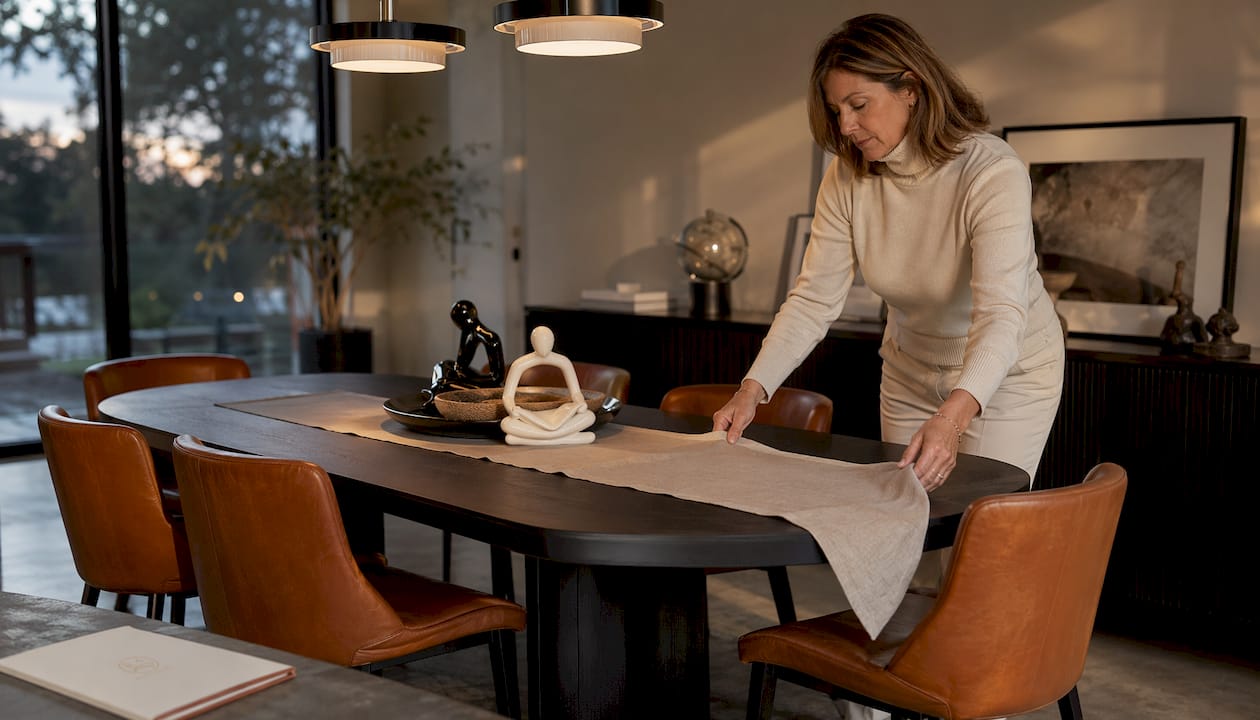
Layered lighting at multiple heights is non-negotiable. A single overhead source flattens textures and reduces depth. Plan for ambient, task, and accent sources, and wire dimmers into the electrical plan early. Look for fixtures with a CRI of 90 or above to render materials accurately.
Art and sculpture
One or two statement works per room. Curated groupings of three pieces work well on a console or shelf. Avoid logo-driven or trend-dependent pieces; opt for sculptural forms with material interest.
Textiles
Silk, velvet, wool, and leather layered together prevent contemporary spaces from feeling cold while reinforcing the quiet-luxury register. A single luxe textile addition per room, such as a velvet cushion or a wool throw, shifts the entire tone.
Pro Tip: Swap generic hardware on cabinetry and doors for solid brass or matte black equivalents. It costs under $200 per room and reads as a full renovation.
| Category | Invest here | Save here |
|---|---|---|
| Lighting | Sculptural pendant, designer table lamp | Recessed fill lights |
| Seating | Anchor sofa or lounge chair | Side chairs, ottomans |
| Surfaces | Marble or stone accent, solid wood table | Secondary shelving |
| Textiles | Velvet cushions, wool rug | Decorative throws |
| Art | One statement piece | Smaller grouping prints |
How do layout and storage preserve the luxury effect?
Layout and concealed storage preserve the luxury effect. Editing is more important than adding. Visible daily items rapidly erode a high-end contemporary look, so plan storage before you plan decor.
Spatial rules:
- Allow 18–24 inches of breathing room around statement pieces
- Use symmetry on primary walls (flanking pendants, paired sconces) and asymmetry for secondary surfaces to avoid rigidity
- Plan sightlines from the entry: the first view should land on a focal piece, not a utility item
Hidden storage checklist:
- Integrated floor-to-ceiling cabinetry with push-to-open hardware
- Multiuse furniture: storage ottomans, console tables with drawers
- Cord management: in-wall conduit or furniture with built-in cable routing
- Furniture that doubles as storage, such as a wine cabinet and shoe storage unit, keeps surfaces clear without sacrificing style
Circulation checklist:
- Minimum 36-inch clearance on main traffic paths
- Anchor rugs under furniture groupings to define zones
- One focal point per room: fireplace, art piece, or statement light
Where should you spend and where can you save?
Prioritize architectural details, lighting, an anchor furniture piece, and textiles. Save on secondary decor, accent tables, and decorative objects.
| Budget category | Suggested share of room budget |
|---|---|
| Architectural details (molding, hardware) | a moderate portion |
| Lighting (fixtures + electrical) | a moderate portion |
| Anchor furniture | a significant portion |
| Textiles (rug, cushions, throws) | a moderate portion |
| Art and sculpture | a moderate portion |
| Secondary decor and soft goods | a smaller portion |
For a single-room refresh, allow four to eight weeks from first purchase to final styling. A multi-room plan typically runs three to six months, depending on custom lead times.
Sourcing guidance:
- Buy bespoke for anchor furniture and built-in storage when budget allows; craftsmanship and custom details deliver longevity and a sense of permanence
- Buy off-the-shelf for textiles, lighting accents, and decorative objects
- Noble Abode curated pieces fit the off-the-shelf tier: statement-quality at accessible price points, with no lead time
- For luxury rug sourcing, specialist retailers offer a wider range of natural-fiber and hand-knotted options than general home stores
How do you keep luxury materials looking their best?
Maintenance and consistent styling habits sustain the look. Schedule simple care routines and the materials age well rather than deteriorating.
Styling tips:
- Layer a wool throw over a leather sofa to add warmth and protect the surface
- Use rugs to anchor stone or concrete-heavy rooms; natural fiber or hand-knotted wool works best
- Rotate cushion covers seasonally to refresh the palette without replacing furniture
Material care basics:
- Velvet: brush weekly with a soft-bristle upholstery brush; blot spills immediately, never rub
- Leather: condition every three to four months with a pH-neutral leather conditioner; keep away from direct sunlight
- Marble: seal annually; clean with a pH-neutral stone cleaner, never acidic products
- Brass: wipe with a damp cloth; allow unlacquered brass to patina naturally for an aged, authentic finish
Sustainability note: Durable materials that age gracefully, such as solid wood, natural stone, and quality wool, reduce replacement cycles and carry a lower long-term environmental cost than fast-furniture alternatives. Reclaimed wood and salvaged glass are viable options for accent pieces.
Pro Tip: Add one tactile accent piece per room that engages touch as well as sight. A smooth stone object or a textured ceramic piece on a console shifts the sensorial register of the whole space.
Five steps to execute a room transformation
A five-step process, starting with a brief and ending with styling and maintenance, keeps the project on track.
-
Brief and measurements. Write down how the room is used daily, who uses it, and what the one non-negotiable function is. Measure the room and every doorway. Note natural light direction and existing electrical positions.
-
Prioritize anchor pieces and lighting. Select the anchor furniture and primary lighting fixture first. Confirm lead times. For custom pieces, order at this stage.
-
Order and schedule. Place all orders in one window where possible. Confirm delivery dates and coordinate installation of any electrical work before furniture arrives.
-
Install and arrange. Place anchor furniture first, then lighting. Lay the rug before positioning seating. Hang art at eye level (57–60 inches to center). Connect and test all lighting circuits and dimmers.
-
Style and set maintenance. Add textiles, sculptural accents, and decorative objects last. Remove anything that does not contribute. Set a maintenance calendar: monthly dusting, quarterly deep clean, annual sealing for stone surfaces.
Noble Abode pieces that complete the look
Noble Abode curates statement-quality pieces that map directly to the priority list: lighting, textiles, and storage.
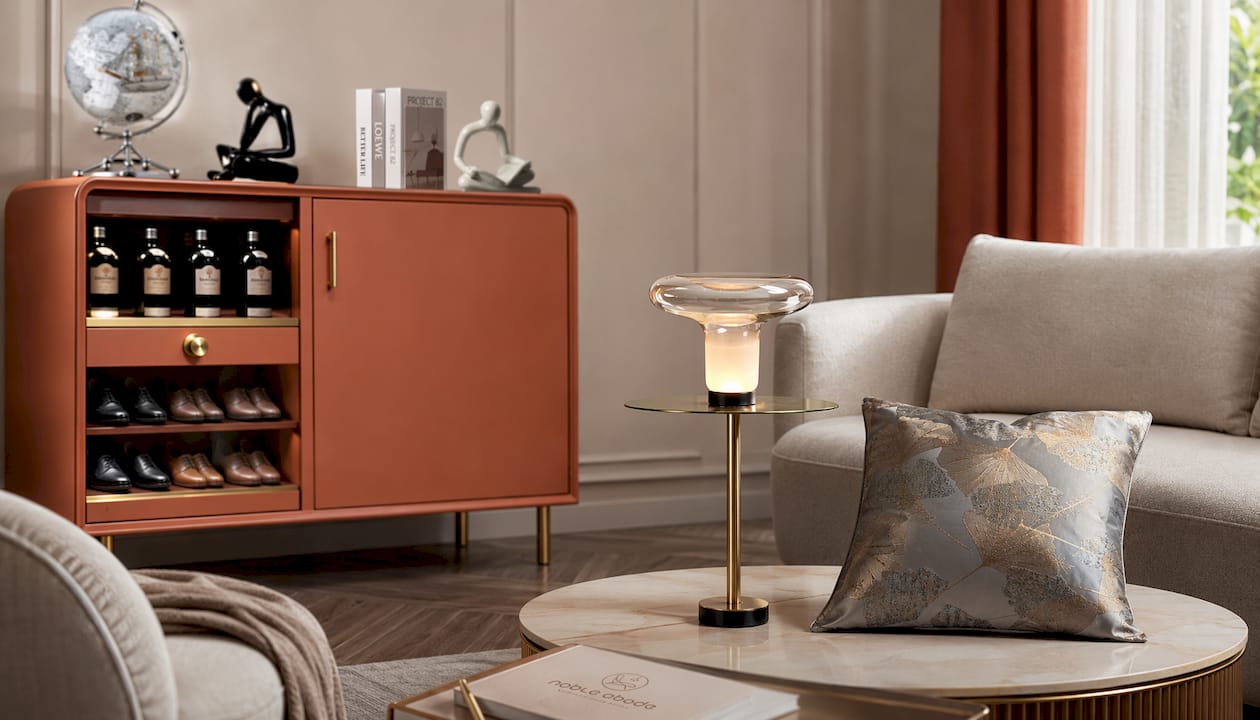
Three pieces that deliver immediate impact:
- Italian Designer Glass Table Lamp: A sculptural lighting piece that fulfills the designer-lamp priority without custom lead times. Pairs with both warm and cool neutral palettes.
- Modern Light Luxury Sofa Cushions: Premium velvet and textured fabric cushions that add tactile layering to any seating arrangement. Easy to maintain and built to hold their shape.
- Modern Luxury Wine Cabinet and Shoe Storage: A multiuse storage piece that keeps surfaces clear while contributing to the room’s visual weight. Functional and refined.
Browse the full luxury decor collection at Noble Abode to find curated pieces across every category in this guide.
Key Takeaways
A luxury contemporary interior is built on three decisions: where you spend, what you remove, and how you layer texture and light.
| Point | Details |
|---|---|
| Spend on anchor pieces and lighting | Allocate a significant portion of room budget to anchor furniture and a moderate portion to lighting fixtures. |
| Edit aggressively before buying | Removing excess decor raises perceived quality faster than adding new pieces. |
| Layer tactile textiles | Velvet, wool, and leather together prevent contemporary spaces from reading cold. |
| Plan storage early | Concealed storage must be designed before decor, not after, to preserve the refined look. |
| Noble Abode for quick wins | Curated lighting, cushions, and storage pieces from Noble Abode deliver statement quality with no custom lead time. |
Designing for feeling, not for trend
The conventional wisdom in interior design circles is that luxury requires a large budget and a long timeline. That framing misses the point. Contemporary design succeeds when a space performs for its users, not when it photographs well for a portfolio.
The most effective rooms are sensorial first. Mixing fabrics and finishes to balance light absorption and tactile warmth is what makes a space feel familiar rather than museum-like. A single well-chosen velvet cushion or a sculptural lamp does more for that register than a full furniture replacement. The quiet-luxury shift happening in American homes right now reflects exactly this: homeowners want materials that age gracefully and spaces that feel lived-in, not staged.
Technology fits this approach when it is invisible. Smart dimmers, in-wall speakers, and integrated climate controls belong behind clean surfaces, not on display. The same principle applies to sustainability: choose durable materials that reduce replacement cycles, and the environmental and financial cases align.
Useful sources for further research
- Decorilla: Luxury Interior Design Top 12 Insider Tips — Practical designer guidance on statement pieces, layered lighting, and quality prioritization. Use for specification decisions.
- Ralston Architects: Contemporary House Design Guide — Architectural perspective on how contemporary design differs from modern. Use for layout and spatial planning.
- CNA Luxury: Modern Luxury Home Design — Six architects and designers on quiet luxury, material selection, and storage planning.
- LUXE Interiors + Design: Quiet Luxury Inspiration — Seventeen project examples illustrating tactile layering and understated palettes.
- InteriorDesign.net: Humbert & Poyet New York Project — Project-level example of sensorial design and custom craftsmanship in a US context.
- Noble Abode: High-End Home Decor Websites — Curated supplier list for elegant living; useful for sourcing across categories.
- Noble Abode: Stylish Home Decor Ideas — Practical styling tips aligned with the principles in this guide.
For large projects, consult a licensed interior designer or architect for site-specific planning and material specifications.