

Bedside Table Styling: 3 Items, 3 Height Tiers, 6 Step Checklist
The easiest bedside table styling that always works is a lamp, a catch-all tray, and one seasonal or personal accent, arranged into three height tiers instead of stacked flat. Skip the exact object count and focus on function first: light you can reach, storage for the small stuff, and one piece that feels like yours. Stephane, a design voice, calls this the fastest way to make a nightstand look finished without turning it into a display shelf.
TL;DR:
- The ideal nightstand setup prioritizes a functional lamp, a containment dish, and a personal accent, arranged on three height tiers for visual balance.
- Choosing the right lamp height involves the reach test, aiming for the lampshade bottom to land at or just below seated eye level.
- Using height variation, such as stacking books or placing objects at different levels, creates a styled look that avoids clutter.
- Seasonal swaps like changing candles, vases, or tray finishes can refresh the mood with minimal effort and cost.
- Overcrowding and poor reachability are common mistakes; removing excess items and ensuring essentials are within arm’s reach keeps the space functional and neat.
Table of Contents
- Bedside Table Styling Made Simple: The 3-Item Formula
- Build Height and Composition: The Three Tiers Technique
- Lighting First: Choosing the Right Lamp Height
- Function vs. Styling: Keeping Essentials Within Reach
- Materials, Texture, and Seasonal Swaps
- Styling His-and-Hers Nightstands as a Pair
- Common Bedside Table Mistakes and Quick Fixes
- Stephane’s Printable Bedside Styling Checklist
- Why Lived-In Beats Perfectly Staged
- Shop the Look: Noble Abode Pieces for This Formula
- Sources
- FAQ
Bedside Table Styling Made Simple: The 3-Item Formula
A lamp, a small tray or dish, and one seasonal or personal object cover every job a nightstand needs to do. The 3-item nightstand formula works because it forces a mix of function and feeling instead of letting decor pile up for its own sake. The lamp anchors light and height. The tray catches rings, glasses, and chargers before they scatter across the surface. The third piece, whether that’s a candle, a small vase, or a framed photo, gives the setup a pulse.
Once that trio is in place, you can adapt it three ways depending on your style and space:
- Minimal duo: Lamp plus a single small object, useful for narrow tables under 20 inches wide.
- Layered maximal: Lamp, tray, book stack, and a vase, built for a wider table with room to breathe.
- Lampless setup: A wall sconce or pendant frees the surface entirely, leaving room for a taller vertical piece like art or a mirror.
Most of the starting pieces are probably already in your house. A dish from the kitchen, a candle from a gift set, or a small frame from a shelf will do the job before you buy anything new.
Build Height and Composition: The Three Tiers Technique
Height variation is what separates a styled nightstand from a cluttered one. Designers describe the rule of three as a matter of vertical registers, not a strict object count, meaning you can style with two items or six as long as they resolve into distinct levels.
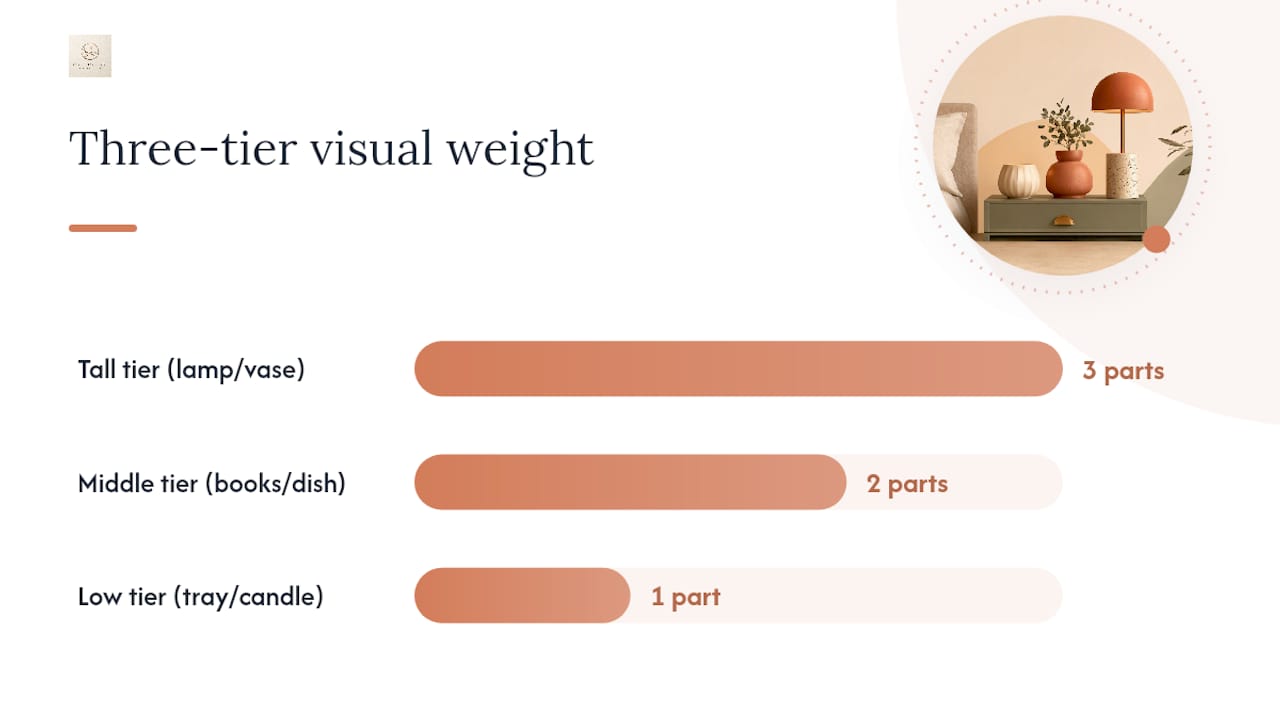
- Tall tier: A lamp or a vertical vase, roughly the visual anchor of the whole vignette.
- Middle tier: A vase, small stack of books, or a catch-all dish at half that height.
- Low tier: A tray, a single book lying flat, or a low candle that hugs the tabletop.
A rough 3:2:1 visual weight between tall, middle, and low keeps the eye moving instead of landing flat. On a typical 24 by 18 inch nightstand, that usually means the lamp sits toward the back corner, the middle tier fills the center third, and the tray or flat object holds the front edge closest to the bed.
Pro Tip: Stack two or three books and set a small object on top instead of buying a “riser.” It’s free, it adds height instantly, and you can swap the book on top whenever you want a different color underneath your candle or vase.
Lighting First: Choosing the Right Lamp Height
The light source is the functional anchor of the whole nightstand, and it’s the one piece that has to work before it gets to look good. The simplest way to find the right height is what stylists call the reach test: measure your seated eye height while sitting in bed the way you actually read, then aim for the bottom of the lampshade landing at or just below that mark.
For most adults, that band falls somewhere between 36 and 44 inches from the floor, though your own mattress height and headboard will shift it slightly. A few things to check before you commit to a lamp:
- Sit in bed as you normally would and mark the wall at eye level with tape.
- Measure from the floor to that mark, then subtract the height of your nightstand.
- Choose a lamp where the shade bottom lands close to that number, not the total lamp height.
- If you want the surface completely clear, a wall sconce or a slim pendant does the same job without taking up tray space.
A rechargeable table lamp with a classic shape gives you flexibility here, since cordless designs let you test different heights and positions before deciding where it lives permanently. Sconces work well for smaller tables where every inch of tabletop matters, while a table lamp still wins for readers who want warm, direct light close to the pillow.
Function vs. Styling: Keeping Essentials Within Reach
A nightstand has to work at 2 a.m. with the lights off, which means function outranks styling every time the two conflict. Keep a short list of essentials close enough to grab without sitting up: a glass of water, your phone charger, reading glasses if you use them, and whatever you take before bed.
The trick to keeping those items from wrecking the vignette is containment, not removal.
- A shallow tray or dish groups small items into one visual “zone” instead of scattering them across the surface.
- A small desktop storage decor piece hides keys, rings, and cords while still looking intentional on top of the table.
- Drawers handle anything you don’t need to see, like extra chargers or lip balm.
- Under-table baskets work for books you’re reading but don’t want stacked on top.
Materials, Texture, and Seasonal Swaps
Mixing materials is what makes a nightstand feel warm instead of sterile. Pair a matte ceramic vase with a glass candle holder, or set a woven rattan tray next to a metal lamp base. The contrast between soft and hard, matte and shiny, does more visual work than adding another object ever will.
Seasonal swaps are the cheapest way to change the mood of a room. Rotating a candle scent, switching a lampshade color, or trading a summer vase for a heavier fall one costs little and takes minutes. A quick refresh checklist:
- Swap the candle or diffuser scent with the season.
- Change the vase or its contents, fresh flowers for stems in spring, dried grasses in winter.
- Trade a glossy tray for a matte one when you want a softer, cozier feel.
- Keep every swap within two or three tones of your bedroom’s existing palette so nothing feels out of place.
Styling His-and-Hers Nightstands as a Pair
Two nightstands don’t have to be identical to look intentional. Mirroring works well when the room is symmetrical and formal, matching lamp for lamp and tray for tray on each side. A looser, complementary approach keeps the same categories on both tables, a lamp, a tray, a personal object, but lets the finishes or colors differ slightly between them.
- Keep lamp height identical on both sides even if the shades differ.
- Let personal items vary completely; that’s where the “his” and “hers” actually shows.
- Leave roughly equal breathing room around each grouping so neither table feels heavier than the other.
Common Bedside Table Mistakes and Quick Fixes
Most bedside styling problems come down to the same handful of habits. Designers recommend one functional item, one sculptural item, and one personal item specifically to avoid these traps.
- Overcrowding and flat heights: Remove one object entirely and add a book riser under another to break up the sameness.
- Too many reflective surfaces: A mirrored tray on a small table doubles the perceived clutter; swap it for a matte ceramic or wood one.
- Poor reachability: If the lamp switch, charger, or water glass isn’t within arm’s reach from a lying position, rearrange before you style anything else.
Stephane’s Printable Bedside Styling Checklist
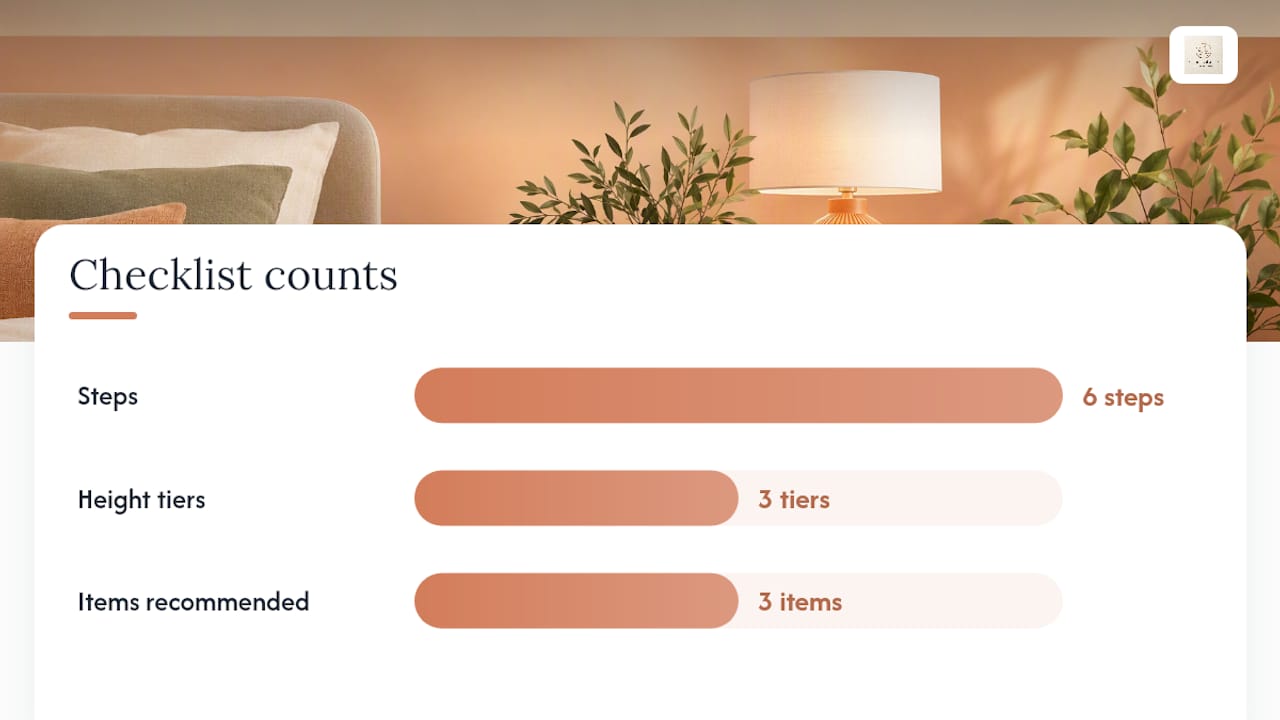
A finished nightstand comes down to six repeatable steps, and running through them in order takes less time than second-guessing your choices piece by piece.
- Measure your seated eye height and mark your ideal lamp height.
- Choose your light source: table lamp, sconce, or pendant.
- Set your three tiers: tall, middle, low.
- Add one tray or dish for containment.
- Run the reach test lying down before finalizing placement.
- Step back and remove one item if the surface feels tight.
Pro Tip: Photograph your nightstand from bed-level, not standing above it. That’s the angle you’ll actually see every night, and it reveals height problems a top-down glance misses.
For a related composition method, the same tiered logic shows up in console table decor styling, where grouping by zones instead of counting objects solves the same crowding problem on a larger surface.
Why Lived-In Beats Perfectly Staged
A nightstand that looks too perfect usually looks untouched. The best ones carry a book you’re actually reading, a photo that means something, or a mug you forgot to move. Some brands build pieces around the idea of timeless shapes, easy care, and a little function built into every object, so styling never comes at the cost of actually living with your things.
— Stephane
Shop the Look: Noble Abode Pieces for This Formula
There’s no shortage of ways to build a bedside vignette from scratch, but matching pieces designed to work as a set saves the guesswork of hunting for the right height, finish, and scale separately. This approach leans on the same three-tier logic this guide walks through: a dependable light source, a containment piece, and a small object with personality, designed for lasting use.
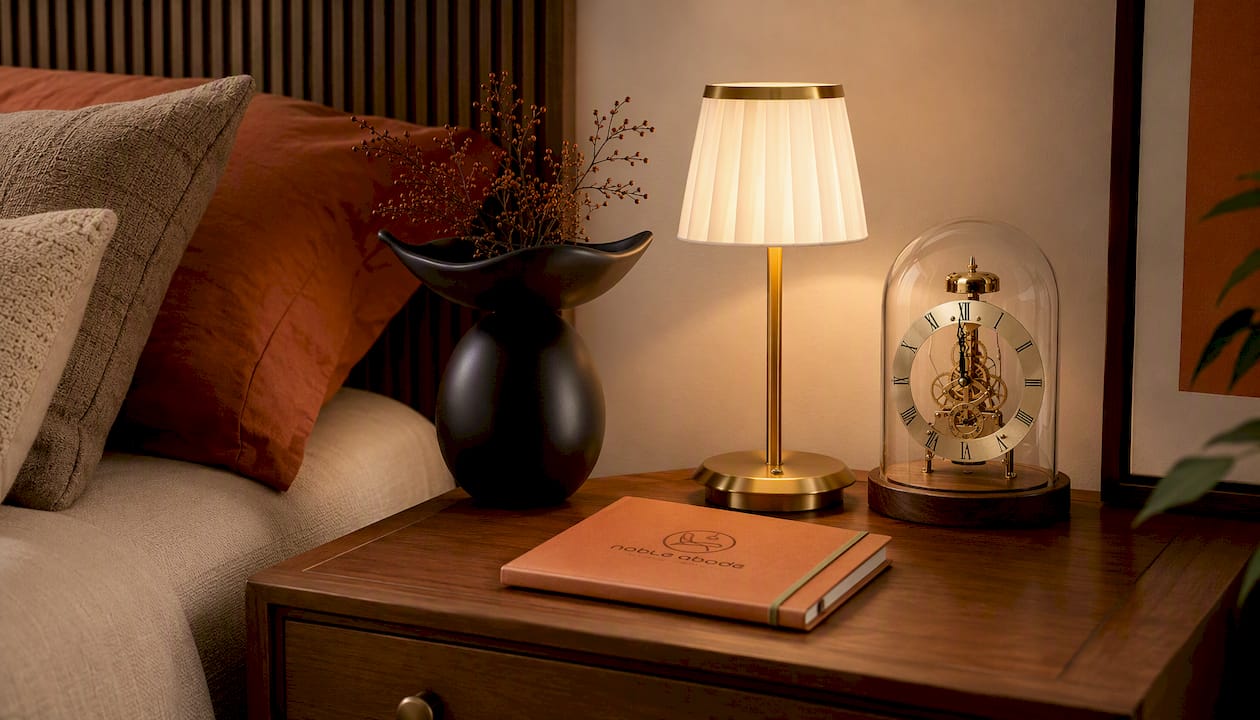
The Rechargeable Table Lamp in a classic style covers your tall tier and doubles as a cordless option if you want to test placement before committing to an outlet-dependent spot. The Key Desktop Storage Decor piece handles your middle-tier containment, corralling rings, cords, and coins without looking like a junk drawer on display. And the Skeleton Desk Clock makes a sharp, low-tier finishing object that’s functional every single morning, not just decorative. Browse the full mood lighting collection or the vases selection to round out your seasonal swaps, and start with whichever piece your current setup is missing most.
Sources
- The simple 3-item nightstand styling hack for fall | Homes and Gardens
- You’re styling your nightstand all wrong—Here’s how to get it right | House Beautiful
- Nightstand styling ideas that hold up after the lights go out - Quiet Minimal
FAQ
What Are the Nightstand Trends for 2026?
Warm, mixed materials and seasonal swaps are driving nightstand styling this year, with matte ceramics and woven textures replacing all-glossy setups. Function-first arrangements, meaning a reliable lamp and hidden storage, are taking priority over purely decorative displays.
What Are Common Bedside Table Mistakes?
The biggest mistakes are overcrowding a flat surface and using too many reflective materials on a small table, since mirrored trays can double the perceived clutter. Poor reachability for switches, chargers, or water is a close second, since a nightstand that isn’t usable at night fails at its main job.
How Can I Style My Nightstand to Look More Put Together?
Stick to the 3-item formula: a lamp, a tray or catch-all, and one seasonal or personal accent, arranged across tall, middle, and low tiers. Stacking a couple of books under one object instantly adds the height variation that makes a flat grouping look intentional.
How Do I Make a Bedside Table Look Nice Without Overdoing It?
Keep the palette within two or three tones of your bedroom and limit yourself to one functional, one sculptural, and one personal item, as designers commonly recommend. A cordless piece like the Rechargeable Table Lamp makes it easy to test a few placements before settling on your final layout.