

Measure Your Seated Eye Level to Choose Bedside Lamp Height
Aim for a bedside lamp between 24 and 30 inches tall, or roughly 2 to 3 inches taller than your nightstand. The shade’s bottom edge should land near chin or shoulder height when you’re sitting up in bed, hiding the bulb from view. That range works for most setups, but the sit-test, actually sitting in your bed and checking the light against your eye line, settles any doubt the numbers can’t. The Spruce and Noble Abode’s own sizing guides both point to this same measurement-first approach.
TL;DR:
- Bedside lamps should be between 24 and 30 inches tall, or roughly 2 to 3 inches taller than the nightstand, based on body sit-test confirmation.
- The standard formula recommends a lamp height of nightstand height plus 2 to 3 inches, aligning with a 26 to 34-inch range for most typical nightstands.
- Shade width should be about one-third of the nightstand width, with height around 40 to 45 percent of the lamp’s total height to maintain visual balance.
- Wall sconces should be mounted 24 to 28 inches above the mattress, offset 3 to 6 inches toward the room from the headrest, especially if adjustable, to avoid glare.
- Pendant lights should hang 20 to 24 inches above the mattress with at least 6 to 8 inches clearance from headboards, and adjust size based on bed dimensions.
Table of Contents
- Table Lamp Height and Proportion Rules
- How High Should a Bedside Wall Sconce Be Mounted?
- Pendant Lights Over the Nightstand: Getting the Drop Right
- Floor Lamps as Bedside Lighting
- The Sit-Test: A Step-by-Step Measurement Method
- Nightstand and Lamp Height Cheat Sheet
- Final Tips for Choosing the Right Bedside Lamp Size
- Stephane’s Perspective: Designing for Proportion That Lasts
- Bedside Lamps That Fit These Sizing Rules
- Sources
- FAQ
Table Lamp Height and Proportion Rules
The formula home stylists rely on is simple: lamp height equals nightstand height plus 2 to 3 inches. If your nightstand runs 24 to 30 inches tall, a lamp between 26 and 34 inches keeps the proportions balanced. In metric terms, that’s a nightstand around 61 to 76 cm paired with a lamp near 66 to 86 cm.
A few example combos make this easier to apply at home:
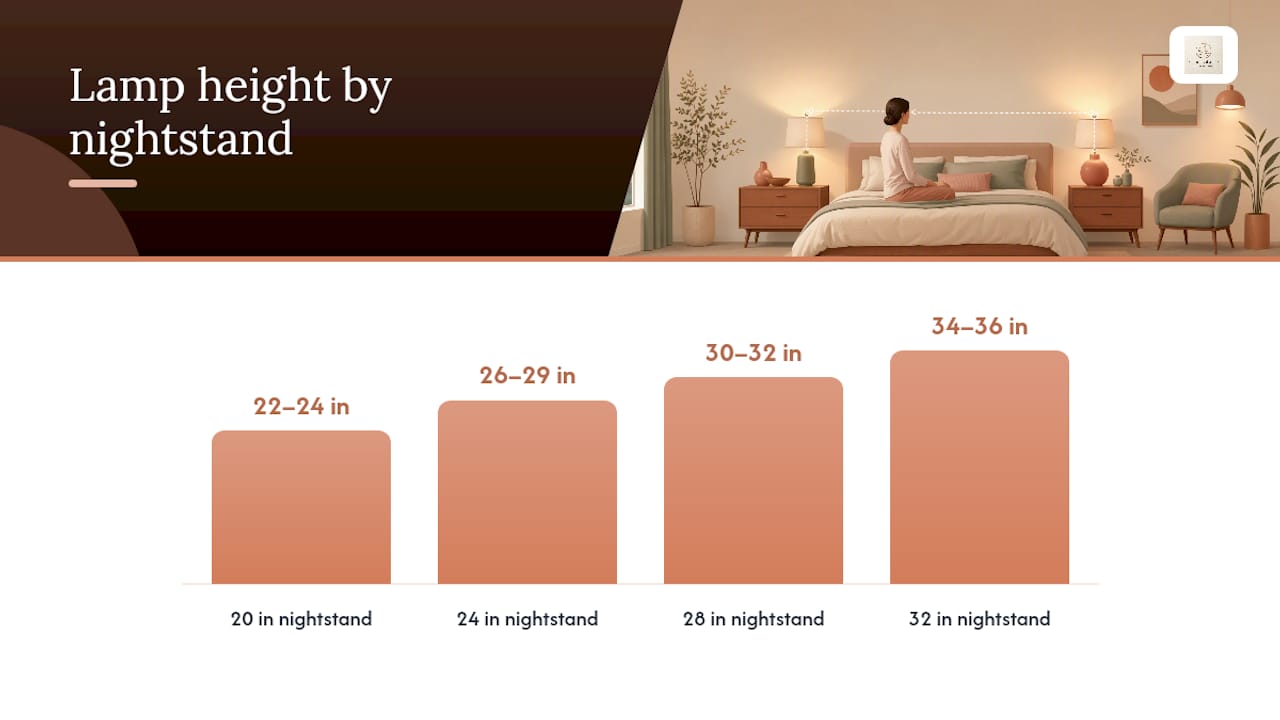
- 20-inch nightstand: 22 to 24-inch lamp, shade width around 7 inches
- 24-inch nightstand: 26 to 29-inch lamp, shade width around 8 inches
- 28-inch nightstand: 30 to 32-inch lamp, shade width around 9 inches
- 32-inch nightstand: 34 to 36-inch lamp, shade width around 10 to 11 inches
Shade proportions matter as much as overall height. A good shade width lands near one-third of the nightstand’s width, and shade height should run about 40 to 45 percent of the lamp’s total height. Go narrower and the lamp looks top-heavy; go wider and it swallows the nightstand surface.
Bulb output counts too. For comfortable reading, look for bulbs in the 450 to 800 lumen range with a warm color temperature around 2700K to 3000K. Anything cooler tends to feel clinical for a bedroom.
Switch placement rounds out the ergonomics. The ideal reach falls between 21 and 28 inches from the mattress top, close enough to find in the dark without fumbling for a cord.
How High Should a Bedside Wall Sconce Be Mounted?
Wall sconces free up nightstand space, but placement takes more care than a table lamp because you can’t slide them over after the fact. Measure from the top of the mattress, not the floor, since bed height varies with mattress thickness and frame style.
- Mount the center of the fixture 24 to 28 inches above the mattress top for most beds
- With a tall upholstered headboard, you can go slightly higher, around 28 to 30 inches, so the light clears the headboard’s profile
- Offset the sconce 3 to 6 inches toward the room from where your head rests, keeping the bulb out of your direct sightline while reading
- Choose an adjustable swing-arm sconce if you share a nightstand setup with someone whose reading position differs from yours
Fixed sconces look cleaner, but adjustable arms solve the sightline problem more reliably since you can angle the shade after you’re already lying down.
Pro Tip: If you’re going hardwired, mark the switch height on the wall with tape before the electrician arrives; 24 to 26 inches above the mattress usually matches where your hand naturally falls.
Pendant Lights Over the Nightstand: Getting the Drop Right
Pendants solve the small-nightstand problem nicely, since there’s no base competing for surface space. Getting the drop height right avoids the two most common complaints: banged heads and glare in your eyes.
- Hang the shade so its bottom edge sits 20 to 24 inches above the mattress top, similar to where a table lamp’s shade would fall.
- Leave at least 6 to 8 inches of clearance from any headboard so the pendant doesn’t visually collide with it.
- Scale pendant width to the bed. A queen or king bed can handle a slightly larger shade than a twin or full.
- Add a dimmer switch, since pendants sit closer to eye level and unshaded brightness reads as harsher than a table lamp’s diffused glow.
Pendants work best in modern, minimalist rooms or tight bedrooms where every inch of nightstand surface counts.
Floor Lamps as Bedside Lighting
A floor lamp earns its spot beside a bed when nightstand space is tight or the room calls for a more sculptural lighting element. Position the shade so its bottom sits at or just below your seated eye level, generally 40 to 46 inches from the floor depending on mattress height.
- Place the lamp 6 to 12 inches from the bed’s edge, angled so light falls across your book rather than into your eyes
- Arc lamps let you position the base out of the walking path while swinging the shade directly over the pillow
- Adjustable-head floor lamps solve awkward room layouts where a table lamp’s fixed position won’t line up right
- In homes with kids or pets, choose a weighted base and route the cord along the wall, since floor lamps tip more easily than table lamps
The Sit-Test: A Step-by-Step Measurement Method
Numbers get you close, but your body confirms the fit. The sit-test takes five minutes and settles arguments that a tape measure alone can’t.
- Sit in bed the way you actually read, propped against pillows, and measure your eye height from the mattress top to eye level.
- Add 5 to 6 inches (about 12 to 15 cm) to that number. This is your target height for the shade’s bottom edge, high enough that the bulb stays hidden from view.
- Subtract your nightstand’s height from that target. The result is the total lamp height you need, base plus shade combined.
- Stack a few books to the calculated height before buying anything, or hold a mock shade in place, to preview how the scale actually looks in the room.
- Reach for an imaginary switch at that height. If it feels like a stretch, favor a lamp with a lower or more accessible switch location.
Pro Tip: Do this test at night with your actual bedside light off and a lamp or flashlight standing in. Daylight hides glare problems that show up the moment you turn off the overhead light.
Nightstand and Lamp Height Cheat Sheet
Once you know your nightstand height, the rest follows a predictable pattern.
| Nightstand height | Recommended lamp height | Suggested shade width |
|---|---|---|
| 20 in | 22 to 24 in | 7 in |
| 24 in (61 cm) | 26 to 29 in | 8 in (20 cm) |
| 28 in | 30 to 32 in | 9 in |
| 32 in | 34 to 36 in | 10 to 11 in |
A few standing rules apply regardless of the exact numbers: with a tall headboard, size toward the top of the range so the lamp doesn’t look dwarfed. With a low platform bed, size toward the bottom so the shade doesn’t tower over the mattress. And with a narrow nightstand, keep the shade close to that one-third-width ratio so it doesn’t overhang the edge.
Final Tips for Choosing the Right Bedside Lamp Size
The numbers get you in the right neighborhood, but a few habits keep you from second-guessing the purchase later.
- Treat the sit-test as the deciding factor, not the tape measure. Fixed formulas assume an average body and an average mattress; yours may differ.
- Let shade width do the visual balancing. A too-narrow shade looks stingy next to a substantial headboard; a too-wide one crowds a small nightstand.
- When you’re torn between two heights, pick the adjustable or dimmable option. It forgives sizing decisions that turn out slightly off.
- Check switch placement and cord length before you buy, especially with pendants or sconces where rerouting a cord later means patching drywall.
Stephane’s Perspective: Designing for Proportion That Lasts
Every piece Noble Abode designs starts with the same question a good lamp answers: does the scale actually work in the room it’s meant for? That’s not an aesthetic afterthought, it’s the difference between a piece that gets used nightly and one that gets pushed to a shelf. Our Side Table Height Guide and lamp collections, including rechargeable and vintage styles, follow the same proportion logic laid out here, because durability means nothing if the piece never fits the space it was bought for.
— Stephane
Bedside Lamps That Fit These Sizing Rules
Once you know your target height and shade width, shopping gets a lot faster. Noble Abode’s lamp collection is built around the same proportion rules covered above, so you’re not guessing between a base that’s too short and a shade that swallows the nightstand.
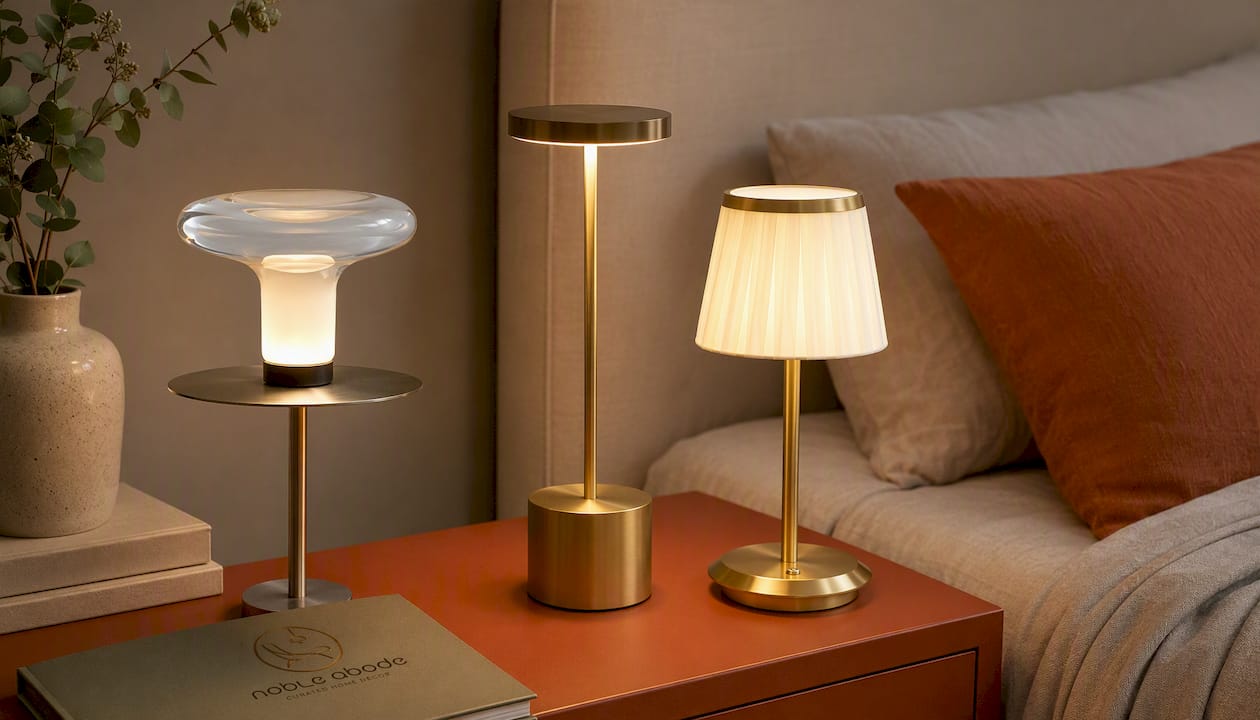
The Vintage Bank Table Lamp suits a classic nightstand in the 24 to 28-inch range, with a base height and shade proportion that land squarely in the sizing sweet spot. If your nightstand is narrow or you want a cord-free setup, the touch control rechargeable table lamp solves the switch-reach problem entirely since a tap anywhere on the base turns it on. For rooms where the nightstand doubles as a display surface, pieces like the Nordic Modern Creative Face Vase or an abstract art figure add visual weight beside a smaller lamp without crowding the surface.
Browse the full Noble Abode decor collection to find pieces sized for your exact nightstand and headboard combination.
Sources
- What Size Lamp for a Nightstand? 2026 Sizing Guide | Banner Mattress Online
- How to Pick Nightstand Lamps | The Spruce
- The Right Bedside Lamp Height (and Why 58cm Is Bad Advice) | DIY Decorator
FAQ
What is a good height for a bedside lamp?
Most bedside lamps work best between 24 and 30 inches tall, or about 2 to 3 inches taller than the nightstand they sit on.
Is 30 inches too high for a nightstand?
Not necessarily. A 30-inch nightstand works fine with a taller headboard or bed frame, but pair it with a lamp around 32 to 34 inches to keep the proportions from looking squat.
How high should a bedside wall sconce be?
Mount the sconce’s center 24 to 28 inches above the mattress top, offset 3 to 6 inches from where your head rests to keep the bulb out of your direct sightline.
Should bedside lamps match the headboard height?
They don’t need to match exactly, but taller headboards call for lamps sized toward the top of the 24 to 30-inch range so the lamp doesn’t look lost against the bed.