

10 Budget Staging Decor Ideas That Photograph and Sell
Declutter and depersonalize first. Then neutralize textiles, layer in fresh greenery, and place one sculptural focal piece per main room. Add a mirror or two to bounce light. These four moves cost the least and change buyer perception the most, since 83% of buyers’ agents say staging helps buyers picture themselves living in a home.
TL;DR:
- Focusing on decluttering and depersonalizing spaces first can significantly enhance buyer perception at minimal cost.
- Key decor upgrades include neutral textiles, appropriately scaled area rugs, and a single statement accessory per surface to create an intentional look.
- Lighting improvements, such as replacing bulbs with warm tones and using mirrors opposite windows, make rooms appear larger in photos.
- Performing quick, daily tidying and strategic replacements like hardware and doormats helps maintain a polished look during the market listing period.
- Using regional, seasonal, and one or two well-chosen statement pieces can add character without clutter, maximizing appeal across various markets.
Table of Contents
- Top Staging Decor Ideas, Ranked by Impact
- Room-by-Room Quick Staging Checklist
- Budget Swaps and “Shop Your House” Moves
- Styling Rules That Photograph and Sell
- Lighting and Photo Prep That Make Rooms Look Bigger
- Keeping the Staged Look Through Every Showing
- Styling With Noble Abode Pieces in Real Vignettes
- Seasonal and Regional Decor Considerations
- A Publisher’s Note on What Actually Sells a Room
- Noble Abode Staging Picks for a Fast, Photo-Ready Sale
- Sources
- FAQ
Top Staging Decor Ideas, Ranked by Impact
Not every staging decor idea deserves equal time or budget. Some earn their place in the first hour of prep. Others matter only if you have cash and time left over. Here’s the order that actually moves the needle on offers and showings.
- Neutral throw pillows and layered textiles. Stick to two or three colors max, mix in one textured pillow (bouclé, linen, or knit) with two solids, and keep the count to four or five per sofa. Overloaded cushion piles photograph as clutter, not comfort.
- A properly sized area rug. The rug should touch or tuck under the front legs of your sofa and chairs, never float alone in the middle of the room. An undersized rug is one of the fastest ways to make a living room look smaller in photos.
- One sculptural vase or statement accessory per surface. A single striking piece reads as intentional. A shelf full of small trinkets reads as leftover life. The Home Staging Institute points to this exact mistake as one of the most common among new stagers: too many small items, not enough confidence in one good one.
- The tray vignette. Coffee tables, kitchen islands, and console tables all benefit from the same trick: a tray holding three grouped objects, varied in height. It contains the eye and looks staged on purpose rather than staged in a hurry.
- Large mirrors placed with intent. A mirror leaning against a wall opposite a window multiplies natural light and makes a room read bigger in every listing photo.
- Fresh greenery that survives neglect. Snake plants, pathos, and ZZ plants tolerate missed watering during a busy selling season. Faux greenery works too, as long as it’s a quality version, not the dusty plastic kind.
- Neutral, appropriately scaled artwork. One large piece beats three small mismatched frames. Size the art to roughly two thirds the width of the furniture below it.
- Swapped hardware and a new doormat. Cabinet pulls and a clean doormat cost under $50 combined and change the first impression of a kitchen and a front door instantly.
- Slipcovers and pillow covers instead of new furniture. A worn sofa becomes a neutral backdrop for $80 to $150 in slipcover cost, versus thousands for replacement.
- Virtual staging for vacant rooms. For empty properties, digital staging tools let you furnish photos without moving furniture, often for a few dollars per image.
The common thread across all ten: quality over quantity. A few well-chosen pieces consistently outperform a room stuffed with budget filler, both in person and on camera.
Room-by-Room Quick Staging Checklist
Buyers form opinions fast, and most of that judgment happens in three rooms before anything else: the living room, primary bedroom, and kitchen. Work through this list room by room and you’ll cover the spaces that actually decide offers.
Living room
- Anchor the largest seating piece against the strongest wall, then float the rest to create a conversation zone.
- Hide every visible cord behind furniture or inside a cable box.
- Add exactly one statement piece. A sculptural vase or an oversized bowl works better than five smaller objects.
Kitchen
- Clear counters until roughly 80% of the surface is empty.
- Set one simple centerpiece, like a bowl of lemons or a small plant, on the island.
- Wipe down fixtures and swap dated cabinet hardware if the budget allows, following helpful tips on ways to modernize your kitchen without a rebuild.
Primary bedroom
- Make the bed hotel-style: fitted sheet, flat sheet folded crisp, two pillows minimum layered with a throw.
- Keep nightstands symmetrical, one lamp and one small object on each side.
- Pull at least a third of closet contents out and store them off-site.
Bathroom
- Replace mismatched towels with white or cream ones, folded the same way.
- Clear counters down to one or two curated items.
- Recaulk visible grout lines and add a small plant or an upscale soap bottle.
Entry and curb
- Set a console table or narrow mirror just inside the front door.
- Put down a fresh, unworn welcome mat.
- Add two matching potted plants and trim any overgrown landscaping near the walkway.
Budget Swaps and “Shop Your House” Moves
Start with subtraction, not addition. Clearing a room of excess before buying a single new item is the single most cost-effective staging decor move available, and it’s the one most sellers skip because it feels unproductive compared to shopping.
Once a room is edited down, look through your own house before opening a wallet. A budget-conscious staging approach means repurposing what you already own rather than buying new pieces for every room.
- Move a striking vase from the bedroom to the dining table.
- Pull a thrifted mirror from storage and lean it against an empty wall.
- Swap heavy winter bedding for a lighter, neutral quilt from the guest room closet.
- Rehome oversized furniture from a small room to a garage or storage unit for the listing period.
A handful of small purchases justify their cost every time: cabinet hardware, a new doormat, and warm 2700K bulbs across the whole house. Fresh neutral paint in one or two rooms also tends to pay for itself in how much brighter and larger the space photographs.
Pro Tip: Before buying anything new, walk through each room with your phone camera and take the exact photo an agent would use for the listing. If clutter shows up in the frame, that’s the item to remove first, not the item to decorate around.
Styling Rules That Photograph and Sell
Professional stagers lean on a small set of repeatable rules, and the rule of three is the most useful one for anyone without design training. Group objects in threes, vary the height and texture within the group, and the vignette reads as deliberate instead of accidental. A vase, a stack of books, and a small plant beat three matching candles every time.
Scale matters just as much as grouping. In small rooms, removing up to half the existing furniture and floating what remains creates conversational zones and makes the whole space feel larger in photos.
- Keep wall colors neutral: warm white, soft greige, or light taupe.
- Add exactly one subtle accent color through pillows or a single piece of art, never more.
- Skip trend-driven colors or patterns that could date the listing in six months.
Pro Tip: If you’re torn between two accent colors, choose the one that already exists somewhere in your kitchen backsplash or bathroom tile. It ties the whole house together without adding a new decision point.
Lighting and Photo Prep That Make Rooms Look Bigger
Bulb temperature changes everything a camera captures. Swap every bulb in the house to 2700K, the warm, inviting glow that professional stagers rely on, and replace any bulb that’s dimmed or flickering. Clean every light fixture while you’re at it. Dust on a glass shade shows up in flash photography more than you’d expect.
Mirror placement does double duty here. Set a large mirror directly opposite a window and it bounces natural light across the room, while layered lamps (a floor lamp plus a table lamp) erase the dark corners a single overhead fixture always leaves behind.
Before the photographer arrives, run this checklist:
- Open every blind and curtain fully.
- Remove personal photos, mail, and toiletries from visible surfaces.
- Tidy counters and tuck away cords.
- Turn on every lamp, even during daylight shoots.
The payoff is real: staged, well-lit listings consistently draw more buyer interest, and agents themselves report that staging makes the visualization leap easier for buyers.
Keeping the Staged Look Through Every Showing
A staged house only works if it stays staged, and that means building a few habits into the weeks your home is on the market.
- Daily tidy, 10 to 15 minutes. Make every bed, fluff pillows back into shape, wipe kitchen counters, and run a quick vacuum over high-traffic paths.
- Pre-show, 15-minute reset. Set out fresh towels, turn on every lamp, open all the blinds, and refresh any flowers or greenery that have started to droop.
- Store personal items off-site. Keep a rotating box in the trunk of your car for mail, medications, and anything you don’t want a stranger’s eyes on during an open house.
- Neutralize odors before every showing. A quick air-out and a wipe-down beats air freshener, which can read as masking a problem rather than solving one.
Styling With Noble Abode Pieces in Real Vignettes
A few statement pieces do more work than a room full of small decor. In a mudroom or entry, the Modern Luxury Wine Cabinet and Shoe Storage Decor doubles as function and focal point, giving buyers organized storage they can picture using immediately. On a console or dining table, The Ballerina Elegance | Art Home Décor Flower Vase pairs naturally with neutral linens for a soft, sculptural centerpiece. In a living room or on a primary bedroom nightstand, Flower Face Vase Art anchors the space without competing with existing furniture.
- Match vase color to your wall tone, not your furniture, for the cleanest photo result.
- Keep maintenance low: dust weekly, avoid direct sun on painted finishes.
- One piece per surface is the ceiling, not the floor.
| Piece | Best Room | Why It Works |
|---|---|---|
| Wine Cabinet and Shoe Storage Decor | Entry or mudroom | Functional storage plus sculptural presence |
| Ballerina Elegance Flower Vase | Console or dining table | Soft focal point paired with neutral linens |
| Flower Face Vase Art | Living room or bedroom | Statement accessory without visual clutter |
Seasonal and Regional Decor Considerations
Staging decor should shift with the calendar, but subtly. In colder months, swap in a heavier neutral throw and warmer-toned pillows, and make sure every lamp is lit before showings start earlier in the evening. In spring and summer, lean into fresh-cut or faux greenery and keep window treatments pulled back to maximize daylight.
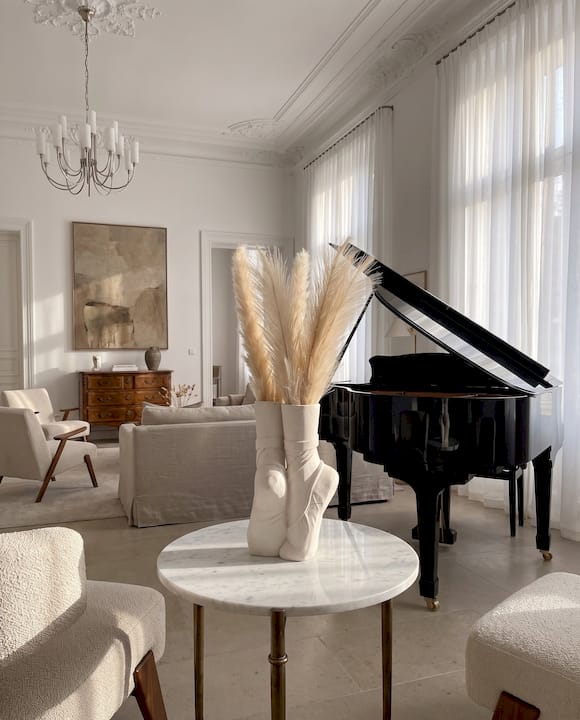
Regional context matters just as much. A coastal listing benefits from lighter, breezier textiles and driftwood or woven textures, while a mountain or lake-region home can carry slightly warmer, richer tones without feeling out of place. Desert climates often photograph best with terracotta or sand-toned accents rather than stark white.
Whatever the season or region, the same rule applies: keep the base neutral and let one or two accents carry the seasonal or regional character. A living room shouldn’t look like a holiday display in December or a beach house in July. It should look like a home that photographs well in any month a buyer happens to click on the listing.
A Publisher’s Note on What Actually Sells a Room
Working through staging trends year after year, the pattern holds: buyers notice light and open surfaces before they notice anything else. A single well-placed piece beats a shelf of trinkets almost every time.
— Stephane
Noble Abode Staging Picks for a Fast, Photo-Ready Sale
There are alternatives to hunting through big-box aisles or a full-service stager for a handful of statement pieces that photograph well and need almost no upkeep during a listing period. Each item below is built for the exact staging moments covered above.
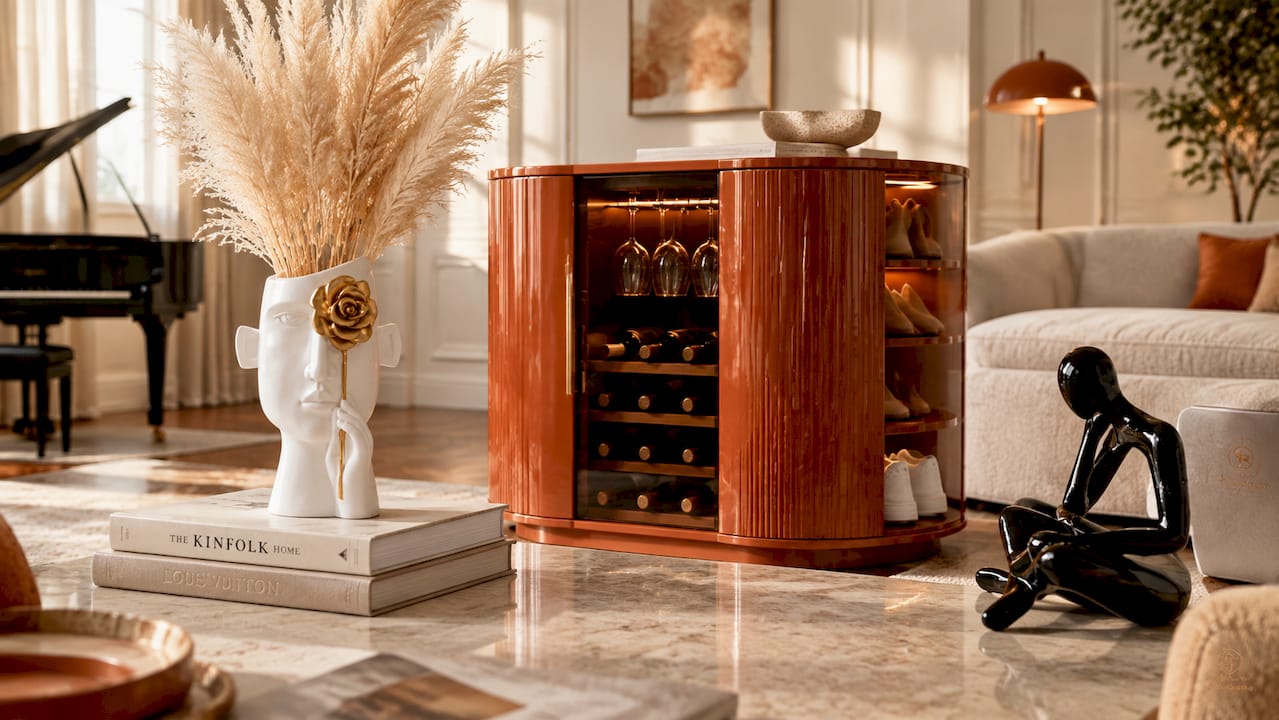
The Modern Luxury Wine Cabinet and Shoe Storage Decor turns an entry or mudroom into a functional focal point buyers remember. The Ballerina Elegance flower vase anchors a console or dining table vignette with almost no daily maintenance. The Flower Face Vase Art fills the “one statement piece per room” rule for a living room or primary bedroom without adding clutter. For sellers who want more styling direction before choosing, the decorative vase idea guide breaks down pairing options by room. Browse the current selection at Nobleabode and pick the piece that matches your highest-traffic showing room first.
Sources
- NAR consumer guide: staging your house for a sale
- How to stage your house for sale — Zillow
- Staging a House on a Budget — Redfin
- Home Staging Institute — top mistakes new stagers make
FAQ
What Should You Avoid When Staging a House?
Avoid overstuffed shelves, bold trend colors, personal photos, and oversized furniture crowding small rooms. Each of these reads as clutter or dates a listing in photos.
What Is the Cheapest Way to Stage a House?
Decluttering and depersonalizing cost nothing and deliver the biggest visible change, followed by “shopping your house” for existing decor rather than buying new pieces.
What Are the Latest Trends in Home Staging?
Warm neutral bases with a single subtle accent color, organic textures like linen and rattan, and one curated statement piece per room are leading current staging approaches, replacing bold, trend-heavy accents that can date a listing.
What Decor Style Works Best for Staging in 2026?
Timeless, neutral styling with natural materials and one sculptural accessory per surface tends to appeal to the widest range of buyers, since it avoids trend fatigue and photographs cleanly in any lighting.