

2-2-1 Formula: Arrange 5 Pillows on a Sofa with Exact Sizes
Start with the 2-2-1 formula: two large pillows at the back corners, two medium pillows layered in front, and one lumbar in the center. This baseline works for most standard 3-seat sofas because it keeps an odd total, anchors both ends, and still leaves the middle seat clear for actually sitting down. Drop to a few pillows on a loveseat, and scale up depending on the sofa or sectional size.
TL;DR:
- Using the 2-2-1 pillow arrangement, a standard three-seat sofa typically needs five pillows, with size differences to create depth and asymmetry.
- Pillow covers should be about 2 inches smaller than inserts to maintain fullness, with size adjustments for deep or shallow sofas.
- Placement begins with large corner pillows, layered medium pillows inward, and a central lumbar, with slight angling for a lived-in look.
- Limiting color palettes to two or three tones and balancing patterns with solids improve cohesion, while mixing textures adds visual interest.
- Seasonal updates involve swapping fabrics to lightweight or heavier textures, maintaining overall count and layering to adapt to warm or cold weather.
Table of Contents
- What Is the Best Pillow Arrangement on a Sofa?
- How Big Should Throw Pillows Be on a Couch?
- How Do You Physically Arrange Pillows on a Sofa?
- How Do You Mix Colors and Patterns on Sofa Pillows?
- How Do You Arrange Pillows on a Sectional or Loveseat?
- What Are the Most Common Pillow Styling Mistakes?
- How Should Pillow Arrangements Change by Season?
- What Fabric Should Sofa Pillows Be Made From?
- How Do You Clean and Maintain Sofa Pillow Covers?
- How Do You Choose Pillows for Your Sofa Style?
- A Design Perspective on Sizing and Product Roles
- Get the Look With Noble Abode’s Curated Pillow Roles
- Sources
- FAQ
What Is the Best Pillow Arrangement on a Sofa?
Odd numbers read as intentional. Even numbers, especially matched pairs pushed to dead center, tend to look like a hotel lobby display. Designers consistently recommend three pillows for loveseats and five for a standard 3-seat sofa, with larger sofas and sectionals climbing to seven or more depending on the length of the back cushion.
The logic behind the count isn’t arbitrary. An odd number forces asymmetry, and asymmetry is what makes a sofa look styled rather than assembled from a matching three-piece set. Working from the corners inward also keeps the visual weight where the eye expects support: at the arms, tapering toward an open, sittable middle.
Here’s how the counts generally break down by size:
- Loveseat or small sofa: a few pillows, often placed at each side and sometimes a small lumbar.
- Standard 3-seat sofa: several pillows arranged in a layered formula.
- Large sofa or sectional: more pillows, adding pairs or cushions suited to size and configuration.
- Oversized or L-shaped sectional: multiple zones of pillows to cover the length and shape.
The rule bends the moment comfort suffers. If a pillow count starts pushing people to the edge of the cushion, the arrangement has failed its actual job.
How Big Should Throw Pillows Be on a Couch?
Size drives the layered look more than color or pattern ever will. The standard progression starts big in the back and steps down toward the front, and that step matters more than most people assume when a set of pillows suddenly looks flat instead of full.
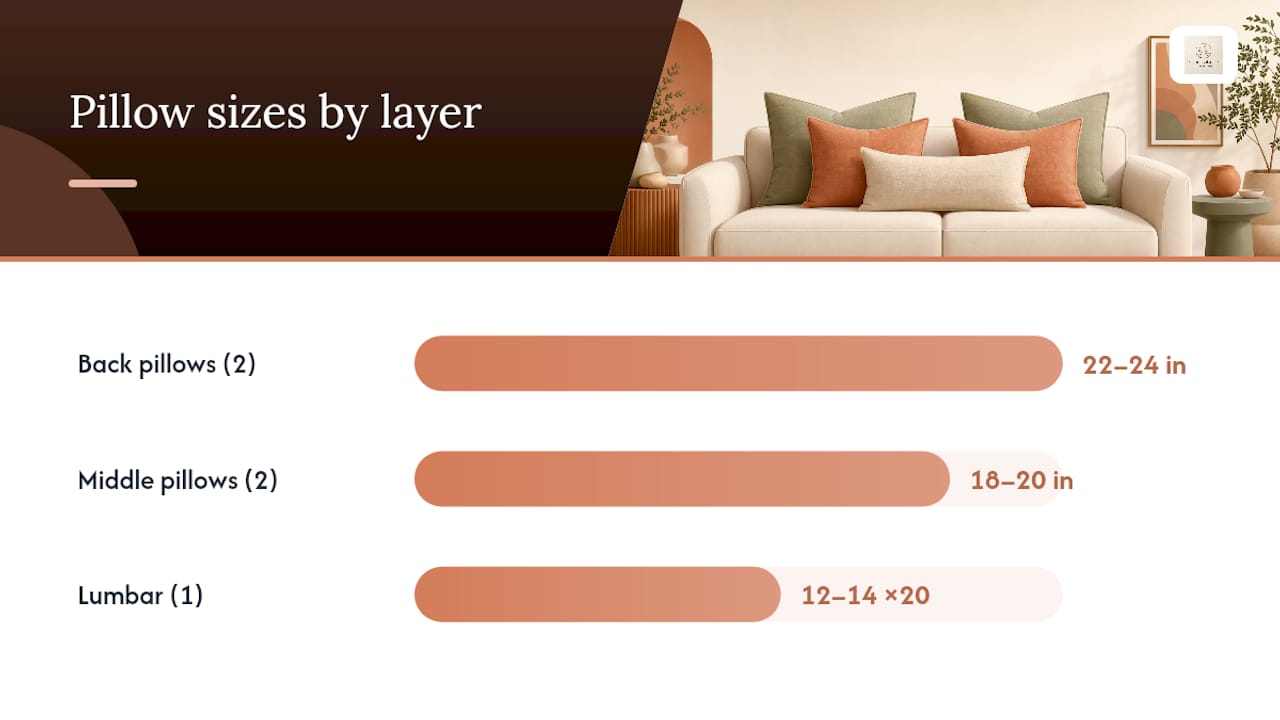
Layer from the back corners forward: 22 to 24 inch pillows go against the back cushions, 18 to 20 inch pillows sit just in front of them, and a 12x20 or 14x20 lumbar finishes the center. Each layer steps down by roughly 2 inches, which is what creates the sense of depth instead of a flat wall of same-size squares.
Depth of the sofa itself changes the math:
- Deep sofas (40 inches or more): go up to 24 or 26 inch back pillows, and consider adding a slim front layer to fill the extra space without losing the back-support cushions.
- Shallow or low-back sofas: drop down in both size and count, since an oversized pillow on a narrow seat eats into usable space fast.
- Standard depth (36 to 38 inches): the classic 24/20/lumbar progression fits without adjustment.
Statistic Callout: Aim for pillow inserts about 2 inches larger than the cover. A 20 inch cover filled with a 20 inch insert looks deflated within weeks; a 22 inch insert inside that same cover holds its shape and gives the arrangement a fuller, more finished appearance.
How Do You Physically Arrange Pillows on a Sofa?
Getting from a pile of pillows to a finished sofa takes about five minutes once the sizing is sorted. The sequence matters more than people expect. Skip a step and the whole thing tends to look lopsided no matter how nice the pillows are.
- Measure first. Note the seat width, cushion depth, and back height. This tells you whether you’re working with a 5-pillow standard layout or need to scale to 7.
- Place the largest pillows at the back corners. These are your anchors, usually the 22 to 24 inch pair.
- Layer the medium pillows in front and slightly overlapping. The 18 to 20 inch pair leans against the anchors, angled inward a touch rather than sitting perfectly flat.
- Add the lumbar last, centered or slightly offset. This is where pattern or color can stand out most, since it’s the piece closest to the eye.
- Angle the front pillows 20 to 30 degrees rather than squaring them off. A dead-straight pillow reads stiff; a slight tilt reads lived-in.
- Sit down and check. If a pillow is in the way of your back or the middle seat feels crowded, remove one before calling it finished.
Pro Tip: Fluff and karate-chop the top of each pillow after placing it. That single crease is what separates a styled sofa from a stacked one.
How Do You Mix Colors and Patterns on Sofa Pillows?
Cohesion comes from restraint, not variety. The most common mistake in a pillow combination for couch project is reaching for five different colors instead of building around a tight palette that pulls from something already in the room.
Limit the palette to two or three colors total, and pull at least one directly from an existing element, a rug, a piece of art, or curtains, so the sofa doesn’t feel like an island. Designers repeatedly point to matched sets as the fastest way to make an arrangement look flat, which is why grouping in threes with varied textures tends to outperform a boxed set every time.
Pattern scale needs the same discipline:
- Pair one large-scale pattern (a bold stripe or floral) with one small-scale pattern (a fine check or dot).
- Balance both against at least one solid or textured pillow so the eye has somewhere to rest.
- Use two textures minimum, velvet against linen, bouclé against a flat weave, since texture contrast does as much visual work as color.
Texture, more than color, is what makes a neutral arrangement feel expensive instead of empty.
How Do You Arrange Pillows on a Sectional or Loveseat?
Sectionals and loveseats each break the standard formula in their own direction. A sectional has extra real estate to fill; a loveseat has almost none.
The corner of an L-shaped sectional acts as a pivot point. Anchor it with one large or visually distinct pillow, then let smaller pillows flow outward on both sides toward the straight runs. Most sectionals land around 5 to 7 pillows total once you count both the corner zone and the extended seating.
- Loveseats: stick to 1 to 3 pillows. One per arm is often enough; a third goes center only if the loveseat is deep enough to spare the space.
- Symmetry vs. asymmetry: pick one and commit. A symmetrical loveseat looks intentional; a sectional usually looks better styled asymmetrically, with size stepping down from a larger back pillow toward a smaller front one.
- Chaise ends: treat as their own mini zone, often just one oversized pillow rather than a full 2-2-1 layout.
What Are the Most Common Pillow Styling Mistakes?
Most sofa pillow mistakes come from either too much sameness or too much clutter. Both are easy to fix once you know what to look for.
- Same-size pillows across the whole sofa flattens the composition instead of layering it.
- Too many pillows turns a couch into an obstacle course; if a guest has to move three pillows to sit down, the count is too high.
- Pillows blocking usable seating space, especially in the center seat, defeats the entire point of a sofa.
- Mismatched pattern scale, like two busy large-scale prints side by side, competes for attention instead of complementing.
Pro Tip: If an arrangement looks off but you can’t tell why, swap one texture before you swap a color. Texture fixes flatness faster than a new hue ever will.
Quick fixes: pull the middle pillow if the sofa feels crowded, replace two small lumbars with one long one for a cleaner line, or rotate in a textured cover instead of buying an entirely new color.
How Should Pillow Arrangements Change by Season?
A sofa’s pillow arrangement can shift with the seasons the same way a wardrobe does, without needing new furniture or a full redecorate.
Summer styling leans toward lighter, breathable covers, think linen, cotton, and lighter textures paired with a brighter or more saturated accent color against a neutral base. Keep the same 2-2-1 structure but swap in crisper fabrics that don’t trap heat the way heavier weaves do. A single bold lumbar in a warm hue against otherwise neutral pillows keeps the look fresh without overloading the palette rules covered earlier.
Cooler months call for heavier textures: bouclé, chunky knit, velvet, or faux fur worked into the medium or lumbar positions. The counts don’t need to change, but the fabric weight does the visual work of making a sofa feel warmer even before anyone sits down. Earth tones and textured neutrals have become the dominant seasonal direction for cold-weather styling, a shift that plays directly into the two-texture rule from the color section.
The easiest seasonal system is a rotating set of covers over the same inserts. Buy one set of pillow inserts sized correctly for the sofa, then swap covers between a warm-weather set and a cold-weather set twice a year. This avoids re-buying whole pillows every season and keeps the sizing and layering order identical, so the arrangement always falls back to the same reliable 2-2-1 or 5-pillow structure regardless of the covers on top.
What Fabric Should Sofa Pillows Be Made From?
Fabric choice affects how long an arrangement stays looking good, not just how it photographs on day one. A gorgeous pattern in a fabric that pills, fades, or flattens within a season isn’t a good long-term pillow combination for sofa, no matter how well it matched the room.
Woven fabrics like cotton, linen, and heavier blends tend to hold their shape and color better over time than cheap printed polyester, which fades under sunlight and loses its crispness faster. Velvet adds a texture layer that photographs beautifully but shows crushing on high-traffic seats, so it’s often better reserved for lumbar or accent positions rather than the pillows that get leaned on daily. Bouclé and chunky knit textures, popular in current styling, add depth but need slightly more careful cleaning than a flat weave.
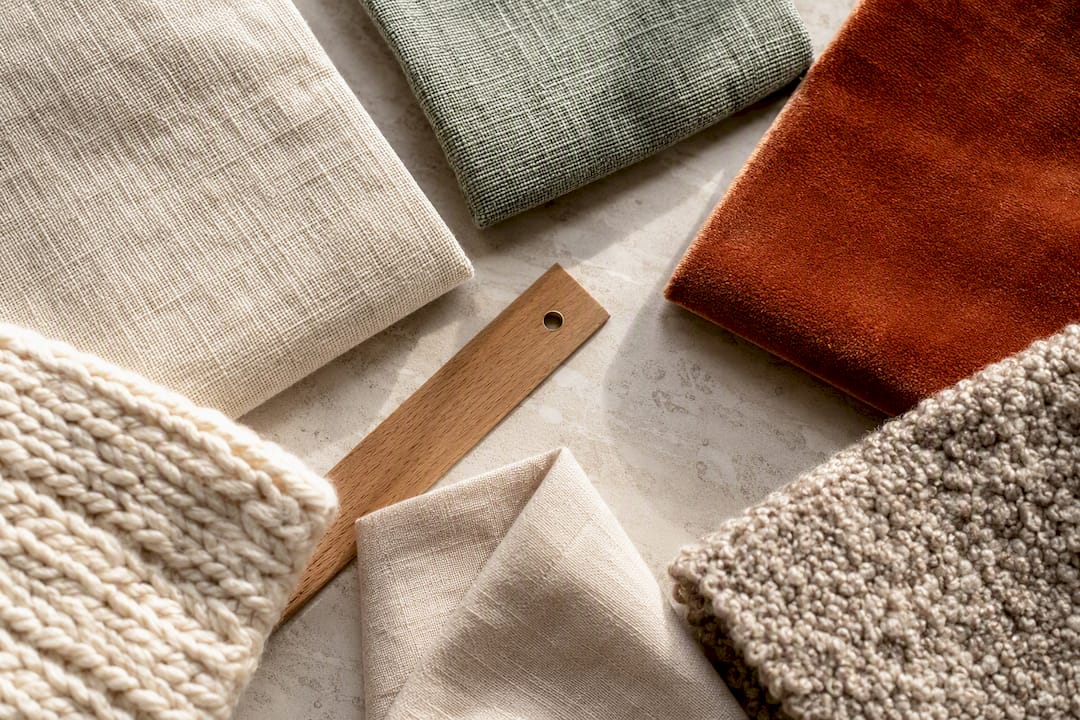
For households with pets, kids, or a sofa that gets daily use, prioritize removable, washable covers over fixed upholstery-style pillows. A zippered cover on a durable weave lets you clean spot stains without replacing the whole pillow, and it makes seasonal cover swaps painless. Performance fabrics, originally developed for outdoor furniture, have also made their way into indoor throw pillows and hold up well against sun fading near windows.
Insert material matters just as much as the cover. A polyester-fill insert holds its shape longer than loose down alone, though a down-and-feather blend gives the softest hand-feel for lumbar pillows people actually rest against. Whichever fill you choose, size the insert about 2 inches larger than the cover, the same rule covered earlier for a full silhouette.
How Do You Clean and Maintain Sofa Pillow Covers?
An arrangement only looks finished if the pillows themselves still look fresh, and that comes down to a maintenance routine most people skip until a pillow already looks tired.
Fluff and rotate every pillow weekly. Cushions compress on one side from regular leaning, and rotating them evens out that wear so no single pillow flattens faster than the others in the arrangement. Vacuum covers with an upholstery attachment every week or two to lift dust and pet hair before it settles into the weave.
Check the care label before washing anything. Many decorative covers are dry-clean-only or spot-clean-only because of embellishments like embroidery, beading, or delicate trims that don’t survive a washing machine. Cotton and linen covers without embellishment usually tolerate a gentle machine wash in cold water, but always air dry rather than tumble dry, since heat is what shrinks covers and warps zippers over time.
Spot-treat spills immediately with a mild dish soap and water solution rather than letting a stain set. For inserts, an occasional fluff in the dryer on a no-heat, air-only cycle helps redistribute clumped fill without damaging the fabric. Swapping to more durable, easy-care covers is also worth considering for a sofa in heavy daily use, since households with high-traffic sofas tend to fare better with fewer pillows and tougher fabric than with a large, delicate collection.
How Do You Choose Pillows for Your Sofa Style?
The sofa itself should dictate the pillow direction before color or pattern enters the conversation. A mismatch between sofa style and pillow style is one of the fastest ways to make an otherwise good room feel unresolved.
A tailored, modern sofa with clean lines pairs well with solid or geometric pillows in a restrained palette, letting the furniture’s shape stay the visual focus. An overstuffed traditional or Chesterfield-style sofa can handle more ornamentation, tufted textures, tasseled trims, richer patterns, without looking busy, because the sofa’s own silhouette already carries weight. A slipcovered or farmhouse-style sofa tends to suit looser, more textural pillows: linen, ticking stripes, or a woven natural fiber that echoes the relaxed shape of the frame.
Room theme matters as much as sofa shape. A coastal or light-filled living room calls for airy fabrics and a palette pulled from natural light, sand, or soft blue. A moodier, warmer living room, heavy on wood tones and low lighting, suits richer jewel tones or deep neutrals in the pillow layer instead. The goal is always the same: the pillows should feel like they were chosen for this specific sofa in this specific room, not picked from a generic best-seller list and dropped on top.
A Design Perspective on Sizing and Product Roles
Pillow arrangement on sofa styling only works when the pieces themselves hold their shape, keep their color, and survive weekly use, which is where Noble Abode’s approach to timeless design and premium craftsmanship earns its place in this conversation. The Retro Luxury Sofa Bed with Pillows works well as the anchor pair in a 2-2-1 layout, sized for those back-corner positions. The Light Luxury Retro Style Pillow for Sofa & Bedside slots naturally into the medium, front-layer role. The American Country Style Luxury Sofa Pillow Decoration suits the lumbar or statement position, where pattern and texture do the most visible work.
— Stephane
Get the Look With Noble Abode’s Curated Pillow Roles
A curated retailer can simplify finding the right size, color, and fill for sofa pillows. Each product is built to slot into a specific role rather than leaving guesswork in the mix: the Retro Luxury Sofa Bed with Pillows fills the back-corner anchor spot, the Light Luxury Retro Style Pillow for Sofa & Bedside covers the medium front layer, and the American Country Style Luxury Sofa Pillow Decoration handles the lumbar or statement piece.
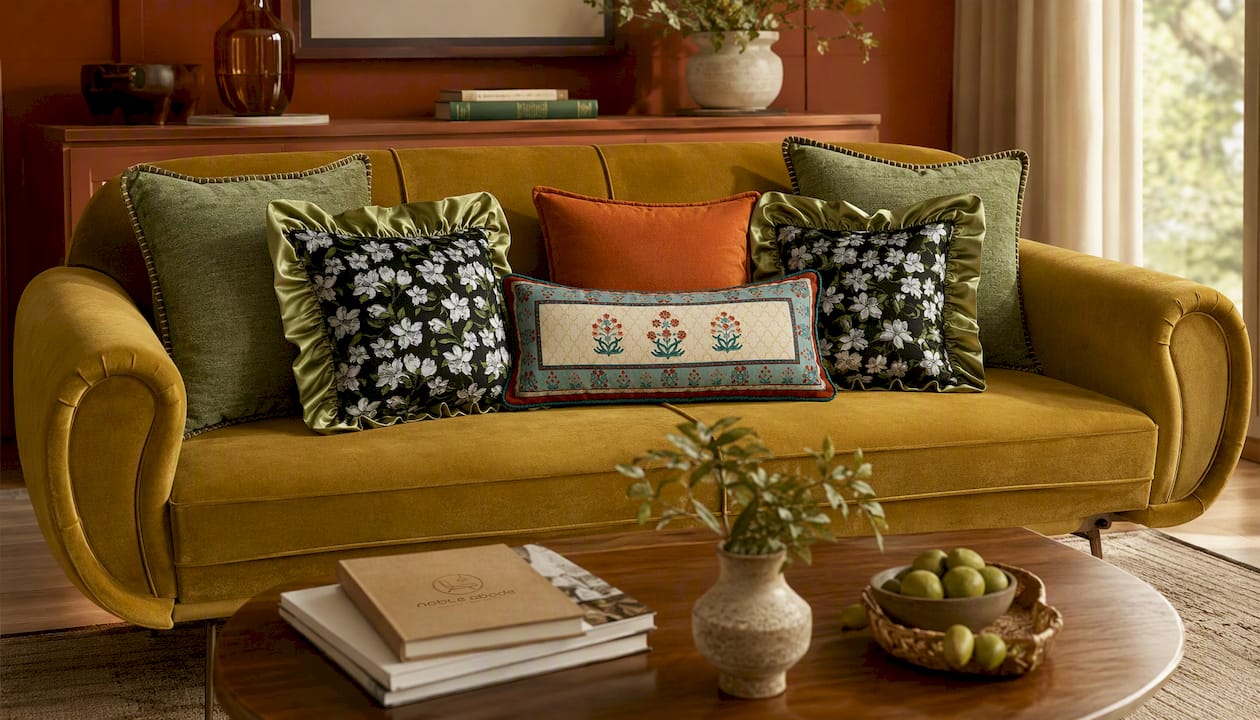
Each piece is designed for durability and ease of care to maintain its appearance during regular use. Browse the full Luxury Decor collection for more anchor and accent options, and check What Size Pillow Insert Do You Need for Your Cover? to get the fill sizing right before you buy. For a completed layered look, pair your new pillows with a throw from Throw Blankets & Soft Furnishings. Start with one anchor pair from the current collection and build the rest of the arrangement around it.
Sources
- How many throw pillows should you have? (Good Housekeeping)
- How To Layer Throw Pillows On A Sofa By Size & Count: Step-by-Step Guide (Nordic Design Blog)
- How to style throw pillows on sectionals (Maria Killam)
- This Is the Correct Number of Throw Pillows for a Couch, Designers Say (The Spruce)
FAQ
What Is the Best Way to Arrange Pillows on a Sofa?
Use the 2-2-1 formula for a standard 3-seat sofa: two large pillows at the back corners, two medium pillows layered in front, and one lumbar centered between them, adjusting the count up or down based on sofa size.
What Is the 2-2-1 Pillow Rule?
The 2-2-1 rule places two large back-corner pillows (22 to 24 inches), two medium front pillows (18 to 20 inches), and one lumbar pillow in the center, creating a layered, odd-numbered arrangement of five total pillows.
What Is the Rule of Thumb for Couch Pillows?
Designers generally recommend three pillows for a loveseat, five for a standard sofa, and five to seven or more for larger sofas and sectionals, always keeping the total an odd number for visual balance.
What Are the Pillow Trends for 2026?
Current styling favors earth tones, textured neutrals like bouclé and chunky knit, and a lumbar-forward, minimalist look that pares back the total count in favor of fewer, higher-quality pieces.
How Many Pillows Should I Put on a Sectional?
Most sectionals work well with five to seven pillows total, anchoring the corner with one large or distinctive pillow and letting smaller pillows flow outward across the remaining seating zones.