

Measured Spacing and Style for Multipurpose Furniture in Small Homes
For small homes, a handful of multipurpose pieces solve most space and function problems: storage ottomans, storage beds, sofa beds, fold-down desks, extendable tables, modular shelving, nesting tables, and a kitchen island on casters. This guide covers sizing, placement, and buying rules for each, including the 18-inch clearance standard and a few picks from Noble Abode worth checking out.
TL;DR:
- Proper spacing and measurement are crucial, with 18 inches of clearance needed around coffee tables and sofas for safe and comfortable movement.
- Prioritizing quality materials such as performance fabrics and solid frames ensures durability and suitability for daily adult use in multipurpose furniture.
- Items that transform easily, like fold-down desks and wall-mounted tables, should be selected for quick conversion and simple operation to prevent disuse.
- Under-bed and under-sofa storage require checking clearance and lift height to avoid purchasing solutions that won’t fit with existing furniture.
- Combining practical function with aesthetic consistency, such as matching materials or colors, helps prevent small-space furniture from appearing as only storage.
Table of Contents
- Multipurpose Furniture Ideas for Every Room
- How to Choose the Right Multipurpose Piece for Your Home
- Placement and Spacing Rules to Make Multipurpose Pieces Perform
- DIY Tweaks and Custom Upgrades That Boost Function
- Stephane’s Perspective: Making Multipurpose Furniture Feel Intentional
- Convertible Chairs and Recliners
- Under-Sofa and Under-Bed Storage Solutions
- Furniture With Hidden Compartments
- Furniture for Tiny Homes and Small Apartments
- Editorial Take: What Actually Makes This List Work
- Noble Abode’s Take on Solving These Jobs
- Sources
- FAQ
Multipurpose Furniture Ideas for Every Room
The best multipurpose furniture ideas share one trait: they solve two jobs without compromising either one. A sofa bed that sleeps badly isn’t a good sofa bed, no matter how well it folds. Here are the pieces worth building a small home around.
1. Storage Ottomans and Benches
An ottoman with a lid does the work of a coffee table, extra seating, and a closet, all in one footprint. It works best in living rooms and entryways where floor space is tight, but clutter still needs somewhere to go. Stick to one category of contents, throws, or games, or seasonal pillows, since mixed-content interiors get abandoned fast because digging through them becomes a chore, according to The Storage Nook. Square and rectangular shapes give you the most storage volume, while round ottomans soften a room’s lines but complicate lid access, per DesignLike. Choose a performance fabric or faux leather top for anything near a coffee cup.
2. Storage Beds
A bed frame with lift-up storage or built-in drawers replaces a dresser in rooms too small for both. It’s the natural choice for studio apartments and kids’ rooms, where clothing storage competes directly with floor space. Measure the lift clearance against your mattress thickness. A thick memory foam mattress needs more hydraulic lift than a standard innerspring model, or the drawers won’t open fully.
3. Sofa Beds and Sleeper Sofas
A sofa bed turns a living room into a guest room without a second lease. It belongs in studios, home offices, and any small living room that occasionally hosts overnight guests. Prioritize mattress quality and conversion effort over extra storage features when sleeping is the primary job, a lesson worth learning before you buy, not after a guest’s first night on a lumpy pull-out. Look for a memory-foam or gel-infused sleeper mattress at least four inches thick.
4. Fold-Down and Wall-Mounted Desks
A fold-down desk gives you a work-from-home setup that disappears at 5 p.m. It works in bedrooms, hallways, and closets converted into micro-offices. Mount it at standard desk height, 28 to 30 inches, and pair it with a compact organizer rather than a bulky filing cabinet. A desktop storage box keeps cords and supplies contained without eating the surface you just freed up.
5. Extendable and Folding Dining Tables
An extendable table seats two on a Tuesday and eight on a holiday. It’s essential in small dining nooks and open-concept apartments where a full-size table would block traffic daily. Check the extended footprint against your room, not just the folded one, and confirm you have 36 inches of clearance behind each seated chair for people to get up.
6. Modular Shelving and Room Dividers
Modular shelving splits a studio into “rooms” while still storing books, decor, and bins. It works best as a divider between a sleeping area and a living area in a one-room apartment. Open-back units let light through and keep the space from feeling boxed in; closed-back units hide clutter but read heavier. A modular wardrobe system can do double duty as both closet and divider in the right layout.
7. Nesting Tables and Stackable Seating
Nesting tables for small spaces solve the problem of needing four surfaces but storing zero when they’re not in use. They slide together into one footprint and pull apart for guests, game night, or extra plate space. Stackable stools do the same for seating. Look for consistent finishes across the set so they read as one piece when nested, not three mismatched leftovers.
8. Rolling Kitchen Islands and Carts
A kitchen island on casters adds counter space, storage, and sometimes seating to galley kitchens that have none of the three. It rolls out of the way when you need floor space and rolls into place when you need a prep surface. Measure your kitchen’s tightest pinch point before buying. If the cart doesn’t fit through the narrowest doorway or aisle, it won’t earn its keep, a point worth checking against ideas covered in this small kitchen optimization guide.
How to Choose the Right Multipurpose Piece for Your Home
Start by measuring, not shopping. An ottoman ideally measures a substantial fraction of the sofa’s width to maintain a balanced visual proportion without appearing lost or overwhelming. For anything that unfolds or extends, measure the full converted footprint, not the folded one sitting in the showroom, and check clearance against doors, radiators, and swing paths before you commit.
Decide the primary function before the secondary one. Buy a sofa bed for the bed, a desk for the desk, and treat storage as a bonus, not the deciding factor.
Material matters more than most buyers expect:
- Performance fabrics resist stains and hold up to pets and kids.
- Faux leather wipes clean fast but shows creasing over time.
- Solid frames handle daily adult seating; foldable frames suit occasional or renter use.
Pro Tip: Choose framed seating with a wood or metal frame if the piece will see daily adult use, and reserve collapsible fabric cubes for occasional seating or a rental where you might move soon.
Before checkout, confirm the weight rating, hinge type (slow-close hinges prevent slammed fingers), whether assembly is required, and the return window in case sizing is off.
Placement and Spacing Rules to Make Multipurpose Pieces Perform
Good furniture in the wrong spot stops functioning the moment someone has to climb over it.
- Leave about 18 inches between the sofa and any ottoman or coffee table for comfortable passage.
- Leave 24 to 30 inches between the ottoman and the TV or opposite seating to protect sightlines and traffic flow, per Homestyler.
- Pull benches 3 to 4 inches off a window or baseboard to prevent tipping when someone sits down hard.
- Pair every flat-top ottoman with a tray sized to roughly 60 to 70 percent of its surface, which keeps it functioning as a coffee-table substitute instead of a catch-all.
Studios need the 18-inch rule most: with less total floor space, every inch of walking room counts double.
DIY Tweaks and Custom Upgrades That Boost Function
Small changes extend how long a piece stays useful.
- Add canvas bins or a plastic divider inside a storage ottoman so contents stay grouped and easy to find.
- Retrofit slow-close hinges on any lid that gets opened daily.
- Add a fitted tray and non-slip pads to any ottoman surface doing coffee-table duty.
- Choose framed, screw-assembled builds for pieces you’ll keep for years; save foldable, tool-free options for rentals or short-term setups.
Stephane’s Perspective: Making Multipurpose Furniture Feel Intentional
Multipurpose only works when it also looks like a choice, not a compromise. My rule: pick one material or color already in the room, wood tone, brass, or a fabric shade, and repeat it in the new piece. A friend’s studio apartment finally clicked once her ottoman matched her rug’s rust tone instead of fighting it. Prioritize craftsmanship and easy-care fabric over trend colors, since you’ll be cleaning that surface long after the trend fades.
— Stephane
Convertible Chairs and Recliners
A convertible chair earns its space by doing what a full sofa bed can’t: fitting into a corner too small for a sleeper sofa. Sleeper chairs fold flat into a single-width bed, which makes them a realistic option for studio apartments, home offices, or a nursery that occasionally hosts an overnight visitor. Recliners with hidden storage in the base or armrest add a second function without adding footprint, which matters in rooms where every chair has to justify its presence.
The trade-off is comfort versus convertibility. A chair mechanism built to fold flat rarely feels as plush as a dedicated armchair, so test the sitting comfort before assuming the conversion feature makes up for it. Look for reinforced frames at the fold points, as that’s where cheap convertible seating fails first, usually within a year of daily use.
Style-wise, a convertible chair reads best when it matches the room’s existing seating rather than standing out as an obvious “spare bed.” A neutral performance fabric blends it into daily use, so it’s a chair first and a sleeping surface only when needed. Skip anything with exposed hardware on the folding mechanism if you have small children or pets nearby.
Under-Sofa and Under-Bed Storage Solutions
The space under a sofa or bed is dead space in most homes, and it’s often the single largest untapped storage zone in a small apartment. Under-bed storage bins on casters roll out for seasonal clothing, extra linens, or luggage, then disappear from sight the rest of the year. Under-sofa storage, meanwhile, usually means choosing a sofa with a raised frame and adding slim bins, or buying a sofa built with drawers integrated into the base.
Measure the actual clearance before buying bins. Standard bed risers add 3 to 5 inches of height, which is often enough for a low-profile bin but not for a full storage crate. If your bed frame sits low to the ground already, risers solve the problem cheaper than replacing the whole frame.
For sofas, this only works if the frame has genuine clearance. A sofa with skirting or a low base won’t accommodate bins no matter how flat they are, so check the gap in person or against listed dimensions before assuming it will work.
Furniture With Hidden Compartments
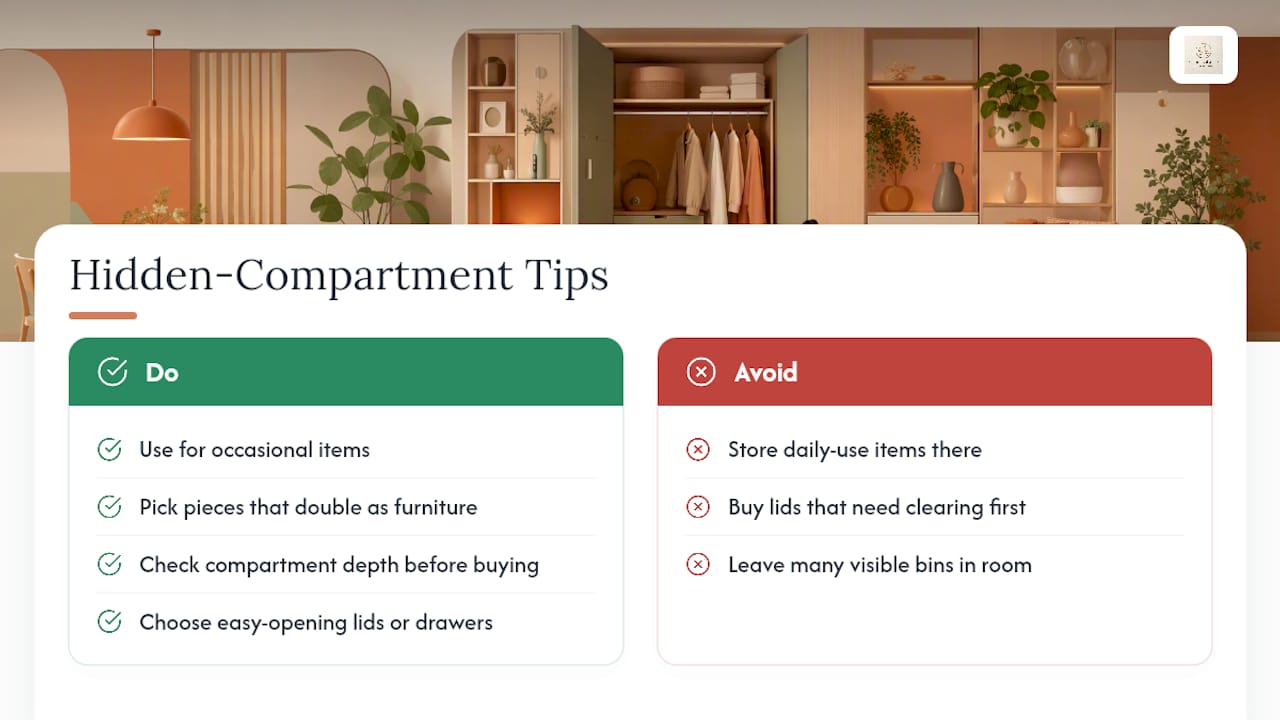
Hidden-compartment furniture solves the oldest small-space problem: where to put things you use often but don’t want visible. A storage bench styled as a small dog bed works this way, functioning as extra seating or a side table on the outside while holding pet supplies, leashes, or toys out of sight underneath. The same logic applies to coffee tables with lift-tops, benches with hinged seats, and side tables with a drawer built into the base.
The appeal is aesthetic as much as practical. A room full of visible bins and baskets looks cluttered even when it’s organized; a room where storage hides inside furniture looks finished. Hidden compartments work best for items you need occasionally, not daily, since anything requiring frequent access benefits more from open, easy-reach storage instead.
Check the compartment’s actual depth and opening mechanism before buying. A lid that requires clearing everything off the top surface first defeats the purpose for anything you need quickly.
Furniture for Tiny Homes and Small Apartments
Tiny homes and studio apartments push multipurpose furniture from a nice-to-have into a requirement, since there’s often no separate room to hide an overflow of single-function pieces. Murphy bed and sofa combinations, foldable dining tables mounted on a wall, and modular wardrobes with pull-out dressing units all show up repeatedly in small-space design guides for a reason: they collapse two or three rooms’ worth of furniture into one wall, according to Design Cafe.
The furniture that works hardest in these homes tends to be the kind that changes shape completely: a table that folds flat against the wall, a bed that lifts to reveal a desk underneath, a bench that opens into a spare cot. That’s different from the moderate multipurpose furniture in a larger apartment, where a piece just needs to serve two jobs without transforming entirely.
Pick pieces that convert with one motion. A Murphy bed or fold-down table that takes two people and ten minutes to operate stops getting used within a month. For more layout ideas built around this exact challenge, this guide to small studio apartment decorating covers how to zone a single room without walls.
Editorial Take: What Actually Makes This List Work
Most small-space guides treat multipurpose furniture as a checklist: buy a storage ottoman, buy a sofa bed, done. That misses the part that actually determines whether the piece gets used. Spacing rules like the 18-inch clearance and the two-thirds ottoman-to-sofa ratio matter more than which product you buy, because a beautifully designed piece jammed into the wrong footprint stops functioning within a week.
The conventional advice undersells styling, too. Multipurpose furniture gets treated as purely practical, when a mismatched material or color makes a room feel like a storage unit instead of a living space. Readers should prioritize measuring and material choice before shopping by photo. A gorgeous ottoman that’s the wrong depth, or upholstered in a fabric that stains at the first spilled coffee, isn’t a solution. It’s a return waiting to happen.
Noble Abode’s Take on Solving These Jobs
If you’d rather buy the solution than build it, Noble Abode carries pieces designed around exactly these small-space jobs. The Light Luxury Multi-function Desktop Storage Box fits the fold-down desk setups covered above, keeping a micro-workspace organized without stealing back the surface area you cleared. Measure your desk depth first; the box should leave room for a keyboard and a notepad without crowding the edge.
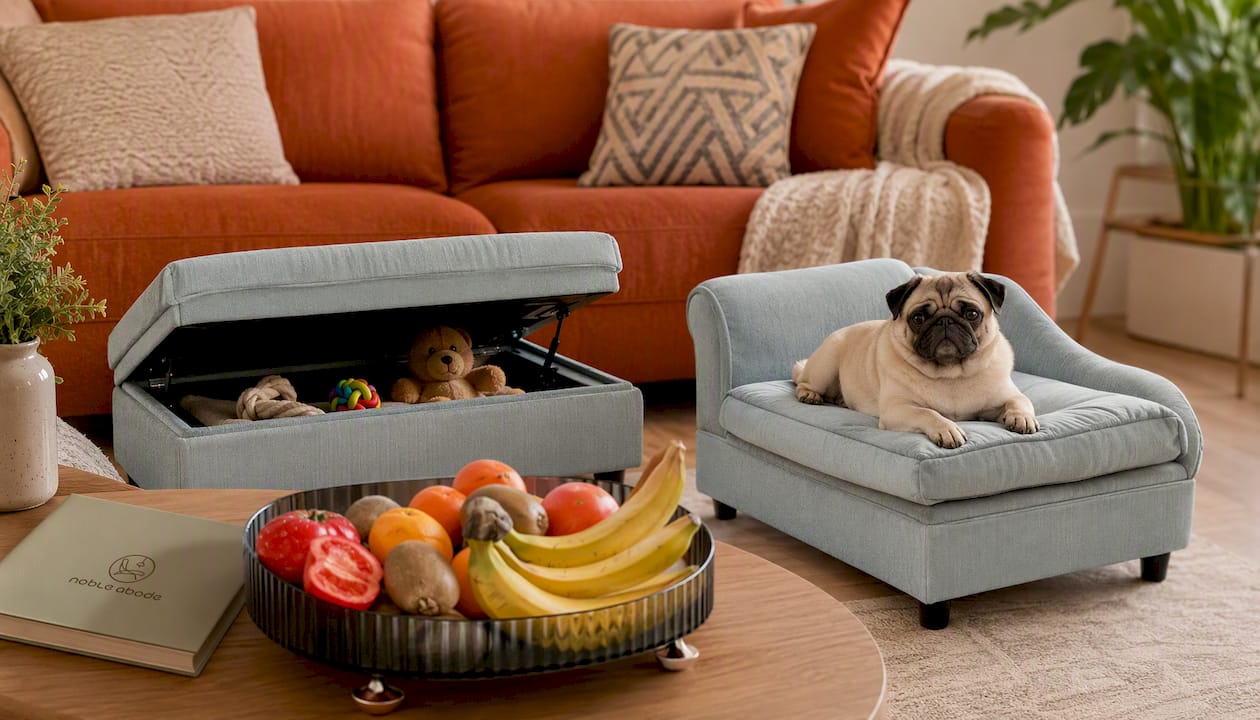
For seating that pulls double duty, the Luxury Small Dog Bed With Hidden Storage works as a compact bench or ottoman alternative near an entryway or living room corner, with pet supplies tucked out of view underneath. A second listing of the same hidden-storage pet bed offers an alternate size and finish if the first doesn’t match your space.
Before ordering, check the product page’s dimensions against your own tape measure, confirm the fabric matches your maintenance habits, and review the return policy in case the fit is off. Browse the current small furniture collection to find the piece that matches the job you actually need done.
Sources
- 11 Storage Ottoman Ideas for a Small Living Room That Work | The Storage Nook
- Small living room furniture spacing | Homestyler
- Multi-purpose furniture ideas | Design Cafe
- Storage Ottoman living room ideas that actually work | DesignLike
FAQ
What are some ideas for multifunctional furniture?
Storage ottomans, sofa beds, storage beds, fold-down desks, extendable dining tables, modular shelving, nesting tables, and rolling kitchen islands cover most small-space needs.
What is the two-thirds rule for furniture?
An ottoman or coffee table should measure roughly two-thirds the width of the sofa it sits in front of, which keeps proportions balanced and leaves enough room for the 18-inch clearance recommended by Homestyler.
What furniture is in high demand right now?
Space-saving pieces with hidden storage, storage ottomans, storage beds, and modular shelving, remain in high demand as more people furnish studios and small urban apartments where every piece needs a second job.
What are some good DIY furniture ideas?
Adding canvas dividers inside a storage ottoman, retrofitting slow-close hinges on a storage bench, and fitting a tray sized to about 60 to 70 percent of an ottoman’s surface are simple upgrades that extend a piece’s usefulness without major tools or skills.
How do I choose multipurpose furniture without regretting it?
Decide the primary function first, measure the full converted footprint before buying, and check the frame, hinge type, and return policy so the piece survives daily use instead of becoming a folded-up regret in the corner.