

Curator First: Display Sculptures, Clear 6 Inches, 3 Noble Abode Picks
Treat a sculpture as the room’s focal point, not an accessory: place it where sightlines naturally land, give it negative space on at least two sides, and light it at an angle that reveals form rather than flattening it. Watch scale against the surface it sits on, keep stability hardware in mind for anything top-heavy, and consider display-ready sculptures designed for staging when selecting a piece for this purpose.
TL;DR:
- Proper sculpture placement prioritizes sightlines and negative space, with testing from multiple angles before permanent positioning; prime spots include hallways or opposite entryways.
- Angled, directional lighting at 30 to 45 degrees enhances texture and dimension, with high-CRI bulbs and appropriate Kelvin temperatures for different materials.
- Supports should match the sculpture’s weight and size, with load limits checked and secure mounting methods used to prevent accidents or damage.
- Grouping sculptures should follow the rule of three, using varied height, texture, and material, while avoiding overcrowding and maintaining visual balance.
- Climate stability, especially humidity and temperature control, is crucial for preserving sculptures, with materials like wood and plaster being particularly sensitive to environmental changes.
Table of Contents
- Where to Place a Sculpture and What Scale Works Best
- What Lighting Actually Reveals a Sculpture’s Form?
- How Do You Choose a Pedestal, Shelf, or Backdrop?
- How to Group Sculptures Without Creating Clutter
- How Do You Keep a Sculpture Stable and Safe?
- A Curator’s Note on Staging at Home
- How Do Humidity and Temperature Affect a Sculpture’s Display?
- Does the Material Change How You Should Display It?
- Can Augmented Reality Help You Plan a Sculpture Display?
- What Are the Legal and Ethical Rules for Displaying Sculpture Publicly?
- Do Labels and Signage Improve How Guests Experience Sculpture?
- The Real Lesson: Most Sculpture Displays Fail Before Lighting Even Enters the Picture
- Noble Abode Pieces Built for the Staging Rules Above
- Sources
- FAQ
Where to Place a Sculpture and What Scale Works Best
Eye level is the default, not the rule. A piece meant to be studied up close, like a tabletop bronze or a small resin figure, works at seated or standing eye level, typically around average eye height from the floor to its center. But a dramatic, larger-scale piece often reads better low, anchoring a room from a low console, or elevated on a shelf where it interrupts a blank wall and pulls the eye upward.
Sightlines matter more than most people think. Best practice guidance starts with placement and scale before anything else, and recommends testing a piece from multiple angles before settling on a spot. The end of a hallway, a stair landing, or the wall directly opposite your front door are prime real estate because they catch attention the moment someone enters the space, making them ideal focal points in home design.
Small spaces don’t rule out large or unusual sculptures. Architectural Digest points to benches, floating shelves, built-ins, and under-bench nooks as ways to integrate bigger pieces without losing floor space, a tactic worth stealing if you live in an apartment or a smaller home.
Before committing to a spot, run a quick test:
- Photograph the space from where people actually sit or stand, not from where you’re staging it.
- Tape an outline of the sculpture’s base on the floor or shelf to check clearance and traffic flow.
- View the piece from a doorway or seating area to confirm it reads as a destination, not clutter.
- Live with the placement for a few days before drilling or mounting anything permanent.
If you’re staging a narrow entry or corridor, ideas for narrow hallways can help you widen the visual field around a piece without crowding it.
What Lighting Actually Reveals a Sculpture’s Form?
Flat, frontal light is the fastest way to make a sculpture look dead. Curatorial guidance recommends angled, directional lighting, ideally at 30 to 45 degrees from the piece, because that angle creates the shadow and highlight contrast that makes texture and dimension visible. Light from directly above or straight ahead washes out the detail you’re paying for.
Bulb choice matters almost as much as angle. Look for a color-rendering index of 90 or higher, since lower-CRI bulbs distort how materials actually look, especially stone, bronze, and warm-toned resin. Kelvin temperature should match material: 2700K to 3000K for warm materials like wood or bronze, closer to 4000K for cooler stone or metallic finishes.
Direct sunlight is a slower threat. UV exposure fades pigment and can degrade resin and painted finishes over months, so keep pieces back from south-facing windows or add sheer diffusion if a sculpture must sit in a sunny spot.
A layered approach works best for most rooms:
- Ambient light for general room function.
- A focused accent, like a picture light or an adjustable track fixture, aimed at the sculpture specifically.
- Battery-powered puck lights or plug-in accent lamps for renters who can’t install wiring.
Pro Tip: A cheap, swiveling accent lamp aimed at 30 to 45 degrees does more for a sculpture’s presence than a brighter ceiling fixture ever will.
How Do You Choose a Pedestal, Shelf, or Backdrop?
The support should roughly match the sculpture’s visual weight. A dense stone or bronze piece needs a base that looks capable of holding it, marble or solid wood rather than a spindly metal stand, while a lighter resin or ceramic figure can sit comfortably on a lacquered or glass surface without looking mismatched.
- Check load limits first. Floating shelves and mantels have weight ratings; heavier pieces usually need a shelf rated for the load, plus proper wall anchors, not just adhesive strips.
- Size the pedestal to the piece. Generally, the pedestal’s footprint should balance stability and visual subtlety relative to the sculpture’s widest point.
- Pick a background that recedes. A neutral or single-color wall lets the piece read as the subject; busy wallpaper or a gallery of framed art behind it competes for attention.
- Confirm mounting method before drilling. Wall-mounted or ceiling-suspended pieces need studs or rated anchors, not just picture hooks, and heavier work often calls for a professional installer.
Pedestal and plinth guidance from professional installers backs this up: proper load-bearing checks matter more than aesthetics once a piece is heavy enough to be a real hazard if it falls.
How to Group Sculptures Without Creating Clutter
The single biggest styling mistake is surrounding a sculpture with too much else. Design experts describe the piece as the room’s lead performer, and that only works when it gets negative space instead of competition from candles, books, and framed photos crowding the same surface.
For groupings, the rule of three still holds: three pieces of varying height, texture, or material read as curated, while two identical objects read as a matched set and four or more start to look like inventory. Styling guides suggest grouping by mood or material family, pairing a smooth resin figure with something rougher in texture, rather than clustering pieces that all look alike.
A few placement formulas that consistently work:
- On a console: one sculpture, one low bowl or vase, and minimal nearby objects to maintain clear space around the piece.
- On a coffee table: sculpture centered or off to one-third, paired with a single stack of books, never both ends styled the same.
- On a bookshelf: group by scale and material, placing the sculpture at a break in the books rather than wedged between them.
In a bedroom, a single small sculpture on a nightstand or dresser top usually outperforms a grouping. The room already has enough visual noise from bedding and furniture, and one quiet, well-lit piece reads calmer than a cluster. If you’re working in a compact living room, apartment-scale styling ideas can help you find a surface that isn’t already overloaded.
How Do You Keep a Sculpture Stable and Safe?
Stability hardware is cheap insurance against a costly accident. Museum wax under a base, L-brackets on shelf-mounted pieces, and weighted or anti-slip pads under freestanding sculptures are standard tools for securing work in an active household, and they take minutes to apply.
A few practical habits matter beyond hardware:
- Keep top-heavy or breakable pieces off low tables in high-traffic paths, especially with kids or pets in the house.
- Move fragile or valuable pieces to a higher shelf before hosting parties, when traffic and elbow room both increase.
- Dust most materials with a soft, dry cloth; avoid ammonia-based cleaners on resin or painted finishes, which can dull or discolor the surface.
- Watch humidity swings near kitchens and bathrooms, where wood and unsealed stone are more prone to cracking or warping over time.
- Call a professional installer for anything wall-mounted over 20 pounds or any piece suspended from a ceiling.
A Curator’s Note on Staging at Home
Good sculpture display comes down to restraint more than skill. Editorial lead Stephane approaches every staging question the same way a gallery curator would: start with the piece, subtract everything that competes with it, then add light and support last.
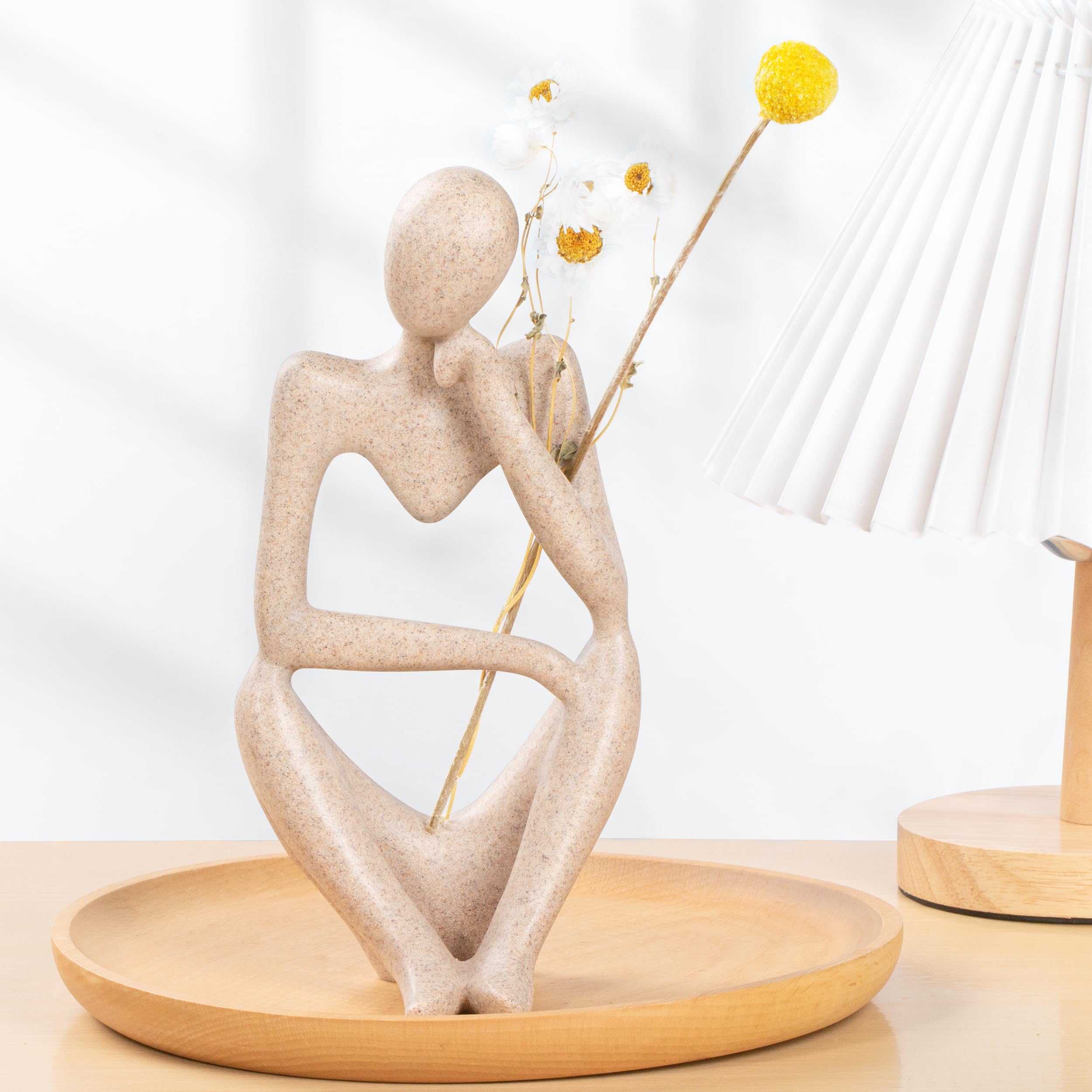
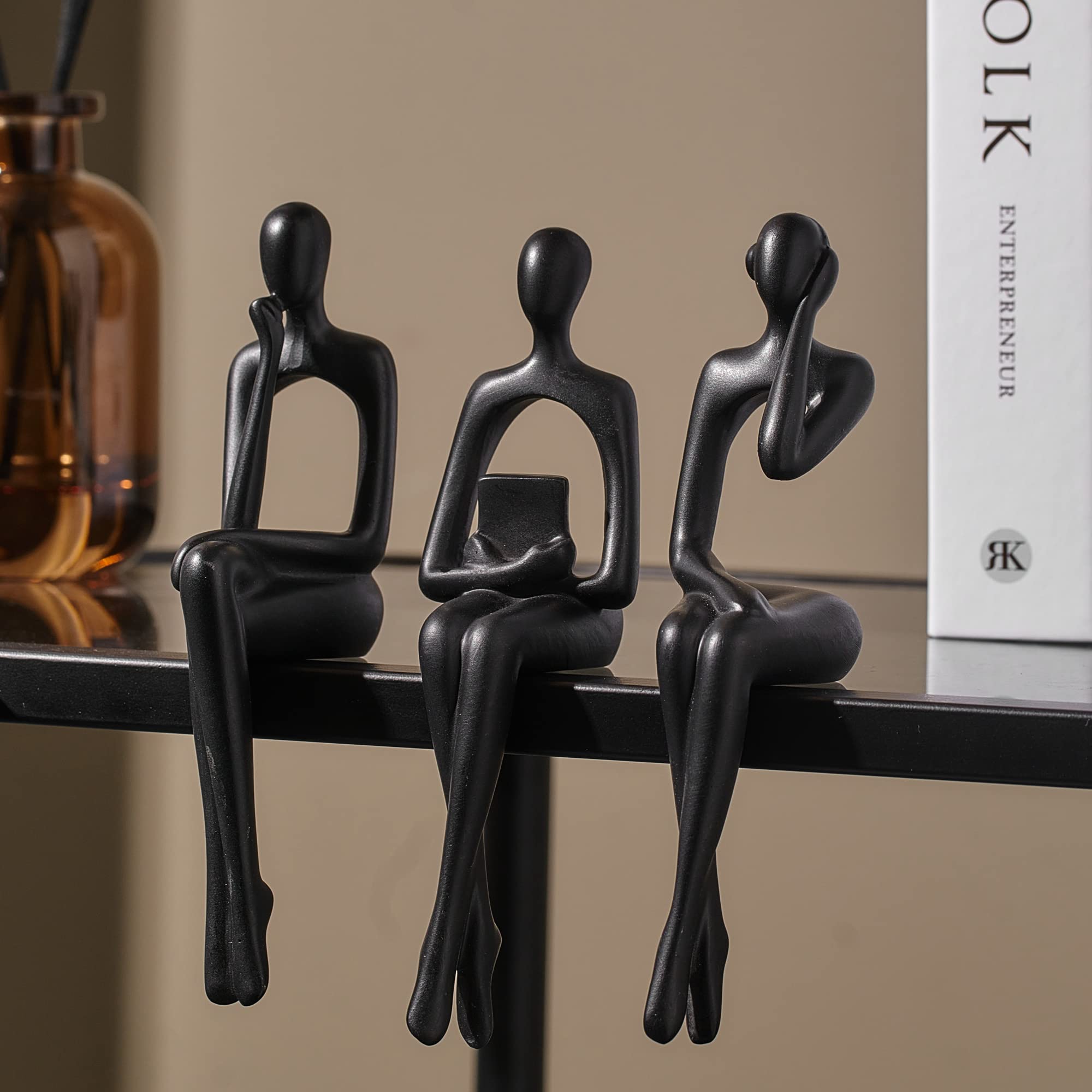
Some curated sculpture collections are built around that principle, featuring pieces designed to be a room’s focal point rather than filler. A Boho Décor Thinker statue sits naturally on a console with one low object beside it, nothing more. The Black Décor Statue works best tucked into a break in a bookshelf, where its dark finish contrasts against lighter spines and negative space around it does the rest of the work.
How Do Humidity and Temperature Affect a Sculpture’s Display?
Climate swings do more damage to sculptures than most collectors expect, especially with materials that absorb moisture. Wood and unsealed plaster expand and contract with humidity changes, which over time causes cracking, warping, or surface separation at joints.
Bathrooms, kitchens, and rooms near exterior doors see the widest humidity swings in a typical home, making them poor long-term homes for wood or plaster pieces. Bronze and resin tolerate humidity better but still suffer under direct heat sources, radiators, fireplace mantels in active use, or sunbaked windowsills, where repeated heating and cooling stresses adhesives and finishes.
A stable interior environment, roughly 40 to 55 percent relative humidity and consistent room temperature, keeps most materials intact for decades. If you’re displaying a piece near a window or heat source, rotate it seasonally or add a small hygrometer to the room so you notice swings before they show up as damage. Basements and unheated sunrooms are especially risky for anything organic or plaster-based, since both temperature and moisture fluctuate more there than in main living spaces.
Does the Material Change How You Should Display It?
Material dictates both placement and care, and treating every sculpture the same way is how damage happens. Bronze and metal pieces tolerate more light and handling but develop a patina over time, so avoid harsh cleaners that strip that finish; a dry cloth and occasional light wax is usually enough.
Stone and marble are heavy and largely UV-stable, making them good candidates for sunnier spots other materials can’t handle, but their weight means the support underneath needs real load capacity, not a floating shelf rated for light decor.
Resin and cast composite pieces, common in modern decorative sculpture, are lighter and easier to place almost anywhere, but they’re more sensitive to UV fading and heat warping than stone or metal. Keep resin work out of direct sun and away from radiators or heating vents.
Wood needs the most climate awareness of any common sculptural material, since it reacts fastest to humidity swings, and unsealed or painted wood surfaces can chip if displayed somewhere they’ll get bumped often. Ceramic and ceramic-glaze pieces sit in between: stable in normal room conditions but vulnerable to chipping on edges, so keep them back from high-traffic shelf edges rather than at the front.
Can Augmented Reality Help You Plan a Sculpture Display?
Digital preview tools have made placement decisions less of a guessing game. Several retailers and design apps now offer augmented reality features that let you hold a phone or tablet up to a room and see a life-size digital version of a sculpture in place before buying or moving anything.
This matters most for scale decisions, since photos alone often misrepresent how large or small a piece will actually look against your furniture. AR previews also help settle height and sightline questions, letting you test whether a piece reads well from a couch, a doorway, or across a room without lifting anything heavy.
For collectors weighing a large statement piece against a smaller accent sculpture, this kind of preview removes a lot of the trial-and-error that used to require literally taping outlines on the floor. It’s not a replacement for seeing a piece in person under real light, since screens still flatten texture and shadow, but it’s a genuinely useful first pass before committing shelf space or wall anchors to something you haven’t lived with yet.
What Are the Legal and Ethical Rules for Displaying Sculpture Publicly?
Anything beyond a private home display, a shared building lobby, a storefront, a community courtyard, carries obligations most collectors don’t think about until it’s an issue. Copyright law generally protects a sculptor’s original work for decades after creation, meaning reproducing, photographing for commercial use, or altering a piece without permission can create liability even if you legally own the physical object.
Public or semi-public installations also raise safety and accessibility questions that private homes don’t. A piece placed where strangers walk needs to meet basic structural safety standards, secured against tipping, positioned clear of walkways, and, in many municipalities, may require a permit if it’s permanently installed outdoors or on shared property.
Ethical display matters too, particularly with cultural or ceremonial pieces. Work tied to a specific cultural tradition deserves context rather than pure decoration, and reputable sellers and collectors increasingly disclose provenance and origin rather than presenting culturally significant work as generic decor. If you’re staging anything beyond a personal collection, checking local zoning or HOA rules before installation avoids problems that are far more expensive to fix after the fact than before.
Do Labels and Signage Improve How Guests Experience Sculpture?
A small placard or handwritten card next to a sculpture changes how people engage with it, even in a private home. Museums use interpretation aids for a reason: naming the artist, material, or story behind a piece gives viewers a reason to stop and look rather than walk past.
At home, this doesn’t need to be formal. A simple note card near a collected piece, listing the artist, region, or material, turns a random object into a conversation starter at a dinner party or open house. For estate agents staging a property, a brief tag on standout decor pieces can help buyers connect emotionally with a space rather than seeing it as generic staging.
Digital touches work too. A QR code near a piece that links to a short video of the artist’s process, or a printed card with the sculpture’s backstory, gives guests something to engage with beyond a glance. It’s a low-effort addition that makes a collection feel curated rather than assembled, and it costs nothing beyond the time to write a few sentences.
The Real Lesson: Most Sculpture Displays Fail Before Lighting Even Enters the Picture
The advice that gets repeated most, buy a pedestal, add a spotlight, misses the actual problem. Most home sculpture displays fail at the placement stage, not the styling stage. A piece gets set on a crowded shelf or a busy console, surrounded by candles and framed photos, and no amount of lighting fixes a spot that was wrong from the start.
Negative space does more work than any accent bulb. If you only fix one thing, clear the six inches around a sculpture before you touch lighting or supports. Conventional advice treats scale, lighting, and grouping as three separate problems to solve. In practice, they’re sequential: get placement and space right first, then light follows naturally, because a piece with real breathing room looks intentional even under a mediocre bulb.
The second mistake is styling for photos instead of for how a room is actually used. A sculpture staged to look good in a listing photo often sits somewhere nobody actually walks past day to day. Prioritize the sightline you see most, from your couch, your entryway, your kitchen doorway, over the angle that photographs best.
— Stephane
Noble Abode Pieces Built for the Staging Rules Above
Everything covered here, negative space, scale, angled light, stable support, only matters once you have a piece worth staging that way. Certain sculptures are designed to hold up under that kind of attention rather than disappearing into a shelf.
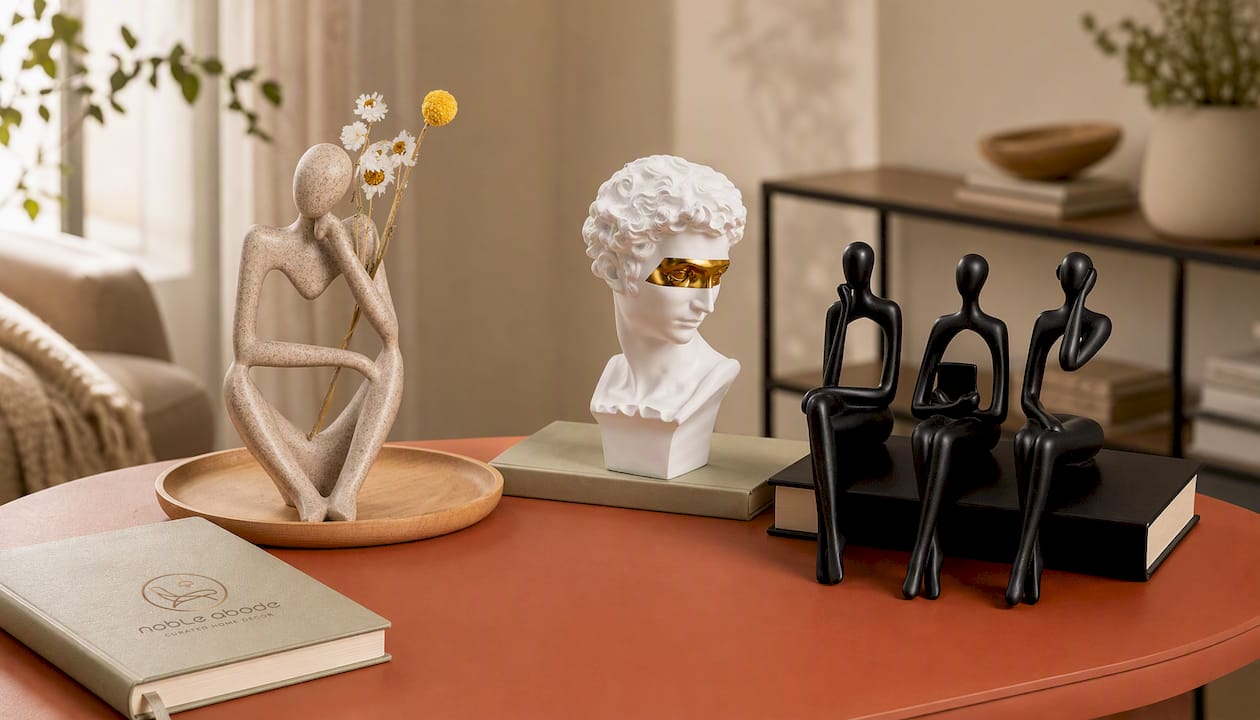
The Boho Décor Thinker statue is sized for a console or entry table, large enough to anchor a room’s focal wall without needing a pedestal, and its sandstone-resin finish wipes clean with a dry cloth. For a mantel or open shelf, the David Art Sculpture offers classic proportions that read well from across a room and pair naturally with the angled accent lighting covered above. If you want a lower-commitment starting point, the Black Décor Statue fits a bookshelf or desk without demanding a dedicated support, an easy way to test a grouping before investing in a larger centerpiece.
Browse the full sculpture collection to find a piece sized for the exact spot you have in mind.
Sources
- Negative space in interior design — Homes & Gardens
- How to display sculpture in small spaces — Architectural Digest
- How to Display Sculpture: A Curator’s Guide to Bringing Art to Life — Historic Arts
- Best Practices for Displaying Sculptures at Home — Liviubora
FAQ
How Do You Display a Sculpture at Home?
Place it where sightlines naturally land, like an entryway or the wall across from a doorway, give it clear space on at least two sides, and light it at a 30 to 45 degree angle to reveal texture and depth.
How Do You Display a Small Sculpture in a Home?
Small pieces work best at eye level on a shelf, mantel, or console with minimal competing objects nearby; a single low bowl or a stack of books is enough company, anything more crowds the piece.
What Are Some Creative Ways to Display Art Pieces?
Group by material or mood rather than matching pieces, use a QR code or small note card to add context, and consider AR preview tools to test scale before committing wall or shelf space.
Where Can I Display My Art for Free?
Community centers, local libraries, and shared building lobbies sometimes accept rotating art displays at no cost, though public or semi-public spaces typically require checking local permit and permission rules first, especially for permanent installations.