

28–32 Inches: Measure Console Table Height in Five Minutes
Most console tables fall between 28 and 32 inches tall, with 30 inches the most common height on the market. The main rule of thumb: match the top of your sofa’s armrest or back cushion, or go up to two inches lower so the table never blocks sightlines or reach. Low sofas, tall sectionals, and different placements (entryway versus behind-sofa) can shift that number in either direction.
TL;DR:
- The common console table height range is 28 to 32 inches, with 30 inches being the most typical, based on sofa seat and armrest heights.
- For behind-the-sofa placement, match or go slightly below sofa armrest height, while entryway consoles are generally 30 to 34 inches tall to create visual impact.
- Proper measurement involves checking sofa seat, armrest, and back cushion heights, and testing mockups with tape or stacked objects before purchasing.
- Depth should be 12 to 18 inches, with length covering at least two-thirds of the sofa for proportional balance, and accessories should support the overall height and style.
- Style influences height trends: modern pieces tend to be taller, vintage are shorter, and furniture material and build affect perceived height and balance.
Table of Contents
- Why 28 to 32 Inches Became the Standard Console Table Height
- Ideal Console Table Height by Where You’re Putting It
- How to Measure and Mock Up Your Console Table Height at Home
- Depth, Length, and Proportion Rules That Pair With Height
- Styling Rules: What Actually Looks Right at Standard Height
- Material and Build Considerations That Shift Ideal Height
- Ergonomics: How Height Affects Everyday Use
- Style Variations: Modern, Vintage, and Rustic Height Trends
- Placement Near Other Furniture and Wall Features
- Noble Abode’s Perspective on Getting Console Table Height Right
- Curated Console Table Accessories From Noble Abode
- Sources
- FAQ
Why 28 to 32 Inches Became the Standard Console Table Height
Furniture makers didn’t pull the standard console table height range out of thin air. It comes directly from how sofas are built. In inches, that range runs 28 to 32; in metric terms, it converts to roughly 71 to 81 centimeters. Thirty inches sits right in the middle, which is why it shows up so often as the default recommendation across furniture retailers and interior design guides.
Standard console table height at a glance: 28–32 inches (71–81 cm), with 30 inches as the sweet spot most brands build around.
The logic traces back to sofa geometry. A typical sofa seat sits 17 to 19 inches off the floor, and armrests usually land somewhere between 22 and 25 inches. A console table in the 28 to 32 inch band clears both of those reference points, which keeps the table from looking squat next to the seating or towering awkwardly behind it. The goal is a surface you can set a drink or a lamp on without stretching or stooping, while the tabletop still reads as a visual companion to the sofa rather than a mismatched afterthought.
That said, standard doesn’t mean universal. A few situations push the range in either direction:
- Low-profile sofas with seat heights under 17 inches often look better with a shorter console, sometimes as low as 24 inches, so the table doesn’t dwarf the seating.
- Tall-back sofas or sectionals with high armrests can support a table closer to 32 or even 33 inches without looking oversized.
- Rooms with sightline concerns, like an open floor plan where the console separates a living area from a dining space, sometimes call for a slightly taller table to help define the zones.
None of these exceptions throw out the 28 to 32 inch range. They just tell you which end of it to lean toward. If you’re shopping without a tape measure handy, 30 inches is a safe bet for almost any standard sofa. If your sofa is unusually low or unusually tall, that’s your cue to measure before you buy.
Ideal Console Table Height by Where You’re Putting It
The right height depends heavily on what the table sits next to and what job it’s doing. A table behind a sofa needs to solve a different problem than one standing alone in an entryway, so the ideal height shifts by placement even though the underlying standard range stays roughly the same.
-
Behind the sofa: 28 to 32 inches. This is the classic use case, and it’s the one where the “match the armrest or go up to two inches lower” rule matters most. A table taller than the sofa back blocks conversation and makes the seating area feel walled in. A table too short gets visually swallowed by the cushions behind it.
-
Entryway console: 30 to 34 inches. Here the table usually stands alone rather than next to seating, so designers tend to size it a bit taller to create a stronger focal point right when someone walks in. Without a sofa to reference, the table itself has to carry visual weight, which is part of why entryway consoles trend taller than behind-sofa versions.
-
Hallway console: 28 to 32 inches. Hallways are tight, so height matters less than depth here (more on that shortly), but staying within the standard range keeps the table from feeling like an obstacle at elbow height.
-
Dining or buffet console: 30 to 32 inches. This range keeps the surface close to typical dining table height, which makes serving and setting down platters more natural.
Each of these numbers ties back to a functional check, not just a design preference. Behind a sofa, ask yourself whether you can actually reach a lamp switch or a coaster without leaning over the back cushion. In an entryway, stand at the front door and see whether the table height draws your eye naturally or gets lost against the wall. In a hallway, walk past it at a normal pace and confirm your hip or elbow doesn’t clip the edge. For dining and buffet use, check that the height comfortably matches your dining chairs and table for a cohesive line across the room.
Pro Tip: If you’re torn between two heights for a behind-sofa table, go with the lower option. A table that’s an inch or two short of the sofa back almost always looks intentional; one that’s an inch too tall usually looks like a mistake.
How to Measure and Mock Up Your Console Table Height at Home
Guessing at height from a product photo is how most console table returns happen. A five-minute measuring session prevents almost all of it.
- Measure your sofa’s seat height from the floor to the top of the seat cushion, typically 17 to 19 inches.
- Measure the armrest height from the floor to the top of the arm, usually 22 to 25 inches.
- Measure the back cushion height, since this is your real ceiling for a behind-sofa console. Match this number or go up to two inches lower.
- Build a quick mockup using painter’s tape on the wall at your target height, or stack boxes and books to the exact height you’re considering. This low-tech method lets you test the look without committing to a purchase or moving heavy furniture.
- Check function, not just looks. Can you reach a lamp switch from the sofa? Does the height clear an outlet you plan to use? Is there enough clearance for foot traffic if the table sits in a hallway or near a doorway?
Pro Tip: Cut a piece of cardboard to the exact length and depth of the table you’re considering and tape it to your mockup stack. Seeing the full footprint, not just the height, catches sizing mistakes that a single number never will.
The most common measuring mistake is stopping at seat height and ignoring the armrest or back cushion, which is the actual point of reference for most placements. A close second is nailing the height but forgetting depth entirely, which leaves you with a table that fits vertically but eats too much floor space or leaves the walkway too tight.
Depth, Length, and Proportion Rules That Pair With Height
Height alone doesn’t make a console table work in a room. Depth and length have to cooperate with it, or you end up with a table that’s the right height and the wrong footprint.
- Depth typically runs 12 to 18 inches. Narrower depths (12 to 14 inches) suit hallways and tight walkways where every inch of clearance counts. Deeper tables (16 to 18 inches) make sense where you need real surface area, like a dining buffet or an entryway that doubles as a drop zone for keys and mail.
- Length should cover at least two-thirds of the sofa’s length for a behind-sofa table, based on common proportional guidance. Go shorter and the table looks like an accessory that wandered off from a smaller piece of furniture.
- For freestanding console tables against a wall, a length-to-height ratio of roughly 1.5 to 3 times the height tends to look balanced, though room size and wall length matter more than a strict formula here.
Depth and height also affect stability. A tall, narrow table with a shallow base can feel tippy once you add a lamp, especially a heavier glass or metal base. If you’re planning to keep a table lamp on the surface, factor its base size into your depth choice and think about where the nearest outlet sits before you finalize placement. A console with 16 inches of depth gives a lamp base breathing room that a 12 inch tabletop simply doesn’t.
Styling Rules: What Actually Looks Right at Standard Height
Once the table itself is sized correctly, what you put on top of it either reinforces that proportion or undoes it entirely.
- Lamp scale matters more than people expect. A good rule of thumb keeps 12 to 18 inches of space between the tabletop and the lower edge of any artwork or mirror above it, which means your lamp height needs to leave that gap intact. An Italian designer glass table lamp with a slim profile works well on a standard 30 inch table because it doesn’t eat into that spacing.
- Group in odd numbers with varied height. Three objects of different heights read as intentional; two objects of the same height read as leftover. A black abstract resin sculpture paired with a shorter vase and one taller piece creates that layered look without crowding the surface.
- Shorter tables (28 to 30 inches) need shorter accessories. A modern wine cabinet with built-in shoe storage already carries enough visual weight that it needs minimal styling on top, just a small accent piece or two.
- Taller tables (31 to 34 inches) can support taller groupings, including an interlocking decorative vase or a pair of black and gold accent ornaments placed slightly off center.
- Leave negative space. A table that’s fully covered end to end looks cluttered no matter how well each individual piece is chosen.
Step back after arranging and view the table from where you’d actually sit or walk past it, not just from directly in front. A grouping that looks balanced up close can look lopsided from across the room, which is often the more honest test.
Material and Build Considerations That Shift Ideal Height
Not every console table with the same listed height feels the same in a room, and a lot of that comes down to build.
A table with a thick, chunky wood top adds visual weight even at a standard 30 inch height, which can make it read as taller than it measures. A thin metal or glass top at the exact same height feels lighter and more open, partly because you can see through or past it more easily. If your room already feels heavy with furniture, a slimmer build at 30 inches will usually feel more balanced than a thick, substantial one at the same number.
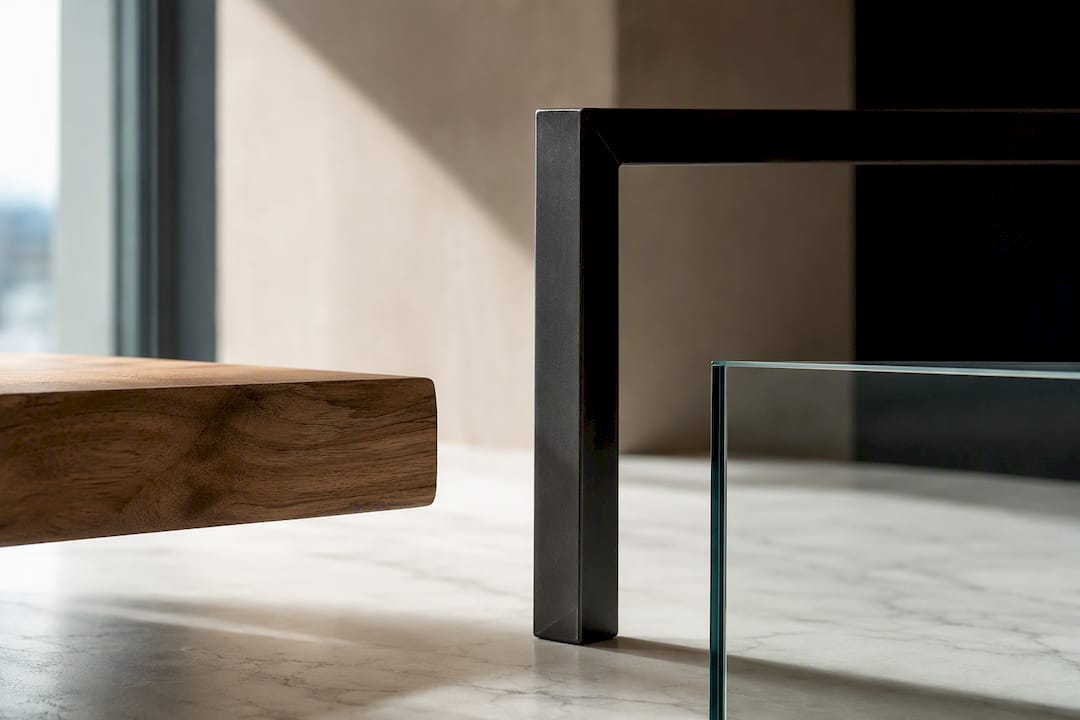
Design style plays into this too. Mid-century and modern pieces tend to run leaner across the board, with tapered legs and slim tops that can sit toward the higher end of the standard range without feeling bulky. Traditional and farmhouse-style consoles often use thicker stock and lower stretcher bars, which visually grounds the piece even when the actual tabletop height matches a slimmer table down to the inch.
Leg style matters as much as material. Hairpin or slim metal legs create more visual “air” underneath the table, making a 32 inch console feel more open than a solid-panel base at the same height. If your space is small, prioritizing leg style over raw height can make a bigger difference than shaving an inch or two off the table itself.
Ergonomics: How Height Affects Everyday Use
A console table isn’t just a design object. It gets touched, reached for, and set things on multiple times a day, and height changes how comfortable that actually is.
At 28 to 30 inches, most adults can set down a coffee cup, a set of keys, or a stack of mail without bending or reaching up. This range also makes it easy to switch a lamp on or off from a standing position, which matters more than people think when the table sits in a hallway or entry that gets used at night.
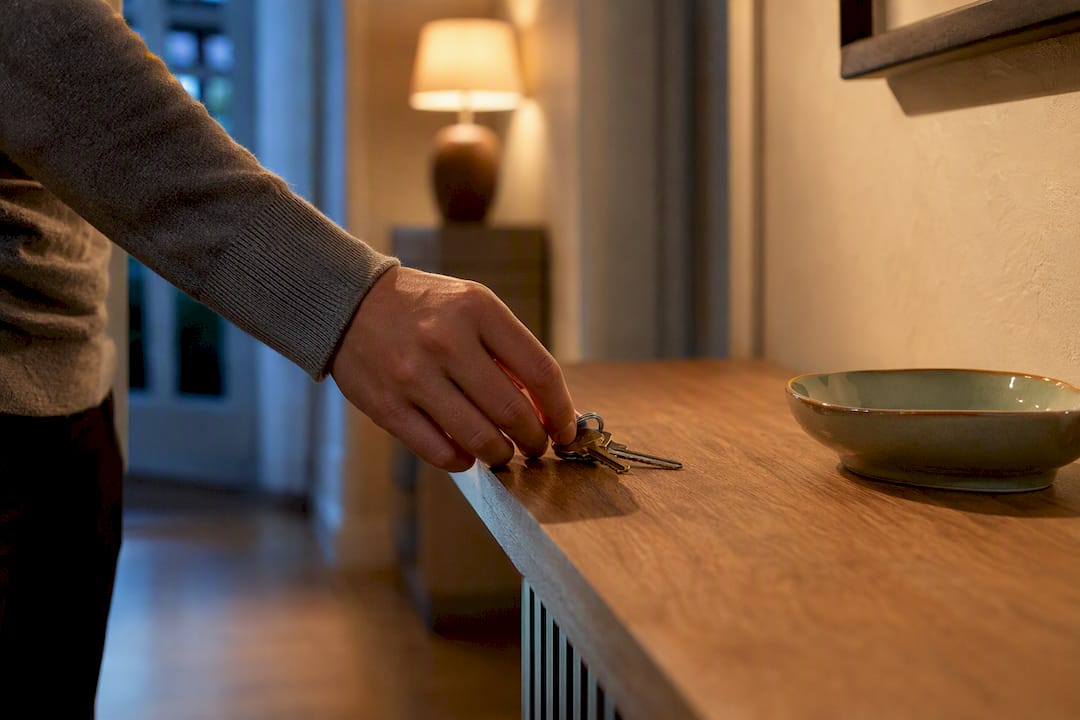
Tables toward 32 to 34 inches shift the ergonomics slightly. They’re easier to use while standing (less bending for taller adults) but a little less convenient if you’re setting something down while seated on the sofa behind it, since the reach angle gets steeper. This is one more reason the behind-sofa placement tends to favor the lower end of the standard range while entryway consoles, used almost exclusively while standing, favor the higher end.
Households with young children or mobility considerations should lean toward the lower end of the range across the board. A shorter table is easier for a child to see over and safer to bump into, and it’s more comfortable to use for anyone who needs to sit down periodically while doing tasks like sorting mail or setting out shoes.
Style Variations: Modern, Vintage, and Rustic Height Trends
Design style doesn’t just change how a console table looks. It nudges the height choice in fairly predictable ways.
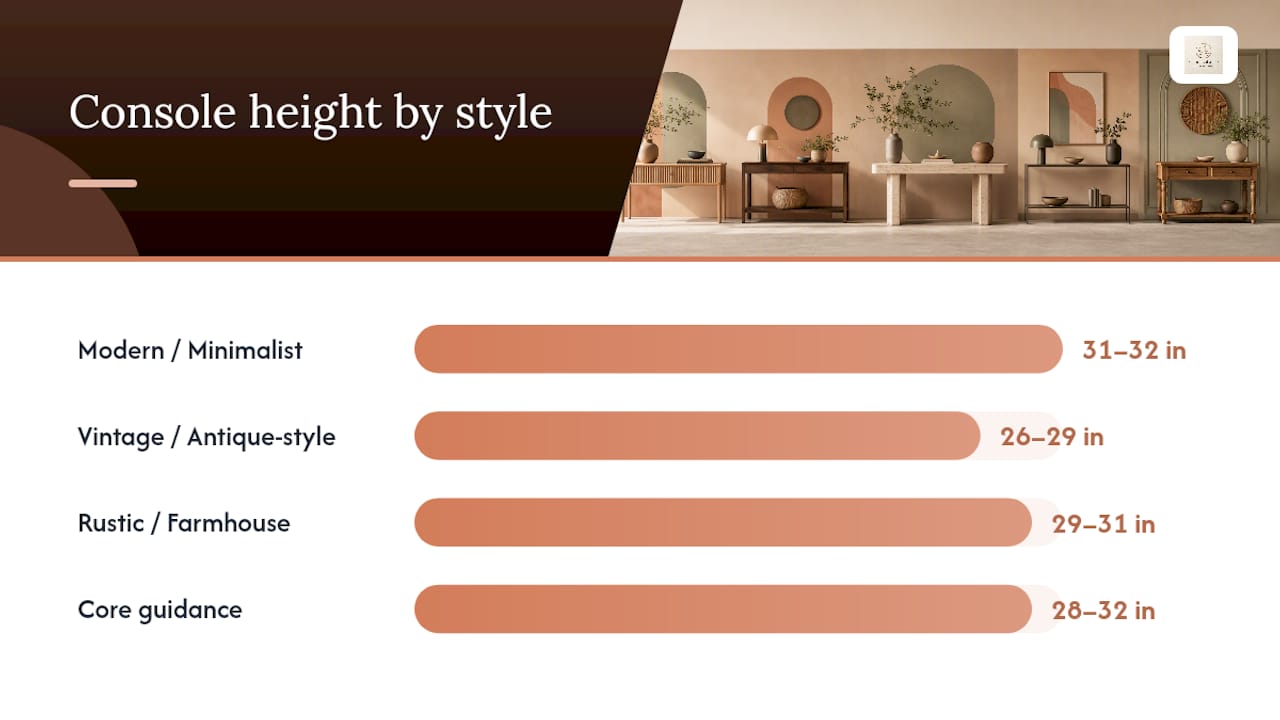
Modern and minimalist consoles frequently sit at the higher end of the standard range, often 31 to 32 inches, because clean-lined pieces are built to stand alone as a visual statement rather than blend quietly into a room. The added height gives the piece more presence against a plain wall.
Vintage and antique-style consoles, especially pieces adapted from actual antique hall tables, tend to run shorter, sometimes 26 to 29 inches, because furniture proportions from earlier eras were generally built lower to the ground. If you’re pairing a vintage-style console with a modern sofa, expect to check the armrest match more carefully since the table may fall below the usual 28 inch floor.
Rustic and farmhouse consoles usually land right in the middle of the standard range, 29 to 31 inches, but they often carry more visual bulk thanks to thicker wood and heavier hardware. That bulk can make them feel taller than the tape measure says, which is worth keeping in mind if your room already has a lot of substantial furniture.
None of these style shifts break the core 28 to 32 inch guidance. They just explain why two tables with nearly identical listed heights can feel noticeably different once they’re actually in a room.
Placement Near Other Furniture and Wall Features
Height decisions rarely happen in isolation. What’s on the wall behind the table, and what’s sitting nearby, both push the right number in one direction or another.
If you’re placing a console under a window, the sill height becomes a hard ceiling. A table can’t be taller than the point where it would collide with the window frame, which sometimes means choosing a shorter option than you’d otherwise pick for that spot. The same logic applies under a mounted television or wall-mounted shelving. Leave enough clearance that the tabletop doesn’t visually crowd whatever hangs above it.
Next to a doorway or in a hallway, height interacts with traffic flow more than with anything on the wall. A table at the top end of the standard range, closer to 32 inches, sits at a height where an outstretched arm or a swinging bag can catch the edge. In tight passageways, that’s reason enough to drop toward 28 or 29 inches even if the rest of the room could support a taller piece.
When a console sits beside an existing piece of furniture, like a bench or a bookshelf, matching heights across the pieces creates a cleaner line along the wall. It doesn’t have to be exact, but a console that’s four or five inches taller than the furniture beside it tends to look disconnected rather than intentionally layered.
Noble Abode’s Perspective on Getting Console Table Height Right
Proportion and function should decide the height, not the first table that catches your eye online. Noble Abode’s approach starts with the same default most designers reach for: around 30 inches, adjusted up or down based on your actual sofa and room. A table is only as good as the fit it creates with everything around it, which is why craftsmanship and finish matter alongside the number on the spec sheet. Test the height with a mockup before you commit. Then choose accessories, lighting, and small decor pieces that reinforce the proportion you worked to get right, rather than fighting against it.
— Stephane
Curated Console Table Accessories From Noble Abode
Once you’ve settled on the right console table height, the accessories on top either reinforce that proportion or undercut it. A few pieces make that easier than others.

The modern luxury wine cabinet with built-in shoe storage works as a standalone entry piece for households that want function built into the console itself, sized to sit comfortably within the standard 30 to 32 inch range. For layering on top of an existing table, the black abstract resin sculpture adds height variation without competing with a lamp. The key desktop storage piece handles the everyday clutter, keys, mail, sunglasses, that otherwise piles up and throws off a styled surface. An Italian designer glass table lamp keeps the 12 to 18 inch spacing rule intact between tabletop and any art hung above it. For a smaller accent grouping, two black and gold ornaments and a European luxury metal decorative piece round out a three-object cluster at varied heights, the kind of grouping that reads as intentional rather than accidental. If the console sits behind a sofa, light luxury sofa cushions tie the two pieces together visually.
Browse the full console table styling collection to find pieces sized for your specific table height and room.
Sources
The height and proportion guidance in this article draws on consistent recommendations across several interior design resources. Decorguider’s breakdown of standard sofa table height anchors the core 28 to 32 inch range. Chairish’s sofa table sizing guide covers the armrest-matching rule and lamp spacing. Flowyline’s placement guide breaks down height by room. Liddiard Home Furnishings’ measuring guide covers mockup methods, and Montreal Lighting & Hardware’s entryway lighting guide offers additional detail on lamp scale near entry consoles.
- How Tall Is A Sofa Table? Standard Height Explained
- The Complete Sofa Table Guide: Sizing, Placement & Styling Tips - Chairish Blog
- How Tall Should a Console Table Be: 5 Perfect Height
- How to Choose the Perfect Size of Behind-the-Sofa Table | Liddiard Home Furnishings
FAQ
What is the standard height for a console table?
Most console tables measure 28 to 32 inches tall, with 30 inches the most common height across furniture retailers.
Is there a console table that is 24 inches high?
Yes. A 24 inch console table typically fits low-profile sofas or compact spaces where a standard 28 to 32 inch table would look oversized.
What is the rule for a console table?
The core rule is to match the height of your sofa’s back cushion or armrest, or go up to two inches lower, so the table doesn’t block sightlines or reach.
What is the standard size of a console table?
Beyond the 28 to 32 inch height, standard depth runs 12 to 18 inches, and length should cover at least two-thirds of the sofa’s length for behind-sofa placement.