

3 Specs to Check Before Buying Performance Fabric for Busy Homes
Performance fabric is a category of textile engineered for stain resistance, durability, and easy cleaning, not one single material. It works for homes with kids, pets, or heavy daily use because the fibers and finishes are built to shrug off spills and abrasion. Before buying, check three specs: the double-rub abrasion count, the lightfastness rating, and the cleaning code printed on the tag.
TL;DR:
- Double-rub abrasion counts of 30,000 or higher are recommended for households with pets and children to ensure durability against wear and tear.
- Fabrics with top-tier lightfastness ratings are essential for outdoor pieces exposed to direct sun, preventing noticeable fading within a season or two.
- Selecting fabrics with the appropriate cleaning code, such as W or S, is crucial for easy maintenance and longevity in busy households.
- Tight, flat weaves resist pet claws better than looped or textured weaves, reducing snagging and fiber damage over time.
- Cost-effectiveness depends on long-term durability and maintenance, with higher rub counts and inherent stain resistance offering better value over several years.
Table of Contents
- What Is Performance Fabric and How Does It Achieve Durability?
- Which Performance Fabric Types Fit Your Home Best?
- How Do You Read a Performance Fabric Spec Sheet?
- A Decision Checklist for Choosing Performance Fabric
- Caring for Performance Fabric to Maximize Its Lifespan
- What You Give Up and What You Gain With Performance Fabric
- Noble Abode’s Take on Balancing Style and Performance
- What Performance Fabrics Cost and Where the Value Actually Sits
- Treatments and Finishes That Boost Performance Properties
- Performance Fabric for Busy Homes: The Editorial Take
- Why the Ornate Room Rug Fits a Busy Household
- Sources
- FAQ
What Is Performance Fabric and How Does It Achieve Durability?
“Performance fabric” describes a category, not a material. Manufacturers build performance into fabric two different ways, and knowing which one you’re buying changes what to expect.
The first method is inherent construction: color and stain resistance get baked into the fiber itself during production. Solution-dyed acrylic and olefin work this way. The second method is topical treatment: a stain guard or water-repellent finish gets sprayed onto a standard fabric after weaving. Topical finishes wear off with cleaning and use; inherent properties don’t.
Common performance fibers include:
- Polyester — soft hand-feel, good stain resistance, moderate cost
- Olefin — excellent stain and moisture resistance, often bleach-cleanable
- Solution-dyed acrylic — superior fade resistance, common outdoors
- Poly-cotton or poly-linen blends — natural look with added durability
Indoor performance fabric and outdoor-rated fabric aren’t interchangeable. Outdoor fabrics add UV stabilizers and mildew resistance that indoor fabrics skip, since indoor pieces never face direct sun or standing moisture the way a porch cushion does.
Which Performance Fabric Types Fit Your Home Best?
Picking the right performance fabric type comes down to matching fiber and weave to your household’s real risks, not chasing the softest option on the showroom floor.
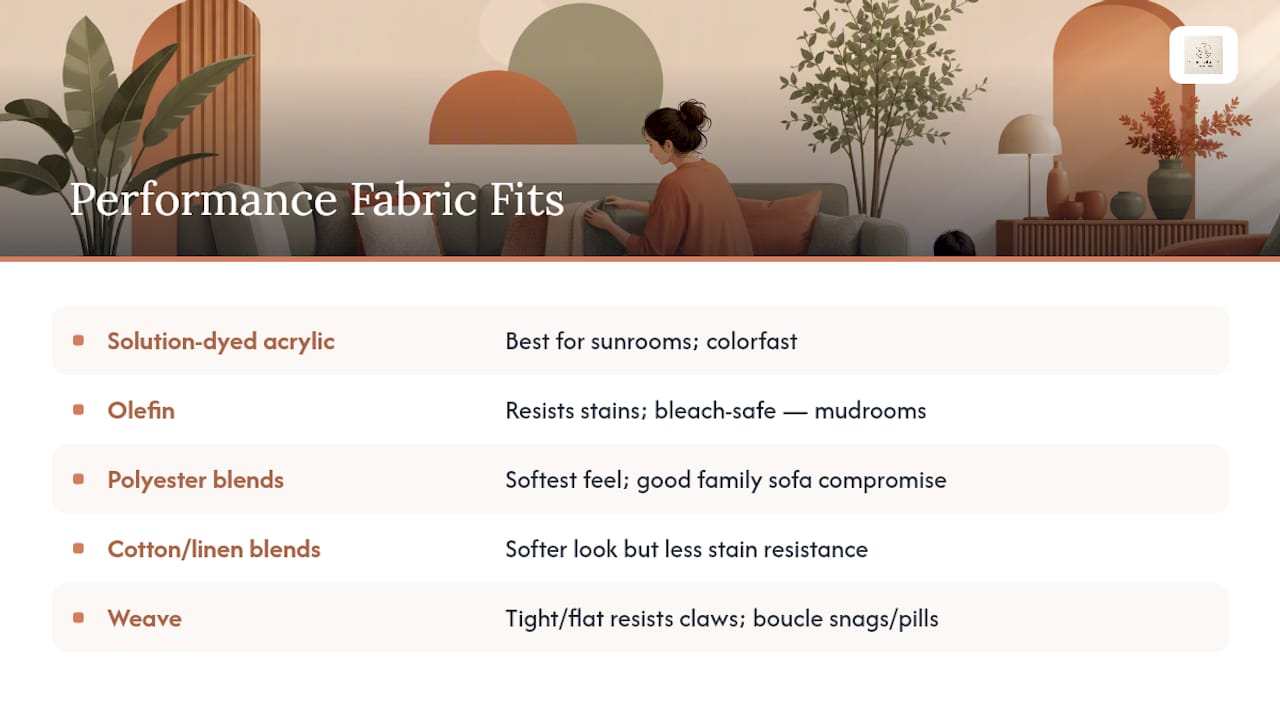
Solution-dyed acrylic handles sun exposure better than almost anything else on the market, since color gets added at the fiber stage rather than sprayed onto the surface. It’s the standard for sunrooms and covered patios. Olefin resists stains and moisture exceptionally well and tolerates bleach without discoloring, making it a strong pick for playrooms and mudroom benches. Polyester performance blends offer the softest feel of the group, a good compromise for a family sofa that still needs to look inviting. Blends mixing performance synthetics with cotton or linen soften the look further but usually sacrifice some stain resistance in the trade.
Weave matters as much as fiber. Tight, flat weaves resist pet claws far better than looped or textured weaves like boucle, which snag easily and pull apart under scratching. Chenille and velvet look rich but trap pet hair and show wear patterns faster in high-traffic households.
Pro Tip: Before committing to a large piece, order a swatch and rub your hand across it hard, then drag a coin lightly over the surface. If it snags, pills, or feels rough after that quick test, it will behave the same way after two years of actual use.
How Do You Read a Performance Fabric Spec Sheet?
Spec sheets look like alphabet soup until you know what three numbers and codes actually control.
Double-rub abrasion counts measure how many rubbing cycles a fabric survives before it visibly wears through, tested using either the Wyzenbeek or Martindale method. Wyzenbeek is the more common U.S. standard, and it reports results in double rubs.
A rating of 15,000 double rubs suits light residential use. For a household with kids, pets, or a sofa that doubles as the family’s main hangout spot, 30,000 double rubs or higher is a reasonable minimum to target.
Lightfastness measures fade resistance on the AATCC scale, usually rated 1 to 5 or higher, with higher numbers meaning slower fading under UV exposure. Covered porches can get by with a moderate rating; fully exposed outdoor furniture needs a fabric rated near the top of the scale to avoid noticeable fading within a season or two.
Cleaning codes tell you what products are safe:
- W — water-based cleaners only
- S — solvent-based cleaners only
- W/S — either water or solvent-based cleaners
- X — vacuum only, no liquid cleaners
Fabrics labeled bleach-cleanable, often solution-dyed acrylic or olefin, can handle diluted bleach without losing color, which matters enormously for households dealing with frequent spills or pet accidents.
A Decision Checklist for Choosing Performance Fabric
Work through these questions in order, and let your biggest household risk drive the final pick, not the fabric that simply looks nicest in the showroom.
- Do you have pets with claws? Prioritize a tight, flat weave over anything looped or textured, since construction resists snagging better than fiber choice alone.
- How often do spills happen? If daily, favor olefin or solution-dyed acrylic with a bleach-cleanable rating over softer polyester blends.
- Will the piece sit in direct sunlight? Push lightfastness to the top of your list and accept a firmer hand-feel if that’s the trade.
- What look are you going for? Blends deliver a more natural texture but usually give up some stain resistance in return.
- What’s your budget and how long should it last? Higher rub counts and inherent stain resistance cost more upfront but usually delay replacement.
A family room with a dog and two kids should lead with rub count and bleach-cleanability. A sunny covered porch should lead with lightfastness first, abrasion second, since fading happens even without heavy foot traffic.
Caring for Performance Fabric to Maximize Its Lifespan
Good performance fabric still needs a routine, and skipping it shortens the life you paid for.
Vacuum weekly using an upholstery attachment, and blot spills immediately rather than rubbing, since rubbing pushes liquid deeper into the fibers instead of lifting it off the surface. For fresh stains, blot with a clean cloth, apply a small amount of mild soap and water, and blot again until the mark lifts. Removable, machine-washable covers simplify this considerably for messier households.
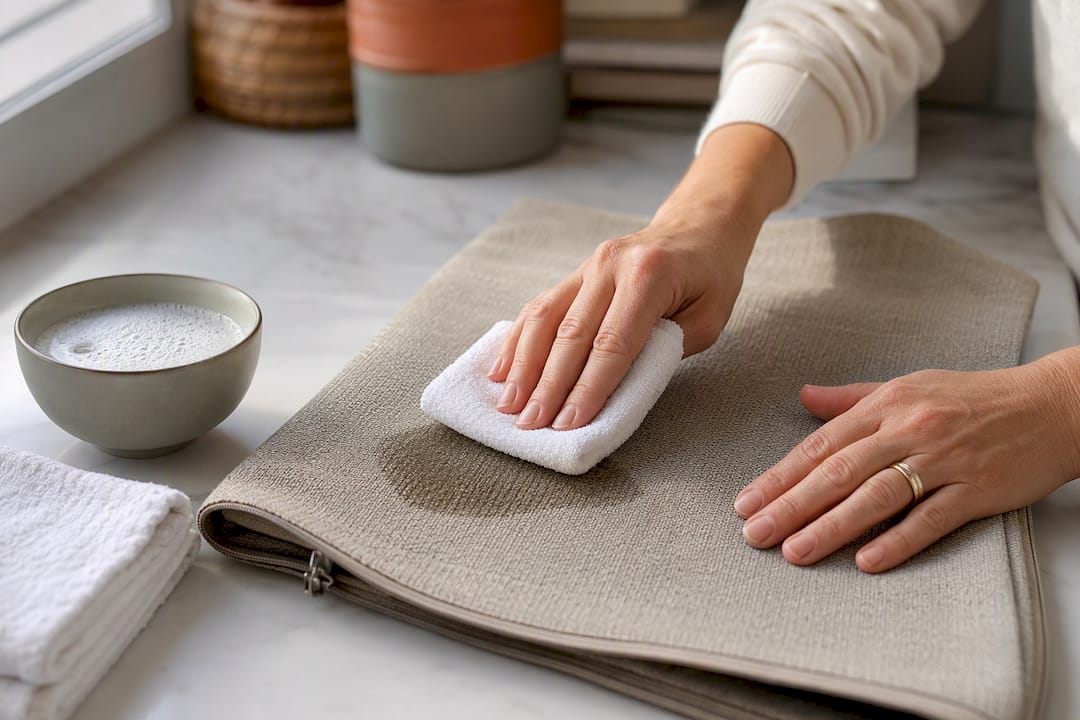
Avoid fabric softener on performance textiles. It coats fibers and can strip the stain-resistant finish over time. Skip harsh solvents unless your fabric’s cleaning code specifically allows them, and call a professional cleaner for set-in stains or anything covering a large area.
Pro Tip: Keep a plastic-free cleaning cloth on hand near the sofa. A compostable wipe works for quick blotting without introducing extra chemicals that could interact badly with a fabric’s finish.
Consistent care does more for longevity than the abrasion rating alone, since correct cleaning habits help fabric meet its expected usable life.
What You Give Up and What You Gain With Performance Fabric
Performance synthetics rarely match the drape or softness of linen or a fine wool blend, and that trade is worth accepting when durability matters more than luxury texture, like a playroom sofa or a family dining bench.
Recycled polyester, or rPET, is worth seeking out. It performs on par with virgin polyester while using less new raw material, giving you the same stain resistance with a smaller footprint.
Expect a well-chosen performance fabric to hold up for several years of regular family use before fading or wear justify reupholstering rather than replacing the piece entirely.
Noble Abode’s Take on Balancing Style and Performance
Durability and design don’t have to compete. Some retailers curate pieces built around that exact balance: rugs, covers, and soft furnishings chosen for easy care as much as for how they look in a room.
A cat-proof, reversible sofa cover shows the approach in practice: a removable layer that protects the piece underneath without forcing a compromise on style. For deeper stain-response steps, the velvet care guide covers techniques that apply broadly across performance textiles, and pet owners furnishing a busy household might also want to look at pet beds designed to look like furniture rather than the typical foam basket.
What Performance Fabrics Cost and Where the Value Actually Sits
Price scales with how the performance gets built in, not just with brand name.
Polyester blends sit at the lower end of the range and suit moderate-traffic rooms where budget matters more than maximum stain resistance. Olefin costs somewhat more but earns that premium through bleach-cleanability and strong moisture resistance, which matters if you’re replacing furniture less often. Solution-dyed acrylic commands the highest price among common performance fibers, justified mainly by its fade resistance for sunlit rooms and covered outdoor spaces.
The real value calculation isn’t sticker price. A lower-cost fabric that needs replacing in three years because it fades or pills costs more over a decade than a pricier fabric that lasts eight to ten years with basic care. Rugs and covers add a second layer to this math: a machine-washable rug avoids the recurring cost of professional cleaning that a delicate wool or silk rug requires every year or two, which often closes the price gap entirely within a few cleaning cycles.
Budget for performance fabric the way you’d budget for flooring, not throw pillows. It’s a structural choice for the room, and the cheapest option upfront isn’t always the cheapest option over the life of the piece.
Treatments and Finishes That Boost Performance Properties
Beyond the base fiber, most performance fabrics carry one or more applied finishes that do specific jobs.
Stain-resistant coatings create a barrier on the fiber surface that keeps liquids from soaking in immediately, buying time to blot before a spill sets. Water-repellent finishes work similarly but focus on beading moisture rather than blocking pigment, common on outdoor cushions and rugs that face rain. Fade-resistant treatments get applied to surface-dyed fabrics that lack solution-dyeing’s built-in protection, though these topical finishes typically degrade faster than inherent fiber-level fade resistance.
Antimicrobial finishes show up on fabrics marketed for pet households or kids’ rooms, reducing odor-causing bacteria buildup between cleanings. Soil-release finishes make a fabric easier to fully clean once a stain does set, rather than preventing the stain in the first place. These finishes aren’t permanent. Most wear down over years of washing and use, which is why a fabric’s inherent construction, like solution-dyeing or olefin’s built-in stain resistance, tends to outperform topical treatments over the long haul even when both start out looking identical on a spec sheet.
Performance Fabric for Busy Homes: The Editorial Take
The textile industry loves to talk fiber chemistry, but most of that detail doesn’t change what you should actually buy. What matters is matching one fabric to your household’s single biggest risk, since most fabrics excel at resisting pets, spills, or sun, but rarely all three equally.
Conventional advice tends to bury shoppers in fiber comparisons before ever mentioning rub counts or cleaning codes, which is backwards. A family should check the cleaning code and rub count before caring whether something is olefin or polyester. The fiber name matters far less than what the tag says it can survive.
If you take one thing from this guide, prioritize the cleaning code first, since it dictates your day-to-day reality. A gorgeous fabric rated “X, vacuum only” in a house with a toddler will look tired within a year no matter how high its rub count runs. Match the spec to your actual life, not the fabric that photographs best.
— Stephane
Why the Ornate Room Rug Fits a Busy Household
A rug takes more daily abuse than almost anything else in a living room, and washability solves most of the wear problems before they start. The Ornate Room Rug pairs a soft floral design with a machine-washable, non-slip build, which means spills, muddy paw prints, and everyday foot traffic don’t require a professional cleaner or a replacement two years in.
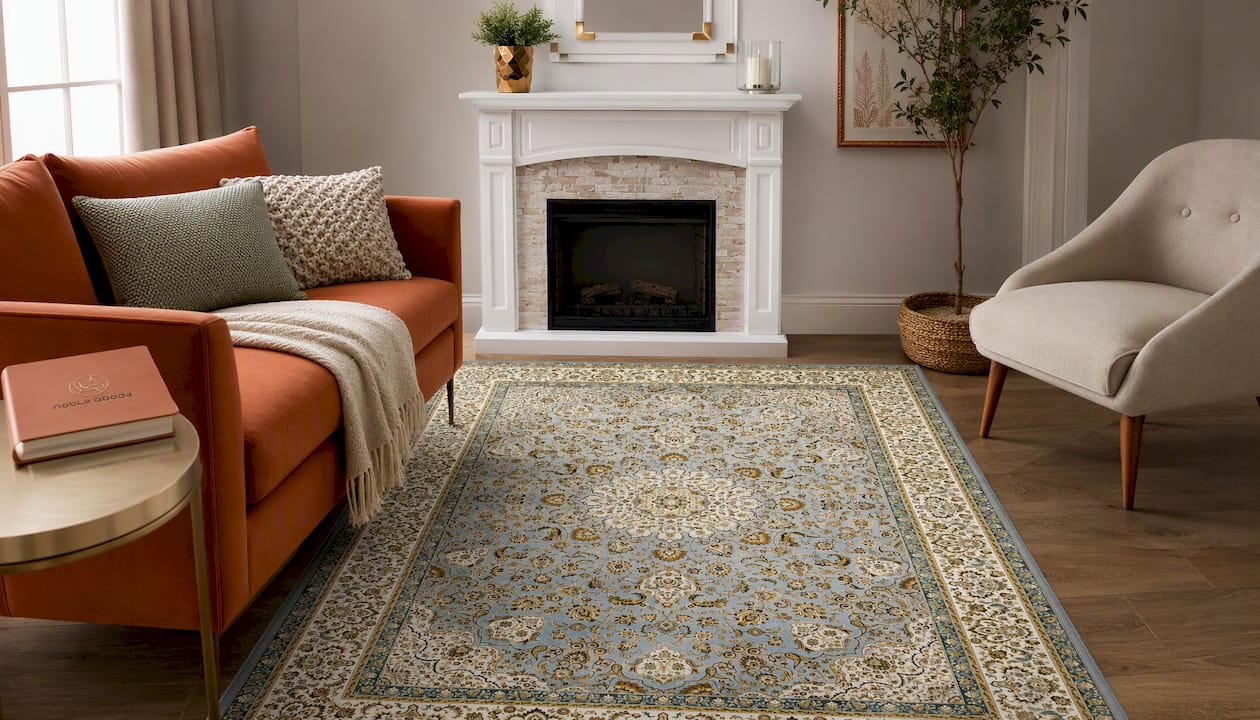
For a family room, nursery, or dining space that sees constant use, that combination of style and low-maintenance care removes a recurring chore from your routine rather than adding one. The non-slip backing also matters in homes with kids or older pets, since it stays put on hard flooring instead of sliding underfoot. Check sizing and availability on the Ornate Room Rug product page and see whether the 8x10 fits your space before your next spill turns into a bigger cleanup than it needed to be.
Sources
- The Complete Performance And Outdoor Fabric Guide
- What Are Performance Fabrics? Complete Guide to… | FibreGuard
- What Is Performance Fabric? How It Works — Revolution Fabrics
- Milliken: What are performance fabrics
FAQ
Is performance fabric the same as microfiber?
No. Microfiber is a specific fiber type known for a soft feel and moderate stain resistance, while performance fabric is a broader category that includes olefin, solution-dyed acrylic, polyester, and blends engineered for durability and easy cleaning.
What kind of fabric is performance fabric?
It’s typically a synthetic fabric, most often polyester, olefin, or solution-dyed acrylic, engineered through fiber construction or applied finishes for stain resistance, abrasion resistance, and easier cleaning than standard upholstery textiles.
Can you put performance fabric in the washing machine?
Only if the specific product is labeled machine-washable, like the Ornate Room Rug’s washable design; most upholstery-grade performance fabric is meant to be cleaned in place according to its W, S, W/S, or X cleaning code rather than machine washed.
What is the best performance fabric brand?
There’s no single best brand since performance is determined by the specific fiber, weave, and finish used on a given piece. Focus on checking rub counts, lightfastness ratings, and cleaning codes on the product itself rather than shopping by brand name alone.