

The Easiest Way to Style a Throw Blanket in Any Room
The highest-impact move in throw blanket styling is treating it as a textural and color anchor on a furniture plane the eye hits first, whether that’s a sofa arm, a chaise, or the foot of a bed. This guide covers eight easy techniques, sizing and material rules, and real product examples so you can copy the look today.
TL;DR:
- Throw blankets should be selected based on furniture size, with 50x60 inches for sofas and 60x80 inches for sectionals to avoid looking undersized or sloppy.
- Textures and materials should contrast or complement the furniture: chunky knits or faux fur add warmth to leather, while lighter fabrics suit fabric sofas for balance.
- Effective styling techniques include draping over the arm, folding into corners, layering, or standing throws in baskets to suit different furniture and interior styles.
- To keep throws in place, use rug pads, clips, Velcro, or weighted hems, and tuck excess behind cushions or the chaise to hide seams.
- Maintaining a styled look involves regular refolding, rotating seasonal throws, and choosing hues already present in room decor for a cohesive appearance.
Table of Contents
- Throw Blanket Styling: 8 Techniques You Can Copy Today
- Styling a Throw on Sofas and Sectionals
- Styling a Throw on a Bed
- Chairs, Benches, Ladders, and Basket Displays
- Picking the Right Size, Material, and Color
- Keeping a Styled Throw Looking Good Day to Day
- Noble Abode Pieces That Bring These Techniques to Life
- Styling Throws by Interior Design Style
- Matching Throws to Your Furniture’s Material
- My Take on the One Technique Worth Repeating
- Shop Noble Abode to Complete the Look
- Sources
- FAQ
Throw Blanket Styling: 8 Techniques You Can Copy Today
Designers who break throw advice down by furniture piece make it easier for you to match a technique to your specific room, and that furniture-first approach is exactly what works here. Each of these eight moves takes under a minute once you know the fold.
1. The corner throw. Fold the blanket into a rectangle and drape it over one arm of the sofa, letting a few inches puddle on the seat. This reads tailored and works well with a throw sized for a standard sofa.
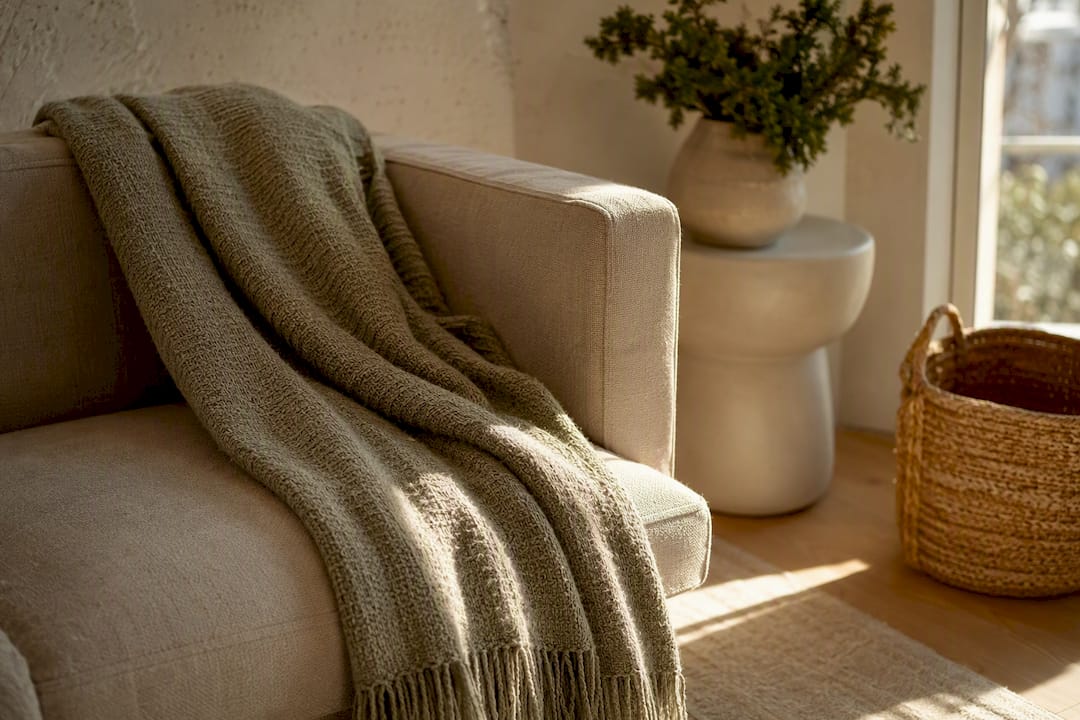
2. The over-arm toss. Skip the fold. Toss the throw loosely over the arm closest to the room’s entry point. Designers commonly recommend this exact placement because it’s the first thing a visitor sees.
3. The waterfall drape. Fold lengthwise into a long strip and hang it down the back of the sofa so it cascades to the floor. Best with a larger throw suited for a deep sectional.
4. The folded seat stack. Fold into thirds and stack it on an empty cushion. Casual, low-effort, ideal for a linen throw in summer.
5. Back-and-beyond. Drape the throw over the entire back of the sofa, letting both ends hang evenly. Works well with heavier chenille.
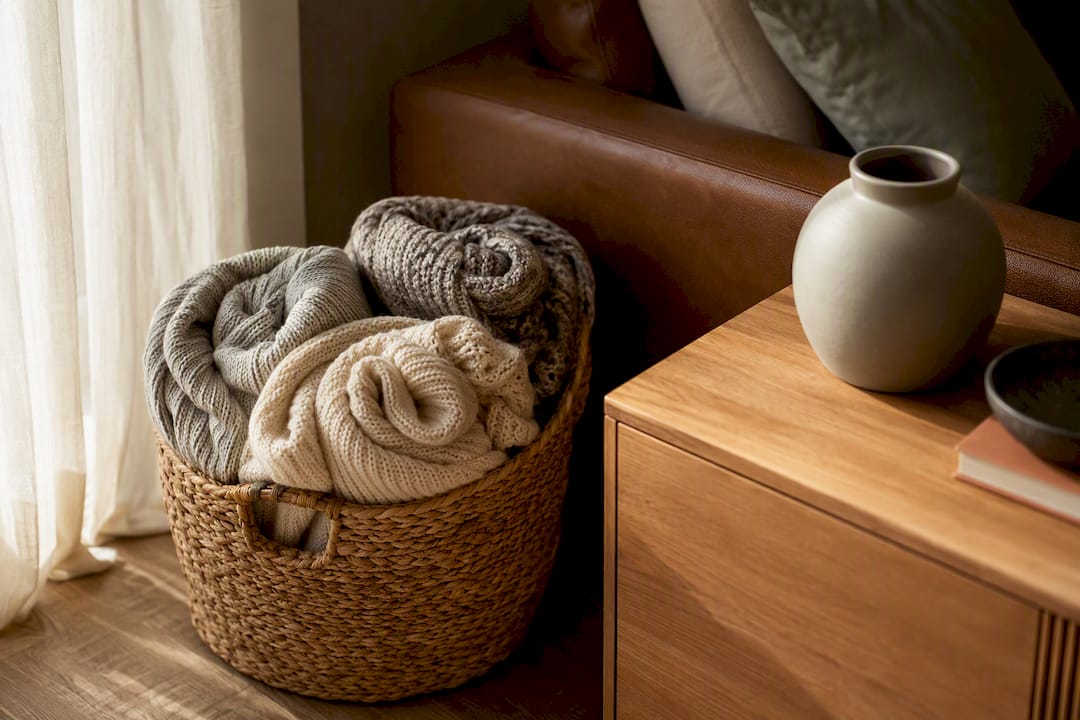
6. The basket display. Roll two or three throws and stand them upright in a basket beside the sofa. Great for rotating a chunky knit throw over a leather sofa for contrast.
7. The diagonal bed drape. Fold into a triangle and lay it across one corner of the bed. Neat, tailored, and forgiving of a smaller throw appropriate for an accent chair or loveseat.
8. Layered throws. Add a small decorative throw over a larger neutral one for depth and contrast without buying oversized bedding.
Styling a Throw on Sofas and Sectionals
Sofas and sectionals reward a little more precision because the throw has to survive daily use, not just look good in a photo. On a sectional, layering a throw over the chaise conceals the seams between modular pieces while creating a dedicated relaxation zone. A back-and-beyond drape suits formal living rooms, while a folded-seat stack fits a casual family room where the throw gets used nightly.
Keeping a throw exactly where you placed it is the real challenge in an active household. A few fixes work reliably:
- Tuck a small rubberized rug-pad square between the throw and the upholstery to stop sliding.
- Attach discreet throw clips at the fold point on slippery leather or velvet.
- Use Velcro dots on the underside of the throw where it meets the arm.
- Choose a throw with weighted hems if your sofa fabric is especially smooth.
Pro Tip: On a sectional, fold the throw so the excess tucks behind the chaise cushion instead of hanging loose. It hides the seam line and keeps the fabric from sliding onto the floor overnight.
Styling a Throw on a Bed
A throw on the bed should look like a deliberate accent, not a leftover blanket someone forgot to put away. The foot-of-bed runner is the most reliable starting point: fold the throw in half lengthwise, lay it across the width of the bed near the footboard, and let six to eight inches hang over the edge.
- Diagonal drape: fold into a triangle and place it across one corner for a tailored, boutique-hotel look.
- Layered runner: drape a smaller decorative throw over a larger neutral one so the smaller piece reads proportionate instead of undersized.
- Half-tuck: tuck one end under the mattress at the foot for a cleaner, less casual finish on a queen or king bed.
Layering two throws of different textures at the foot of a queen bed also solves the common problem of a throw that’s technically too small for the mattress width.
Chairs, Benches, Ladders, and Basket Displays
Throws don’t need a sofa or bed to earn their spot. An accent chair, a bench at the end of a hallway, or a wooden ladder leaned against the wall all work as display surfaces.
- Drape a folded throw over the back of an accent chair for an instant cozy corner near a reading lamp.
- Store extras rolled upright in a basket, letting fringe or pattern peek over the rim for visual texture.
- Layer two or three throws over the rungs of a ladder for a rustic, boutique-store effect.
- Pair matching throws on two chairs flanking a fireplace for symmetry.
Basket storage doubles as styling, which matters if you’re short on closet space and need extras within reach.
Picking the Right Size, Material, and Color
Getting the technique right only matters if the throw itself fits the furniture. Undersized throws look accidental; oversized ones look sloppy.
- Standard sofa: 50×60 inches.
- Sectional or deep sofa: 60×80 inches.
- Accent chair or loveseat: 36×48 inches.
Material choice should follow both the season and the furniture underneath it. Pairing a chunky knit throw with a smooth leather sofa creates the kind of texture contrast that makes a room feel finished rather than flat. Cotton and linen suit warmer months and lighter fabrics; mohair, chenille, and faux fur bring weight and warmth for fall and winter. For color, the safest rule is to pull a hue that already exists somewhere in the room, whether that’s a rug, a set of decorative pillows, or the wall paint, rather than introducing a brand-new shade.
Pro Tip: If your sofa is a neutral tone, your throw is the cheapest way to test a bold color before committing to new pillows or a rug.
Keeping a Styled Throw Looking Good Day to Day
A throw that looks perfect on day one and rumpled by day three isn’t actually styled, it’s just draped. A few habits keep it photo-ready without much effort.
- Machine-wash cotton and acrylic throws on a gentle cycle; spot-clean or dry-clean mohair, wool, and faux fur.
- Refold and re-drape once a day, especially after the throw’s been used for actual napping.
- Rotate heavier throws in for fall and winter, lighter ones for spring and summer.
- Store off-season throws in a labeled basket or bin to keep them from crowding the linen closet.
- Add a weighted hem or a rug-pad square if a throw keeps sliding no matter how you fold it.
Noble Abode Pieces That Bring These Techniques to Life
A faux fur throw at 750gsm is exactly the kind of texture-forward piece that makes the over-arm toss or waterfall drape look intentional on a mid-tone or leather sofa. Noble Abode curates pieces specifically for this kind of styling: timeless materials, easy care, and proportions built for real furniture, not just catalog photos. A knitted throw works the same way on an accent chair, adding chunky texture without overwhelming a small space.
Styling Throws by Interior Design Style
The technique stays consistent across styles, but the material and fold change the mood entirely.
In a modern space, keep it simple: one clean fold, one neutral or bold-accent color, no fringe. A single waterfall drape in a solid charcoal or cream throw suits a minimalist sofa without competing with the room’s clean lines. Modern rooms also benefit from restraint on quantity, one well-placed throw beats three competing for attention.
Rustic interiors welcome chunkier textures and imperfection. A folded seat stack in a cable-knit wool throw, slightly rumpled rather than pressed flat, fits a room built around reclaimed wood and stone. Layering two throws in complementary earth tones over a leather sofa plays into the contrast Martha Stewart’s guidance recommends, since leather’s smoothness needs a rougher counterpart to feel warm rather than sterile.
Bohemian spaces are the one style where more is genuinely more. Layer two or three throws in different patterns, a woven stripe, a fringed solid, a textured knit, and let them overlap loosely rather than folded square. A basket display near a bohemian sofa also fits the aesthetic, since visible storage reads as curated rather than cluttered in that style. Fringe and tassels, which would look busy in a modern room, are the point here.
Across all three styles, the rule that holds is proportion: match the throw’s weight and pattern intensity to how much visual noise the rest of the room can handle.
Matching Throws to Your Furniture’s Material
The fabric or finish underneath the throw changes which one actually looks good on it.
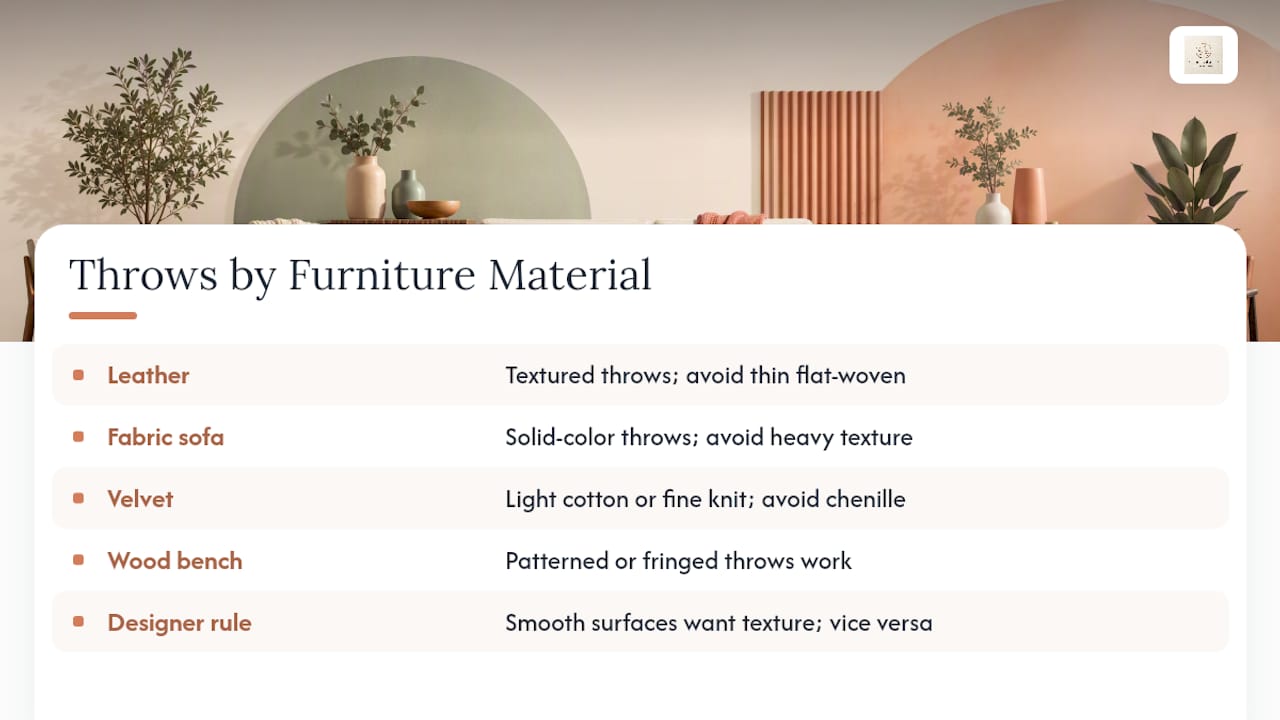
Leather sofas need texture contrast more than any other surface. A chunky knit, mohair, or faux fur throw breaks up leather’s smooth, cool surface and adds warmth that leather alone can’t provide. A thin, flat-woven throw on leather tends to slide constantly and looks underdressed.
Fabric sofas, especially linen or cotton blends, have more texture built in already, so the throw’s job shifts from contrast to color. A solid-colored throw in a complementary hue works better here than another heavily textured piece, which can make the whole seating area feel busy.
Velvet furniture pairs well with lighter-weight throws, cotton or a fine knit, since velvet already carries its own texture and weight. Piling a heavy chenille throw on top of velvet can look overdone.
Wood benches and ladders, common in entryways or as throw display pieces, work with almost anything, since the throw is the focal point rather than a complement to upholstery. This is where a patterned or fringed throw earns its keep, since there’s no competing texture to manage.
When in doubt, the working rule from designers holds across every material: smooth surfaces want textured throws, and already-textured surfaces want smoother ones.
My Take on the One Technique Worth Repeating
If you only try one thing from this guide, pair a faux fur throw like the Hyde Lane with a mid-tone sofa and one slim lumbar pillow. The contrast does more work than a whole new pillow set. Try it in five minutes: fold the throw over the arm nearest your entry, add the lumbar pillow, step back.
— Stephane
Shop Noble Abode to Complete the Look
Once the throw is placed, the surrounding decor is what turns a styled corner into a finished room. Noble Abode’s curated pieces are built to layer in fast, without a redesign. A Key Desktop Storage Decor piece on a console table anchors the entryway where your over-arm throw catches the eye first. An Italian Designer Glass Table Lamp beside the sofa adds warm light that flatters faux fur and knit textures alike, and a Touch Control Rechargeable Table Lamp works the same way on a nightstand next to your diagonal bed drape.

For a bohemian-leaning corner, a 2 PCS Black & Gold Accent Ornament set adds contrast without competing with layered throws. Rustic and modern rooms both benefit from a Black Décor Statue placed near the basket display, giving the eye a second focal point that isn’t fabric. If you’re staging a dining area alongside your styled living room, a Luxury Crystal Wine Glass set or a Light Luxury Western Tableware Set carries the same timeless materials into the next room. A Modern Luxury Wine Cabinet and Shoe Storage Decor piece rounds out an entryway that’s already doing double duty as storage and display.
Browse the full throw blanket collection and pick one piece today to build your first vignette.
Sources
- 6 Ways to Style a Throw Blanket That Doesn’t Fully Cover Your Bed — Apartment Therapy
- How to fold or arrange a throw blanket on your couch — Martha Stewart
FAQ
How do you style a throw blanket?
Fold or drape it over the sofa arm closest to the room’s entry point to create an instant visual anchor, then adjust the fold based on whether you want a tailored or casual look.
How do you style two throw blankets on a couch?
Layer a chunkier throw in a back-and-beyond drape with a smaller, contrasting-texture throw folded over one arm, so each piece reads distinctly rather than blending together.
How do you style a throw blanket on a queen bed?
Use the foot-of-bed runner fold with six to eight inches hanging over the edge, or layer a small decorative throw over a larger neutral one so it reads proportionate to the mattress.
What is the purpose of a throw blanket on a couch?
Beyond warmth, a throw adds texture and color contrast that makes a sofa look finished, and it works as a low-cost way to test a new hue before committing to larger furniture changes.
What size throw blanket works best for a sectional?
A 60×80 inch throw suits most sectionals and deep sofas, while a standard sofa is better served by a 50×60 inch throw.